Discover the magic of Hirosaki City (弘前市), the cultural heart of Aomori Prefecture and Japan’s undisputed cherry blossom capital. Famous for the iconic Hirosaki Castle, this historic castle town offers a perfect blend of feudal history, stunning botanical gardens, and unique Western-style architecture. Whether you are visiting in spring to witness the “Sakura Carpet” on the castle moats or exploring the local apple orchards and vibrant summer festivals, our Hirosaki travel guide covers everything you need to know. Plan your trip to this Northern Japan gem and experience one of the most picturesque destinations in Tohoku.
And if you love apples, the city harvests the most apples in Japan, making it a heaven for apple and apple pie lovers because the apples in Hirosaki are fresh, delicious, and cheap (≧▽≦).
Things to Do in Hirosaki, Aomori
So, what to do in Hirosaki? Most of Hirosaki City’s attractions are close to Hirosaki Park, home to the famous Hirosaki Castle. If you are nature, take a bus to Mt. Iwaki for a day hike! The attractions below are listed by distance from Hirosaki Station.
- Explore Hirosaki with a Professional Guide
- The Apple Post Boxes in Hirosaki
- How to Get to Hirosaki City
- How to Get Around Hirosaki City Center
- Hirosaki Castle and Hirosaki Park (弘前城 and 弘前公園)
- Fujita Memorial Garden (藤田記念庭園)
- Tsugaru-Han Neputa Village (津軽藩ねぷた村)
- Former Ito Family Residence (旧伊藤家住宅)
- Former Iwata Family Residence (旧岩田家住宅)
- Former Tōō Gijuku Missionary Residence (旧東奥義塾外人教師館)
- Miniature Structures (ミニチュア建造物)
- Former Hirosaki City Library (旧弘前市立図書館)
- Aomori Bank Memorial Museum (青森銀行紀念館)
- Catholic Hirosaki Church (カトリック弘前教会)
- Hirosaki Church, United Church of Christ in Japan (日本キリスト教団 弘前教会)
- Saishōin Temple (金剛山最勝院)
- Choshoji Temple (長勝寺)
- Hirosaki Apple Park (弘前市りんご公園)
- Mt. Iwaki (岩木山)
- When Is the Best Time to Visit Hirosaki?
Tip: From mid-December to late March, you can rent long boots for free (sizes range from 20 cm to 27 cm) at the 3 locations below. You can leave your shoes with them while you rent the boots out. Note: no reservation is available.
☛ Hirosaki Municipal Tourist Center (弘前市立観光館) from 9 am to 5 pm. Return the boots by 6 pm.
☛ Hirosaki City Tourist Information Center (弘前市観光案内所) from 8:45 am to 5 pm. Return the boots by 6 pm.
☛ Hirosaki City Machinaka Information Center (弘前市まちなか情報センター) from 9 am to 8 pm. Return the boots by 9 pm.
Note that the hours you rent out the boots may differ from the above from the end of December to the beginning of January.
Apart from the long boots, they also provide non-slippery rubber (滑り止めゴム) for the shoe rental service. Please talk to the staff at the locations above if you prefer to use the rubber instead.
Explore Hirosaki with a Professional Guide
If you prefer a guide to introduce you to Hirosaki, consider joining one of the following tours.
- Hirosaki Castle Cherry Blossom Private Charter One-Day Tour (Cherry Blossom Season Exclusive)
- Apple Picking and Hirosaki Castle Private Tour
Hirosaki’s Brief Profile
Hirosaki is a city where Japanese and Western architecture exist in harmony. From the Hirosaki Castle and temples that were built both before and during the Edo period (1603 – 1868) to the western-style buildings such as the Aomori Bank Memorial Museum built in the Meiji (1868 – 1912 ) and Taishō period (1912 – 1926), there is an abundance of beautiful architecture to adore when you come to Hirosaki.
When Is the Best Time to Visit Hirosaki?

The people living in Hirosaki must have a great mind for business. Each season, at least one major festival attracts 200,000 or more people to enjoy what Hirosaki has to offer. Those cherry blossom trees, and the trees that produce a vibrant autumn color weren’t just planted overnight. You will surely be amazed by how grand each festival is!
Refer to our article on The Best Time to Visit Hirosaki for more information!
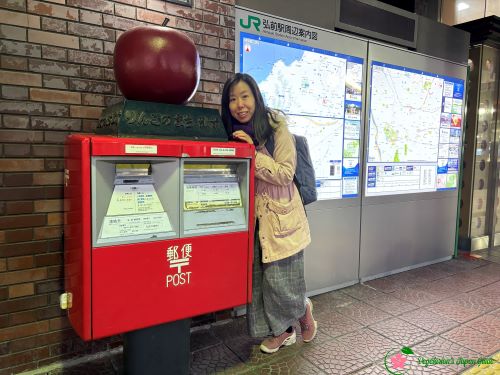
The Apple Post Boxes in Hirosaki
During your time at Hirosaki, see how many street post boxes you can find with an apple on top (≧▽≦).
We are sure you will be as excited as we are when you spot one. But here are some tips. You should definitely be able to find one around Hirosaki Apple Park, JR Hirosaki Station, or Hirosaki City Hall!
How to Get to Hirosaki City
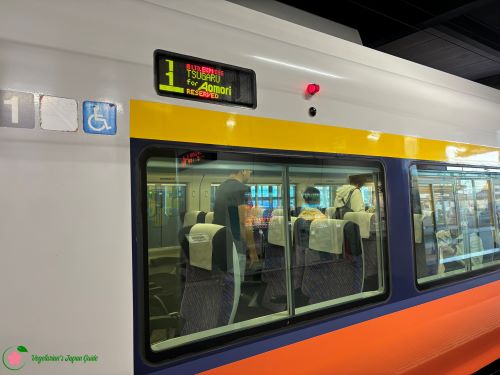
Learning how to get to Hirosaki City is essential for visiting this stunning northern gem in Aomori Prefecture. Whether you are traveling by the Tohoku Shinkansen from Tokyo, or using the affordable highway bus network, Hirosaki is well connected to major hubs like Sendai.
Refer to our How to Get to Hirosaki by Public Transport for the most efficient transport routes, travel times, and tips for using the JR Pass to ensure your journey to the apple capital is as smooth as possible.
How to Get Around Hirosaki City Center
To get to various attractions in Hirosaki’s city center, take the Dotechō Junkan Bus (土手町循環バス), which departs from Hirosaki Bus Terminal’s (弘前バスタミナール) bus stop no. 8 in front of JR Hirosaki Station between 10 am and 6 pm from April to November. The service runs every 10 minutes (10 am to 5 pm, from December to March).
You can use one of Japan’s Transportation Apps to plan your visit.
Sightseeing in Hirosaki with Rental Bicycles
The thing we love about this city is its bike rental services. There are a couple of places where you can rent a regular bike for 500 yen (or an electric-assisted bike for 1,000 yen) for the rest of the day (you have to return the bike by 4 pm, though)!
If you are coming to Hirosaki by JR train, one of the bicycle rental stations is conveniently located at Hirosaki City Tourist Information Center (弘前市観光案内所) on the JR Hirosaki Station’s ground floor (=゚ω゚)ノ.
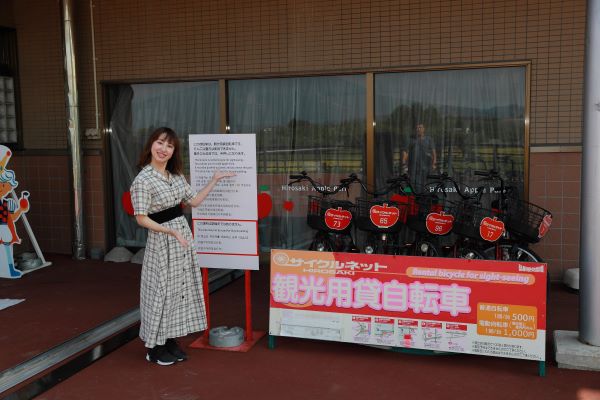
For more information about this service, please refer to Hirosaki Tourism and Convention Bureau’s website HERE!
Klook.comHirosaki Castle and Hirosaki Park
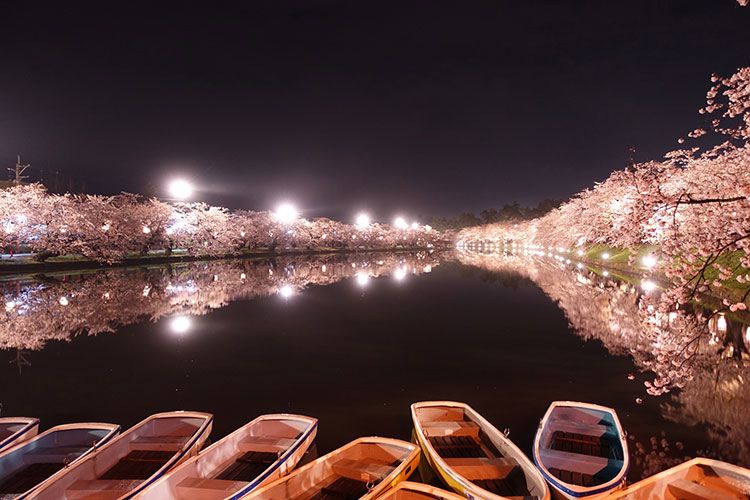
Hirosaki Castle is the symbol of Hirosaki City. With its castle tower being the only one to have retained its original appearance since the Edo period in northeastern Japan, the Castle is a must-visit spot for a Japanese history buff. The castle park has vast grounds with a variety of plants. From approximately 2,600 cherry blossom trees to ginkgo and chrysanthemum, Hirosaki Park is colored with seasonal colors throughout the year.
For more information, please refer to our article on Hirosaki Castle and Hirosaki Park!
Fujita Memorial Garden (藤田記念庭園)
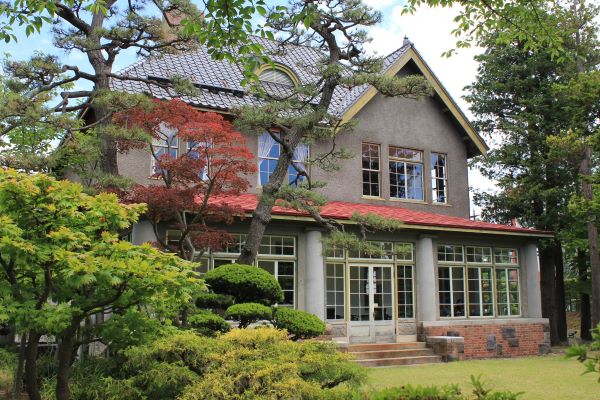
When you need a break from the exploration in Hirosaki Park, Fujita Memorial Garden next to the park is a perfect spot for a rest. The memorial garden is an example of how Western and Japanese cultures can exist in harmony. Thus, if you are interested in unique architectural styles, check out the main house while enjoying the apple pie at the café!
For more information, refer to our Fujita Memorial Garden article.
Tsugaru-Han Neputa Village (津軽藩ねぷた村)
This whole village is about one of the Three Great Festivals of the Tōhoku Region – the Hirosaki Neputa Festival (ねぶた祭). This festival, which sees more than 2 million people coming to Aomori, is held from the 1st to the 7th of August each year.
Throughout the festival period, parades of gigantic neputa lantern floats and folk art performances happen every day from morning to night.
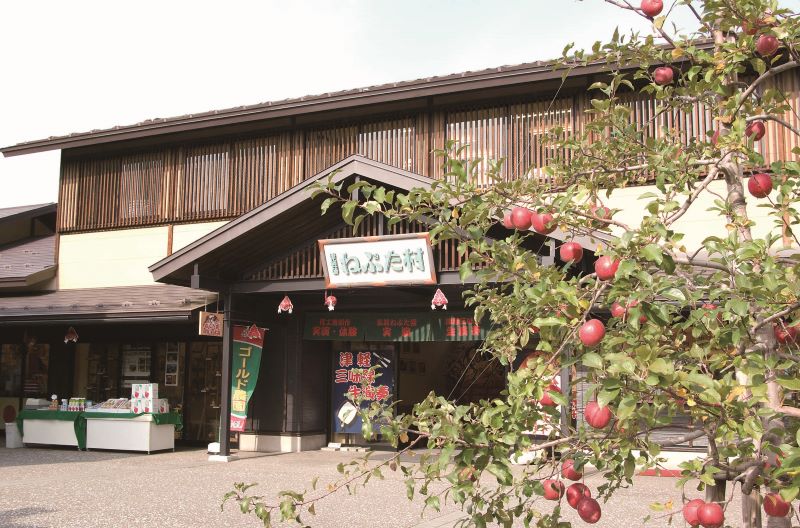
As tourists, we don’t have a Teleportation Door like the cartoon character Doraemon, so the Neputa Village offers us a window back in time to this spectacular event!
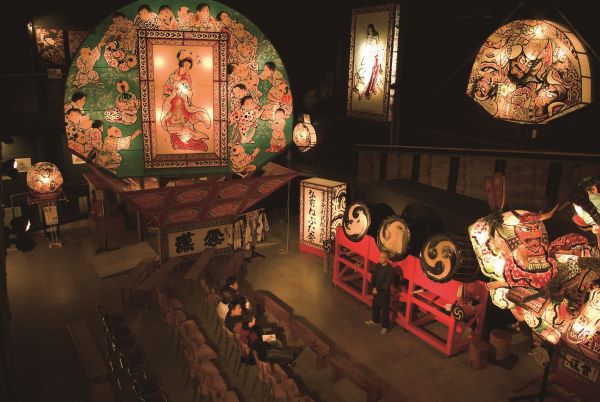
Although the village is called “neputa”, it is more like a folk crafts museum in the Tsugaru region. Whether you just feel like strolling around the facility to explore Neputa lanterns that depict gods, Japanese and Chinese historical or mythical figures, or Kabuki actors, or you want to learn how various local craftworks are made by actually making one yourself, Neputa Village can cater to your request!
There are, of course, restaurants and souvenir shops ready to empty your wallet. So if you are interested in these cultural spots, you can easily spend half a day immersing yourself in this culturally rich destination next to Hirosaki Park (*’▽’).
For more information, refer to the official website HERE.
Neputa Village’s Opening Hours, Admission Fee, and Access Information
- The village is open daily from 9 am to 5:30 pm (till 4 pm from December to March)
- The last admission is at 5 pm.
- The admission fee is
- 600 yen for adults
- 400 yen for high school students
- 300 yen for elementary school students
- 100 yen for children from 3 years old
- To get to the village, get off the bus at Tsugaru-Han Neputa Village (津軽藩ねぷた村)
Former Ito Family Residence (旧伊藤家住宅)
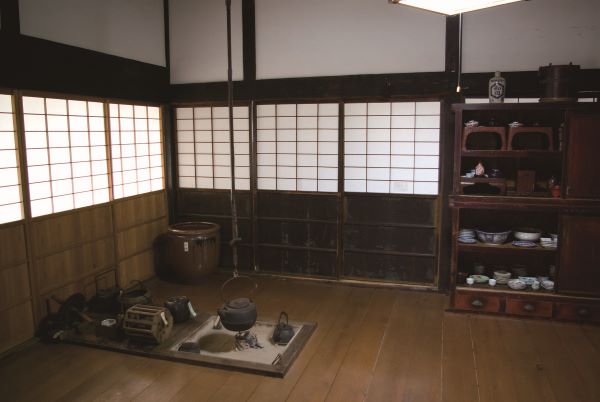
The Former Ito Family Residence is located in the Nakacho Traditional Buildings Preservation Area (仲町伝統的建造物群保存地区). During the shogunate era, the Ito family served as doctors at Hirosaki Castle.
Inside the house, you can explore the structure and characteristics of a middle-class samurai house from the Edo period!
P.S. It is free to enter the grounds of the house (^_-)-☆.
Former Ito Family Residence’s Access Information and Opening Hours
- To get to the Former Ito Family Residence, get off the bus at Tsugaru-Han Neputa Village (津軽藩ねぷた村). The House is just a 5-minute walk away from the bus stop.
- The residence is open from 10 am to 4 pm from April to November (except on August 13 and from December 29 to January 3)
- It is closed on Tuesdays and Fridays from July to October and Monday to Thursday from November to March.
- Note that during the Neputa Festival and Autumn Festival, the residence is open regardless of the above.
Former Iwata Family Residence (旧岩田家住宅)

Unlike the Ito Family Residence, the Former Iwata Family Residence is a thatched-roof samurai house with a Japanese tea room atmosphere. Most of the main parts of the house, such as the pillars, huts, and thatched roofs, have never been replaced with new material but retain their original state, built 200 years ago.
If you want to know about the life of the samurai in Hirosaki at that time, make sure you drop by this residence!
Entry is again – FREE!
Former Iwata Family Residence’s Access Information and Opening Hours
- The Former Iwata Family Residence is open from 10 am to 4 pm (opening hours may differ during the days when festivals are held in Hirosaki)
- The residence is closed on Mondays and Thursdays from July to October and Wednesday to Sunday from November to March.
- The residence is also closed on August 13 and from December 29 to January 3.
- Note that during the Neputa Festival, Autumn Festival, and Winter Festival, the residence is open regardless of the above.
- To get to the Former Iwata Family Residence, get off the bus at Tsugaru-Han Neputa Village (津軽藩ねぷた村). The residence is just a 2-minute walk away from the bus stop.
Former Tōō Gijuku Missionary Residence (旧東奥義塾外人教師館)

The Former Tōō Gijuku Missionary Residence, built in 1903, served as the dormitory for foreign teachers at Tōō Gijuku School. The museum inside the residence features furniture and furnishings from the Meiji period (1868 – 1912).
If you are interested in what foreigners’ life was like in the early 1900s in Japan, then this is the place you want to visit when you come to Hirosaki!
P.S. Entry is FREE!
And for those who love visiting unique cafés, you won’t want to miss out on the café on its ground floor. Again, apple pie is the most popular dish (´▽`*). From the café’s window, you can see miniature buildings across the road at Ōtemon Square (追手門広場).
Chilling here for a few hours and pretending you are one of those foreign teachers who were invited to Japan back in the 1800s can be another way to enjoy your time at Hirosaki!
Former Tōō Gijuku Missionary Residence’s Opening Hours and Access Information
- The residence is open from 9 am to 6 pm daily.
- The cafe is open from 9:30 am to 6 pm.
- The last order is at 5:30 pm.
- To get to this Residence, get off the bus at Shiyakusho Mae (市役所前).
Miniature Structures (ミニチュア建造物)
In Ōtemon Square (追手門広場), you will find 14 miniature buildings quietly sitting on the grass lawn. While you may not be able to find some of them now in Hirosaki city, they actually existed during the Meiji and Taisho periods (1868 – 1926).
The buildings are 1/10 of the size of the original building, so there are about the size of a little 3-year-old! For those buildings that still remain standing nowadays, it could be really fun to compare the miniature version of the buildings with the real ones (^_-)-☆.
P.S. It is free to get into Otemon Square (=゚ω゚)ノ.
How to Get to Miniature Structures
- From JR Hirosaki Station (弘前駅), it is a 30-minute walk to the museum.
- You can also cut your travel time by taking a bus and getting off at Shiyakusho Mae (市役所前).
Former Hirosaki City Library (旧弘前市立図書館)

The Former Hirosaki City Library is another example of Japanese-Western fusion. Completed in 1906, the library was largely built in Renaissance style, but you can also spot Japanese architectural elements here and there throughout the building.
This cute building was open to the public as a library until 1931. It is currently a museum featuring the history of the building and local literature. As it is super close to Hirosaki Park and entry is free, why not add this little spot to your itinerary, even just for a photo op?
Former Hirosaki City Library’s Opening Hours and Access Information
- The library is open from 9 am to 5 pm daily!
- From JR Hirosaki Station (弘前駅), it is a 30-minute walk to this library.
- You can also cut your travel time by taking a bus and getting off at Shiyakusho Mae (市役所前).
Aomori Bank Memorial Museum (青森銀行紀念館)

This building was built to be the first bank in Aomori Prefecture. The renaissance-style building comes with a tower that serves as an observatory – which isn’t open to the public at the moment… (;´・ω・)
Various financial instruments, such as old banknotes and coins, are displayed on the ground floor. If you have a great passion for the banking industry, come here to discover how the industry has evolved!
For those that love renaissance-style design, as the interior and furnishings are very gorgeous, we are sure you will get very excited once you enter this old bank building (and don’t forget to check out the ceiling for the Aomori’s traditional craft “Kinkara leather painting (金唐革絵)”!).
Aomori Bank Memorial Museum’s Opening Hours, Admission Fee, Access Information
- The museum is open from 9:30 to 4:30 daily from April 1 to November, except Tuesdays, and from December 29 to January 3.
- During the Cherry Blossom Festival, Neputa Festiva, and Snow Lantern Festival, the museum is open from 9:30 am to 6 pm.
- The admission fee is
- 200 yen for adults
- 100 yen for elementary and junior school students
- From JR Hirosaki Station (弘前駅), it is a 30-minute walk to the museum.
- You can also cut your travel time by taking a bus and getting off at Shiyakusho Mae (市役所前). The bank is just a 1-minute walk away from the bus stop.
Catholic Hirosaki Church (カトリック弘前教会)
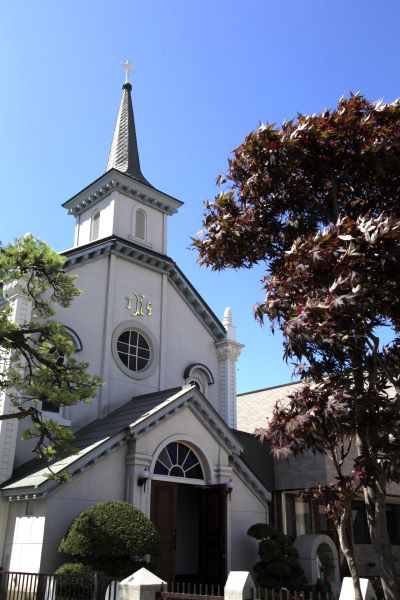
The Catholic Hirosaki Church is a Romanesque wooden mortar church built in 1910 and has been used as a church ever since.
Either the air in Hirosaki is really clean, or they put a lot of effort into keeping the church’s appearance as pristine as possible. As you can see in the photo, the church still meets its visitors with its pure white walls!
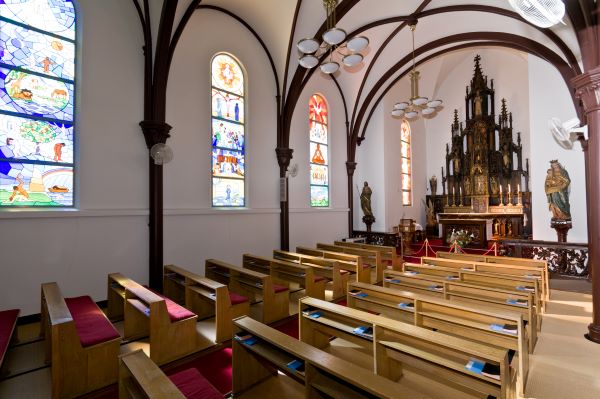
The gothic-style altar was a gift from the Church of St. Thomas in Amsterdam, Netherlands.
Pay close attention to the brighter-colored stained glass. You will find something that can’t be found elsewhere in the world (hint: apples and shamisen (Japanese lute))!
Catholic Hirosaki Church’s Opening Hours and Access Information
Catholic Hirosaki Church is open from 7 am to 7 pm (until sunset in wintertime). Unless the church is holding a mass, tourists are all welcome to walk around the church.
To get to the church, take a bus and get off at Bunka sentā (文化センター). The Church is just a 5-minute walk away from the bus stop.
Hirosaki Church, United Church of Christ in Japan (日本キリスト教団 弘前教会)
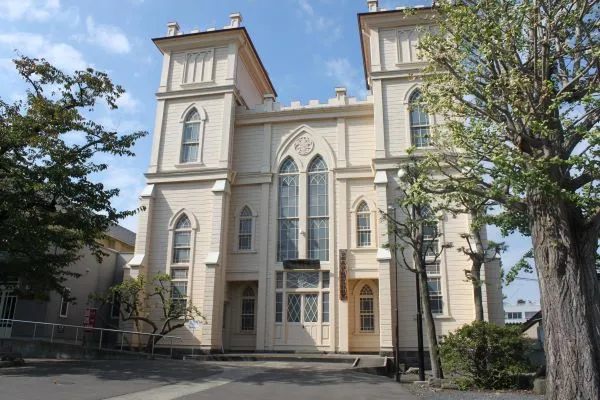
This ivory church is a Protestant church that was originally built in 1875. The current church we can visit is the second rebuilt in 1907. It has the structure of a heavy, two-story wooden building with a double-tower Gothic style similar to Notre Dame.
The church has a very simple interior with a red carpet and white walls, but it feels sublime!
If you want to have a peek at what this church looks like inside, come between 9 am and 4 pm. Also note that the church is closed on Wednesday and Sunday before lunchtime (the gate will be locked when there is no staff inside the church).
For more information, please refer to their website HERE.
Hirosaki Church, United Church of Christ in Japan’s Access Information and Opening Hours
To get to the church, take a bus and get off at Bunka sentā (文化センター). The church is just a 5-minute walk away from the bus stop.
Saishōin Temple (金剛山最勝院)
Saishoin Temple, near Hirosaki Park, is a famous cherry blossom spot. But the temple grounds are also stunning in autumn.

The temple was originally built in 1667 to pray for the peace of those who passed away in the battle of Tsugaru region unification. Because of the contrast between its red color and the surrounding nature, the 5-story pagoda visible from the streets of Hirosaki is said to be the most beautiful in northeastern Japan (*´ω`).
After you visit Hirosaki Castle, why not drop by the temple and chill in its peaceful atmosphere, especially when the entry is FREE?
Saishōin Temple’s Opening Hours and Access Information
- Saishoin Temple is open daily from 9 am to 4:30 pm.
- To get to the temple, take a bus and get off at Honchō (本町). The temple is then around an 8-minute walk.
- If you are taking the regular bus, get off at Hirosaki Kōkōmae (弘前高校前).
Chōshoji Temple (長勝寺)

Choshoji Temple was originally built in 1528 and relocated a few times before settling where it is today (´▽`*).
This temple, with its simple yet magnificent appearance, has been listed as a National Important Cultural Property. So if you have some spare time between your busy schedule, how about spending 30 minutes or so to immerse yourself in this historically rich spot?
Zenringai Street (禅林街) (33 Temples of Zen Area)
Leading to the gate of the Chōshoji Temple, at the two sides of the straight road, there are another 33 temples.
Just as the name of this road (or street) suggests, this area of Hirosaki has a calming, zen-like atmosphere. Taking a little pilgrimage among these temples can be a great idea if you love visiting all the temples in Japan (*´ω`).

Chōshoji Temple’s Opening Hours and Access Information
- Choshoji Temple is open from 9 am to 4 pm daily from April to November.
- Bus services stopping close to Chōshoji Temple depart from Hirosaki Bus Terminal (弘前バスタミナール) in front of JR Hirosaki Station for 300 yen.
- Please take the bus service bound for Nishimeyamura Yakuba (西目屋村役場) or Soma Chōsha (相馬庁舎) and get off at Shigemori Machi Chōshoji-iriguchi (茂森町 長勝寺入口). The temple is a 10-minute walk away from the bus stop.
- For more details, please refer to the Hirosaki Tourism And Convention Bureau’s website HERE!
- P.S. The bus will also bring you to Hirosaki Apple Park.
Hirosaki Apple Park (弘前市りんご公園)
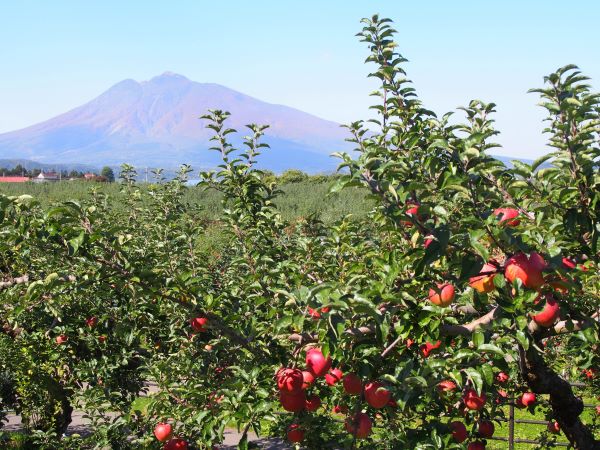
When the Japanese think about Aomori, apples are probably one of the first things that will pop up in their mind. Hirosaki harvests the most apples in the country. So naturally, it has several orchards dedicated to tourists.
The most accessible orchard in Hirosaki is the Hirosaki Apple Park. At Hirosaki Apple Park, not only can you do apple picking, but there is a range of experiences and festivals/events that you can participate in throughout the year!
For more details, please refer to our article about the Apple Park HERE (=゚ω゚)ノ.
Proceeding Further to the Summit of Mt. Iwaki for a Spectacular View and Cherry Blossoms
If you love exploring nature, Mt. Iwaki, which is located around a 60-minute bus ride from Hirosaki’s city center, is the perfect destination to stop by when you visit Hirosaki. Although it is 1,625-meter tall, getting to the summit isn’t a hard thing to do!
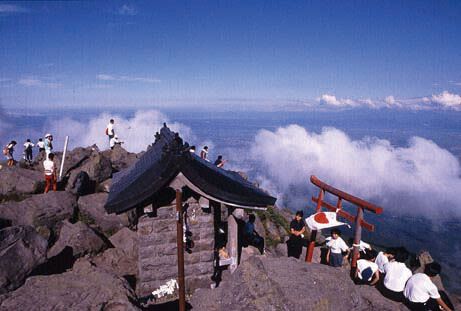
For more information on how to get to the top of Mt. Iwaki without too much effort, refer to our article on Mt. Iwaki (=゚ω゚)ノ.
Explore the Capital of Aomori Prefecture: Aomori City
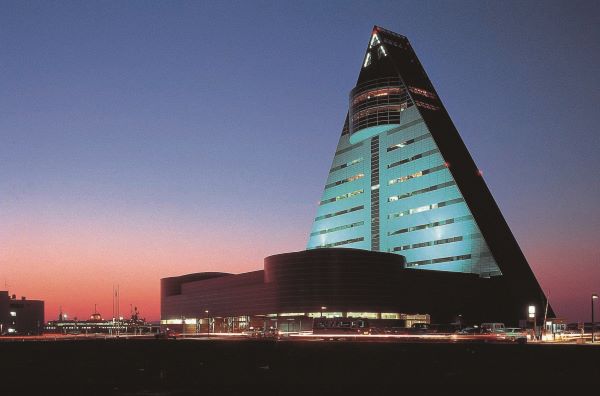
Aomori City, the capital of Aomori Prefecture, has a wealth of beautiful nature, such as the Hakkōda mountain ranges and Mutsu Bay. Stunning scenery can be adorned throughout the year. In the fall, it is the time to find out your favourite kinds of apples!
The city also has a couple of cultural heritages for you to enjoy a different side of Japanese culture.
For more information, please refer to our article on Aomori!
An Excursion with the Joyful Train: Resort Shirakami
The joyful train, Resort Shirakami, with 3 different designs, runs between Aomori and Akita prefectures on the Tsugaru Plain. It is reputed for its beautiful scenery along the railway line! Hence, getting a train pass that allows unlimited rides on the line is a good idea, so you can get off the train and enjoy the natural scenery. Seeing the beautiful scenery changing from the train window is also a great idea.
For more information about this stunning train line, check out our article on Resort Shirakami!