Step into the heart of Japanese spiritual history at Kinpusen-ji Temple (金峯山寺), the majestic centerpiece of the UNESCO World Heritage-listed Mt. Yoshino. As the head temple of Shugendo, this ancient site has served as a sacred training ground for over 1,300 years. Its main hall, the Zao-do, is a masterpiece of traditional architecture and stands as one of the largest wooden structures in Japan. Within its walls, travelers can seek blessings from the awe-inspiring Zao Gongen deities, the three massive, blue-skinned figures representing the past, present, and future. Whether you are witnessing a powerful fire ceremony or admiring the temple’s dark-timbered beauty against a backdrop of 30,000 cherry trees, Kinpusen-ji offers a profound look into the mystical soul of the Nara mountains.
Shugendo is a unique mountain ascetic faith blending Buddhism and Shintoism.
Just a few-minute walk away from the Yoshinoyama Ropeway Station, you will pass through Kinpusenji Kuromon Gate (金峯山寺黒門), the main gate to Mt. Yoshino.

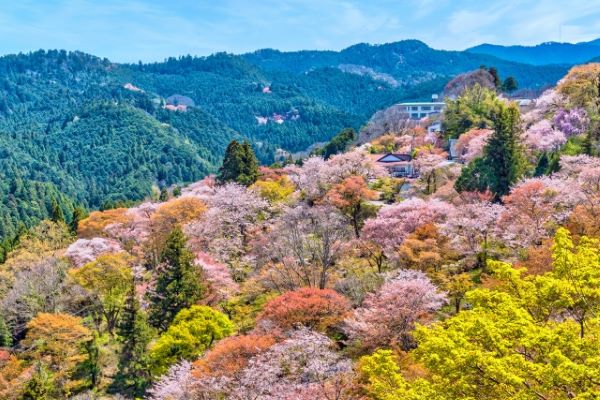
Tip: Before you cross the Kuromon Gate, make a short detour to Shōkenkōtaigō Onodate-ato (昭憲皇太后御野立跡) towards the Mt. Yoshino Tourist Car Park. The observatory deck is where Empress Shōken (Emperor Meiji’s wife) admired the cherry blossom scenery of Mt. Yoshino!
Kinpusenji’s Zaō-dō
Mt. Yoshino’s symbol has to be Kinpusenji’s main worship hall, Zaō-dō (蔵王堂). The building, at 34 meters tall, is the largest wooden structure in the region, second only to the Tōdaiji Temple (東大寺). We are sure you will be overwhelmed by the dignified and profound feeling that the National Treasure brings to the visitors when you see it up close!
Zaō-dō is the worship hall that enshrines the three 7-meter-tall Kongō Zaō Gongen (金剛蔵王権現) statues. To meet Kongō Zaō Gongen, you have to plan your visit carefully, as it isn’t normally exhibited to the public.
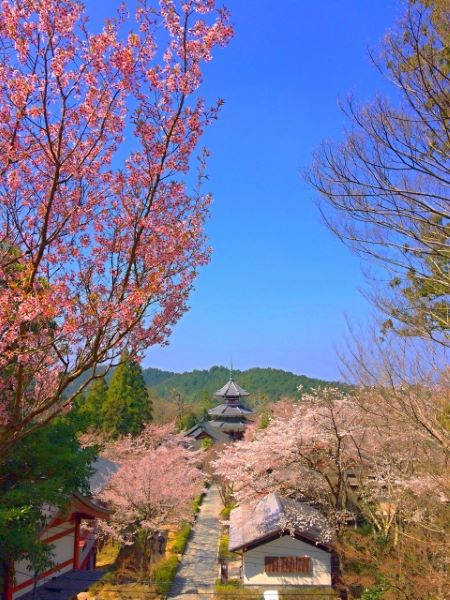
In 2025, you can see the Kongō Zaō Gongen statues at Kinpusenji Temple from October 24 to the end of November, from 8:30 am to 4 pm.
The entry fee to Zaō-dō is doubled during this time.
Tip: You can see the Kongō Zaō Gongen statues at night if you stay at one of the ryokans in Mt. Yoshino during the unveiling periods. With the doors of Zao-do Hall closed, you will attend the memorial service lit only by candlelight and worship the statues floating in the darkness.
What is Shugendō (修験道) and Kongō Zaō Gongen (金剛蔵王権現)
Shugendō (修験道), originating in Japan, is rooted in animistic beliefs and incorporates elements of Shintoism, Taoism, and Buddhism. It aims to cultivate spiritual power through ascetic practices on holy mountains. Kongō Zaō Gongen (金剛蔵王権現) is the highest object of worship in Shugendō.
Around 1,300 years ago, when En no Gyōja (役行者) founded the Kinpusenji Temple, the grand head temple of Kimpusen Shugendō Main Sect, it is said to have carved an image of Kongō Zaō Gongen on a cherry tree. En no Gyōja is a semi-legendary holy man who was respected for his practice of mountain asceticism during the second half of the 7th century. Since then, Shugendō practitioners who admired En no Gyōja made their way to Mt. Yoshino and planted cherry trees along the way, forming part of the Pilgrimage Routes in the Kii Mountain Range (紀伊山地の霊場と参詣道), which was designated a World Heritage site in 2004. Together with the route, the Zaō-dō and Nio Gate (仁王門) are also registered.
For more information on the buildings in Kinpusenji, please refer to their website HERE.
Kinpusenji Temple’s Opening Hours, Admission Fee, and Access Information
- The Zaō-dō (蔵王堂) and Nōten Daijin Ryūō-in Temple (脳天大神龍王院) are open from 8:30 am to 4 pm.
- To enter Zaō-dō (蔵王堂)
- Adults: 800 yen
- High school students: 600 yen
- Elementary school students: 400 yen
- From Yoshinoyama Ropeway Station, it is less than a 10-minute walk.
Discover Other Attractions in Mt. Yoshino

Widely considered Japan’s premier cherry blossom destination, Mt. Yoshino has a couple of spots to admire the slopes blanketed by the flowers of over 30,000 cherry trees. And as a UNESCO World Heritage site, the sacred mountain offers much more than seasonal flowers. Thousand-year-old shrines are scattered in the Shimo, Naka, Kami, and Oku Senbon areas.
So, refer to our Mt. Yoshino article to discover the attractions that inspired poets for centuries!