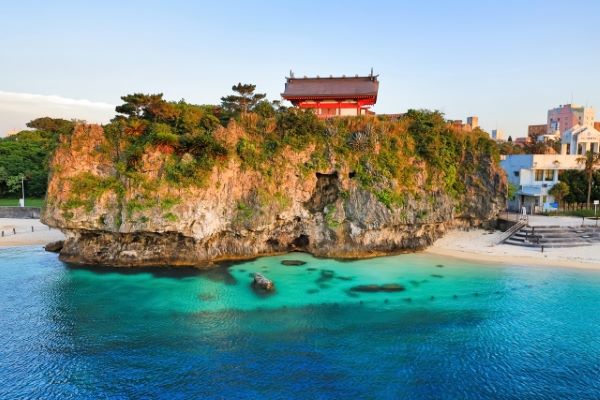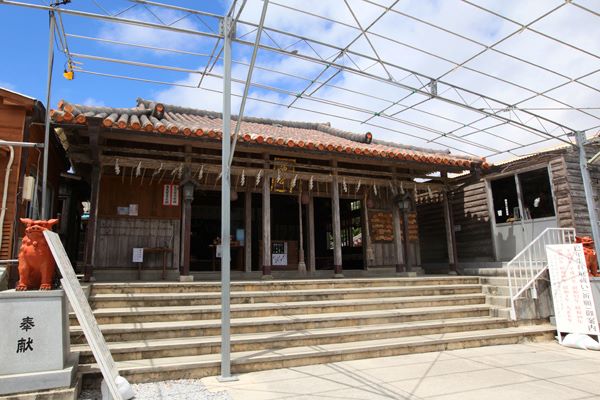
What are some of the best things to do in Morioka? Discover a hidden sanctuary of history and spirituality at Sakurayama Shrine (櫻山神社), a tranquil “power spot” nestled at the base of the Morioka Castle Ruins Park. Established in 1749, this sacred site is the spiritual heart of Morioka, dedicated to the four generations of the Nanbu clan lords who once ruled the region. Despite the history, the small shrine’s most awe-inspiring feature is the Eboshi-iwa, a massive, 7-meter-tall “Gale Rock” resembling a traditional court noble’s hat and said to protect the city from disaster. Moreover, there is a sacred stone turtle said to grant longevity and health to those who pay their respects!
Sakurayama Shrine’s History
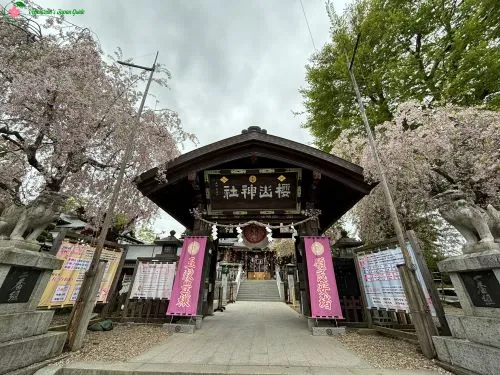
As Morioka Castle-jō Site Park was the base of the Nambu clan, it makes sense to erect a shrine to the feudal lords who greatly contributed to the domain’s development.
For the domain’s first lord, the Sakurayama Shrine was built by Morioka Domain’s 8th lord in 1749. Then, the spirit of the 3rd lord, the 11th lord, and the Nambu clan’s founder were also enshrined here. The locals call it Sakurayama-san (櫻山さん).
It is believed that the castle park receives sacred power from Mt. Iwate. Thus, by worshipping the gods enshrined here, you will receive blessings for stability in life, money, and fame.
Sakurayama Shrine’s Eboshi-iwa Rock (烏帽子岩)
In particular, there is a 7-meter-tall rock called Eboshi-iwa to the right of the worship hall at Sakurayama Shrine. It is a huge rock that has the power to make those it touches healthy.

The Eboshi-iwa first appeared during the construction of Morioka Castle. Seeing its appearance as a good omen, it has been treated as Morioka’s guardian rock (お守り石). When disasters and epidemics occur, rituals to pray for the health and safety of citizens are held in front of the rock.
While we tourists can’t perform any rituals in front of Eboshi-iwa, we can try to find a small stone that resembles it. It is said that finding such a stone and carrying it with you will prevent you from getting sick!
Even if you can’t find the Eboshi-iwa-shaped stone, you can still pray to Eboshi-iwa. It will give you the confidence and courage to face obstacles in your life.
An eboshi is the hat court nobles in Japan used to wear. The rock is named Eboshi because it looks like it.
The Turtle, Chōju Kamenosuke (長寿亀之助)
At the purification fountain at Sakurayama Shrine, there is a turtle statue called Chōju Kamenosuke. This beloved “Longevity Turtle” rests near the shrine’s main hall, serving as a symbolic guardian alongside the Eboshi-iwa.
It is said that if you scrub his shell with a scrubbing brush, your lifespan will be extended. One scrub will extend your lifespan for three years, two for six years, and three for ten years!
Festivals at Sakurayama Shrine
From May 25 to 27, visit Sakurayama Shrine for the shrine’s annual festival. Events such as a parade of warriors and traditional performing arts will be held over these three days.
In winter, on the 26th of January from 1 pm, the Donto Festival takes place. It is an event to burn the talismans, amulets, and New Year’s pine decorations from the past year and pray for everyone’s good health and prosperity in the new year. From 5:30 pm on the same day, the Naked Pilgrimage (Hadakamairi, 裸詣り) is held. The possession of men wearing white headbands and costumes made from straw with lightly chilli-spiced paper in their mouths arrives at Sakurayama Shrine. It is another ritual to pray for a prosperous year.
Sakurayama Shrine is also a hot spot for food stalls during other festivals held in Morioka, especially the Sansa Festival at the beginning of August.
Tip: Refer to our Morioka’s Top Festivals article for other grand festivals in the city!
How to Get to Sakurayama Shrine
- Sakurayama Shrine’s shrine office is open from 9 am to 5 pm.
- The closest bus stop to Sakurayama Shrine is Kenchō Shiyakusho-mae (県庁・市役所前). From Morioka Station, it is around a 20-minute walk.
Discover the Must-Visit Attractions in Morioka
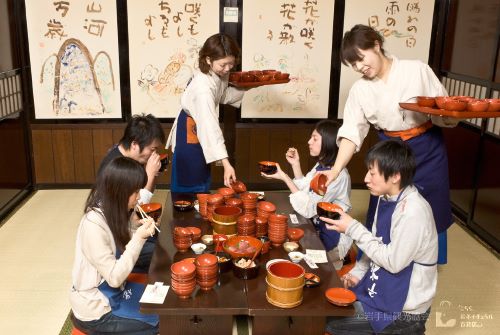
When you hear of Morioka, Wanko Soba, and Morioka cold noodles are probably the first two things that come to mind. But the city isn’t just about food. It also has many cultural attractions, hot springs, nature and more!
So refer to our Morioka article for ideas about where to stop by when visiting Iwate Prefecture’s capital city!