While millions of tourists flock to Hyogo Prefecture for the iconic white walls of Himeji Castle, few realize that an ancient, spiritual destination awaits just 25 minutes away. Rising quietly above the city, Mt. Shosha (書写山) is home to Engyōji Temple (圓教寺), a breathtaking 1,000-year-old Buddhist complex nestled deep within a dense, mossy forest. Famously featured as a filming location for The Last Samurai, this peaceful mountain offers an incredible escape from the urban crowds, complete with winding pilgrimage trails, soaring wooden temple halls, and sweeping panoramic views. Read on for everything you need to know about the mountain, from navigating the Shinki bus and ropeway to finding vegetarian-friendly options along the way.
All You Need to Know About Mt. Shosha and Engyōji
- Booking an English-Guided Tour
- How to Get to Mt. Shosha from Himeji Station
- From Himeji Station to the Foot of Mt. Shosha
- From the Sanjō Stop to Engyōji Temple
- Engyōji Temple Profile: Himeji’s Ancient Forest Sanctuary
- Other Areas in Mt. Shosha
- Mt. Shosha FAQ
Booking an English-Guided Tour
If you prefer a guide to introduce you to the charms of Himeji, including Mt. Shosha, how about joining one of the following tours?
- Himeji Half-Day Private Tour with Government-Licensed Guide
- Himeji Full-Day Private Tour with Government-Licensed Guide
- Himeji and Mt. Shosha Tour
How to Get to Mt. Shosha from Himeji Station

- 1. Buy the Combination Ticket: At Himeji Station.
Go to the Shinki Bus Terminal Information Center (神姫バス 姫路駅前案内所) located outside the North Exit, on the left. Purchase the Bus + Ropeway Combined Ticket for 1,700 yen (children under the age of 12, the set ticket is 850 yen). This saves you money and covers your round-trip bus and ropeway fares.
- 2. Board Shinki Bus No. 8: 30-minute ride.
Head to Bus Stop No. 10 at the terminal. Look for the distinct orange Shinki Bus labeled No. 8 bound for Mt. Shosha Ropeway. Ride it to the very last stop (you will be boarding your return bus trip here as well).
- 3. Take the Ropeway: 4-minute ascent.
From the bus stop, walk directly to the ropeway station. The ropeway departs every 15 minutes. Enjoy the sweeping views of Himeji as you ascend to Sanjō Station at the summit. Refer to Mt. Shosha Ropeway’s Website for the service’s timetable.
- 4. Enter the Temple Grounds: 20-minute walk or micro-bus.
From Sanjō Station, pay the 500 yen entrance/conservation fee. From here, you can take a 20-minute flat walk past the 33 Kannon statues to the main gate, or catch the local micro-bus (500 yen round trip) if you want to skip the walk.
Important:
→ There are 2 bus terminals at JR Himeji Station’s north exit. The Shinki Bus terminal is located on the left-hand side when you come out of the exit.
→ Please take note of the last ropeway service because if you miss it, you probably can’t get off the mountain until the next day…
Travel from Himeji Station to the Foot of Mt. Shosha
Mt. Shosha is a lesser-known mountain, especially for international tourists. Thus, when we visited the area, we didn’t need to queue to board the ropeway to the top of the mountain (which was great!).
There is a direct bus that you can take from JR Himeji Station (姫路駅) to Mt. Shosha to get to the ropeway (just a 30-minute trip). There is no need to rush to the ropeway station after you get off the bus, as the ropeway runs every 15 minutes.

The view during the 4-minute trip up the mountain is just amazing!
Important: Please note that during the winter months, they have a maintenance window for a couple of weeks. Before you go, please check out Mt. Shosha Ropeway’s Website to ensure the ropeway is operating.
From the Sanjō Stop to Engyōji Temple
When you reach the Sanjō stop (山上駅), check the direction indicator for Engyōji Temple (圓教寺). The temple entrance is just 600 meters from the ropeway. There are also free walking sticks for those who want to use one. The trek to the temple and its precincts is quite flat. The sticks are probably for those who want to challenge themselves hiking down the mountain.
At the entrance to Engyōji, please remember to pay the 500 yen entrance fee (300 yen for elementary school students). The money is used to help maintain the area.
If you really don’t want to walk, three bus services per hour will take you to the main temple of Engyōji. It will cost you 500 yen per person for a return trip.
Refer to the map on the left for the Micro Bus bus stop. The bus’s timetable can be found at the end of Engyōji’s access information page.
Just around the Micro Bus bus stop, there is this Big Bell of Mercy (慈悲の鐘). Even if you aren’t a Buddhist, there is no harm in hitting the bell and making a wish!
It is said that if you pray hard enough, your dream will always come true (=゚ω゚)ノ.

It is a 20-minute walk from the Big Bell of Mercy to the main gate of the temple. You will see 33 Kanon Buddha statues (left) and some Long Night Light Lanterns (right) throughout the path.
The Kanon Buddha statue symbolizes mercy, and the Long Night Light represents the light of guidance and hope.
These are all of great heritage value, so even if you aren’t Buddhist, you may still want to take a few photos with them!
Engyōji Temple Profile: Himeji’s Ancient Forest Sanctuary
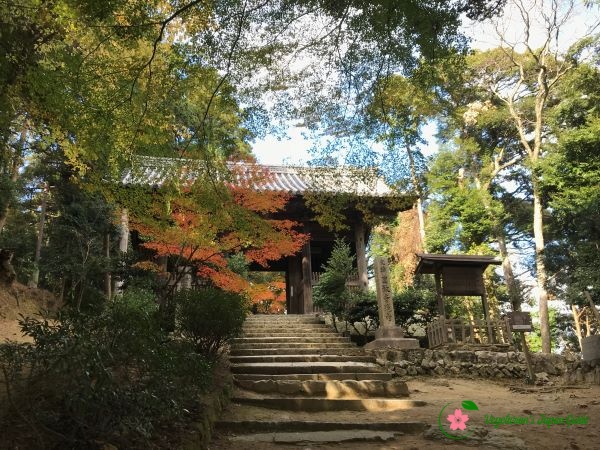
Hidden away beneath the dense canopy of Mt. Shosha sits Shoshazan Engyōji Temple, one of western Japan’s most spiritually significant Buddhist complexes. Far more than just a single building, Engyoji is a sprawling alpine sanctuary made up of atmospheric forest trails, ancient moss-covered statues, and massive wooden temple halls that have stood the test of time.
| Quick Facts | Detail |
| Founded | 966 AD by the Buddhist monk Shoku Shonin |
| Sect | Tendai Buddhism |
| Significance | No. 27 on the famous Saigoku Kannon Pilgrimage |
| Famous For | Ancient wooden architecture, Shojin Ryori (vegan monk cuisine), and Hollywood film sets |
A Thousand Years of History
Engyoji Temple was founded in 966 AD by Shoku Shonin, a holy monk of the Tendai sect of Buddhism. According to legend, Shoku was inspired to establish the temple after experiencing a vision of the goddess of mercy, Kannon, while practicing severe asceticism on the mountain.
Because of its remote mountain location, it quickly became a premier training ground for priests, scholars, and even emperors seeking a place of intense meditation away from the distractions of secular society. Along with Mt. Hiei in Kyoto and Mt. Daisen in Tottori, Engyoji was historically revered as one of the top three training centers for the Tendai sect. Today, it remains an active place of worship and serves as the 27th stop along the Saigoku Kannon Pilgrimage, a 33-temple route winding through the Kansai region.
Key Highlights & Architecture in Engyōji Temple
As you wander the gravel paths through the cedar trees, the modern world completely disappears. The temple complex is split into distinct zones, but the architectural heart of Mt. Shosha lies in the Main Hall, Maniden (摩尼殿) and Mitsunodo (The Three Halls).
From the ropeway station, you will first reach Maniden. Make sure you climb the stairs to experience the historical, peaceful atmosphere. Not to mention the view up there is quite stunning!
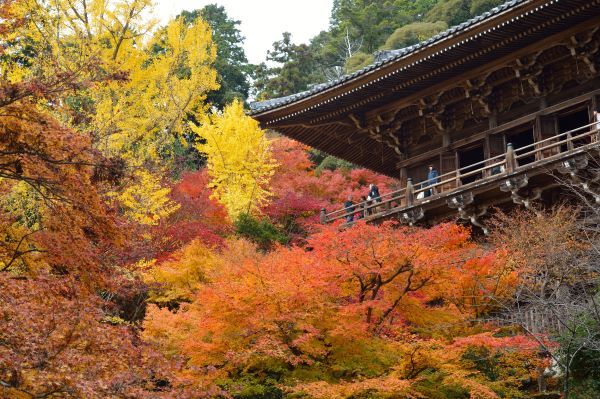
- The Main Hall, Maniden (摩尼殿): Perched dramatically on a steep hillside, the Maniden is constructed on massive wooden stilts, heavily mirroring the famous architecture of Kyoto’s Kiyomizudera. It houses a sacred statue of Kannon and features an open-air balcony overlooking the trees.
- The Mitsunodo (Three Halls, 三之堂): Deeper in the forest, three magnificent wooden structures sit in a U-shaped formation around a central dirt courtyard. These include the Daikodo (Great Main Hall, 大講堂), the Jikodo (Lodging and Dining Hall, which now houses a museum of temple treasures, 食堂), and the Jogyodo (Gymnasium/Gynmastic Hall used for walking meditations, 常行堂).
Refer to Engyōji Temple’s Website for a more detailed introduction of the attractions in the precinct.
The Hollywood Connection: The Last Samurai
If the weathered wood and towering halls of the Mitsunodo look familiar, it is likely because you have seen them on the silver screen. Engyōji Temple was famously a primary filming location for the 2003 Hollywood blockbuster The Last Samurai, starring Tom Cruise and Ken Watanabe.
The timeless, preserved nature of the Three Halls made it the perfect stand-in for the mountain retreat of the samurai leader, Katsumoto.
- Where to look: The Jikodo hall is where Tom Cruise’s character, Nathan Algren, converses with Katsumoto about the meaning of bushido and the beauty of the perfect cherry blossom.
- A Living Set: Unlike many movie sets built in studios, directors chose Engyōji for its complete lack of modern infrastructure, wires, or buildings, allowing the actors to immerse themselves in a setting that looks identical to Japan centuries ago.
The Last Samurai brought international fame to Mt. Shosha, but local directors have long known its value. The temple has also been featured prominently in various Japanese historical dramas (Taiga dramas) and samurai films.
Finding Vegan Food at Engyōji Temple

If you come to Engyōji Temple in the morning, you might be hungry by the time you reach the gate!
Why not stop at the Myokoin Engyōji Kaikan for traditional monk cooking? You will receive a unique souvenir as well!
Please refer to our Mt. Shosha’s Unique Vegan Cuisine article for more information about Shōjin Ryori (monk cooking) at Engyōji Temple!
Other Areas in Mt. Shosha
After visiting the main temple of Engyōji, take one of these paths to explore other areas of Mt. Shosha.
Each temple in the area has its own unique quirks waiting for you to discover!

For some reason, these kinds of paths remind us of the scenes in Korean period dramas. But with Korea and Japan so close geographically, it is not surprising that their ancient architecture is pretty similar.
On the way back to the ropeway station, you will pass through this gap between the old trees.
Make sure you snap a photo or two because the view from here is just breathtaking!

Mt. Shosha FAQ
Is Mt. Shosha worth visiting?
Yes, Mt. Shosha is highly worth visiting, especially as a half-day trip combined with Himeji Castle. It offers a deeply peaceful, forested escape with over 1,000 years of Buddhist history, beautiful hiking trails, and magnificent wooden temple structures that famously served as a filming location for The Last Samurai.
How long do you need at Mt. Shosha?
You should plan to spend between 2 to 3 hours on Mt. Shosha. This gives you enough time to ride the ropeway, walk the forested path to the main Engyoji Temple complex, explore the massive wooden halls, and comfortably return without rushing.
Can you get vegan or vegetarian food on Mt. Shosha?
Yes, you can experience traditional Buddhist vegetarian cuisine (Shojin Ryori) at the Engyoji Temple complex, which is naturally vegan. However, it requires a reservation several days in advance and is available only for groups of 5 or specific seasons. For casual dining, it is highly recommended to pack your own vegetarian snacks or eat near Himeji Station.
How much does it cost to visit Mt. Shosha?
A round-trip visit costs approximately 2,200 yen per adult. This includes the Shinki Bus + Ropeway combination ticket (1,700 yen) purchased at Himeji Station, plus the temple entry/mountain conservation fee (500 yen) collected at the top of the ropeway.
How do you get from Himeji Castle to Mt. Shosha?
To get to Mt. Shosha from Himeji Castle, you can catch the Shinki Bus No. 8 directly from the bus stops located outside the castle’s main entrance gates. The ride takes about 20 to 25 minutes and drops you off directly at the base of the Mt. Shosha Ropeway.
Can you walk up Mt. Shosha instead of taking the ropeway?
Yes, there are several traditional pilgrimage trails that lead up the mountain to Engyoji Temple. The most popular is the Higashi-zaka (East Trail), which takes about 40 to 50 minutes of steady uphill hiking through the forest and offers a rewarding, active alternative to the ropeway.
The Perfect Himeji 1-Day Itinerary
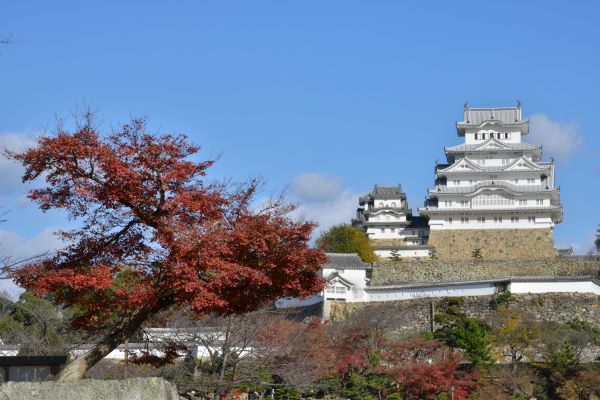
To get the absolute most out of your time in Himeji, Mt. Shosha is best experienced as part of an unforgettable single-day trip combined with the city’s main attraction. By starting your morning marveling at the soaring, pristine white walls of Japan’s most spectacular original fortress, you can easily catch a direct bus right outside the castle gates around lunchtime to spend your afternoon exploring the quiet, mystical forests of Mt. Shosha. Pairing these two contrasting sites gives you the ultimate balance of grand feudal history and tranquil spiritual nature in one seamless day.
To map out your morning, check out our Complete Guide to Himeji Castle to learn about the best photo spots, entry tips, and how to navigate the castle grounds before heading up the mountain.
Visit the Venice of Japan – Kurashiki Bikan Historical Quarter!
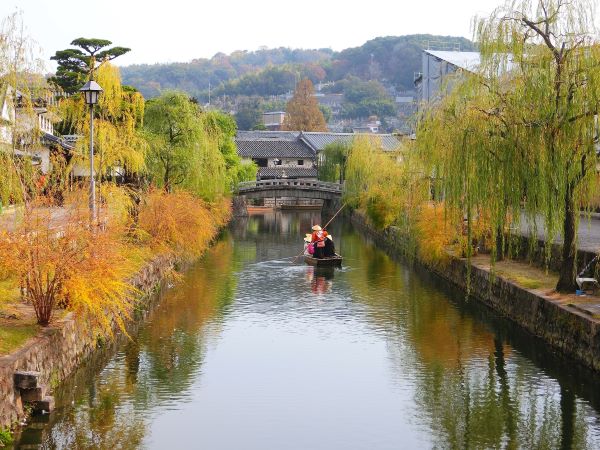
Just around a 60-minute train ride from Himeji Station, the Kurashiki Bikan Historical Quarter is famed as the Venice of Japan. The area with traditional houses and willow trees lining the banks of the canal is one of the country’s most popular filming locations. In addition to the trendy cafes and restaurants, the area also has many cultural facilities, including the Ōhara Museum of Art (which houses a collection of international masterpieces), the Kurashiki Museum of Folkcraft, and the Kurashiki Archeological Museum.
For more information to plan your visit, please refer to our article on Kurashiki Bikan Historical Quarter!