Stepping into the Kurashiki Bikan Historical Quarter (倉敷美観地区) in Okayama Prefecture feels like stepping onto a living movie set, and it often is. Affectionately known as Japan’s “Little Venice,” this breathtaking district is a popular shooting location for historical films and Japanese television dramas, thanks to its wonderfully preserved, willow-lined canals and iconic white-walled storehouses. Whether you want to drift down the water on a traditional flat-bottomed boat, shop for artisan denim, or explore world-class masterpieces at the Ōhara Museum of Art, this area offers a perfect, cinematic escape from modern city life. Moreover, Kurashiki is incredibly accommodating to vegans and vegetarians. In this comprehensive travel guide, we will cover everything you need to know to plan the perfect trip, including how to get there, the top things to do, and the best vegetarian and vegan dining options in Kurashiki Bikan Quarter.
Best Tips and Things to Do in the Kurashiki Canal District
- Kurashiki Bikan Historical Quarter Quick Facts
- Getting to Kurashiki Bikan Quarter: Train & Walking Directions
- Best Guided Tours of Kurashiki Bikan Historical Quarter
- A Brief History: From Rice Storehouse to Textile Capital
- Tenryō Coffee Shop (天領倉敷珈琲): Kurashiki’s Best Specialty Coffee Cafe
- Kurashikikan (倉敷館): The Historic Tourist Information Center
- Renting a Denim Kimono at Kurashiki Kimono Komachi (倉敷着物小町)
- Riding the Traditional Kurashiki River Boat Tour (くらしき川舟流し)
- Ōhara Museum Of Art (大原美術館): Western Masterpieces in Japan
- Shinkei-en Garden (新渓園): A Peaceful Oasis and Traditional Villa
- Yuurin-an Cafe (有鄰庵): Famous Local Desserts in Kurashiki
- Kurashiki Archaeological Museum (倉敷考古館): Discover Local Samurai History
- Visiting the Japanese Folk Toy Museum (日本郷土玩具館) in an Edo Rice Granary
- Shopping on Kurashiki Denim Street (倉敷デニムストリート): Japan’s Jeans Mecca
- Experience the Kurashiki Sansaiichi Local Farmers’ Market (倉敷三斎市)
- Best Time to Visit Kurashiki Bikan Quarter: Seasons & Festivals
- Is Kurashiki Bikan Historical Quarter Vegetarian-Friendly?
- Kurashiki Bikan Historical Quarter at Night: The Illumination and Accommodation
Tip: If you want to explore Kurashiki Bikan Historical Quarter in a Kimono or Yukata, make a booking with VASARA Kimono. Unlike most kimono rental shops in Japan, VASARA Kimono is a lot cuter and more stylish!
Kurashiki Bikan Historical Quarter Quick Facts
| Kurashiki Bikan Quarter | Fast Facts |
| Location | Okayama Prefecture, Chūgoku Region |
| Best For | Edo-period architecture, canal boat tours, denim shopping |
| Closest Station | JR Kurashiki Station (10-minute walk) |
| Top Vegan/Vegetarian Pick | Tsubame Cafe (つばめ喫茶室) |
| Best Time to Visit | Late afternoon (to catch the daytime views and nighttime illumination) |
Refer to the Kurashiki Walking Map for the information about shops, museums, and most importantly, restrooms!!!
Important: Many shops and restaurants in Kurashiki Bikan Quarter are closed on Mondays.
Getting to Kurashiki Bikan Quarter: Train & Walking Directions
Kurashiki is incredibly easy to reach, making it one of the most accessible day trips in Western Japan. Whether you are traveling with a Japan Rail (JR) Pass or using a local IC card (like Suica or ICOCA), your journey will almost always route through Okayama Station.
Here is the fastest and most seamless way to get to the historic canal district:
- 1.Travel to Okayama Station: The Main Transit Hub.
- Take the JR Sanyo Shinkansen (bullet train) directly to Okayama Station. It takes about 45 minutes from Shin-Osaka, 35 minutes from Hiroshima, and around 3.5 hours from Tokyo.
- 2.Transfer to the JR Sanyo Main Line: 15-minute train ride.
- At Okayama Station, transfer to the local JR Sanyo Main Line (bound for Fukuyama/Itozaki) or the JR Hakubi Line. Board a local or rapid train and ride it for 15 to 17 minutes until you reach JR Kurashiki Station (倉敷駅). The fare is completely covered by the JR Pass, or costs 330 yen without one.
- 3.Exit via the South Exit: Arrival at Kurashiki Station.
- 4.Walk through the Covered Arcade: 10 to 15-minute walk.
Tip: Instead of following Google Maps, we recommend walking past the local shopping streets to experience the local atmosphere and some pre-shopping, of course! After you get off at the JR Kurashiki Station, head to the covered Ebisu Dori Shotengai/Ebisu Street Shopping Street (えびす通り商店街). Ebisu Dori Shotengai is connected with Hon Dori Shotengai/Main Street Shopping Street (本通り商店街), so you can follow that pathway to the end of Hon Dori Shotengai. Once you reach the end, you will be able to see the beautiful white Japanese traditional housing and the willow trees along the edge of the canal!
Important for Bullet Train Travelers: Kurashiki’s shinkansen stop, Shin-Kurashiki Station, is located 9 kilometers outside the city center and is served only by the slower Kodama trains. Always transfer at Okayama Station instead. It saves time and drops you off much closer to the historic quarter.
Best Guided Tours of Kurashiki Bikan Historical Quarter
If you prefer a guide to introduce you to the beautiful historical township, consider joining one of the following tours.
Also, here are some activities you can consider participating in at the Kurashiki Bikan Historical Quarter.
- Half-Day Private Folk Crafts Tour
- Japanese Tea Ceremony Private Experience
- Special Ikebana Experience Guided by an Ikebana Master, Mrs. Inao
- 3-Hour Temari Workshop in Kurashiki
A Brief History: From Rice Storehouse to Textile Capital
During the Edo period (1603–1867), Kurashiki flourished as a Tenryō, a prosperous trade hub under the direct control of the Shogun. Its strategic canal system was built to transport massive yields of rice and cotton into the town’s signature white-walled storehouses (kura), from which the city gets its name. Today, because of these picturesque waterways, stone bridges, and the traditional flat-bottomed boats that still glide past weeping willows, the district is affectionately known as Japan’s “Little Venice.”
As the town modernized during the Meiji era, it successfully transitioned from a trading post into a textile powerhouse, marked by the 1889 construction of Japan’s first modern cotton mill (now Kurashiki Ivy Square). Miraculously escaping the destruction of World War II, local citizens chose preservation over modernization. They meticulously converted the centuries-old merchant storehouses into a vibrant, living district of museums, boutique shops, and cafes, seamlessly blending its Edo-period canal heritage with early 20th-century Western industrial charm.
Tenryō Coffee Shop (天領倉敷珈琲): Kurashiki’s Best Specialty Coffee Cafe
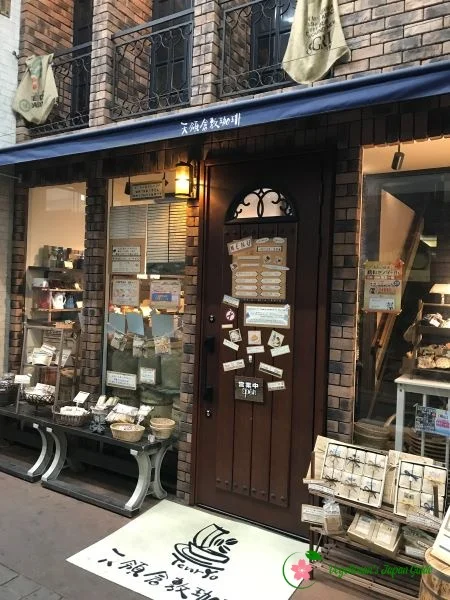
Conveniently located just a short walk from the station, right on the way to the Kurashiki Bikan Historical Quarter, this iconic roastery is the perfect spot to stop by first thing in the morning to fuel up before your sightseeing adventure begins. Whether you are looking for a perfectly roasted morning espresso, a bag of artisan coffee beans to take home, or a relaxing spot to unwind, this cafe is an absolute must-visit. It is hidden in the covered shopping street. So look carefully so you can experience Japan’s meticulous modern coffee culture firsthand.
For a full breakdown of their unique menu, seasonal drinks, and our personal favorite recommendations, head over to our complete review of Tenryō Coffee Shop in Kurashiki.
Kurashikikan (倉敷館): The Historic Tourist Information Center
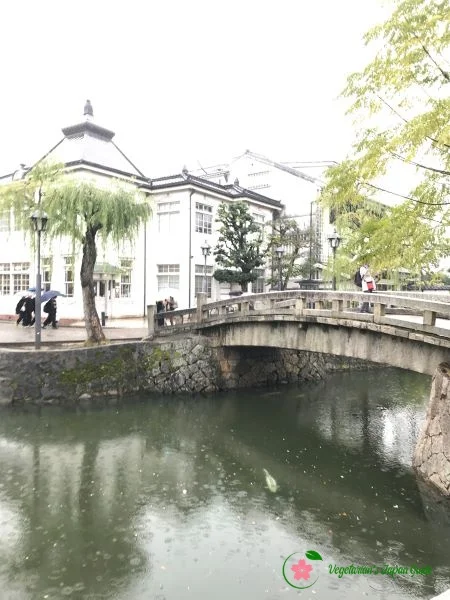
Standing prominently along the scenic canal, Kurashikikan is much more than just a place to grab a map. It is a stunning architectural transition piece. Built in 1917 as the Kurashiki Town Hall, this registered Tangible Cultural Property beautifully fuses Western wooden architecture with traditional Japanese design elements, making it an iconic focal point of the Bikan Historical Quarter. Nowadays, it is the township’s tourist information center. When you first arrive at Kurashiki Bikan Historical Quarter, head to the white building next to a little bridge for useful tourist information, including things to do in Kurashiki!
🌟 Key Highlights
- The Hub for Kurashiki River Boat Tour Tickets : This is the only place where you can purchase tickets for the famous Traditional Boat Tour of the Kurashiki River (500 yen for adults).
- Tip: Tickets sell out fast on weekends, so make this your very first stop of the day!
- A Perfect Rest Stop: The second floor offers a free, air-conditioned rest area with clean public restrooms, a water fountain, and vending machines, a perfect oasis during a long day of exploring.
- Breathtaking Views: The second-floor windows look directly down onto the Kurashiki River and Nakabashi Bridge, offering one of the most photographed vantage points in the entire district.
- Visitor Essentials: Inside, you will find helpful multilingual staff, free Wi-Fi, coin lockers, and a wealth of pamphlets on local attractions and hidden gems.
📍 Visitor Information
- Location: Right in the heart of the Bikan Historical Quarter, adjacent to the Nakabashi Bridge.
- Hours: 9:00 AM – 6:00 PM (Varies slightly by season)
- Admission: Free
Facilities at the Tourist Information Center
- Ground level: Information counter, rest area, coin lockers, toilet, sales counter for Kurashiki River Boat Tour
- Second level: Rest area, breastfeeding room, diaper changing table
Renting a Denim Kimono at Kurashiki Kimono Komachi (倉敷着物小町)
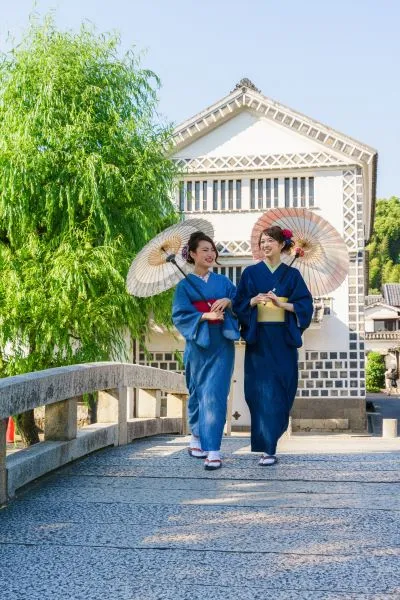
Because Okayama Prefecture is internationally recognized as the birthplace and capital of high-quality Japanese denim, there is no better way to immerse yourself in local culture than by wearing a stylized denim kimono.
Kurashiki Kimono Komachi is the nation’s very first rental shop specializing in these beautiful indigo garments, allowing you to seamlessly blend into the historic, cinematic streets. Walking along the willow-lined canals in a sharp denim kimono offers a stunning modern-meets-traditional aesthetic that looks incredible in photos.
For details on rental pricing, daytime vs. nighttime rental plans, and advice on booking your reservation in advance, check out our full Kurashiki Denim Kimono Rental Guide.
Riding the Traditional Kurashiki River Boat Tour (くらしき川舟流し)
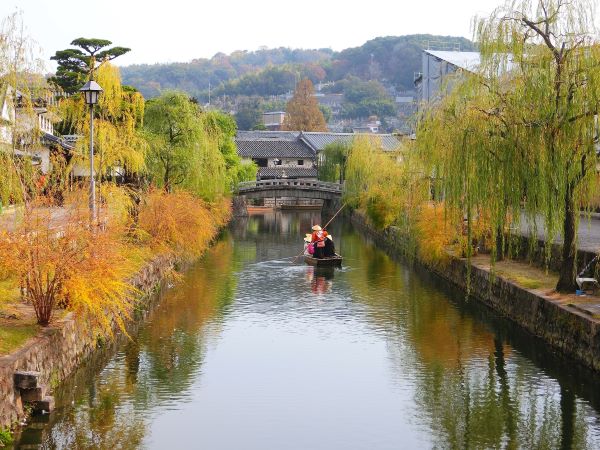
To truly appreciate why this area is nicknamed Japan’s “Little Venice,” you need to get off the stone pathways and look up at the town from the water. Taking a peaceful, 20-minute cruise down the tranquil Kurashiki River on a traditional flat-bottomed wooden boat is arguably the most iconic experience in the Bikan Quarter.
As a traditional boatman slowly rows you down the canal using a long bamboo pole, you will glide beneath historic stone bridges, drift past sweeping weeping willows, and get a spectacular, water-level view of the 400-year-old black pine trees and Edo-period white-walled storehouses. Guests are even provided with traditional straw hats (sugegasa) to wear during the trip, making for the ultimate photo opportunity.
⚠️ Crucial Insider Tip: How to Secure Tickets
This is the one detail that catches most tourists off guard: You cannot book this boat tour online or in advance. Tickets can only be purchased on the exact day of your visit, and they can sell out fast, often by mid-morning on weekends and holidays.
As soon as you arrive in the Bikan Quarter, skip the sightseeing and walk straight to the Kurashikikan/Kurashikikan Tourist Information Center (the beautiful Western-style wooden building right along the riverbank). Ticket sales open at 9 am. Buy your preferred time slot first, and then build the rest of your day’s itinerary around your scheduled boat ride.
| Logistics | Quick Guide |
| Operating Hours | First departure at 9:30 am, last departure at 5 pm (Runs every 30 minutes) To cope with the heat, the last departure from July 1 to September 30 is at 3 pm in 2026. |
| Ticket Price | Adults: 700 yen | Children (Ages 5–12): 350 yen | Under 5: Free |
| Payment Method | Cash only |
| Duration | Approximately 20 minutes (Maximum 6 passengers per boat) |
| Closures | March–December: Closed the second Monday of the month (unless it is a holiday) January–February: Operates only on weekends and public holidays New Year period: December 29 to January 3. |
Important: Please don’t be late, as your tickets will be forfeited!
If the tour is canceled due to rain, strong wind, or tourist events, you can get a refund from Kurashikikan during its business hours (refer to above).
Ōhara Museum of Art (大原美術館): Western Masterpieces in Japan
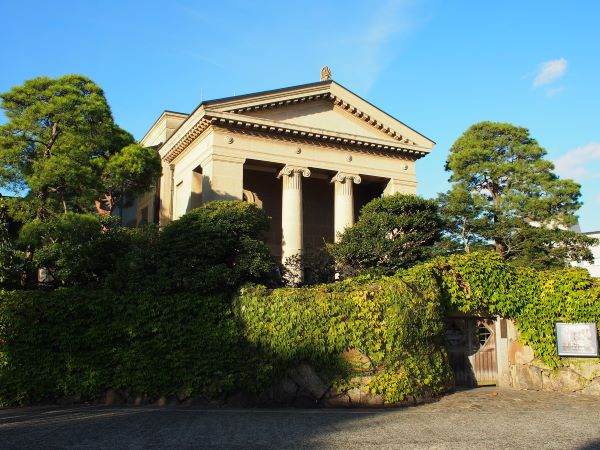
When you walk around Kurashiki Bikan Areas, it is hard to miss the Greek temple-styled building. Ōhara Museum of Art is Japan’s first privately owned Western Art Museum. More recently, it has also exhibited works by Eastern artists.
Due to the value of the collections in the museum, the American fighter pilots were explicitly instructed to avoid bombing Kurashiki during WWII!
The museum was first opened in 1930 by Magosaburō Ōhara (大原 孫三郎). In the main building, you will find works by famous artists such as Gauguin, Degas, Renoir, Matisse, Picasso, and even Pollock.
Find out more the museum’s website about the collections that you will be able to see when you visit the Ohara Museum of Art!
The gardens in the museum are also very eye-catching. There are various statues crafted by many world-renowned artists waiting to be admired!
Ōhara Museum of Art’s Opening Hours, Admission Fee, and Access Information
- Ōhara Museum of Art is open from
- 9 am to 5 pm from March to January
- 9 am to 3 pm from December to February
- The last admission is 30 minutes before the museum closes for the day.
- The museum is closed on Mondays except for August.
- If Monday is a Japanese public holiday, the museum will be open.
- Also, refer to the days marked in green on the museum calendar. The museum won’t open on these days.
- The admission fee is
- 2,000 yen for adults
- 500 yen for elementary to high school students
Shinkei-en Garden (新渓園): A Peaceful Oasis and Traditional Villa
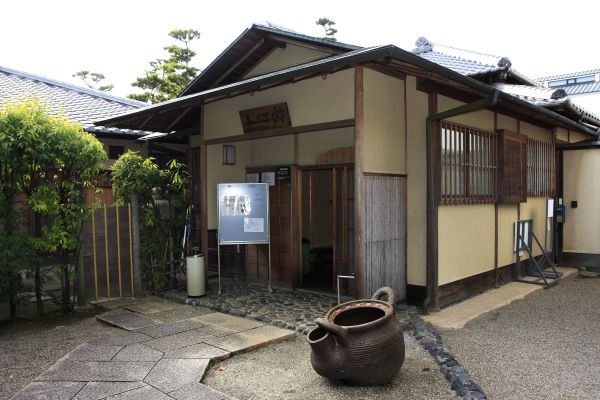
The Shinkei-En, next to the Ōhara Museum of Art, is another point of interest in relation to the Ōhara family.
This villa was built in 1893 in celebration of the 60th birthday of Kōshirō Ōhara, the first president of Kurabo Industries Ltd. (倉敷紡績). After Magosaburō Ōhara took over the family business, he gifted this villa to the city of Kurashiki for the locals to enjoy!
Entry to the facility is free. However, not all areas are open each day. Please refer to the noticeboard at the entrance to confirm whether any areas are closed to the public on the day of your visit (see photo above).
Apart from the well-maintained Japanese garden, designed by a famous designer at the time, you will want to spend some time in the Great Hall, Keikendō (敬倹堂), if it isn’t rented for events.
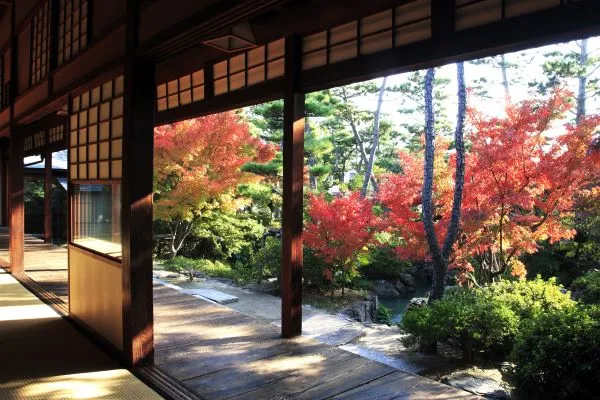
You really don’t get that many chances to enter a hall that is as big as the size of 56 tatami mats!
One tatami mat is about 0.9 m by 1.8 m, though it varies slightly by region.
From late February to early March, there will be 30 sets of Hina Dolls on display as part of the Kurashiki Hina Matsuri Festival (倉敷雛めぐり). If you are going to visit Kurashiki during this time of the year, Shinkei-En is definitely a place you want to add to your itinerary!
Shinkei-En’s Opening Hours and Access Information
- Shinkei-En is open from 9 am to 5 pm daily except from December 29 to January 3.
- It is free to enter Shinkei-En.
- Shinkei-En is a 13-minute walk from Kurashiki Station.
Yuurin-an Cafe (有鄰庵): Famous Local Desserts in Kurashiki
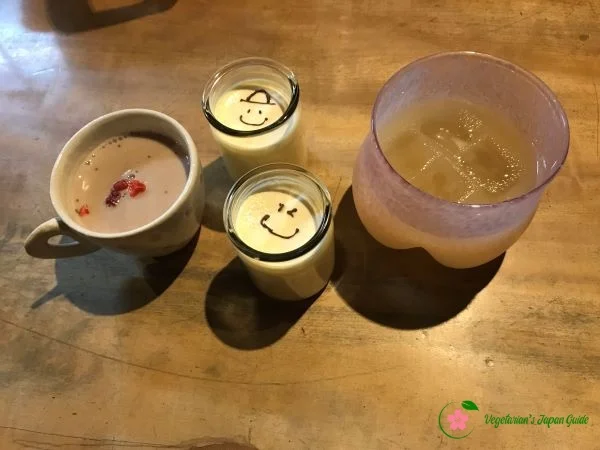
Beyond the beautiful historic architecture of the townhouse, the main reason people visit this cafe is to try their legendary, limited-edition “Happiness Pudding”. These adorable, hand-decorated custard puddings have become a viral sensation across Japan due to a wonderful local rumor: if you take a photo of your pudding, look at it two weeks later, and recall your trip, a wave of good fortune will come your way! Because the cafe only makes a strictly limited batch each day, they sell out fast.
For an insider look at their full menu, tips on beating the crowds, and our personal review of these lucky treats, check out our complete Guide to the Yuurin-an Cafe and Happiness Pudding.
Kurashiki Archaeological Museum (倉敷考古館): Discover Local Samurai History
Opposite the Kurashikikan (Kurashiki Tourist Information Center) and next to the Nakahashi Bridge in the Bikan area, you will find the Kurashiki Archaeological Museum, a house with black-and-white brickwork. There, you can learn about Okayama Prefecture’s history.
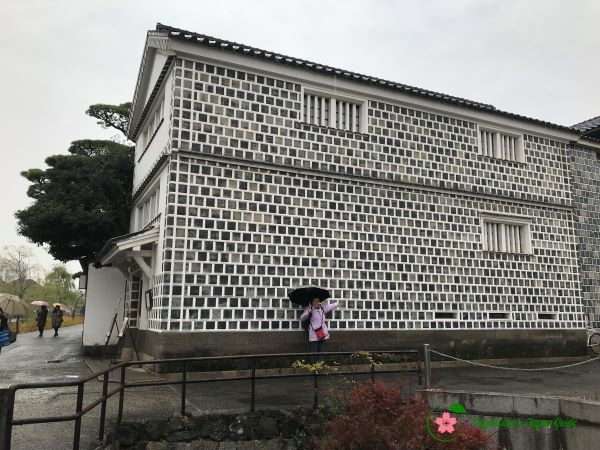
It has a suite of collections and artifacts from the Paleolithic period to the Kamakura period (1192 – 1333) as well as the Muromachi period (1336 – 1573). These historical periods marked the emergence of the samurai, the warrior caste, and the establishment of feudalism in Japan.
You can check out pictures of what is on exhibit on museum’s website. Though unfortunately, there is not yet an English version.
Kurashiki Archaeological Museum’s Opening Hours, Admission Fee, and Access Information
- Kurashiki Archaeological Museum is open from 10 am to 3 pm daily from Friday to Sunday except from December 27 to January 2.
- The admission fee is
- 500 yen for adult
- 400 yen for senior high school and university students
- 300 yen for elementary and junior high school students
- Access to special exhibitions will incur additional expenses.
- The museum is a 15-minute walk from Kurashiki Station.
Visiting the Japanese Folk Toy Museum (日本郷土玩具館) in an Edo Rice Granary
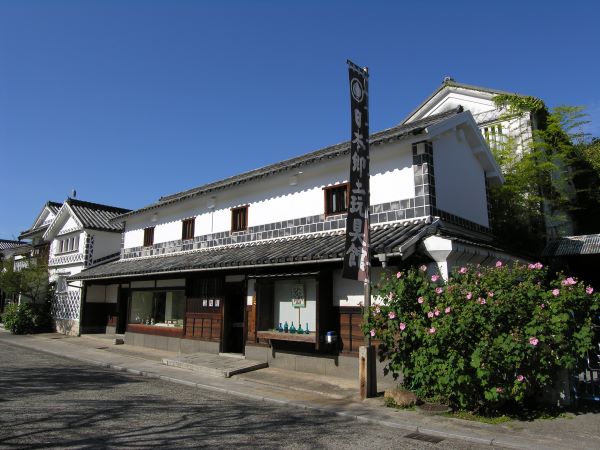
When you stroll beside the canal, you might pass a traditional white Japanese house. This building houses a large display of Japanese Folk Toys.
The Japanese Folk Toy Museum has around 30,000 folk toy collections from various regions and periods of Japan (from the 1600s to the present). The building was a rice granary during the Edo period, so the display rooms aren’t as large as you might expect.
Check out the display room on museum’s website. You will be amazed!!
The best thing about this museum is that you won’t need to pay to walk around its courtyard, terrace, and gallery. You only need to pay for admission to access the facility’s exhibition space.
Japanese Folk Toy Museum’s Opening Hours, Admission Fees, and Access Information
- The Japanese Folk Toy Museum is open from 10 am to 5 pm daily except on the 1st of January.
- The last admission is at 4 pm
- The admission fee is
- 600 yen for adults
- 300 yen for high school and university students
- 100 yen for elementary school students
- The museum is a 15-minute walk from Kurashiki Station.
Please visit the Japanese Folk Toy Museum’s website for detailed business hours for each area.
Shopping on Kurashiki Denim Street (倉敷デニムストリート): Japan’s Jeans Mecca
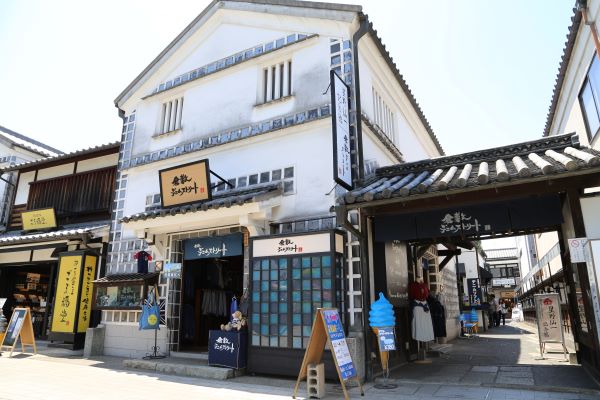
Kojima District, about 40 minutes by train from JR Kurashiki Station, is the birthplace of Japan’s denim industry.
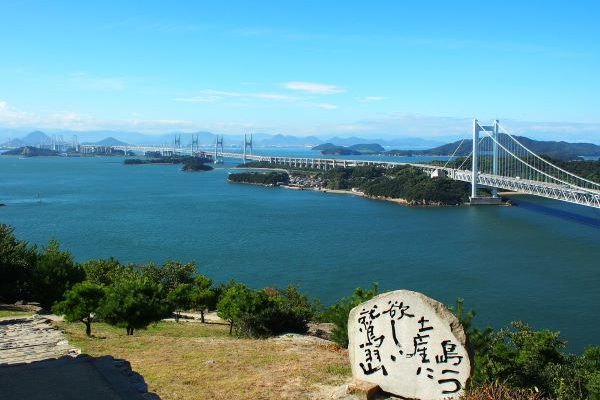
If you don’t have time to admire the panorama view of the Seto Ōhashi Bridge (瀬戸大橋) and the Seto Inland Sea, or have your free cosplay session at the Kojima Student Uniforms, then at least drop by this part of the Bikan Quarter for some denim shopping and enjoy some dark blue-colored ice cream or a light meal!
The Kurashiki Denim Street is just a one-minute walk from the Japanese Folk Toy Museum!
Experience the Kurashiki Sansaiichi Local Farmers’ Market (倉敷三斎市)
There are quite a few shopping streets around JR Kurashiki Station.
Currently, from 8 to 11 am on the 3rd Sunday of each month, farmers’ markets offer fresh local produce and processed food made by smaller local businesses. If you plan to come to Kurashiki on a day when the market would open, why not get up a bit early and do a treasure hunt around the station?
Best Time to Visit Kurashiki Bikan Quarter: Seasons & Festivals
- Kurashiki Hina Matsuri Festival (倉敷雛めぐり): from late February to early March
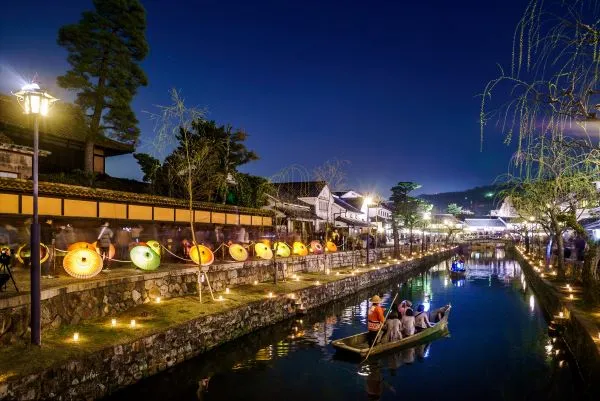
- Kurashiki Haruyo Akari (倉敷春宵あかり): from early to the end of March
- Cherry blossom: from late March to early April
- Autumn foliage: from mid to late November
Is Kurashiki Bikan Historical Quarter Vegetarian-Friendly?
One of the biggest worries for plant-based travelers in Japan is finding safe, delicious food while exploring historical areas. Fortunately, the Kurashiki Bikan Quarter is surprisingly accommodating for vegetarians and vegans, if you know exactly where to look.
From traditional storehouses converted into fully vegan cafes to historic Japanese inns (ryokan) serving plant-based versions of local delicacies, you don’t have to settle for convenience store snacks here.
Top Plant-Based Dining Picks in the Bikan Area
- Tsubame Cafe (つばめ喫茶室): A beautifully renovated traditional storehouse that serves a stellar, 100% vegan Japanese Hamburger Set (Veggie Hamburger Teishoku). It is packed with fresh, locally sourced Okayama vegetables and features phenomenal dairy-free desserts.
- Boulangerie mugi & Cafe mugi: A wildly popular local bakery blending seamlessly into the historic streetscape. They use natural yeast and zero animal fats or additives in their artisanal loaves, making it a fantastic morning stop for fresh, fluffy bread.
- sami (然味): Tucked away in a tranquil, 100-year-old townhouse, this hidden gem offers high-end, innovative fusion course menus that can easily be made entirely vegan with an advance reservation.
Because navigating menus in Japan can be tricky, we have put together a comprehensive breakdown of the area’s culinary scene. For exact locations, business hours, English-speaking staff availability, and even more plant-based eateries, check out our complete guide to Vegetarian Dining at Kurashiki Bikan Quarter.
Kurashiki Bikan Historical Quarter at Night: The Illumination and Accommodation
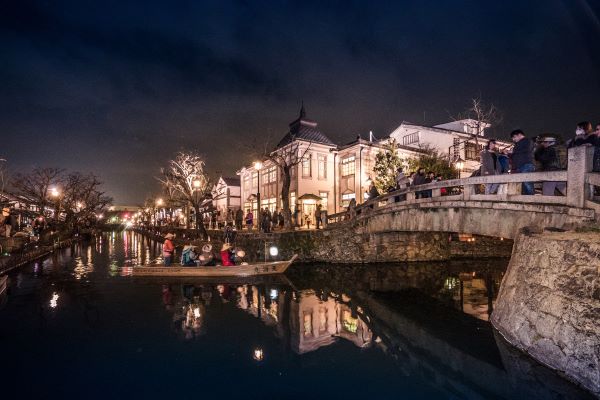
To truly experience the magic of Kurashiki after the day-trippers leave and the historic canals light up with soft illumination, consider spending the night in a beautifully preserved machiya inn. These historic merchant townhouses have been elegantly transformed into boutique luxury accommodations, seamlessly blending traditional wooden architecture, tatami flooring, and sliding paper doors with modern Western comforts. Sleeping in a piece of living history is the ultimate way to elevate your trip to Okayama.
To discover the absolute finest preserved properties, compare room amenities, and find the perfect traditional stay for your budget, dive into our curated list of The Best Machiya Inns at Kurashiki Bikan Quarter.
Find out More Attractions in the Greater Kurashiki City
While the Bikan Historical Quarter is undoubtedly the crown jewel of the city, Kurashiki has so much more to offer beyond the historic canal banks, from the panoramic sunset views over the Seto Inland Sea at Mt. Washuzan to the bustling artisan jeans workshops of the nearby Kojima District.
To help you piece together the perfect itinerary, calculate transit budgets, and discover hidden attractions across the wider region, we have compiled everything into one master resource. Head over to our comprehensive Kurashiki City Travel Planning Guide to start mapping out your ultimate Western Japan adventure today!