No trip to Himeji is complete without marveling at the iconic, brilliant white facade of Himeji Castle. But while most tourists head straight back to the train station after touring the fortress, those in the know step right next door into Kōkōen Garden (姫路城西御屋敷跡庭園 好古園). Opened to commemorate the history of Himeji City, this stunning complex features nine separate, walled traditional Japanese gardens built directly on the archaeological footprint of a samurai lord’s former West Residence. Walking through its grand wooden gates feels like stepping straight back into the Edo period. Whether you are looking to admire the colorful koi fish, photograph the sweeping castle views from the classical Garden of the Hill and Pond, or enjoy a vegan-friendly matcha ceremony at the historic Sōju-an tea house, this comprehensive Kōkōen Garden guide covers everything you need to know, from cheap combo ticket hacks to plant-based travel tips.
All You Need to Know Before Visiting Kōkōen Garden
- Why You Can’t Miss Kōkōen Garden Next to Himeji Castle
- The Nine Walled Gardens of Kōkōen: A Visual Guide
- The Vegan-Friendly Tea House Sōju-An Experience (茶室 双樹庵)
- Kōkōen Garden Seasonal Events & Night Illuminations
- Vegetarian & Vegan Dining Near Kōkōen Garden
- Kōkōen Garden Hours, Fees, and Combo Tickets
- How to Get to Kōkōen Garden from Osaka and Kyoto
- Booking an English-Guided Tour
Why You Can’t Miss Kōkōen Garden Next to Himeji Castle
No trip to Himeji is complete without marveling at the iconic, white facade of Himeji Castle. But while most tourists head straight back to the station after touring the fortress, those in the know step right next door into Kōkōen Garden.
Opened in 1992 to commemorate the 100th anniversary of Himeji City, Kōkōen is not just a single garden. It is a stunning complex of nine separate, walled traditional Japanese gardens. Built directly on the archaeological footprint of the samurai lord’s former West Residence, walking through its grand wooden gates feels like stepping straight back into the Edo period.


The garden was designed and supervised by the famous landscape scholar, Professor Makoto Nakamura of Kyoto University, and the 15th Grand Tea Master of Urasenke Tea School. Based on the original layout of the historical residences and passageways, they artfully used the remains of 16th-century walls and passageways to design 9 distinct gardens, including a tea house.
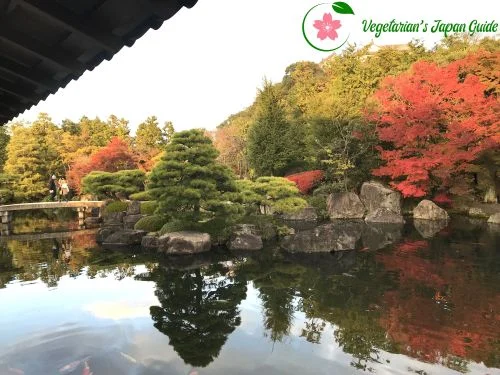
At Kōkōen’s unique gardens, you can expect to see and experience many of Japan’s garden elements, including bamboo, pine trees, various water features, and Koi fish!
The Perfect Companion to Your Himeji Itinerary
While the castle showcases the grand, defensive military architecture of feudal Japan, Kōkōen offers a peaceful, sensory counterweight. Each of the nine interconnected gardens represents a distinct landscape style from the Edo era, including:
- The Garden of the Lord’s Residence: Featuring a massive pond filled with over 250 vibrant koi fish and a dramatic cascading waterfall.
- The Garden of Summer Trees & The Garden of Autumn Leaves: Meticulously landscaped flora designed to peak during Japan’s most beautiful seasonal shifts.
- The Garden of Bamboo: A tranquil, towering grove that rivals the crowded pathways of Kyoto’s Arashiyama.
The Nine Walled Gardens of Kōkōen: A Visual Guide

Kōkōen is unique because it uses the historical layout of ancient samurai estates and pathways excavated by archaeologists. Instead of a single massive open space, traditional mud-and-tile walls (tsuiji-bei) divide the complex into nine distinct, themed micro-gardens.
Here is a breakdown of what you will experience as you walk through the complex, organized by design style and seasonal highlights.
Side-by-Side Comparison of Kōkōen’s Nine Gardens
Below is a summary of Kōkōen’s Nine Gardens. You can refer to Kōkōen garden map for their locations.
| Garden Name (English & Official Japanese) | Primary Landscape Feature | Best Season to Visit | Aesthetic Vibe |
| 1. Garden of the Lord’s Residence (Oyashiki-no-Niwa / 御屋敷の庭) | Massive pond, waterfall, and 250+ colorful koi fish | Year-Round (Stunning in Autumn) | Grand, majestic, and dynamic |
| 2. Tea Ceremony Garden (Cha-no-Niwa / 茶の庭) | Winding stepping stones leading to Sōju-an Tea House | Spring & Autumn | Intimate, rustic, and deeply peaceful |
| 3. Garden of the Flat Landscape (Nagare-no-Hiraniwa / 流れの平庭) | Stream flowing through low, elegant shrubs and minimalist lawns | Spring | Serene, uncluttered, and expansive |
| 4. Garden of the Seedlings (Nae-no-Niwa / 苗の庭) | Edo-period crop nursery and historical vegetable plots | Early Summer | Agricultural, educational, and rustic |
| 5. Garden of Summer Trees (Natsuki-no-Niwa / 夏木の庭) | Deciduous trees selected for deep green summer foliage and autumn contrast | Summer & Autumn | Cool, refreshing, and heavily shaded |
| 6. Garden of Pine Trees (Matsu-no-Niwa / 松の庭) | Sculpted black and red pines mirroring a coastal shore | Winter (Snow scenes) | Classical, structured, and timeless |
| 7. Garden of Flowers (Hana-no-Niwa / 花の庭) | Wild, historic flower species cultivated since the Edo period | Late Spring to Summer | Vivid, colorful, and naturally wild |
| 8. Garden with a Hill and Pond (Tsukiyama Chisen-no-Niwa / 築山池泉の庭) | A classical topography featuring an artificial hill, winding stream, and stone lanterns | Autumn (Peak November) | Traditional, multi-leveled, and scenic |
| 9. Garden of Bamboo (Take-no-Niwa / 竹の庭) | Towering bamboo grove centered around a stone lantern | Year-Round | Mystical, whispering, and vertical |
Three Must-See Highlights for Your Walk in Kōkōen
If you are short on time and cannot explore all nine, make sure your walking path hits these three crowd favorites:
- The Bridge View in the Lord’s Residence: The largest garden features a stunning, wooden Roofed Corridor bridge (Wadari-Rōka渡り廊下). Stand in the center of the bridge to watch the waterfall cascade into the pond while hundreds of shimmering koi fish swim right beneath your feet.
- The Autumn Leaves Reflection: If you visit during late November, the Garden of Autumn Leaves puts on an incredible night illumination. The fiery red maples reflect perfectly off the mirror-like streams, creating a photographer’s paradise.
- The Bamboo Path Seclusion: Tucked toward the back, the Garden of Bamboo features roughly 15 different varieties of bamboo. It offers the same mystical, towering atmosphere as Kyoto’s famous Arashiyama grove, but with a fraction of the tourist crowds.
The Vegan-Friendly Tea House Sōju-An Experience (茶室 双樹庵)

When you visit Kōkōen Garden, you definitely can’t miss out on its tea house!
Tucked away in one of Kōkōen’s most peaceful corners sits Sōju-an, an authentic Japanese tea house built to mirror the elegant sukiya-zukuri architectural style of the Edo period. Designed with precision by the 15th Grand Tea Master of Urasenke Tea School, the tea house is perfectly angled so that guests can look up and view Himeji Castle’s main keep looming majestically over the garden’s lush foliage.
Visiting Sōju-an is a wonderfully low-stakes, accessible way to experience a traditional Japanese tea ceremony without needing a prior reservation or extensive knowledge of formal etiquette. You simply remove your shoes at the entrance, sit on the traditional tatami straw mats, and absorb the serene view while the host in a traditional kimono serves you a bowl of freshly whisked, frothy Uji matcha (powdered green tea) alongside a seasonal wagashi (Japanese sweet).
The sweets you are served are designed to reflect the current season, shaped like a cherry blossom in spring, a bright green maple leaf in summer, or a fiery orange leaf in autumn. It is intensely sweet, purposefully crafted to balance out the deep, earthy bitterness of the hot matcha tea that follows.
Are the Sweets Safe for Vegetarians and Vegans?
For plant-based travelers in Japan, the hidden presence of animal products (like dashi fish stock, lard, or gelatin) in seemingly innocent foods can cause constant travel anxiety. Fortunately, the tea house at Kōkōen is an incredibly safe and welcoming stop.
Historically, Japanese tea ceremony sweets developed alongside Zen Buddhism, which adheres to a strict plant-based lifestyle (Shojin Ryori). Because of this centuries-old heritage, authentic wagashi rely entirely on plant components rather than dairy, eggs, or animal gelatin.
| Common Wagashi Ingredients | What It’s Made Of | Is it Vegan? |
| Anko (餡子) | Sweet paste made from boiled azuki beans and sugar | Yes |
| Agar / Kanten (寒天) | A gelatinous substance derived completely from red algae seaweed | Yes |
| Mochi / Joshinko (上新粉) | Glutinous rice flour or sweet rice cake dough | Yes |
| Shiro-an (白餡) | Sweet white bean paste made from butter beans or lima beans | Yes |
But note that in Japan, most standard white and brown sugars are not guaranteed to be vegan. As in the US, many sugar manufacturers filter their cane sugar with bone char (animal bone char) to bleach and decolourize it.
Sōju-An Opening Hours and Matcha Tea Prices
Because Sōju-an operates as a public tea house within a municipal garden, it is much more affordable than private tea ceremonies in Kyoto or Tokyo.
- Opening Hours: 12 pm to 4 pm
- The last admission is at 3:40 pm.
- Sōju-An is closed between December 21 and January 5.
- Admission / Cost: 700 yen (includes one bowl of matcha and one seasonal sweet). You purchase a separate token for the tea house at an automated vending machine right inside the Sōju-an entrance.
- Seating Options: While traditional tatami floor seating is the default, they also offer ryurei-shiki (table-and-chair seating) if you find it uncomfortable to sit cross-legged or on your knees for extended periods.
How to fully enjoy the ritual: Eat the entire sweet first using the small wooden pick provided. Once your mouth is coated in the sweet bean paste, lift the matcha bowl with both hands, rotate it slightly clockwise to avoid drinking from the “front” or face of the bowl design, and sip the tea to let the bitter and sweet flavors harmonize perfectly.
Kōkōen Garden Seasonal Events & Night Illuminations
- Cherry Blossom Night Viewing Event (夜桜会)
- The 2026 Kōkōen Garden Cherry Blossom Night Viewing Event is held from 6 pm to 8 pm from March 27 to 29 and April 3 to 5.
- The last admission is at 7:30 pm.
- The 2026 Kōkōen Garden Cherry Blossom Night Viewing Event is held from 6 pm to 8 pm from March 27 to 29 and April 3 to 5.
- Grand Tea Ceremony Exhibit (大茶の湯)
- Formal tea ceremony is performed at Souju-an on April 19 and October 25 in 2026. Anyone is welcome to witness the ceremony on the day.
- Autumn Leaves Night Viewing (紅葉会)
- The 2026 Kōkōen Garden Autumn Leaves Night Viewing Event is held from November 17 to December 6. During this period, the garden is closed at 8 pm.
- The last admission is at 7:30 pm.
- The 2026 Kōkōen Garden Autumn Leaves Night Viewing Event is held from November 17 to December 6. During this period, the garden is closed at 8 pm.
Refer to Kōkōen Garden’s Official Website for upcoming events!
Vegetarian & Vegan Dining Near Kōkōen Garden
Finding authentic, plant-based meals in Japan can be a challenge because dashi (fish broth) is often used in everyday cooking. Fortunately, the area surrounding Himeji Castle and JR Himeji Station has some fantastic, accommodating options if you know where to look.
Whether you are looking for a quick macrobiotic lunch right outside the castle gates, a cozy vegan cafe hidden in the local shopping arcades, or traditional shojin ryori (Buddhist vegetarian cuisine) up on nearby Mt. Shosha, you won’t have to settle for just convenience store snacks.

Because restaurant hours and English menu availability change frequently, we have compiled a complete, up-to-date culinary guide to help you navigate your day trip without any cross-contamination worries.
👉 Read our full guide: The Best Guide to Himeji’s Vegan-Friendly Restaurants to discover exactly where to eat, complete with walking maps, opening hours, and must-try dishes.
Kōkōen Garden Hours, Fees, and Combo Tickets
Planning your visit to Kōkōen Garden is incredibly straightforward because it sits directly adjacent to Himeji Castle’s main gate. However, navigating the ticketing options strategically can save you a significant amount of pocket change.
- Kōkōen Garden is open from 9 am to 5 pm (last admission at 4 pm).
- The garden is closed on December 29 and 30.
- Note: the opening hours may change if there are planned events on the day.
| Ticket Type | Adults (Ages 18+) | Children & Teens (Under 18) Free otherwise (Be sure to bring a valid photo ID/passport to verify your age at the gate!) |
| Kōkōen Garden Ticket Only | ¥400 | Free |
| Himeji Castle Ticket Only | ¥2,500 | Free |
| Himeji Castle + Kōkōen Combo Ticket | ¥2,600 | Free |
How to Get to Kōkōen Garden from Osaka and Kyoto
Reaching the garden from the main regional transit hubs is completely stress-free. If you are arriving from Osaka (around 60 minutes via JR Special Rapid Service) or Kyoto, your journey will terminate at JR Himeji Station.
Option 1: Departing From Osaka
The journey from Osaka changes slightly depending on your starting station.
- The Lightning Fast Way (Shinkansen): Head to Shin-Osaka Station. From here, you can board the JR Sanyo Shinkansen. The blistering commute takes a mere 23 to 30 minutes and costs approximately ¥3,520 to ¥4,270 one-way.
- The Budget-Friendly Way (Local JR Line): Head to Osaka Station (located in the Umeda commercial district). Board the direct JR Special Rapid Train (Shin-Kaisoku) on the JR Kobe Line. It takes exactly 1 hour and costs just ¥1,490. No train transfers are necessary.
- Non-JR Alternative: If you hold a Kansai Railway Pass, you can catch the Hanshin Limited Express from Osaka-Umeda Station straight to Sanyo-Himeji Station. It is the slowest route (100 minutes, ¥1,320), but it is fully covered under non-JR network passes.
Option 2: Departing From Kyoto
Getting to Himeji from Kyoto follows the same train networks but takes a bit longer due to the extra distance.
- The Lightning Fast Way (Shinkansen): From Kyoto Station, you can hop right onto direct Hikari or Nozomi Shinkansen trains. The journey takes around 45 to 55 minutes and costs roughly ¥5,000 for a one-way unreserved ticket.
- The Budget-Friendly Way (Local JR Line): Catch the direct JR Special Rapid Train (Shin-Kaisoku) straight from Kyoto Station. It takes 90 minutes to pull into Himeji, costing ¥2,210 one-way. This train runs frequently (roughly every 15 minutes).
🎟️ The Rail Pass Rules (Don’t Get Caught Off Guard)
💡 Regional JR Passes (Highly Recommended): If you are only touring the Kansai area, skipping the national pass and purchasing a regional pass, such as the JR Kansai Wide Area Pass or a 1-Day JR Kansai Area Pass is highly economical. The Wide Area variants actually allow you to ride all shinkansen trains, including the Nozomi, between Shin-Osaka and Himeji.
🗺️ Navigating from Himeji Station to Kōkōen Garden
Once your train arrives at Himeji Station (姫路駅), getting to the garden is completely foolproof. Kōkōen Garden is next to the famous Himeji Castle.
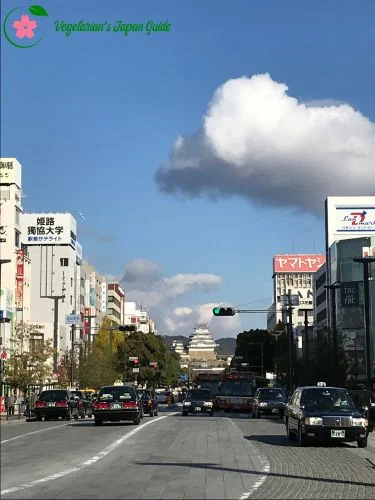
- Exit out of the station’s North Exit. The moment you step outside, you will see the magnificent white castle towering prominently at the absolute end of the main boulevard. Simply walk straight down Otemae-dori Street for about 15 to 20 minutes.
- To get to Himeji Castle from Himeji Station, take a bus operated by Shinki Bus (神姫バス) from bus stop numbers 6 to 10. Please get off at Himejijō Ōtemon-mae (姫路城大手門前).
- The buses that depart from the stops arrive approximately every 5 minutes.
- From the bus stop, it is only a 5-minute walk.
- The one-way bus fare is 100 yen.
Essential Kōkōen Garden Visitor Amenities
Before you step past the entrance gates, keep these convenient on-site amenities in mind to maximize your comfort:
- Luggage Storage: Exploring traditional gardens with heavy bags can ruin the peaceful atmosphere. Convenient ¥100 coin lockers are located directly in front of the garden’s management office near the main gate.
- Accessibility: Unlike Himeji Castle, which requires climbing steep, narrow wooden ladders inside the main keep, Kōkōen Garden is wheelchair and stroller friendly. Meticulously paved pathways wrap through the individual garden gates, and free rental wheelchairs are available on a first-come, first-served basis at the front office.
Best English-Guided Tours of Himeji Castle and Kōkōen
If you would like an English-speaking tour guide to introduce Himeji Castle and Kōkōen Garden, make a booking with one of the two tour guide groups.
In addition, here is a list of tours you can book to explore Himeji City, including Himeji Castle and Kōkōen Garden.
- Himeji Half-Day Private Tour with Government-Licensed Guide
- Himeji and Mt. Shosha Tour
- Himeji Full-Day Private Tour with Government-Licensed Guide
- Himeji Castle Easy Bike Tour: Samurai History, Garden & Matcha
- Himeji Castle and Traditional Sake Breweries Tour
- Walking Tour in Himeji Castle Garden and Aizome Indigo Dyeing
- Himeji: Private Guide Tour of the Castle from Osaka or Kyoto
Tours That Explore Both Himeji and Kobe!
Make it a Full Day Trip: The Ultimate Mountain Escape
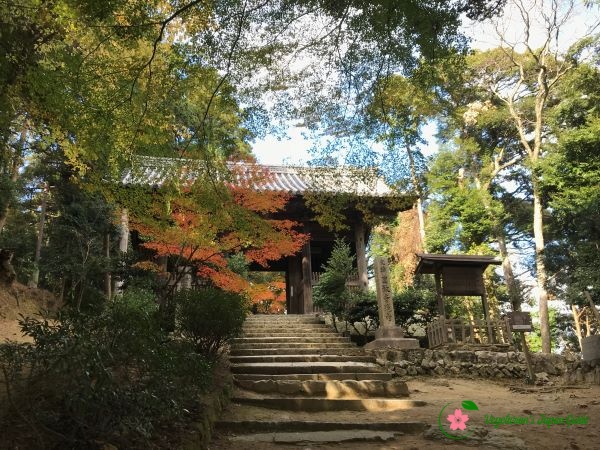
If you want to experience the deep spiritual roots of Japanese vegetarianism, pair your castle visit with a side trip to Mt. Shosha. Located just 25 minutes from the castle gates, this peaceful mountain is home to Engyo-ji, a 1,000-year-old temple complex famous as a filming location for The Last Samurai. Beyond its massive wooden structures and serene forest trails, Mt. Shosha is one of the few places in Hyogo where travelers can experience authentic Shojin Ryori, traditional Buddhist vegetarian cuisine served on historic lacquerware by the temple monks.
👉 Plan your journey: Check out our complete guide to Mt. Shosha to discover how to catch the ropeway, reserve a temple lunch, and explore this stunning mountain oasis.
Visit the Venice of Japan – Kurashiki Bikan Historical Quarter!
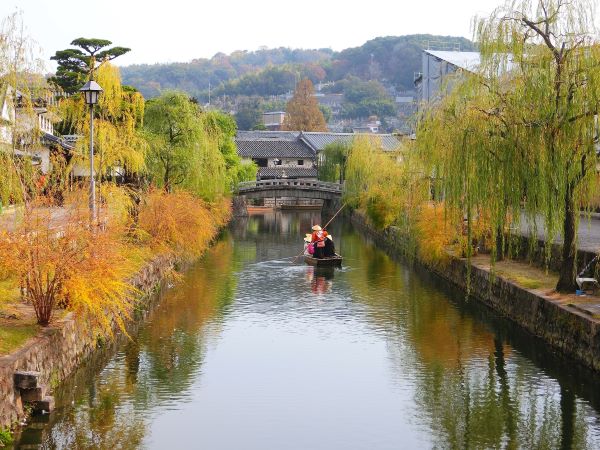
Just around a 60-minute train ride from Himeji Station, the Kurashiki Bikan Historical Quarter is famed as the Venice of Japan. The area with traditional houses and willow trees lining the banks of the canal is one of the country’s most popular filming locations. In addition to the trendy cafes and restaurants, the area also has many cultural facilities, including the Ōhara Museum of Art (which houses a collection of international masterpieces), the Kurashiki Museum of Folkcraft, and the Kurashiki Archeological Museum.
For more information, please refer to our article on Kurashiki Bikan Historical Quarter!