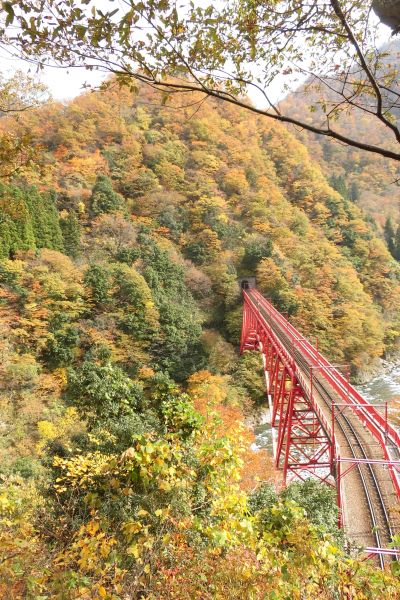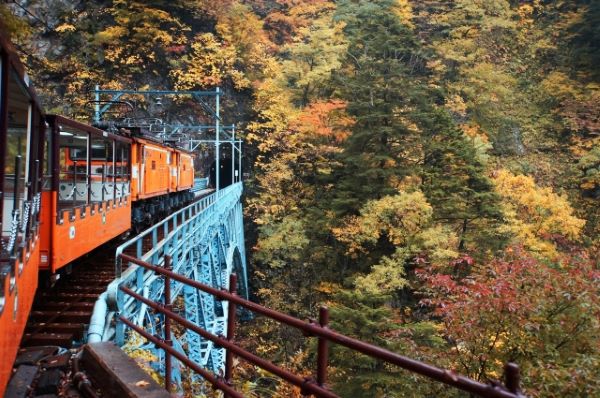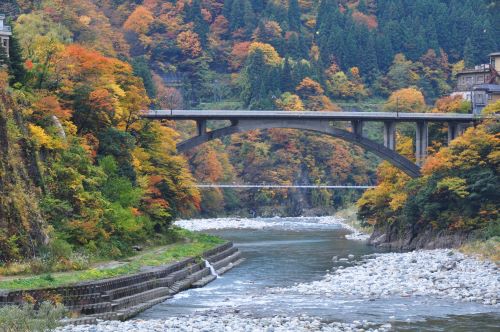
Planning a trip to Aomori? Look no further than the Hakkōda Ropeway (八甲田ロープウェー), your gateway to the stunning Hakkoda Mountains. This iconic aerial lift offers passengers breathtaking, panoramic views of the surrounding peaks, Aomori City, and even distant Hokkaidō on a clear day. Whether you’re seeking to marvel at vibrant autumn foliage, trek through alpine marshlands in summer, or experience world-class powder skiing and see the famous “snow monsters” in winter, the Hakkoda Ropeway delivers an unforgettable, year-round natural escape.
Important: Please check the Hakkoda Ropeway website to confirm the ropeway is operating before heading out. The JR Bus staff at Aomori’s bus stop let us know that the ropeway was suspended for the day by holding a message board. But we can’t guarantee they will always be there to inform future passengers.
All You Need to Know Before Visiting the Hakkoda Ropeway
- Hakkoda Ropeway's Autumn Foliage Season
- Tips For Visiting the Hakkoda Ropeway During Peak Season
- Hakkoda Ropeway's Summit Station (山頂駅)
- Hakkoda Mountains Hiking Trail
- Our Visit to the Hakkoda Ropeway
- Hakkoda Ropeway's Ski Season and Snow Monsters
- Skiing Around Hakkoda Ropeway
- How to Get to Hakkoda Ropeway by Bus
- Discover the Attractions in Hakkōda Mountains
For Hakkoda Ropeway’s business hours, timetable and fares, please refer to their official website HERE.
Hakkoda Ropeway’s Autumn Foliage Season
The fall foliage season around Hakkoda Mountains peak usually peaks around mid-October.
Tips For Visiting the Hakkoda Ropeway During Peak Season
During the peak season, the first thing after arriving at Hakkoda Ropeway’s Sanroku Station (山麓駅) is to purchase your ropeway ticket and get a timeslot to board the ropeway. They used different colors to indicate the time slots. If you want to be the first to enter the gondola lift, queue at the waiting area as soon as the prior group has left.
The space inside the station is divided smartly to guide passengers who have purchased their ticket to the staff who distribute the time slot indicator (see the 2nd, 4th, and 5th photos in the Instagram post).
Why would you want to be the first one to enter the gondola lift? So you can choose your seat. You won’t want to be standing in the middle where you can’t take photos properly!
Tip: We recommend sitting at the side facing the ropeway station at the bottom of the mountain (i.e. the Sanroku Station). The view in front of you will slowly expand into a panoramic view of the surrounding mountains!
Hakkoda Ropeway’s Summit Station (山頂駅)
Hakkoda Ropeway’s Summit Station has two levels. The ground level is connected to the gondola lift boarding area. You will also find a souvenir shop and a toilet there. If you plan to hike from Hakkoda Ropeway’s Summit Station, please submit your Mountain Entrance Notification Form to the wooden box for your safety (see the 3rd photo in the Instagram post). The notification form is next to the wooden box.
The upper level is the station’s observation floor, including an observation deck (the 4th and 5th photos in the IG post). While there was almost no one on the floor when we were there, it is likely to be packed in winter when it is freezing cold outside.
Once you are ready to explore, follow the road sign to the promenade (see the last photo in the IG post)!
Hakkoda Mountains Hiking Trail

From Hakkoda Ropeway’s Summit Station, there are a couple of trekking courses that you can stroll around the summit before going back down to continue your exploration in the area. The shortest loop course only takes 30 minutes.
Please refer to HERE for the trek/hike course map!
For more information about hiking the Hakkoda Mountains, refer to HERE.
Our Visit to the Hakkoda Ropeway
We stayed near Aomori Station for two nights at the end of October. While the ropeway was suspended for the first two days due to bad weather, we were lucky to have a clear, windless day on the third day. Although it meant we had to spend 2 hours on the bus from Lake Towada to the Hakkoda Ropeway, it was worth it!

While the foliage in the upper parts of the mountains had fallen, in the lower parts of the mountain, it still had vivid colors when we got there! Plus, the snow season started early, so that we could enjoy both the snow and fall seasons on the same day!
Hakkoda Ropeway’s Ski Season and Snow Monsters
From late October to early November, the winter season begins. As the Earth gets warmer, the first snow may not occur until sometime in November.
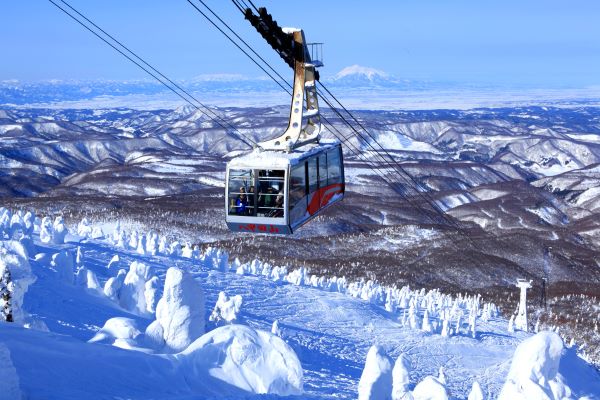
The snow season around Hakkoda Ropeway typically begins at the end of November and lasts until mid-May. There are several courses with various levels of difficulty that you can take.
Apart from the rime on trees in Hakkoda, you will also be enjoying the scenery of Tsugaru (津軽), Shimokita Peninsulas (下北両半島), and even Hokkaidō (北海道) as you ski or snowboard (but still pay close attention to what is in front of you. We really don’t want your Japan trip to end up with you in the hospital).
Tip: if you are interested in the snow monsters (trees that are glazed with snow and ice, morphing them into strange monster-looking figures – like those that are shown in the photo) in Hakkoda Mountains, visit the Hakkoda Ropeway in January or February (^_-)-☆.
Important: If you are starting from Sukayu Onsen, note that the trail, which consists of stairs near the ryokan, is often muddy due to poorly drained roads in the forest.
If you would like to learn more about the Hakkoda area and what to expect when visiting Hakkoda Ropeway each season, please refer to the official HERE and translate it using your browser’s translation function!
Skiing Around Hakkoda Ropeway
Please click HERE for more information about the ski/snowboard courses at Hakkoda.
Ski/Snowboard Equipment Rental at Hakkoda Ropeway
Apparently, you can get a cheaper price if you pay in cash. Please refer to the price tables HERE on the official website. The English price table is below the Japanese ones.
How to Get to Hakkoda Ropeway by Bus
- To get from Aomori to Hakkoda Ropeway (approx. 60 minutes travel time): Take JR Bus Mizuumi-Gō (みずうみ号) from either JR Aomori Station’s bus stop no. 11 or the bus stop no. 1 located at JR Shin-Aomori’s east exit.
- To get from Sukayu Onsen (酸ケ湯温泉) to Hakkoda Ropway (approx. 15 minutes travel time): Take JR Bus Mizuumi-Gō (みずうみ号)
- To get from Lake Towada to Hakkoda Ropeway (approx. 125 minutes travel time): Take JR Bus Mizuumi-gō (みずうみ号) from JR Tohoku Bus Nenokuchi Station (ジェイアールバス東北 子ノ口駅)
- The bus service is only available between mid-April to mid-November.

Once you get on the bus, please keep an eye on the indicator screen and get off at Hakkoda Ropeway (八甲田ロープウェー駅前).
Japanese transport IC cards, such as Suica, can be used to board the JR Bus Mizuumi-go.
Refer to our How to Get to the Picturesque Oirase Gorge article for more information about the JR Bus.
Tips:
☛ If you have luggage or bags that you don’t want to take with you as you trek around the Summit Station (山麓・山頂駅窓口), you can check in your belongings at the Summit Station for 200 yen per bag.
☛ If you are holding a JR pass covering the Aomori Prefecture, it is free for you to board any JR bus in the region! You can refer to HERE for a list of regional JR Passes and look for the ones that covers Aomori.
Discover the Attractions in Hakkōda Mountains

Embark on an unforgettable journey along the Hakkoda-Towada Gold Line, a premier scenic route connecting the majestic Hakkoda Ropeway to the emerald waters of Lake Towada. Whether you are photographing the fiery autumn reflections of Tsuta-numa pond or hiking alongside the moss-covered waterfalls of the Oirase mountain stream, this route is the ultimate way to discover the raw natural beauty of Northern Japan.
For more information, refer to our article on Hakkoda-Towada Gold Line!