Mastering the Shinkansen (bullet train) is the secret to a seamless Japan adventure, offering a blend of high-speed efficiency and unparalleled comfort. Whether you are racing from the neon lights of Tokyo to the ancient temples of Kyoto or heading north to the snowy peaks of Aomori, knowing how to navigate the ticketing system and ride the Japan high-speed train is essential. From choosing between reserved and non-reserved seats to mastering the SmartEX app or using a JR Pass, buying a ticket has never been more accessible for international travelers. This guide covers everything you need to know for your upcoming bullet train trip, including the latest oversized luggage rules and the etiquette tips that will help you ride like a local.
The Must-Knows About Riding the Shinkansen
- About Japan’s High Speed Train
- Seeing Mt. Fuji From Your Shinkansen Windows
- Understanding the Bullet Train Ticketing System
- The Need of Reserving Shinkansen Tickets
- The Oversized Babbage Rule
- Purchasing Your Shinkansen Tickets
- Other Must-Knows About the Bullet Train
What Is Shinkansen
Shinkansen is Japan’s bullet train. The Tōkaidō Shinkansen, which began operating in 1964 on occasion for the Tokyo Olympics, was the world’s first commercial high-speed rail service.
At the time, the top speed was 210 kilometers per hour. Since then, the Shinkansen has been through numerous upgrades, with the current maximum speed reaching over 300 kilometres per hour, depending on the route!
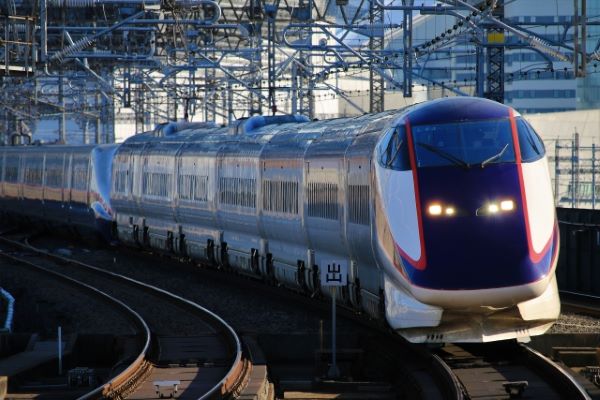
Types of Shinkansen Services
In Japan, bullet trains are given different names depending on the region or route they travel, their frequency, and the number of stops they make.

For example, Nozomi, the Shinkansen that many Japanese people use to travel between Tokyo and Osaka, only stops at Shinagawa, Shin-Yokohama, Nagoya, and Kyoto before reaching Osaka. The bullet train, Hikari, also serves the same region but only stops at Shinagawa, Shin-Yokohama, Toyohashi, Nagoya, Gifu-Hashima, Maibara, Kyoto, and Osaka.
So while it takes only 2.5 hours to travel from Tokyo to Shin-Osaka on the Nozomi, it takes about 3 hours on the Hikari.
This system caters to passengers traveling for different purposes. Those in a hurry can take the bullet train with the fewest stops, whereas tourists can take a slower bullet train that lets them get off at a station closer to their destination.
| Shinkansen Route/Service | Train Route | Shinkansen’s Names |
| Hokkaidō Shinkansen (北海道新幹線) | Shin-Aomori (新青森) to Shin Hakodate-Hokuto (新函館北斗) | Hayabusa (はやぶさ) Hayate (はやて) |
| Tōhoku Shinkansen (東北新幹線) | Tokyo (東京) to Shin-Aomori (新青森) | Hayabusa (はやぶさ) Hayate (はやて) Yamabiko (やまびこ) Nasuno (なすの) |
| Akita Shinkansen (秋田新幹線) | Morioka (盛岡) to Akita (秋田) | Komachi (こまち) |
| Yamagata Shinkansen (山形和新幹線) | Fukushima (福島) to Shinjō (新庄) | Tsubasa (つばさ) |
| Jōetsu Shinkansen (上越新幹線) | Ōmiya (大宮) to Niigata (新潟) | Toki (とき) Tanigawa (たにがわ) |
| Hokuriku Shinkansen (北陸新幹線) | Takasaki (高崎) to Kanazawa (金沢) | Kagayaki (かがやき) Hakutaka (はくたか) Asama (あさま) Tsurugi (つるぎ) |
| Tōkaidō Shinkansen (東海道新幹線) | Tokyo (東京) to Shin-Osaka (新大阪) | Nozomi (のぞみ) Hikari (ひかり) Kodama (こだま) |
| Sanyō Shinkansen (山陽新幹線) | Shin-Osaka (新大阪) to Hakata (博多) | Mizuho (みずほ) Nozomi (のぞみ) Hikari (ひかり) Kodama (こだま) Sakura (さくら) |
| Kyūshū Shinkansen (九州新幹線) | Hakata (博多) to Kagoshima Chūō (鹿児島中央) | Mizuho (みずほ) Sakura (さくら) Tsubame (つばめ) |
| Nishi Kyūshū Shinkansen (西九州新幹線) | Takeo Onsen (武雄温泉) to Nagasaki (長崎) | Kamome (かもめ) |
Shinkansen Seat and Train Carriage Types
Like airplanes, Japan’s bullet train carriages offer different classes.
Shinkansen’s Ordinary Car/Carriage
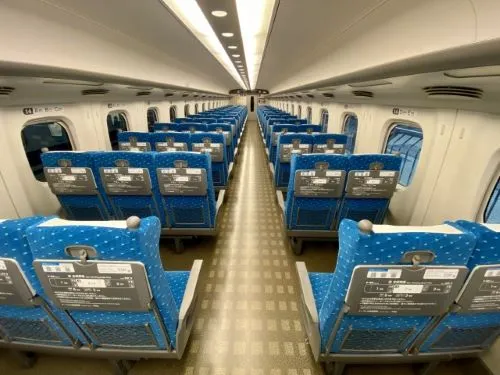
The ordinary carriage is equivalent to flying economy, except that the seats in Japan’s ordinary bullet train carriages are much more comfortable! Each seat in the Shinkansen ordinary carriage has ample leg room that can fit a medium-sized suitcase or a table tray. USB ports are also available to charge your devices.
Therefore, upgrading to a Green Car seat is usually unnecessary!
Shinkansen’s Green and Premium Green Car/Carriage
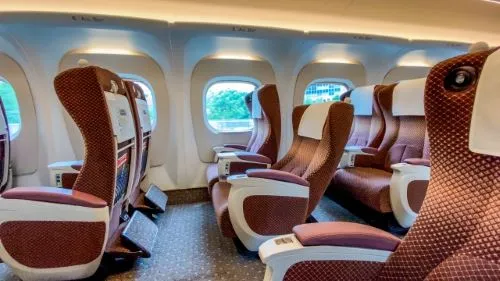
The Green and Premium Green carriages are equivalent to flying in business class. Compared to the seats in the ordinary car, the seats in the green car are wider and more comfortable with fancy footrests. The seats can also rotate 180 degrees, making them suitable for group travel.
Instead of 5 seats in a row, the green cars have 4 seats in a row with an aisle in the middle. In addition to the table tray, it also has a personal reading light.
Furthermore, the green carriages are usually quieter, perfect for a good rest or working remotely.
Shinkansen’s GranClass Car/Carriage
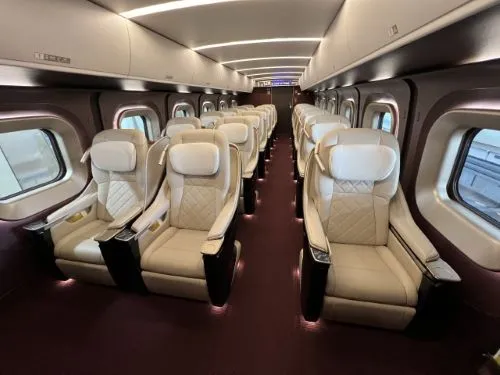
The GranClass carriage is equivalent to flying first class. This service is only available on Hokkaidō Shinkansen (Series E5 and H5), Tōhoku Shinkansen (Series E7 and W7), and Jōetsu Shinkansen (Series E7).
There are only three seats per row, providing a more open, yet somewhat private, space for a relaxing trip. The reclining feature is better than those in ordinary and green carriages. Beverages and light meals may be provided depending on which train you take.
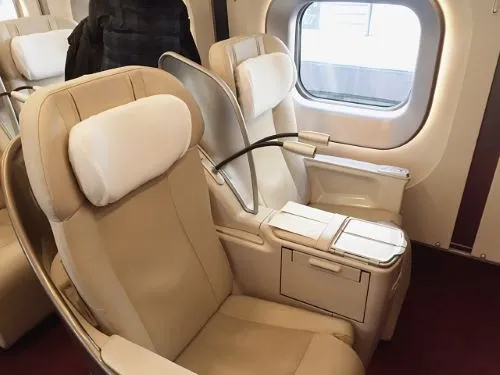
Refer to the JR Gran Class official website HERE for more information.
Would I See Mt. Fuji When Traveling Between Tokyo and Osaka/Kyoto
Yes, you can see Mt. Fuji when traveling on a train between Tokyo and Osaka/Kyoto. Regardless of the direction of travel, choose the “E seat” on the ordinary carriages. If you want to take the green carriage, reserve the “D seat“.
Would I See Mt. Fuji When Traveling Between Tokyo and Nagano/Kanazawa
If you plan to visit Nagano and/or Kanazawa from Tokyo, the good news is you can also see Mt. Fuji on the train. While the view isn’t as magnificent as what Tōkaidō Shinkansen offers, Mt. Fuji can be seen between Ōmiya Station (大宮駅) and Kumagaya Station (熊谷駅) when the weather is good.
Remember to sit on the left-hand side of the train if the train is traveling from Tokyo to Nagano/Kanazawa.
The Best Timing to Take a Photo of Mt. Fuji on a Bullet Train
While you can see Mt. Fuji from the train regardless of the direction of travel, the view is better when the train travels from Osaka to Tokyo, as fewer things will block your view. Get your camera ready when the train passes Shizuoka Station. The best photography opportunity is after the train has exited the tunnel and passes the Fuji River.
If you take Nozomi, the timing is approximately an hour and 45 minutes after the train departs from Shin-Osaka Station.
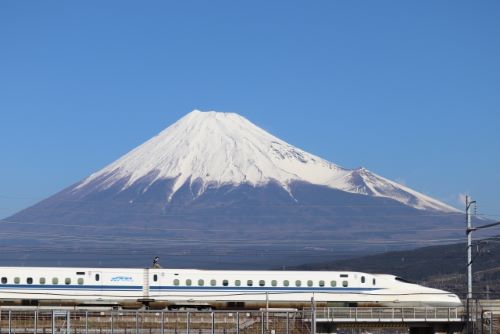
If the train travels from Tokyo to Osaka, get your camera ready after it passes Atami Station. The best photography opportunity is shortly before and after the train passes Shin-Fuji Station. If you take Nozomi, the train will arrive in Atami around 45 minutes after departing Tokyo Station.
Tip: Refer to our Best Seats on the Shinkansen from Tokyo to Hokkaidō article if you plan to take the Tōhoku Shinkansen. If you plan to travel to Akita from Tokyo, refer to our article on The Best Seats on the Akita Shinkansen: Komachi.
Different Types of Shinkansen Tickets
There are two types of Shinkansen tickets: reserved and non-reserved.
- Seats in ordinary carriages can be reserved. If all reserved seats have been booked, non-reserved carriages allow you to board the Shinkansen you wish to take. However, please note that:
- The reserved seat tickets are more expensive.
- Not all Shinkansen have non-reserved carriages.
- Green and Gran Class carriages are reserved-only carriages.
What Tickets Do I Need to Take a Shinkansen
In many cases, when you get your bullet train ticket at a JR train station in Japan, you will usually get two paper-based tickets: the base fare ticket and a Shinkansen express ticket.
A base fare ticket is required when boarding all trains in Japan. Unlike local, rapid, and express services, limited express and Shinkansen require an additional super (limited) express train ticket for boarding. You will need to show both tickets when taking a bullet train in Japan. When you pass through the ticket gate, insert both tickets to open it.

A base fare ticket covers the charges calculated based on the distance traveled. The super express ticket includes the speed and service charges.
- To board an Ordinary Shinkansen Carriage:
- A base fare ticket and a Shinkansen super express reserved seat ticket are required to board an Ordinary Reserved Carriage.
- A base fare ticket and a Shinkansen super express non-reserved seat ticket are required to board an Ordinary Non-Reserved Carriage.
- To board the Green Shinkansen Carriage, you will need a base fare ticket, a Shinkansen super express reserved seat ticket, and a Green Car ticket.
- To board the Premium Green Shinkansen Carriage, you will need a base fare ticket, a Shinkansen super express reserved seat ticket, and a Premium Green Car ticket.
- To board the Gran Class Shinkansen Carriage, you will need a base fare ticket, a Shinkansen super express reserved seat ticket, and a Gran Class Car ticket.
Important:
☛ No extra tickets are required for non-reserved carriages with a JR Pass. If you use the JR Pass to reserve a seat on the bullet train, you will only get one reserved ticket to be inserted into the ticket machine.
☛ Note that sometimes, the base fare ticket, Shinkansen super express ticket, and the green car ticket can be combined into one ticket. When unsure, please check with station staff.
Tying Your Suica Card to a Shinkansen Ticket
You can link the bullet train ticket to your Suica card (Other Japan’s IC Transportation Cards) if you have purchased the Shinkansen ticket online or via apps like SmartEX or JR-East eki-net.com. Once linked, you can take the bullet train by tapping your Suica at the gate.
Taking the Shinkansen With Suica Card or Other Japan’s IC Transportation Cards
If you plan to take the JR East bullet trains (see the routes below), you can board them with an IC card, such as Suica. The method is known as Touch De Go! Shinkansen (タッチでGo!新幹線).
Important: Before you get too excited, refer to the Official Website and translate it into English to see which segments aren’t valid for the Touch De Go! Shinkansen. Even the Japanese are confused about whether they can use this method. Thus, either confirm with a staff member at the station that you can use your Suica to exit at your destination, or purchase a Shinkansen ticket.
As many Tōhoku Shinkansen trains are fully reserved, if you don’t have a reserved-seat ticket, you can still use this method to board. But please give up your seat if it is claimed by someone with a reserved seat ticket.
| Shinkansen Route/Service | Train Route | Shinkansen’s Names |
| Tōhoku Shinkansen (東北新幹線) | Tokyo (東京) to Shin-Aomori (新青森) | Hayabusa (はやぶさ) Hayate (はやて) Yamabiko (やまびこ) Nasuno (なすの) |
| Akita Shinkansen (秋田新幹線) | Morioka (盛岡) to Akita (秋田) | Komachi (こまち) |
| Yamagata Shinkansen (山形和新幹線) | Fukushima (福島) to Shinjō (新庄) | Tsubasa (つばさ) |
| Jōetsu Shinkansen (上越新幹線) | Ōmiya (大宮) to Niigata (新潟) | Toki (とき) Tanigawa (たにがわ) |
| Hokuriku Shinkansen (北陸新幹線) | Takasaki (高崎) to Kanazawa (金沢) | Kagayaki (かがやき) Hakutaka (はくたか) Asama (あさま) Tsurugi (つるぎ) |
Activate Your IC Card’s Touch De Go! Shinkansen Function
Whether you use a physical IC card or the Mobile Suica on your smartphone, you need to activate the Touch De Go! The Shinkansen (タッチでGo!新幹線) functions at a ticket/charging machine at a JR East station.
Refer to HERE for a detailed guide on activating your IC card’s Touch De Go! Shinkansen (タッチでGo!新幹線) function. You can translate it using Google Chrome’s translation function.
Can I Take Japan’s Bullet Train Without a Reservation
You can only sit in the Shinkansen’s ordinary non-reserved carriages without a reservation. Note that not all bullet trains in Japan have a non-reserved carriage.
Do I Need to Reserve a Seat on the Shinkansen
Train services in Japan are frequent. Unless the train you want to take is reserved-only, a reservation is generally not required. The only exception is if you plan to travel during Japan’s long public holidays. This includes:
- During the New Year period from the end of December to the beginning of January
- Japan’s Golden Week from the end of April to early May.
- The Obon Festival in mid-August
- Japan’s Silver Week in late September
- For other parts of the year – you might want to reserve a seat on a bullet train during cherry blossom and fall foliage seasons.
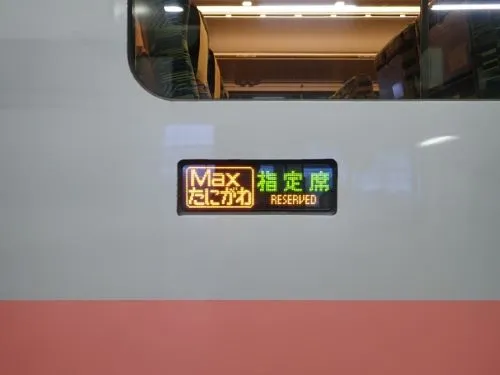
That said, a reservation guarantees you a seat on the train, so make one whenever possible for a pleasant train ride. You should be able to reserve your preferred seat on the train 1 day in advance, unless your travel period falls during Japan’s peak travel period.
A Reservation Is Essential to Board the Bullet Train, Nozomi, During the Peak Seasons
You will need a reservation to take the Nozomi Shinkansen, the fastest bullet train traveling between Tokyo, Osaka, and Hakata during the following periods of the year.
- The New Year period
- The Golden Week
- The Obon Festival
- The Silver Week.
Do I Need to Reserve the Oversized Babbage Area on the Bullet Train
If you plan to take the bullet train with baggage with a total dimension between 161 cm and 250 cm, you need to reserve the oversized baggage area behind the back-row seats. If the total dimension exceeds 250 cm, you need to reserve a seat for that baggage.
The oversized baggage rule applies to the following train lines (all bullet trains traveling between Tokyo and Kyūshū):
- Tokaidō Shinkansen, Kyūshū Shinkansen, and Nishi-Kyūshū Shinkansen
- Between Tokyo and Shin-Osaka
- Between Shin-Osaka and Hakata
- Between Hakata and Kagoshima
- Between Takeo-Onsen and Nagasaki
Refer to the Official Pamphlet for more information.
Important: You might be fined if you didn’t reserve the oversized baggage area but left your belongings there.
Tip: If your belongings’ total dimensions are less than 160cm, put them on the luggage rack above your seat.
Reserving the Oversized Baggage Compartment (特大荷物コーナー)
From the 24th of May 2023, the Tokaidō Shinkansen, Kyūshū Shinkansen, or Sanyō Shinkansen you board might have an oversized baggage compartment. It is the same type of compartment commonly found in airport express trains, such as the Narita Express. Currently, only 16 bullet trains have this facility. They are located in carriages 4, 6, 9, 13, and 15.
The compartment has two stories. If your baggage fits in the oversized baggage compartment, make a reservation when you purchase your bullet train ticket by selecting seats with the right to use it. The ticket prices for these seats are the same as those for other seats.
- The upper compartment can fit baggage measuring 80 x 60 x 50cm.
- The upper compartment can fit baggage measuring 80 x 60 x 40cm.
Luggage cable locks are available. If you want to use it, your transportation IC card can be used to lock and unlock the luggage cable locks. The bar in the middle of the compartment is also locked. The 4-digit pass code is the carriage number + your seat’s row number.
Important: You might be fined if you didn’t reserve the oversized baggage compartment but left your belongings there.
How to Reserve the Bullet Train’s Oversized Babbage Area and Oversized Baggage Compartment
Because the number of seats with oversized baggage storage space is limited, it is best to reserve a seat as soon as possible on the official website, such as smart-ex.jp.
You can also reserve Shinkansen tickets online using klook. While it isn’t possible to reserve a specific seat, you can at least reserve seats with oversized baggage space. Plus, the website accepts all major credit cards.
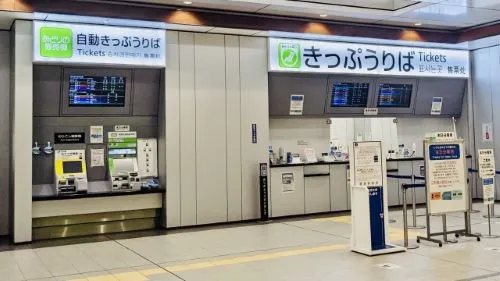
Other reservation methods include using the ticket vending machine at a station or from a ticket office.
How to Purchase Shinkansen Tickets
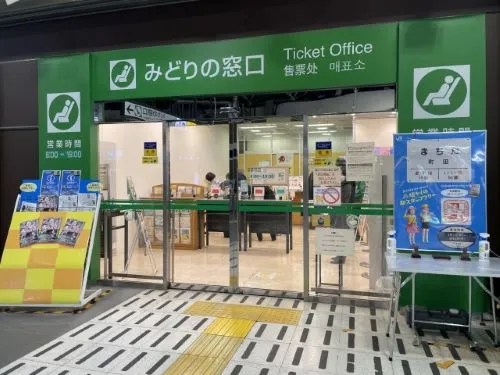
Before taking a bullet train, you will first need to purchase a Shinkansen ticket or have a JR Pass that covers the entire journey. You can purchase a Shinkansen ticket from a ticket office, a Shinkansen ticket machine, or online.
Note that JR’s ticket office, Midori no Madoguchi (みどりの窓口), and Shinkansen ticket machines are not available at all JR stations.
How to Buy Shinkansen Tickets Online
Since each region has its own Shinkansen official website, purchasing your Shinkansen ticket via Klook is far more convenient. Plus, if you plan to board the Shinkansen serving the JR West region, purchasing through Klook lets you get it at a discounted tourist price!
Refer to the table below for the official websites for each region and the regional JR Pass you can use to reserve and board the Shinkansen for free.
Important: Unless you use the smart-ex app, remember to pick up your Shinkansen ticket at the dedicated ticket vending machine or from a JR ticket office. Note that you cannot use the app to reserve a ticket for all stations in Japan. Read on for more details.
Tip: You can link your Suica/ICOCA IC card with your Shinkansen reserved ticket once you have purchased it online or at the station’s ticket office or ticket machine.
Your Destination is in Eastern Japan, including Tokyo, the Central Region, the Northeastern Region, and Hokkaidō
eki-net.com is the official JR East train reservation for Eastern Japan, including Tokyo, the Central Region, the Northeastern Region, and Hokkaidō. If your destination is between Tokyo and Hakata in Kyūshū, you can also use smart-ex.jp, the official bullet train reservation website for Western Japan. It also has a phone app that you can download.
Tip: With the smart-ex app, you can scan the app screen on your phone to pass through the ticket gate on the day.
The JR Passes that you can use in this area are:
| Region | Pass Name | Valid Period | Main Covered Destinations | Purchasable Websites | Terms and Conditions |
| Northeastern and East | JR EAST PASS (Tohoku Area) | 5-day | Aomori, Akita, Mt. Zaō, Oirase Gorge and Lake Towada, Sendai, Nikkō, and Tokyo | klook | Terms and Conditions |
| Hokkaidō and Northeastern | JR Tohoku-South Hokkaido Rail Pass | 6-day | Hokkaidō, Aomori, Akita, Mt. Zaō, Oirase Gorge and Lake Towada, and Sendai | klook | Terms and Conditions |
| East and Central | JR EAST PASS (Nagano, Niigata area) | 5-day | Tokyo, Nagano, Karuizawa, Niigata, Matsumoto, and Hakuba | klook | Terms and Conditions |
| Hokkaidō, Northeastern, and East | JR East-South Hokkaido Rail Pass | 6-day | Sapporo, Aomori, Akita, Mt. Zaō, Oirase Gorge and Lake Towada, Sendai, Nikkō, and Tokyo | klook | Terms and Conditions |
| Northwestern | Hokuriku Area Pass | 4-day | Kanazawa, Toyama, Unazuki Onsen, and Kaga Onsen | klook | Terms and Conditions |
| East, Central, Northwestern, and West | Hokuriku Arch Pass | 7-day | Tokyo, Kanazawa, Toyama, Kyoto, and Osaka | klook | Terms and Conditions |
Your Destination is in Western Japan, including Osaka, Kyoto, Nara, Hiroshima, and Kyūshū
smart-ex.jp is the official JR West train reservation website for Western Japan, including Osaka, Kyoto, Nara, Hiroshima, and Kyūshū. smart-ex also has a phone app that you can download.
Tip: With the smart-ex app, you can scan the app screen on your phone to pass through the ticket gate on the day.
The JR Passes that you can use in this area are:
| Region | Pass Name | Valid Period | Main Covered Destinations | Purchasable Websites | Terms and Conditions |
| East, Central, Northwestern, and West | Hokuriku Arch Pass | 7-day | Tokyo, Kanazawa, Toyama, Kyoto, and Osaka | klook | Terms and Conditions |
| Central and West | Takayama-Hokuriku Area Tourist Pass | 5-day | Nagoya, Osaka, Shirakawagō, and Takayama | klook | Terms and Conditions |
| Northwestern and West | Kansai-Hokuriku Area Pass | 7-day | Kanazawa, Unazuki Onsen, Toyama, Tottori, Osaka, Kyoto, and Nara | klook | Terms and Conditions |
| West | Kansai Wide Area Pass | 5-day | Osaka, Kyoto, Shiga, Nara, Kobe, Okayama, Amanohashidate, Wakayama, and Takamatsu | klook | Terms and Conditions |
| West and Sanyo/San’in | Kansai-Hiroshima Area Pass | 5-day | Osaka, Kyoto, Shiga, Nara, Kobe, Okayama, and Hiroshima | klook | Terms and Conditions |
| West and Sanyo/San’in | Sanyo-San’in Area Pass | 7-day | Osaka, Kyoto, Shiga, Nara, Kobe, Okayama, Shimane, and Hiroshima | klook | Terms and Conditions |
| West, Sanyo/San’in, and Northern Kyūshū | JR-West All Area Pass | 7-day | Tottori, Osaka, Kyoto, Shiga, Nara, Kobe, Okayama, and Hiroshima | klook | Terms and Conditions |
| West, Sanyo/San’in, and Northern Kyūshū | Sanyo-San’in-Northern Kyushu Area Pass | 7-day | Osaka, Kyoto, Shiga, Nara, Kobe, Okayama, Hiroshima, Fukuoka, Yufuin, and Beppu | klook | Terms and Conditions |
| West, Sanyo/San’in, and Northern Kyūshū | Setouchi Area Pass | 7-day | Kyoto, Osaka, Nara, Kobe, Okayama, Matsuyama, Takamatsu, Hiroshima, and Hakata | klook | Terms and Conditions |
| Sanyo/San’in | Hiroshima-Yamaguchi Area Pass | 5-day | Hiroshima and Fukuoka | klook | Terms and Conditions |
| Sanyo/San’in | Okayama-Hiroshima-Yamaguchi Area Pass | 5-day | Okayama, Hiroshima, and Fukuoka | klook | Terms and Conditions |
Your Destination is in Kyūshū
jrkyushu.co.jp is the official train reservation website for the Kyūshū region.
The JR Passes that you can use in this area are:
| Region | Pass Name | Valid Period | Main Covered Destinations | Purchasable Websites | Terms and Conditions |
| West, Sanyo/San’in, and Northern Kyūshū | Sanyo-San’in-Northern Kyushu Area Pass | 7-day | Osaka, Kyoto, Shiga, Nara, Kobe, Okayama, Hiroshima, Fukuoka, Yufuin, and Beppu | klook | Terms and Conditions |
| Kyūshū | All Kyushu Pass | 3-day, 5-day or 7-day | Fukuoka, Nagasaki, Kumamoto, and Kagoshima | klook | Terms and Conditions |
| Kyūshū | Northern Kyushu Pass | 3-day or 5-day | Fukuoka, Yufuin, Beppu, Kumamono, Okura, and Saga | Terms and Conditions | |
| Kyūshū | Southern Kyushu Pass | 3-day | Nagasaki, Kumamoto, Miyazaki, and Kagoshima | Terms and Conditions |
What if I Missed the Shinkansen That I Reserved?
Besides the discounted ticket, such as Hayatoku (お先にトクだ値, EX早特, 九州ネット早特), you can still use it to board the bullet train’s non-reserved carriages on the same day. However, if you want to sit in a reserved carriage, you must purchase another reserved-seat ticket.
If the train you want to take is reserved-only, you can still take the next train, but you will need to stand for the entire journey.
How Much Luggage Can I Bring When Boarding a Train in Japan
You may bring up to 2 pieces of luggage with a total length, width, and height of up to 250 cm (up to 2 meters in length) and a weight of up to 30 kg.
If you have more than 2 pieces of luggage, a separate ticket (普通手回り品きっぷ) must be purchased for each additional piece of luggage you wish to bring onboard. Currently, the cost is 290 yen per luggage.
Can You Get on and off Japan’s Bullet Train?
Whether you can get on and off Japan’s bullet train depends on the situation. If your Shinkansen ticket meets the requirements below, then you can get on and off the bullet train.
- The total travel distance of the base fare ticket exceeds 101km.
- An easy way to confirm if your base fare ticket allows you to get on and off a Shinkansen is to check if the wording “下車前途無効” is printed on the ticket. If not, then you can get on and off with the base fare ticket.
Important:
☛ While the base fare ticket may still be valid, the super express ticket must be purchased separately for each leg of the train trip.
☛ You cannot travel backwards.
Tip: The base fare ticket is valid for 2 to 6 days, depending on the distance traveled. Please confirm with the station staff if you are unsure.
The Shinkansen Ticket That Does Not Allow You to Get On and Off
- Reserved-seat Shinkansen ticket.
- A booklet of Shinkansen tickets (usually sold in sets of 10).
- If the base fare ticket and the super express ticket are combined into one ticket.
- This might be the case if you have purchased a booklet of tickets.
- A ticket that was purchased at a discount rate under specific conditions.
- A ticket that allows you to depart from and return to specific metropolitan areas instead of a specific train station.
Getting a Better Understanding of Tokyo’s Train System
If you had a chance to look at Tokyo’s train map, you might be startled at first glance. With so many train companies operating lines and stations in Tokyo, the city’s train map can look too confusing for many tourists.
So if you want to understand Tokyo’s train system better, refer to our Guide to Tokyo’s Transportation System and Train Routes!
The Most Useful Apps for Traveling in Japan
In this day and age, smartphones are our new maps, translators, and guides. It is the most useful tool for navigating when traveling to a foreign country like Japan.
But for it to be useful for your Japan trip, you will need to download a couple of apps. For more information, see our Most Useful Apps for Traveling in Japan article!