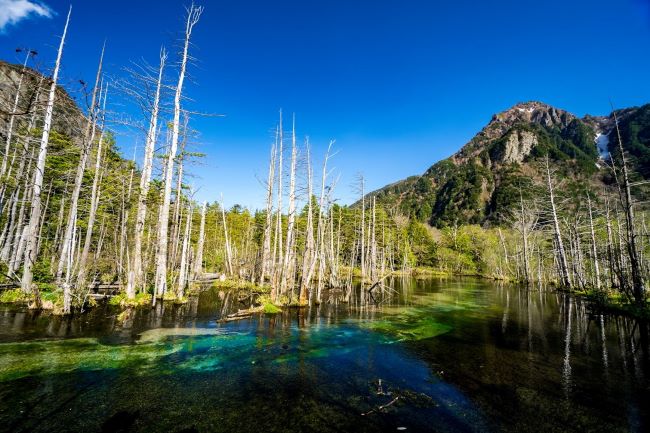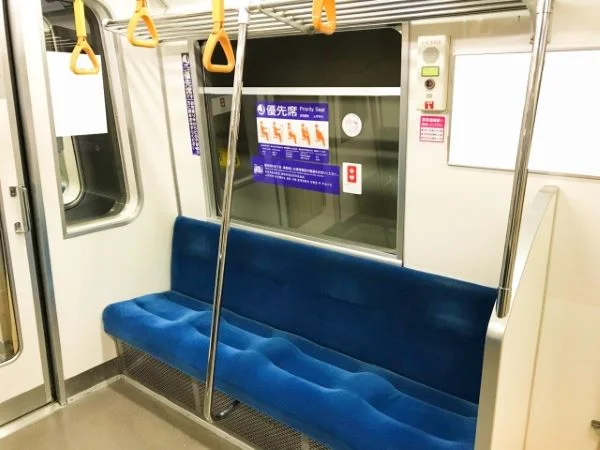
Journey into the “Great North” of Japan on the Akita Nairiku Line (秋田内陸線), a scenic railway that unlocks access to some of the country’s most pristine wilderness. This historic line serves as the gateway to the breathtaking Yasu-no-Taki, Japan’s second-highest waterfall, and the elegant, secluded curves of Todo Falls. Beyond the rails, travelers can discover the emerald waters of Taihei Lake and the dramatic cliffs of Komata-Kyo Gorge, where rugged hiking trails and boat tours reveal the raw beauty of Akita Prefecture. From thundering cascades to serene alpine lakes, the Akita Nairiku Line is more than a commute. It is a front-row seat to the untouched soul of Tohoku. You can even take the train to chase the serene “snow monster” vistas of winter!
Getting to Akita Nairiku Line
The only problem with this train line is getting there. You will need to take the Ōu Line (奥羽本線) to JR Takanosu Station (鷹ノ巣駅) first. The first station of the Akita Nairiku Line, Takanosu Station (鷹ノ巣駅), is just conveniently located next to the JR Takanosu Station.
Tips:
☛ To get the best view of the scenery along the rail track, go straight to the front or the back of the train. The photos/videos that you can take from there are just at a totally different level than the ones from the windows next to the window seats (=゚ω゚)ノ.
☛ Refer to HERE for Akita Nairiku Line’s Timetable.
The Ōu Line runs all the way from JR Aomori Station (青森駅) in the Aomori Prefecture, passing JR Hirosaki Station (弘前駅), JR Odate Station (大館駅), JR Takanosu Station (鷹ノ巣駅), and to the south of the Akita Prefecture after passing JR Akita Station (秋田駅).
The Must-Visit Natural Spots Along the Akita Nairiku Line
- Getting to the Scenic Spots Along the Akita Nairiku Line
- Yasu-no-Taki Falls (安の滝)
- Tōdō Falls (桃洞滝)
- Taihei Lake (太平湖) & Komata-kyō (小又峡)
Tips:
☛ If you are coming for the autumn foliage, the color usually peaks from mid to the end of October along the Akita Nairiku Line.
☛ If you read Japanese, HERE is the area’s hiking map.

Getting to the Scenic Spots Along the Akita Nairiku Line
Unfortunately, getting to this picturesque spots along the Akita Nairiku Line. As these spots aren’t close to a train station, make a reservation with the Moriyoshizan Shuttle if you don’t plan to drive.
The timetable for the sightseeing shuttle can be found HERE. If you read Japanese, HERE is a PDF summary of all the Moriyoshizan Shuttle services (森吉山シャトル). The PDF also contains the taxi companies’ contact numbers.
Tip: Book the Moriyoshizan Shuttle HERE online and receive a 5% off on the cost.
Meet the Snow Monsters at Mt. Moriyoshi and Immerse Yourself in the Stunning Scenery
The most popular tourist destination accessible by the Akita Nairiku Line is Mt. Moriyoshi.
Rising majestically in the heart of Akita Prefecture, Mt. Moriyoshi is among the top three locations in Japan for finding the “Snow Monsters” (Juhyo) that form as a result of the unique weather phenomenon. Accessible via the Ani Gondola, this peak provides 360-degree panoramic views of Northern Japan, making it a sanctuary for winter hikers, photographers, and nature lovers seeking the raw beauty of the Tohoku region. As a bonus, you can play with the super cute mascot dog Hokuto!
Find out more about this beautiful spot with our article on Mt. Moriyoshi HERE!
Yasunotaki Falls (安の滝)
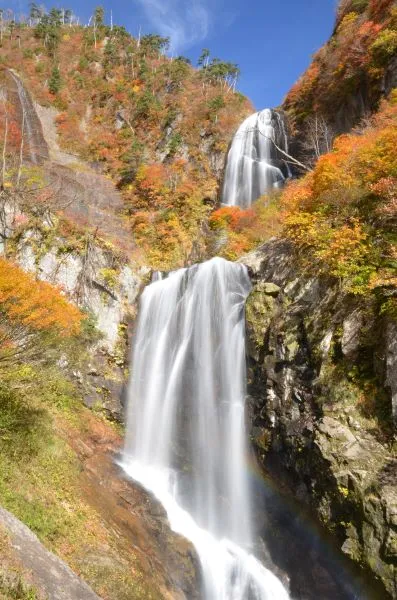
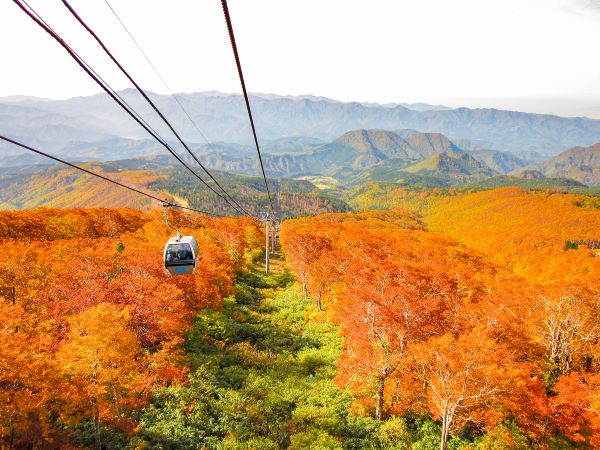
Yasunotaki Falls ranked second amongst the top 100 waterfalls in Japan. And it is not hard to understand. Especially in autumn, the 45-minute hiking course to the falls is just breathtaking!
If you do drive, we would still recommend you catch one of the sightseeing shuttles. Because firstly, the number of car spaces at the car park at the track’s entrance is limited. Many people have to try another day just because they can’t find a car space. Secondly, not only will you be driving on earthen or gravel roads, but they are narrow, which is the worst when a car comes from the opposite direction.
All we want to say is that you don’t want to use up all your energy trying to park before you even start hiking!
Important: It is recommended to check on Kita-Akita City’s Website to ensure the road to Yasunotaki Falls is accessible.
Taking the Moriyoshizan Shuttle to Yasunotaki Falls
Important: The sightseeing shuttle route is currently suspended as the waterfall isn’t accessible at the moment.
The sightseeing shuttle for Yasunotaki Falls departs from Ani-Matagi Station (阿仁マタギ駅) of the Akita Nairiku Line.
Important: Reservation at least one day in advance is required to use this shuttle service.
- The one-way cost is
- 2,200 yen for adults
- 1,100 yen for elementary school students and younger
The Best Time to Visit Yasunotaki Falls
In the afternoon, the sun will shine directly on the part of the mountain where Yasunotaki Falls is. During this time of the day, you have a large chance of getting a photo of Yasunotaki Falls with a rainbow on the waterfall!
In autumn, arrive at the Yasunotaki Falls between 1 and 3 pm to capture the most beautiful moments of the waterfall (=゚ω゚)ノ.
Note: If you plan to drive to Yasunotaki Falls, the car park will likely be full by 10 am…
From the Car Park of Yasunotaki Falls to the Actual Waterfall
Whether taking a sightseeing shuttle or self-driving, you must get out of the car at Yasunotaki Falls’ car park. Behind the directory signboard, there is a bathroom that is quite well-maintained. We highly recommend using it before hiking, as there are no toilets along the 45-minute route (at least a 90-minute round trip).
The first part of the track is relatively well-maintained, but some sections aren’t. So hiking shoes and hiking poles are always your best friends.
Yasunotaki Falls is a two-tiered waterfall. The tracks leading to the bottom of the waterfall are relatively easy. But if you have enough physical strength, definitely hike up to the first tier of the waterfall, because the second-best photo spot is on the way, with the third-best at the top of the mountain!
Important: It is also possible that you will meet a bear during this trip (though the likelihood isn’t high, as they hide from us too). According to the guide who has multiple bear encounters, if you see a bear, DON’T SCREAM! The best thing to do is try not to scare the bear and get out of the scene slowly.
On the Way to the First-Tier of Yasunotaki Falls
As mentioned, getting to the first tier of the waterfall isn’t for everyone. Refer to the 7th photo in the Instagram post above, and prepare yourself to climb through something like that.
You should see a staircase most likely covered by grass on the left-hand side of the bottom of the waterfall. The staircase marks the start of the trail to the first tier of the Yasunotaki Falls.
The top tier of the waterfall should be in front of you in 10 minutes.
Remember to explore the waterfall basin after you have your fill of the beauty of the top tier of Yasunotaki Falls. You will get a really close shot of the waterfall over there (^_-)-☆.
Yasunotaki Falls’s Fall Foliage Season and Winter Closure
- The autumn leaves usually start changing color in late September and peak between mid-October and the end of October.
- Due to heavy snowfall, Yasunotaki Falls isn’t accessible from early November to late May.
- The sightseeing shuttle to Yasunotaki Falls operates from early June to early November. The exact operating dates vary depending on snow conditions in the area.
Tōdō Falls (桃洞滝)
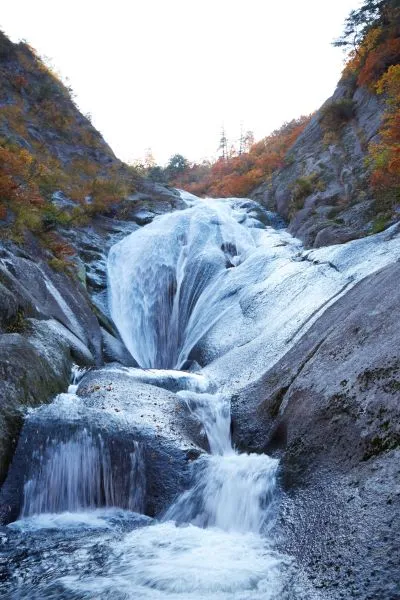
A 4 km stroll will lead you to this unique waterfall in Mt. Moriyoshi (森吉山). As Todo Falls isn’t well-known amongst tourists, especially foreigners, so unless it is autumn, you might get the entire trekking course to yourself (*’▽’).
It should take around an hour to get to Todo Falls. Accounting for photo stops, you might want to factor in 3 to 4 hours to reach the track’s entrance.
Also, Mt. Moriyoshi is home to Asian Black Bears. Bringing bear bells with you should reduce the chance of a bear encounter!
Moriyoshiyama Yaseichoju Center (森吉山野生鳥獣センター)
To start trekking to Todo Falls, you need to get to the Moriyoshiyama Yasei Chōjū Center (森吉山野生鳥獣センター) first.
Here you will find all the information about Mt. Moriyoshi’s ecosystem, the wildlife living on the mountain, and, of course, the hiking and trekking routes everyone can enjoy!
Taking the Moriyoshizan Shuttle to Todo Falls
The sightseeing shuttle for Tōdō Falls/Todo Valley depart from Animaeda Onsen Station (阿仁前田温泉駅) of the Akita Nairiku Line. The route you should take is the 3rd route: Animaeda Onsen the station 〜 Mt. Moriyoshi Dam Museum 〜 Wild center of birds and beasts (阿仁前田温泉駅 ~ 森吉山ダム広報館 ~ 杣温泉 ~ ヒバクラ登山口 ~ 野生鳥獣センター(桃洞渓谷)).
Important: A reservation at least 120 minutes in advance is required to use this shuttle service. Also, the return taxi trip needs to be booked, so don’t forget to book with your taxi driver before he heads off!
- The one-way cost is
- 5,500 yen for adults
- 2,750 yen for elementary school students and younger
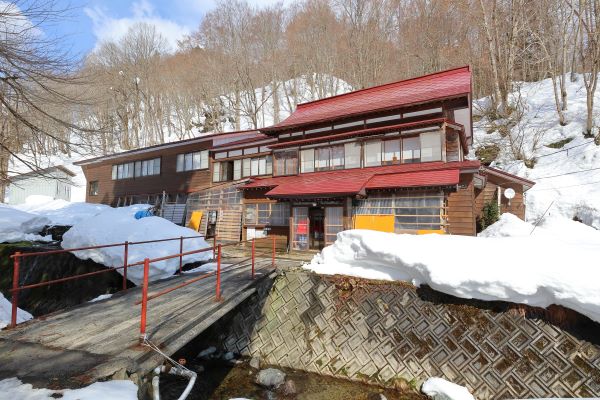
On the other hand, if you decide to stay at Yunosawa Yumoto Soma Onsen Ryokan (湯の沢湯本杣温泉旅館), the sightseeing taxi can pick you up from there too.
The cost for this option is:
- 3,600 yen for adults
- 1,800 yen for elementary school students and younger
Tōdō Valley Trekking Course (桃洞滝渓谷散策コース)
From the back of the Moriyoshiyama Yasei Chōjū Center, you will find the trail that leads to Tōdō Falls.
Although most of the trail hasn’t been artificially altered, it isn’t hard to find your way as there are signs along the way.
Some parts of the end of the track are made of wood. As the forest can get quite humid, be very careful when walking on those wooden paths. It can get really slippery with moss growing on the track.
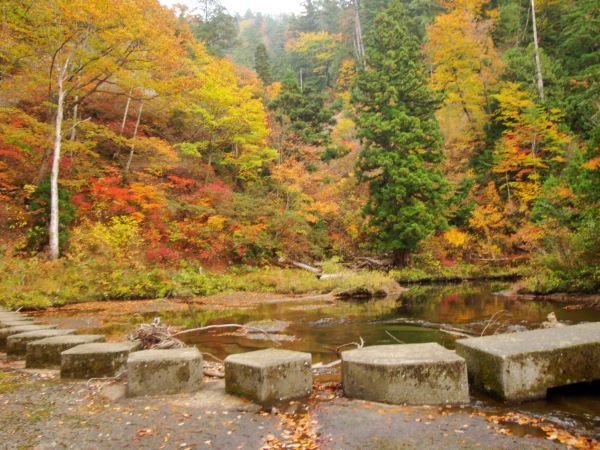
If you are lucky and it rained the day before, there should be some puddles during the last part of the journey. The puddles will reflect the surrounding nature with the proper lighting, which is another great photo opportunity for you (^_-)-☆.
To minimize the impact of human activities, even some bridges across the rivers along the way are just stepping stones (and, in a few cases, just a wooden board)!
The tracks sometimes split into two smaller paths. Always check the signboard at the intersection when in doubt about which path to take. The arrow that has Tōdō Falls (桃洞滝) label is the one you want to follow.
The wide track will split into two smaller paths around 45 minutes after you begin this stunning journey. Please turn right here to the Tōdō Falls. Otherwise, the trail that connects you to the mountain stream will lead you all the way to Akamizu Valley (赤水渓谷), which is a 90-minute trip to Usagitaki Falls (兎滝).
The Best Time to Visit Tōdō Falls
If you plan a photoshoot, arrive at Tōdō Falls in the morning. Otherwise, you will only get backlight in the afternoon…
Season-wise, the light spring green can be seen from mid-May to mid-June. The autumn foliage usually peaks from early to mid-October.
Please note that Tōdō Valley is closed from mid-November to the end of May each year. So, unfortunately, the winter view of this scenic place will remain a mystery for most of us.
Passing the Tōdō Falls
Starting at Todo Falls, this waterfall tour treks upstream. If you haven’t noticed by now, the shape of the Todo Falls looks like female genitalia. The waterfall is therefore known as “Medaki (女滝)”. “Me” is short for “mesu”, which means “female” in Japanese.
And it just happens that there is a waterfall upstream with a giant rock resembling male genitalia close up. The waterfall is therefore called “Odaki (雄滝), “o” is short for “osu” which means male in Japanese (´▽`*).
Tip: If you visit this wonderful place in summer, be fully prepared for mosquito attacks! Long sleeves, long pants, insect repellent, insect bite medicine, etc… are highly recommended. But even if you are going in spring or autumn, having a bottle of insect repellent should still be a good idea (=゚ω゚)ノ.
Taihei Lake (太平湖) and Komata-Kyō Gorge (小又峡)
The lake is an artificial lake that was formed upon the completion of Moriyoshi Dam (森吉ダム). On the other side of the 195-hectare wide lake is the less-traveled scenic spot – Komata-Kyō.
Each year, from June to the end of October, sightseeing boat services run from 9:30 am to 4 pm, connecting nature lovers with the splendid waterfalls hidden deep in the mountains of Mt. Moriyoshi.
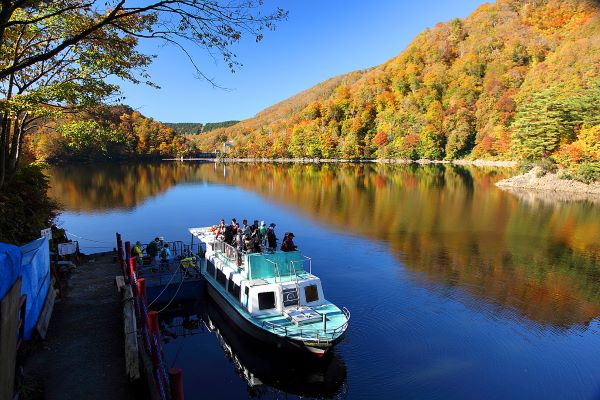
About Lake Taihei Greenhouse
Whether you are driving or taking a sightseeing shuttle, your first stop at Taihei Lake is the Lake Taihei Green House (太平湖グリーンハウス). Don’t just walk by when you see it; you will need to get your boarding pass for your sightseeing boat here.
Tips:
→ Use the toilet facility in the Green House. Especially if you plan to trek in Komata-Kyō, as the toilet on the other side of the lake is temporary.
→ The road leading to the Lake Taihei Green House is quite windy. If you get car sick easily, remember to take some preventative measures!
→ For those who plan to explore Komata-Kyō, hiking shoes are recommended.
If you stay at Okunoyu Moriyoshisanso (奥ノ湯 森吉山荘), check with the hotel staff, as you should be able to get discounts on the sightseeing boat (=゚ω゚)ノ.
The restaurant at the Green House is temporarily closed, but you can still get some snacks from the shop in the house.
Because it takes about 10 minutes to reach the pier and the staircases leading to it are quite steep, we recommend heading there as soon as you are ready.
About Taihei Lake Sightseeing Boat (太平湖小又峡シャトルタクシー船)
- The boat operates from 9:30 am to 2:30 pm at an hourly interval to Komata-Kyō.
- You can refer to the official website HERE and translate it into English using Google Chrome’s translation function at the right of the address bar.
- The boat from Komata-Kyō back is operating from 10 am to 4 pm on an hourly interval.
- The cost is currently for taking the Taihei Lake Sightseeing Boat is
- 3,000 yen for adults
- 1,00 for children up to 12 years of age
- The boat operates from June to October each year (exact dates change year by year depending on snow conditions).
- It takes around 20 minutes to get to Komata-Kyō.
About the Sightseeing Taxis
The sightseeing shuttle for Taihei Lake and Komata-Kyō Gorge departs from Animaeda Onsen Station (阿仁前田温泉駅) of the Akita Nairiku Line. The route you should take is the 5th route: Animaeda Onsen the station 〜 Lake Taihei and Komatakyo Gorge, Moriyoshizan-onsen Chiisanamorinoyu 〜 Lake Taihei and Komatakyo Gorge (阿仁前田温泉駅 ~ 太平湖・小又峡、杣温泉 ~ 太平湖・小又峡).
Important: A reservation at least 120 minutes in advance is required to use this shuttle service. Also, the return taxi trip needs to be booked, so don’t forget to book with your taxi driver before he heads off!
The one-way cost is 4,400 yen (2,200 yen for kids up to and including primary school students) per person.
On the other hand, if you decide to stay at Yunosawa Yumoto Soma Onsen Ryokan (湯の沢湯本杣温泉旅館) or Okunoyu Moriyoshisanso (奥ノ湯 森吉山荘), the sightseeing taxi can pick you up from there too.
The cost for this option is:
- 2,000 yen for adults
- 1,000 yen for elementary school students and younger

Komata-Kyō Gorge
The Komata-Kyō is an area that almost has no trace of human activity. This means the tracks can be quite slippery and sometimes unsafe, with some sections featuring a straight drop.
So please don’t go into the area with slippers or pretty shoes like high heels!
From the Komata-Kyō pier, it takes around 45 minutes to get to the most magnificent waterfall in the area – Sangai Falls (三階滝).
Along the way, there are a couple of unique waterfalls that you might want to take some selfies with (like the Ryūjinnotaki Falls (竜神の滝) in the photo)!

Sangai Falls (三階滝)

The Sangai Falls, like its name, is a three-tiered waterfall. No matter how many times you come, you will still be fascinated!
As moss grows on the rocks around the waterfall, if you want to get close to the waterfall basin, watch your step because you don’t want to be washed away by that magnificent amount of water (‘ω’)ノ.
It is possible to hike from here all the way to the Moriyoshiyama Yasei Chōjū Center (passing by the Tōdō Falls). But this hiking track is quite dangerous and isn’t for anyone.
If you do wish to complete this four-hour course, please arrange guide services by contacting NPO Bōken no Kagi Kūn NPO 冒険の鍵クーン) by sending an email to [email protected].
Best Time to Visit Taihei Lake (太平湖) and Komata-Kyō (小又峡)
- The light spring green season is from mid-May to early June
- The autumn foliage season is from mid to late October