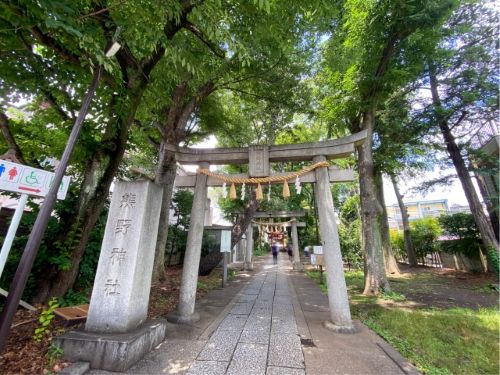
Although situated in Jiyūgaoka‘s bustling area, Kumano Shrine (自由が丘 熊野神社) manages to retain its quiet and solemn atmosphere. The historic shrine is said to have been founded before the 12th century. Despite the rapid urbanization, the shrine maintains its lush grounds.
If you like trekking, you might have heard of the famous Kumano Kodō. The network of ancient pilgrimage trails to the three grand shrines of Kumano (Hongu Taisha, Hayatama Taisha, and Nachi Taisha) is recognized as a UNESCO World Heritage Site. Apparently, the locals in the Meguro ward also made their way to the three grand shrines of Kumano. As not everyone can endure the long journey, a part of the gods of the Hongu Taisha was ceremonially received from Wakayama and a Kumano Shrine was established in Jiyūgaoka.
The grounds at the end of the narrow approach are surrounded by lush greenery, including sacred zelkova trees and large ginkgo trees, creating a quiet and serene atmosphere that makes it a perfect spot to refresh yourself between shopping or walking around the city.
Another charm of the shrine is that you can feel the changes in nature with each season. Like Kuhonbutsu Jōshin-ji Temple nearby, the cherry blossoms at the entrance are beautiful in spring.
Jiyūgaoka Kumano Shrine, Where You Pray for a Good Relationship
The Kumano Shrine in Jiyūgaoka is renowned for being a popular spot for prayers related to relationships. Why? Because there are two sacred pines behind the main worship hall, whose branches stretch out close to one another. The red pine is regarded as female, and the black one is male. So together, they make a couple (夫婦松, 良縁松). Thus, if you visit Tokyo with your partner or are looking for one, pray to the gods at Kumano Shrine in Jiyūgaoka. Your wishes might be granted! There are also Koimikuji (恋みくじ) for you to draw to tell your love fortune!
In addition, because in Japanese, the pronunciation of waiting and pine are the same, the pine tree is regarded as a sacred tree that is said to “wait” for the gods to reside in it. As it is hard to use pine seedlings to survive once transplanted, the locals believe that if the pine seedlings grow successfully, it is said that a god inhabits the land.
Tips:
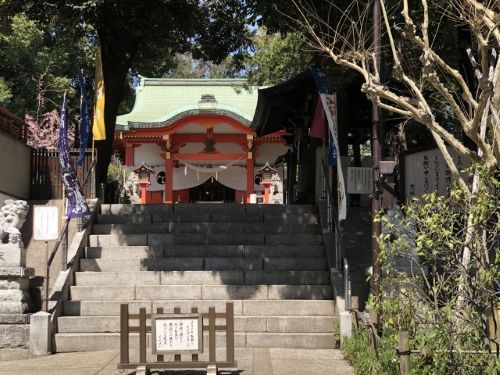
☛ Remember to check out the guardian lion-dog statues in front of the staircase leading to the main worship hall. They look like the ones that would appear in a Japanese anime!
☛ See if you can find the heart shape hidden in the decoration of the main worship hall.
The Inari Shrine (稲荷神社) in Kumano Shrine’s Precinct
To the right of the main shrine is a path leading to Inari Shrine, a shrine within the grounds. It is rumored that the gods enshrined here are extremely powerful and make pilgrim’s prayers come true. So, if you run a business, remember to pray at this Inari Shrine.
In addition to greeting the gods, there are a few things that you can check out. The purification in front of the shrine is special. It is carried by four Gaman-sama (がまんさま), that are symbols of good fortune. Their facial expressions are different, so ensure you compare them.
The worship hall has beautiful dragon carvings under the roof. You will also find a beautifully painted ema plaque offered in the Meiji period. Moreover, red and white plums grow around the shrine. After the flowers bloom in early spring, plums are harvested during the rainy season in June.
The Festival at Jiyūgaoka Kumano Shrine
The Kumano Shrine annual festival is held on the first Sunday in September. It is the day to pray for a good harvest. During the day, several portable shrines are carried by people from various countries and paraded through the streets of Jiyūgaoka lined with outdoor stalls. In front of the main worship hall, the locals would use drums to perform Meguro Bayashi (目黒ばやし) and Kagura dance (神楽) to entertain the gods.
Jiyūgaoka Kumano Shrine’s Opening Hours and Access Information
- Jiyūgaoka Kumano Shrine is open from 9:30 am to 3:30 pm.
- The shrine is a 4-minute walk from Tokyū Dentetsu’s Jiyūgaoka Station (自由が丘駅).
What Else Can You Do in Jiyūgaoka
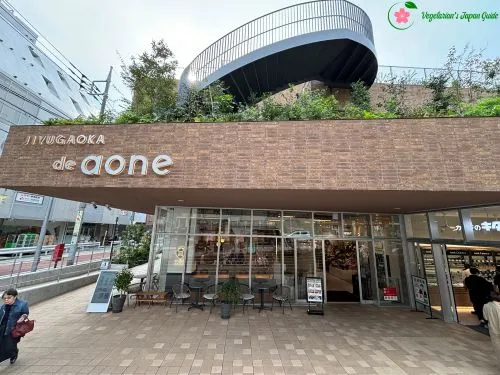
Besides cultural and historical spots, Jiyūgaoka has much more to offer. The neighborhood named Liberty Hill has many famous sweet shops, stylish cafes, and trendy boutique shops. From places perfect for taking a break during a date, to photogenic places, Jiyūgaoka is where you can have a taste of Japan’s capital without being pushed around!
For more information, refer to our article on What to Do and Where to Eat in Jiyūgaoka!