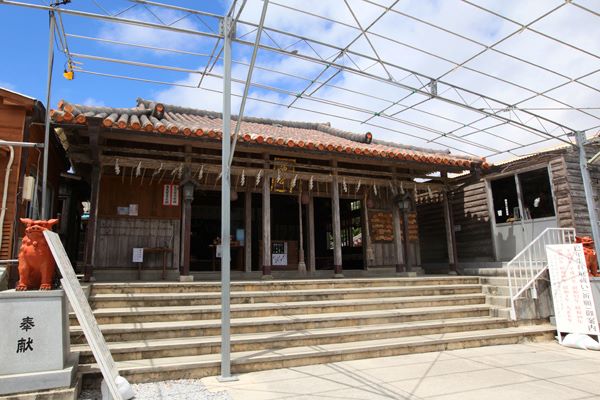
Discover the profound spiritual history of Ryūkō-ji Temple (龍口寺), a serene sanctuary in Fujisawa just a stone’s throw from the Enoshima coast. Known as the site of the “Tatsunokuchi Persecution,” this historic Nichiren Buddhist temple commemorates the miraculous survival of the priest Nichiren in 1271. Today, the temple grounds offer a peaceful retreat from the bustling beaches, featuring a majestic five-story wooden pagoda—the only one of its kind in the Kanagawa region—and a striking hilltop stupa. Whether you are exploring the intricate woodcarvings of the Main Hall, climbing the forest paths for a glimpse of the Pacific, or attending the vibrant Tatsunokuchi Festival in September, Ryūkō-ji offers a deep, contemplative look into Japan’s religious heritage and architectural beauty.
Ryūkō-ji Temple and the Legend of Enoshima
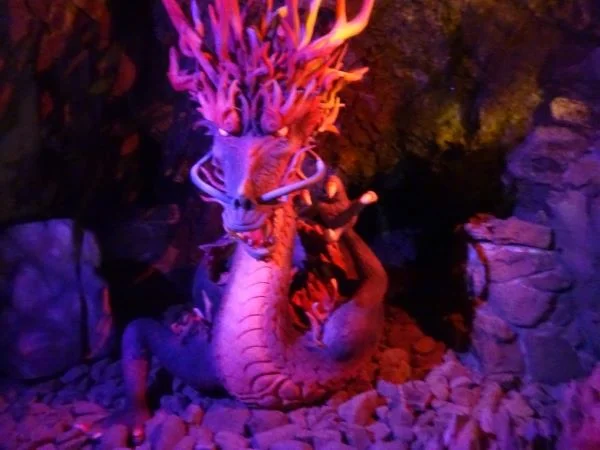
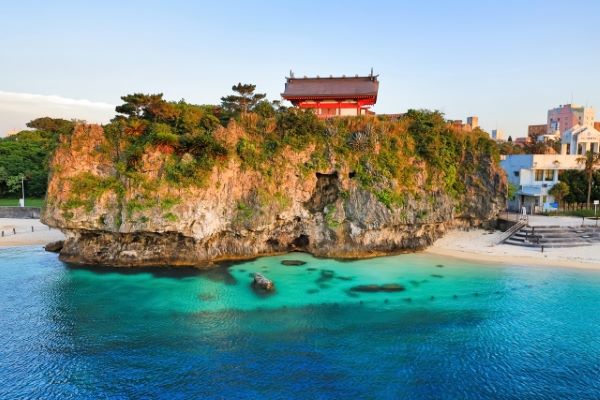
If you have read Enoshima’s legend in our Enoshima article, you might remember the five-headed dragon who fell in love with the goddess, Benzaiten. To worship the dragon, the locals built a shrine in front of the mountain it had transformed into, naming it Ryūkōmyō Shrine (龍口明神社).
Check out Enoshima’s legend in our Enoshima article if you haven’t already!
Ryūkō-ji’s History and the Miracle That Saved Nichiren Shōnin
In the Kamakura period (1185 – 1333), the Tatsunokuchi execution site was located really close to Ryūkōmyō Shrine. While the villagers feared that executing criminals so close to the precinct would anger the dragon, the execution site turned out to be beneficial to the shrine.
In the late Kamakura period, after Nichiren Shōnin (日蓮上人) meditated in Enoshima Iwaya Caves, many gathered around Enoshima to learn and chant the Lotus Sutra (法華経) with him. They believed that chanting the sutra contributed to the country’s prosperity. However, their kind thoughts have unsettled the Kamakura shogunate.
In 1271, Nichiren was caught by the Kamakura shogunate and executed at the Tatsunokuchi execution site. But something weird happened just before the knife was going to cut his head off.
It is said that a bright light ball flew from Enoshima’s direction, and suddenly, the sky darkened, leaving the only light source as the bright light ball. Startled by what had just happened, the official reported the mysterious scene, and the Kamakura shogunate ordered the execution to be stopped.
Nichiren was returned to jail and later exiled to Sado (佐渡), but eventually returned to Kamakura.
Treating the event as a miracle, Nichiren’s disciple, Nichihō (日法), preserved the scene by erecting a small hut soon after Nichiren passed away.
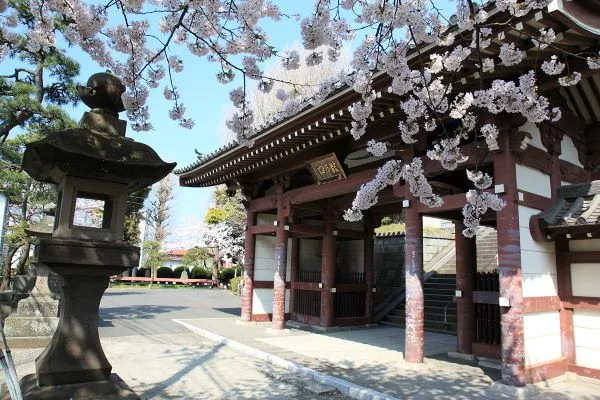
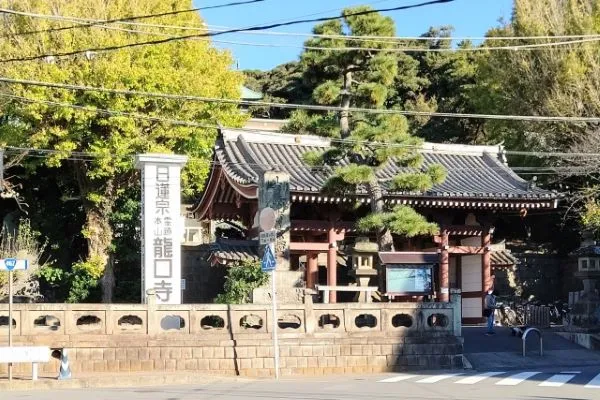
In 1337, Nichihō carved a statue of Nichiren and formally transformed the hut into a proper temple. Even today, you can still see the execution site behind the Niō-mon Gate (仁王門) when you visit Ryūkō-ji.
Thanks to the contribution of the other six disciples, Ryūkō-ji became a large temple in 1357 that receives thousands of pilgrims each year who also stop by Ryūkomyō Shrine next door.
The Attractions in Ryūkō-ji
On the grounds of Ryūkō-ji, you will see a small cave jail where Nichiren was confined before execution (see the 7th photo in the IG post). Nowadays, a bronze Nichiren statue is enshrined.
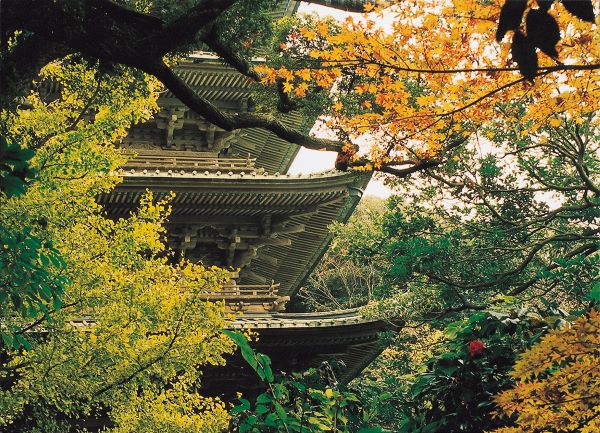
If you stroll around the precinct, you will encounter the only five-story wooden pagoda in Kanagawa Prefecture, built in 1910.
At the far left of the temple, the round white Stupa contains Gautama Buddha’s remains. It was completed to commemorate the 700th anniversary of Nichiren’s execution. A golden Gautama Buddha is enshrined at the front of the building.
Tip: The bell in the bell tower can be rung by the general public.
Moreover, you can adore different flowers throughout the year.
- Cherry blossoms in spring
- Ginkgo next to the Niō-mon Gate and fall foliage in autumn
- Camellia in winter
Ryūkō-ji’s Opening Hours and Access Information
- The temple’s office is open from 9 am to 4 pm.
- From Enoshima Electric Railway’s (江ノ島電鉄) Enoshima Station (江ノ島駅) and Shōnan Monorail’s (湘南モノレール) Shōnan Enoshima Station (湘南江の島駅), it is around a 3-minute walk.
- From Odakyu’s Katase-Enoshima Station (片瀬江ノ島駅), it is around a 15-minute walk.
Note that the Ryūkomyō Shrine was relocated in 1978 to Kamakura.
What Else to Do on Enoshima Island?
Escape to Enoshima, a breathtaking offshore island in Kanagawa Prefecture that serves as the ultimate coastal retreat just a short trip from Tokyo. Famed for its dramatic Pacific views and sacred shrines dedicated to the goddess of music and fortune, this “Island of the Gods” is a sanctuary where spirituality meets seaside adventure. There are a lot more things you can experience on the sacred island near Tokyo!
So, refer to our article on Enoshima for more information, including cafes with stunning views!