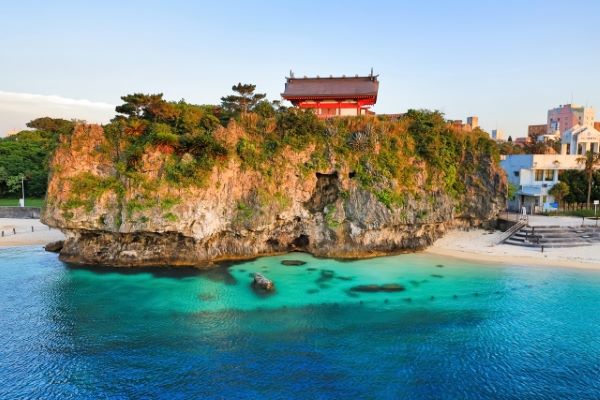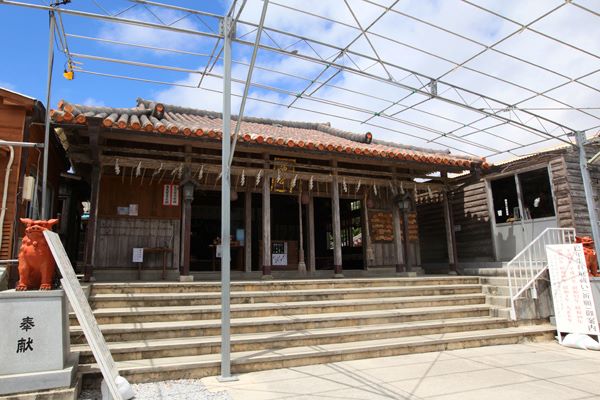
Escape to Enoshima Island (江の島), a breathtaking offshore island in Kanagawa Prefecture that serves as the ultimate coastal retreat just a short trip from Tokyo. Famed for its dramatic Pacific views and sacred shrines dedicated to the goddess of music and fortune, this “Island of the Gods” is a sanctuary where spirituality meets seaside adventure. From exploring the mystical Iwaya Caves carved by the waves to wandering through the vibrant Samuel Cocking Garden and its iconic Sea Candle lighthouse, Enoshima offers an enchanting blend of nature and myth.
Furthermore, Enoshima is only 40 minutes away by bus from Kamakura, so many people treat the two destinations as a duo and plan a two to three-day visit to make their trip to Japan more unforgettable!
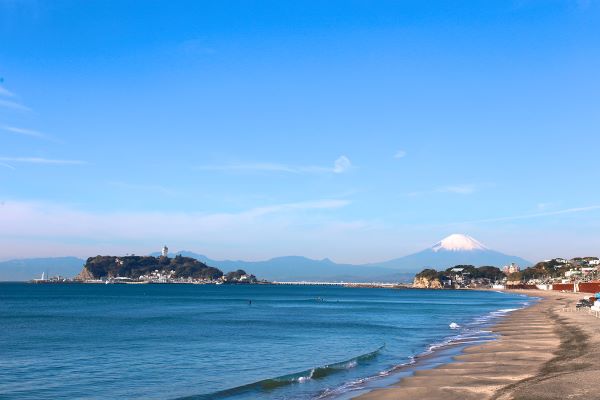
On a clear day, you are almost guaranteed a photo with the mighty Mt. Fuji as a backdrop!
Things to Do in Enoshima
- How to Get to Enoshima from Tokyo and Narita/Haneda Airport
- Enoshima Benten Bridge (江の島弁天橋)
- Bronze Torii Gate (青銅の鳥居)
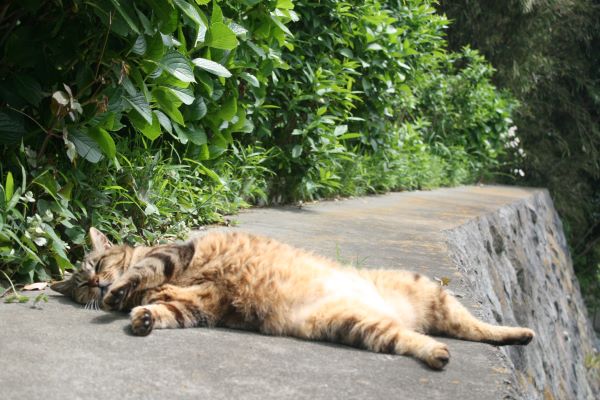
- Enoshima, a Cat Island
- The Legend of the Five-headed Dragon and the Origin of Enoshima
- Enoshima Shrine (江島神社)
- Enoshima Iwaya Caves (江の島岩屋)
- Shitamichi Passage Way (下道)
- Enoshima Daishi (江の島大師)
- Enoshima Sea Candle (江の島シーキャンドル)
- Cafe Shima no Chaya Aburaya (島の茶屋あぶらや)
- Enoshima Pancakes (江の島パンケーキ)
- The best place to enjoy Enoshima island’s sunset.
- Inoue Sōhonpo Japanese Confectionary Shop (井上総本舗)
- Cafe Maru (カフェーマル)
- Ryūkō-ji Temple (龍口寺)
Refer to HERE for Enoshima island map.
Tip: If you want to spend a night around Enoshima, consider Kishu Railway Katase Enoshima Hotel. It is within walking distance of Enoshima’s main attractions.
Explore Enoshima With a Guided Tour
If you prefer a guide to introduce you to the charms of Enoshima, how about joining one of the following tours?
- Hiking Tour in Enoshima with a Local Guide
- Kamakura and Enoshima Day Tour from Tokyo
- Enoshima & Yokohama Red Brick Warehouse One Day Tour from Tokyo
- 2D1N Mount Fuji & Owakudani & Enoshima Bus Tour from Tokyo
- Kamakura One-day Tour by Chartered Car Departure from Tokyo
How to Get to Enoshima from Tokyo and Narita/Haneda Airport
For Enoshima’s access information, please refer to the official website HERE. Also, HERE is more information about various transportation passes that may save you money. The same information is provided on the first page of the brochure HERE. On top of the English station name, the station number and the Japanese station name are labeled, which might be useful when you get there.
Tips:
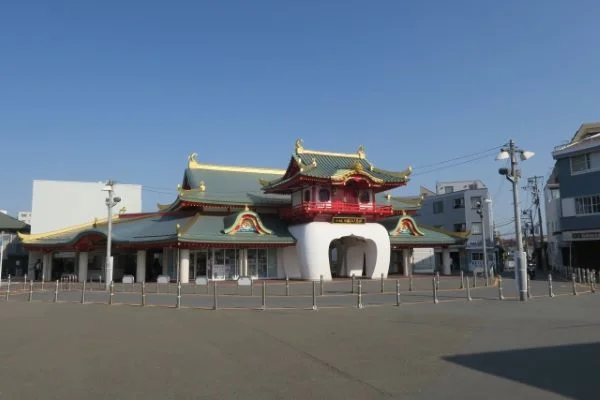
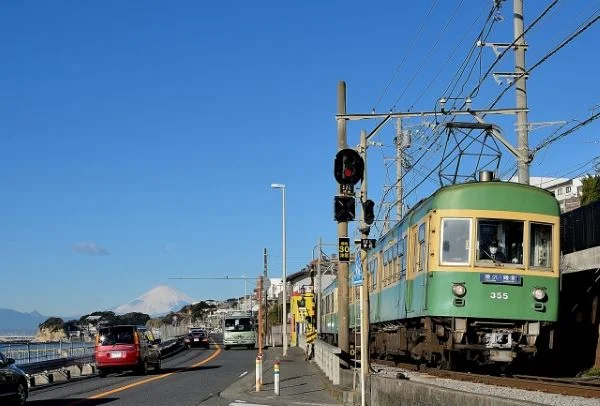
☛ Instead of taking Odakyū Electric Railway (小田急電鉄) and getting off at Katase-Enoshima Station (片瀬江ノ島駅), we recommend switching to Enoden (Enoshima Electric Railway (江ノ島電鉄)) from Kamakura Station (鎌倉駅) or Fujisawa Station (藤沢駅). The retro station buildings and train carriages, along with the natural scenery, are the best way to start your trip to Enoshima.
☛ For the return trip, take the train from Odakyū ‘s Katase-Enoshima Station to check out the station designed based on the dragon palace!
☛ Remember to grab an Enoshima Map from the Enoshima Tourist Center (江の島観光案内所) at the end of Enoshima Benten Bridge. English directory signs are also placed across the island.
Enoshima Benten Bridge (江の島弁天橋)
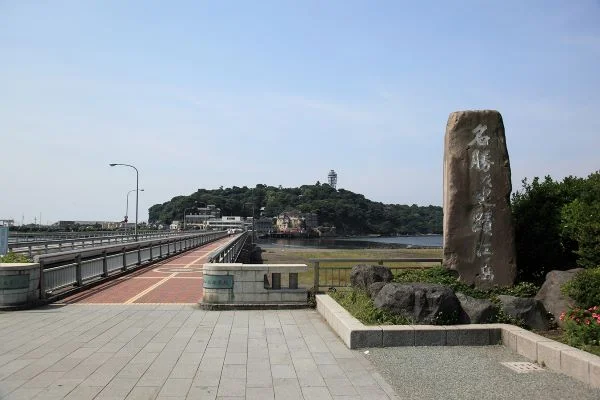
From the train stations closest to Enoshima, it is about a 5 to 10-minute walk to the pedestrian-only Enoshima Benten Bridge (江の島弁天橋), which connects the island to Japan’s main island. If you plan to drive, use the vehicles-only Enoshima Ōhashi Bridge (江の島大橋), which is just a meter away.
The 389-meter-long Enoshima Benten Bridge was built for the 1964 Tokyo Olympics yacht competition. On the bridge, you might see some people enjoying watersports.
Bronze Torii Gate (青銅の鳥居)
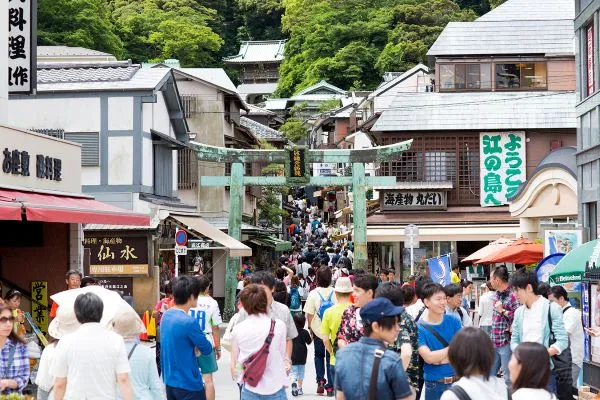
Crossing the Enoshima Benten Bridge, the green Bronze Torii Gate is the entrance of Enoshima. The gate – restored in 1821, also marks the precinct of the realm of god.
In the past, Shintoism and Buddhism were synchronized in Japan. Until the beginning of the Meiji period (1868 – 1912), when the separation decree was issued, Enoshima itself was the precinct of a temple called Kinkizan Yogan-ji (金亀山与願寺), a temple dedicated to Benzaiten.
So when pilgrims took a pilgrimage to Enoshima, they aimed to worship Benzaiten in the Enoshima Iwaya Caves at the far end of the island.
The street that stretches from the torii gate is called Nakamise-dōri (仲見世通り), which is the approach to Enoshima Shrine. Souvenir shops and restaurants lined the sides of Nakamise-dōri, making it one of the most lively spots on Enoshima.
Note that most shops are only open from 10 or 11 am, so if you arrive earlier than that but want to check out the shops, remember to come back before late afternoon, when the shops usually start closing.
Enoshima, a Cat Island
While it is not well known, there are many cats in Enoshima.
Unlike the cats in big cities, the cats on Enoshima are chill and won’t escape from you when you draw near. In fact, a few of them might even come up to you for some pets!
If you want to find out about other cat islands in the country, refer to our article on the Top 10 Cat Islands in Japan!
The Legend of the Five-headed Dragon and the Origin of Enoshima
Most of the historical and cultural attractions on Enoshima are based on the Legend of the Five-headed Dragon, which is said to be the island’s origin. Here is how the legend goes.
Important: We apologize for the distressing content that may be uncomfortable for you, as some parts relate to children.
- Once upon a time, a five-headed dragon was living in Sagami Bay (where Enoshima now exists). The dragon ravaged the coastal village, causing a lot of trouble for the villagers.
- In a desperate attempt to save the village, the villagers offered the children to the dragon as tributes. This is why the area was called Koshigoe (originally “子死越”, now “腰越” so the name doesn’t cause distress to people).
- In 552, a large earthquake happened in Koshigoe and continued for 10 days. As a result, Enoshima rose from the sea.
- After the earthquake stopped, a beautiful goddess with 15 children descended.
- The dragon fell in love at first sight and proposed to the goddess, but was rejected on the spot.
- Not giving up on the goddess, the dragon vowed to make up for his past sins and started to take care of the village, and the goddess finally agreed to marry him.
- As time passed by, the dragon’s life got closer to an end. But to keep up his promise, he turned himself into a mountain, Ryūkōzan (龍口山), and continues to watch over the island today.
- Ryūkōzan is the small hill at the back of Ryūkō-ji (龍口寺) on the other side of Enoshima Station.
- The island that popped up after the earthquake is Enoshima, and the goddess is Benzaiten (弁財天), the goddess of wealth, music, and eloquence.
Enoshima Shrine (江島神社)
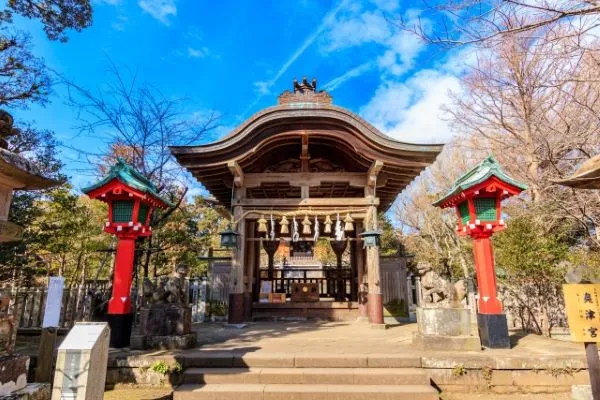
Enoshima Shrine is the major attraction of Enoshima. Before the separation of Shintoism and Buddhism, Enoshima was the precinct of Kinkizan Yogan-ji Temple (金亀山与願寺), which worships Benzaiten, a Buddhist guardian deity.
Although the name of the religious facility has changed, it remains a popular pilgrimage site in Japan to seek Benzaiten’s blessing.
Together with the Itsukushima Shrine (厳島神社) on Miyajima and the Tsukubusuma Shrine (都久夫須麻神社) in Shiga Prefecture, the Benzaiten statues in the three shrines are known as the Three Great Benzaiten in Japan.
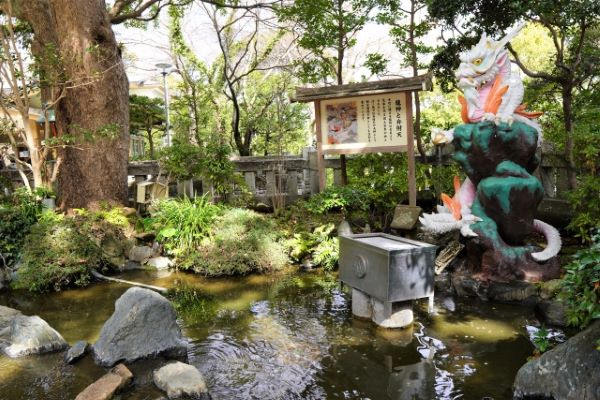
Enoshima Shrine consists of three sub-shrines, the Hetsumiya (辺津宮), the Nakatsumiya (中津宮), and the Okutsumiya (奥津宮). In addition to the worship halls, the shrine also has a couple of more interesting spots, such as a pond that will make you richer if you wash your coins in it.
For more information about this prominent attraction on Enoshima, please refer to our article on Enoshima Shrine.
Enoshima Iwaya Caves (江の島岩屋)
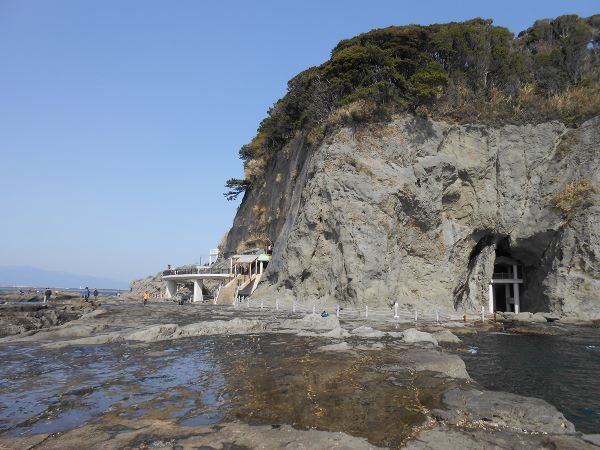
Enoshima Iwaya Caves are said to be the birthplace of the Enoshima Shrine. It is also where many revered Japanese monks meditated centuries ago.
In addition to the historical and cultural elements, the scenery from the bridges leading to the cave entrance is just spectacular. On a clear day, you will even get a clear view of Mt. Fuji afar!
For more information, please refer to the second half of our Enoshima Shrine article.
Shitamichi Passage Way (下道)
If you don’t want to climb up stairs and don’t want to use Enoshima Escar, Shitamichi Passage Way is a good option to get to Enoshima Shrine’s Okutsumiya and Enoshima Iwaya Caves.
Although it will mean missing out on Enoshima Shrine’s Hetsumiya and Nakatsumiya, it is a great way to conserve your physical stamina.
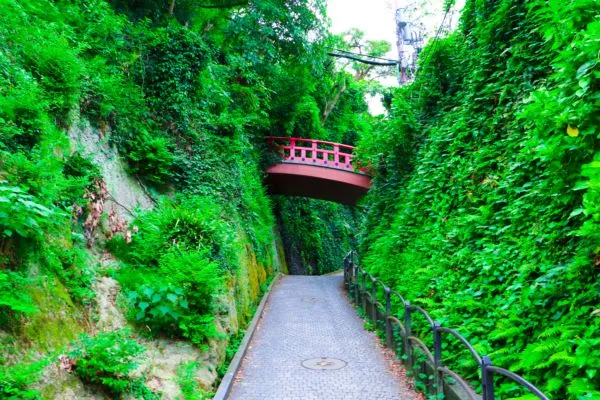
From the red torii gate of Enoshima Shrine, head right instead of passing through the torii gate. You will see this traditional red bridge in no time. As the passageway is constructed along the island’s coastline, it will be a more relaxing stroll with superb ocean views.
If you want to visit Enoshima Sea Candle and the observation decks at the top of Enoshima, all you need to do is climb up the stairs along Oiwaya Street. Yes, there is a bit of climbing, but it won’t be as tiring.
Enoshima Daishi (江の島大師)
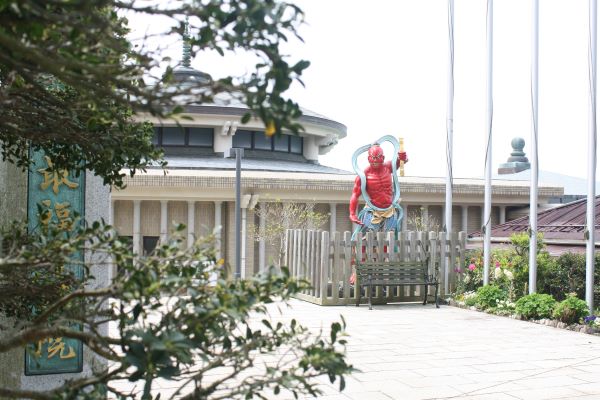
From Nakatsumiya to Okutsumiya, you will walk past a temple called Enoshima Daishi. The two bright red Deva king statues will definitely catch your attention.
Because of the modern-style worship hall, many might think it is a Buddhist-themed museum that the Deva kings are guarding. But it is the 6-meter-tall red Acala statue (不動像) in the Hondō Hall that they are protecting. Because of its red color, the Japanese call it Aka-Fudō (赤不動).
Enoshima Daishi was completed in 1993 as a branch of Kagoshima’s Saifuku-ji Temple (最福寺) in the Kantō region. As Saifuku-ji is Kōyasan’s sub-temple, Enoshima Daishi is linked to the sacred land established by Kōbō Daishi.
Visitors are welcome to tour freely inside the Hondō. Feel free to participate in the Gomagyō (護摩行) ritual. The purification ritual, which involves burning small pieces of holy (scented) wood before the Buddhist altar, is performed every day, usually at 10 or 10:30 in the morning.
You might find it weird when you take a closer look at the main image, Japan’s biggest Acala statue. Isn’t it supposed to be a red statue? The one in front of you is clearly black…
The redness of the Acala statue has gradually faded to black from smoke from the Gomagyō fire ritual. So if they perform a deep clean on the statue, the original red color should be exposed.
Embroidery Buddhist Painting (刺繍仏画) at Enoshima Daishi
Enoshima Daishi also has a resting area. From there, there are stairs to the ossuary in the basement.
While ossuary doesn’t sound too enticing, on the wall of the staircases leading to the back of the building are 18 impressive Buddhist embroidered tapestries. Those were all artworks by teenage Chinese ladies from long ago. The embroidery work is so detailed that it is almost like a photo!
Enoshima Sea Candle (江の島シーキャンドル)
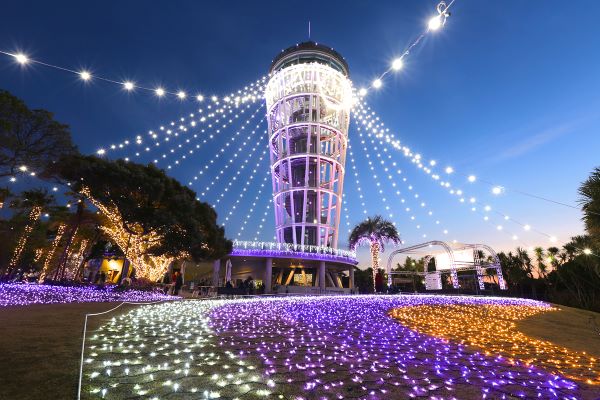
The iconic lighthouse and observation tower are the crown jewels of Enoshima Island. Standing tall within the lush Samuel Cocking Garden, this striking architectural landmark offers one of the most spectacular 360-degree panoramas in Japan, featuring sweeping views of Sagami Bay, the distant Izu Peninsula, and a breathtaking silhouette of Mt. Fuji.
So, refer to our Enoshima Sea Candle article for ideas of what you can do during the day and at night!
Shima no Chaya Aburaya (島の茶屋あぶらや)
If you hike your way up to Enoshima Shrine’s Okutsumiya, Shima no Chaya Aburaya is the perfect place to rest your legs. It is an oasis on a hot summer day or on a freezing winter day.
Enjoying a bowl of traditional desserts with a cup of tea or other drinks of your choice in the Japanese-style cafe is the best way to take your visit to Enoshima to the next level.
The staff here are all really nice. The cafe’s interior is like a ryokan’s lobby. If you are a bit hungry, give the cafe’s vegetable-filled Oyaki bun a try.
Shima no Chaya Aburaya is open from 10 am to 5 pm.
Enoshima Pancakes (江の島パンケーキ)
If you prefer Western-style desserts, consider Enoshima Pancakes on the western cliff of Enoshima. While your mouth enjoys the wobbly and fluffy pancakes, your eyes are also treated to the stunning view of Sagami Bay.
On a clear day, it is one of the best spots to admire Mt. Fuji at its magnificent best. Furthermore, as long as it isn’t rainy, the sunset from the pancake specialty shop is just splendid!
Enoshima Pancakes was originally a teahouse named Fujima Chaya, which opened for pilgrims in 1854. In 2011, it reopened after renovation as a pancake specialist. While the menu is limited, all items are deliciously prepared!
Tip: If you are a student, show your student ID to enjoy the 1,500 yen pancake for only 1,000 yen!
Enoshima Pancakes’ Opening Hours and Access Information
- Enoshima Pancakes is open from 12 pm to 5 pm.
- From Enoshima’s entrance, it is around a 25-minute walk.
Inoue Sōhonpo Japanese Confectionary Shop (井上総本舗)
On Nakamise-dōri Street at Enoshima Shrine, Inoue Sohonpo is a Japanese confectionery shop loved by locals for almost 100 years (established in 1925). While there are a couple of manjū (Japanese sweet bean-paste bun) shops close by, Inoue Sohonpo has been rated the best!
The white bun in the photo is infused with sake. When you bite into it, the light fragrance of sake will gradually spread in your mouth. The brown bun’s skin has a light brown-sugar flavor, which pairs perfectly with the sugar-reduced red bean paste.
The current owner of Inoue Sohonpo is the fourth generation. The belief that has been supporting him every day is that he won’t let any customers say the shop’s taste has dropped. Instead, he wants them to give him the recognition that his buns taste even better than the ones made by the past three generations!
Since Inoue-san was young, he was surprised by the number of customers who told him that every time they came to Enoshima, they definitely stopped by the shop for their signature manjū and shell-shaped monaka (bean-paste-filled wafers).
The bean-paste-filled wafers sold at Inoue Sohonpo are handmade using a method passed down for generations. The crispy wafers are made with sticky rice flour. Between the two wafers is the bean paste made with high-quality azuki beans and sugar. On a hot summer day, many customers would buy their new item, the ice monaka. On top of the bean paste, ice cream is sandwiched!
The shape of the monaca was designed after five different types of shells. Each of them is the size of one mouthful. So, how about ordering a set of Monaca and seeing how closely they resemble the real shells?
The shop also has a dining area where other types of traditional desserts are served.
Refer to HERE for Inoue Sohonpo’s menu and allergens information.
Inoue Sōhonpo’s Business Hours and Access Information
- Inoue Sohonpo is open from 10 am to 5 pm daily except Tuesdays and Fridays.
- From 10 am to 6 pm at weekends and public holidays
- The shop is a 12-minute walk from Odakyū’s Katase-Enoshima Station (片瀬江ノ島駅).
Important: Inoue Sohonpo accepts cash only.
Cafe Maru (カフェーマル)
For all the cat lovers, stop by Cafe Maru. While it isn’t a cat cafe, you will most likely be welcomed by the cafe’s cat Tarō!
If Tarō’s cuteness has enchanted you, there are many original Tarō goods designed and handmade by the cafe’s owner, Ichinose, on sale.
If you aren’t into cats, you will still want to drop by Cafe Maru for their handmade cakes and their nostalgic interior, decorated with many antiques. Stepping into the cafe is like stepping into another world. The quiet, relaxing atmosphere inside the cafe stands in sharp contrast to the busy tourist area outside.
Cafe Maru’s Business Hours and Access Information
- The cafe is open from 11:30 am to 6 pm daily.
- Cafe Maru is just a one-minute walk away from the Bronze Torii Gate.
Ryūkō-ji Temple (龍口寺)
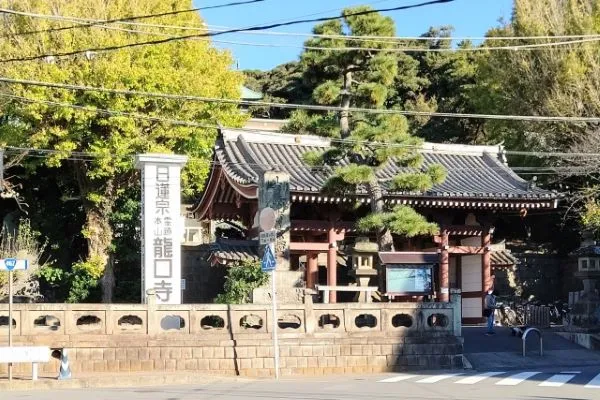
On your way back to your hotel, how about stopping by Ryūkō-ji Temple, which is very close to Enoshima Station?The temple grounds offer a peaceful retreat from the bustling beaches, featuring a majestic five-story wooden pagoda and a striking hilltop stupa. You can also adore seasonal colors at this “hidden gem” near Enoshima!
Refer to our Ryūkō-ji Temple article for more information.
Discover the Attractions in Kichijōji
If Enoshima is on your itinerary, you are likely to be based in Tokyo. If that is the case and you have a free day, we highly recommend you check out Kichijōji. The neighborhood that was rated “The Most Desirable Area to Live” is great for almost everything. There is a large park filled with vegetation and several unique cafes where you can rest. It is also where the famous Ghibli Museum is located!
For more ideas of what to do in the area, refer to our Kichijōji article!