For travelers who prefer whiskers over skyscrapers, Japan offers a unique phenomenon: cat islands. Known locally as Nekoshima, these remote fishing villages have become world-famous destinations where the feline residents significantly outnumber the human population. Whether you are trekking to the “Cat Heaven” of Tashirojima in the north or taking the ferry to the viral shores of Aoshima, visiting a cat island is a bucket-list experience that requires a bit of prep and a lot of treats. In this guide, we will break down the top cat islands in Japan, how to navigate the ferry schedules, and the essential etiquette for keeping the local kitty communities happy and healthy.
Our Favorite 15 Cat Islands in Japan
If you are planning a trip to a Nekoshima (cat island), these ten destinations offer the best feline encounters and scenic island views across Japan. In particular, Enoshima and Tashirojima are the two cat islands near Tokyo.
| Region | Island Name | Key Highlight | Access Point | Ferry/Travel Time |
| Northern Japan (Tohoku) | Tashirojima (田代島), Miyagi | The legendary “Cat Shrine” and Manga-themed cabins. | Ishinomaki Port | 45–60 min |
| Eastern Japan (Kanto) | Enoshima (江ノ島), Kanagawa | The best day trip from Tokyo with shrine & cliff views. | Bridge (Walk/Car) | N/A |
| Seto Inland Sea | Ao Island (青島), Ehime | The highest cat-to-human ratio in Japan. | Nagahama Port | 35 min |
| Sanagi Island (佐柳島), Kagawa | The famous “Jumping Cats” of the harbor walls. | Tadotsu Port | 50 min | |
| Ogijima (男木島), Kagawa | Hillside village featuring modern art and cat vistas. | Takamatsu Port | 40 min | |
| Manabeshima (真鍋島), Okayama | A preserved “Old Japan” setting used in films. | Kasaoka Port | 45–70 min | |
| Mushima (六島), Okayama | A quiet, heart-shaped island known for its Art Project. | Kasaoka Port | 45–60 min | |
| Muzukijima (睦月島), Ehime | Famous for citrus groves and many orange tabby cats. | Mitsuhama Port | 30–60 min | |
| Iwaishima (祝島), Yamaguchi | Unique stone-wall architecture and heart-like shape. | Yanai Port | 60 min | |
| Southern Japan (Kyushu) | Ainoshima (相島), Fukuoka | Most popular in Kyushu; incredibly easy to access. | Shingu Port | 20 min |
| Ainoshima (藍島), Kitakyushu | Rugged, local fishing vibes near the Kanmon Straits. | Kokura Port | 35 min | |
| Umajima (馬島), Kitakyushu | The quiet, tiny neighbor to the Kitakyushu Ainoshima. | Kokura Port | 20 min | |
| Yu Island (湯島), Kumamoto | A peaceful retreat known as the “Crossroads of Cats.” | Oyanano Port | 30 min | |
| Kaderashima (加唐島), Saga | Off-the-beaten-path tranquility for quiet exploration. | Yobuko Port | 20 min | |
| Okinawa | Oujima Island (奥武島) | Famous for southern beach vibes and island tempura. | Bridge (Bus/Car) | N/A |
Travel Tip for Plant-Based Travelers
Finding plant-based food on Japan’s remote islands can be a challenge. It is best to bring plant-based food with you if you plan to visit most of the cat islands we introduce in this guide. Refer to HERE for a list of vegan food available at convenience stores.
Ao Island (Ehime): The “Cat-Heavy” Island of the Seto Inland Sea
Often referred to as the ultimate destination for feline enthusiasts, Aoshima (popularly known as Ao Island) is famous for having one of the highest cat-to-human ratios in the world. With roughly 100 cats for every handful of human residents, the island has become a viral sensation. Unlike some of the larger, more developed islands, Aoshima is a tiny, quiet fishing village where the cats truly run the show—greeting the ferry in massive groups and lounging in every available sunny spot along the pier.
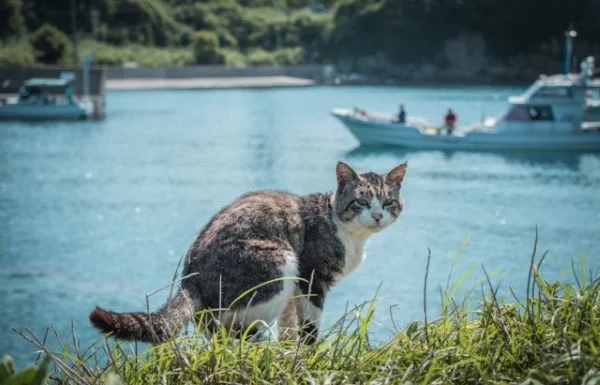
Because the island is so remote and lacks modern tourist facilities, visiting Aoshima feels like stepping back in time. It offers a raw, authentic experience where the primary “attraction” is simply sitting on the dock and being surrounded by dozens of friendly, curious cats.
- Access: Take the JR Yosan Line to Iyo-Nagahama Station. From there, it is a 2-minute walk to the Nagahama Port. The “Aoshima Maru” ferry makes two round trips daily, taking approximately 35 minutes to reach the island.
- Pro Tip: The ferry has a very strict passenger limit and is often canceled due to high waves. To ensure a spot, arrive at Nagahama Port at least 45–60 minutes before the morning departure. If the morning boat sells out, there is no guarantee you will get on the afternoon trip.
- Vegetarian Note: There are no shops, vending machines, or restaurants on Aoshima. It is vital to bring your own water and a vegetarian lunch from Nagahama or Matsuyama. Additionally, please be prepared to take all your trash back to the mainland, as there are no public waste bins on the island.
For more information, please refer to our article on Ao Island.
Tashirojima Island (Miyagi): The “Manga & Majesty” Cat Island
Often cited as the original “Cat Island,” Tashirojima is located off the coast of Ishinomaki and is steeped in a unique history where felines are treated as local deities. Centuries ago, islanders raised silkworms for textiles and kept cats to protect them from mice; later, local fishermen began to believe the cats’ behavior could predict the weather and ensure a bountiful catch. This deep respect led to the creation of a literal Cat Shrine (Miyori Jinja) at the heart of the island, where visitors leave small feline figurines as offerings.
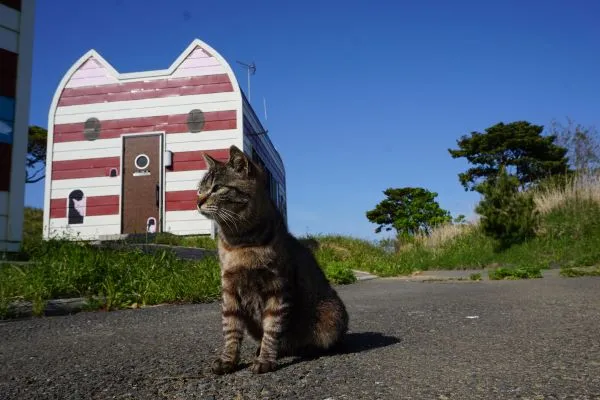
Today, Tashirojima is equally famous for its “Manga Island” resort—a collection of whimsical, cat-themed cabins designed by legendary manga artists. The island offers a blend of rugged coastal beauty, traditional fishing village charm, and a feline population that vastly outnumbers the human residents.
- Access: From Sendai, take the JR Senseki Line to Ishinomaki Station. From there, take a short bus or taxi ride to the Ajishima Line Ferry Terminal (Chuo Pier). The ferry ride takes about 45–60 minutes.
- Pro Tip: The ferry makes two stops on the island: Odomari and Nitoda. Most travelers should get off at Nitoda Port (the southern stop), as this is where the majority of the cats, the “Manga Island” cabins, and the local shop are located.
- Vegetarian Note: Facilities are very sparse. There is a small cafe/resthouse called Shima-no-Eki near the center of the island that sometimes offers light snacks, but their menu is limited and inconsistent. Since Ishinomaki is a famous seafood port, most local lunch options involve fish. It is highly recommended to stock up on vegetarian bento or sandwiches at
For more information, please refer to our article on Tashirojima Island!
Oujima Island (Okinawa): The “Southern Tempura Haven” of the Ryukyu Islands
Located off the southern coast of Okinawa’s main island, Oujima (also known as Ojima) is a small, vibrant fishing community connected to the mainland by a short, 150-meter bridge. While many of Japan’s cat islands are remote and require long ferry rides, Oujima is incredibly accessible, making it a favorite for travelers exploring the Nanjo area. The island is world-famous for its local “Okinawan-style” tempura shops, and the resident cats are well aware of this fact—they are often found strategically stationed outside the frying stalls, waiting for visitors to share a tiny piece of their snack.
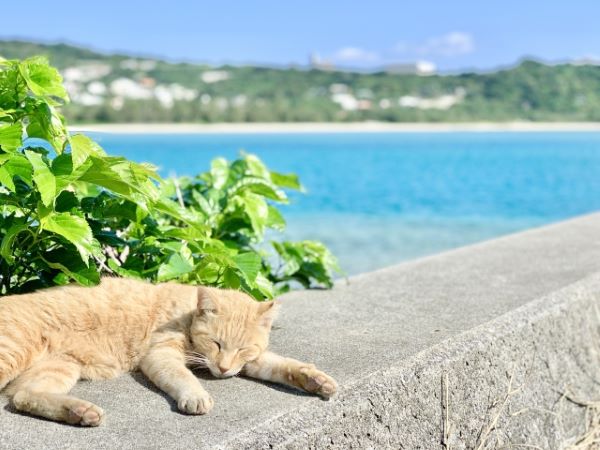
The island’s atmosphere is laid-back and tropical. You can walk the entire perimeter in about 20 minutes, enjoying views of turquoise water and coral reefs while meeting dozens of friendly, sun-drenched felines lounging on the stone walls and colorful fishing boats.
- Access: No ferry is required! Oujima is easily reachable by car or bus from Naha City (approx. 40–50 minutes). If using public transport, take a bus from the Naha Bus Terminal toward Nanjo City and get off at the “Oujima” stop.
- Pro Tip: For the best cat-watching, head to the area around Nakamoto Tempura Shop. It is the most popular spot on the island, and the cats have learned that where there are crowds, there is food. Just remember to only offer them tiny, unseasoned bits (or better yet, just a friendly pet) to keep them healthy.
- Vegetarian Note: Unlike the remote islands, Oujima actually has several food options! While the tempura is the main draw, many stalls offer Vegetarian-friendly Tempura options such as Beni-imo (purple sweet potato), Kabocha (pumpkin), and Goya (bitter melon). Since Okinawan tempura has a thicker, bread-like batter, it is quite filling. Be sure to double-check that the batter doesn’t contain dashi (fish stock) if you are a strict vegetarian.
For more information, please refer to our article on Oujima Island!
Enoshima (Kanagawa): The “Urban Island” and Feline Sanctuary
Connected to the mainland by a 600-meter bridge, Enoshima (江の島) is a stunning island that serves as one of the most popular day trips from Tokyo. While it is famous for its sea caves, sprawling botanical gardens, and ancient shrines dedicated to the goddess of luck, it is also a well-known sanctuary for hundreds of “community cats.” Both locals and monks adore these feline residents, and you will often find them napping on the stone steps leading up to the Enoshima Shrine or lounging near the entrance of traditional teahouses.
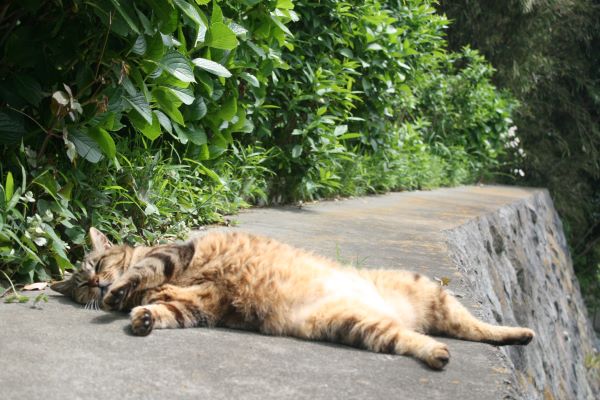
The island offers a unique blend of coastal beauty and cultural depth. As you climb the winding paths toward the Samuel Cocking Garden, the cats provide a charming distraction from the steep stairs, often posing for photos against the backdrop of Mount Fuji (on clear days) and the sparkling Sagami Bay.
- Access: No ferry required! Enoshima is easily accessible via a short walk across the bridge from three stations: Enoshima Station (Enoshima Electric Railway), Katase-Enoshima Station (Odakyu Line), or Shonan-Enoshima Station (Shonan Monorail).
- Pro Tips:
- To find the most relaxed cats, avoid the crowded main shopping street near the bridge. Instead, head to the “back” side of the island toward the Okutsu-miya Shrine and the paths leading down to the Iwaya Caves. The cats in these quieter, forested areas are much more likely to approach you for a friendly greeting.
- And if you are a big cat lover, be sure to stop by Cafe Maru and say hello to the resident cat, Tarō!
- Vegetarian Note: Enoshima is famous for shirasu (whitebait), but as a major tourist hub, it is surprisingly vegetarian-friendly! Several cafes near the top of the island, like Loncafe, offer French toast and sweets. You can also find Mitarashi Dango (sweet soy glaze rice balls) and roasted corn at the street stalls. For a full meal, check out the Italian restaurants near the yacht harbor that offer meat-free pasta and pizza.
For more information, please refer to our article on Enoshima!
Ainoshima Island (Fukuoka): The “Cat Heaven” of the Genkai Sea
Located just a short ferry ride from the bustling streets of Fukuoka, Ainoshima is one of Japan’s most accessible cat islands for travelers staying in Kyushu. Unlike some of the more rugged, mountainous islands, Ainoshima features a relatively flat, 5.4km coastal road that loops around the entire island, making it perfect for a leisurely afternoon walk.
The cats here are well-cared for by the local fishing community and are often found lounging near the harbor or congregating around the ferry terminal to greet arriving visitors.
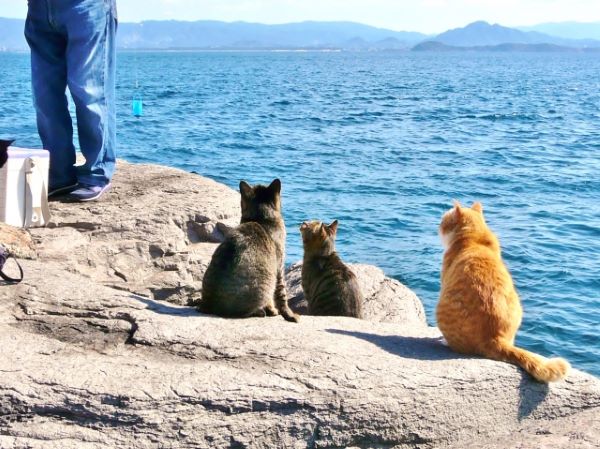
Because the island is small and peaceful, it offers a tranquil escape where you can watch the feline residents nap in the sun against the backdrop of the sea.
- Access: Take the Shingu Town Community Bus from either JR Fukukodai-mae Station or Nishitetsu Shingu Station to Shingu Port. From there, it is a 20-minute ferry ride to the island.
- Refer to HERE for a detailed transport guide to Ainoshima.
- Pro Tip: Ferry and bus schedules change between the summer and winter seasons. Always verify the latest departure times from Shingu Port to avoid missing the last boat back to the mainland.
- Vegetarian Note: Dining options on the island are extremely limited and often revolve around the local catch. It is highly recommended to purchase vegetarian-friendly snacks or a bento at a convenience store near a train station in Fukuoka before heading to the port.
For more information, please refer to our article on Ainoshima!
Ainoshima (Kitakyushu): The “Rugged Frontier” of the Kanmon Straits
While most tourists flock to the Ainoshima near Fukuoka City, the Kitakyushu Ainoshima (written with the kanji 藍島) offers a more rugged and authentic “off-the-beaten-path” experience. Located in the Hibiki-nada Sea, this island is a thriving fishing hub where the feline residents have lived alongside the local community for generations.
The cats here are famously hardy and can be found lounging atop colorful fishing nets or guarding the narrow, winding alleys that lead away from the harbor.
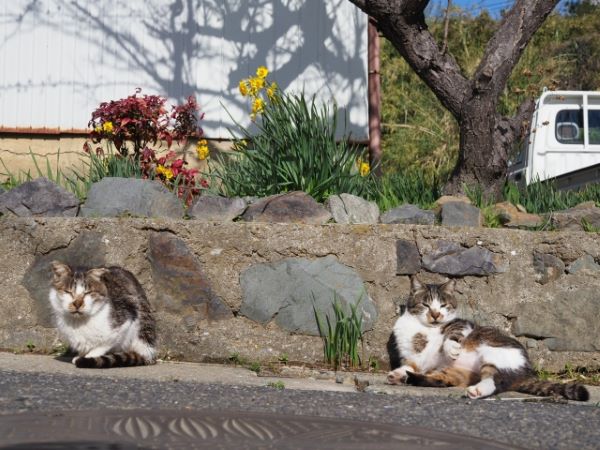
The island features unique geological formations, including the “Suigetsu” rocks, and offers a quiet, slow-paced atmosphere that feels worlds away from the industrial center of nearby Kokura. It is a perfect destination for those who want a peaceful cat-watching experience without the large crowds often found at more “viral” locations.
- Access: Take the Kitakyushu Municipal Ferry from the Kokura Port (Asano Pier), which is just a 5–10 minute walk from the Shinkansen exit of JR Kokura Station. The ferry ride takes approximately 35 minutes.
- Pro Tip: This ferry route actually makes two stops. The first stop is Umajima (another small cat island), and the second is Ainoshima. If you have time, you can get a “two-for-one” experience by visiting both, but be sure to check the return ferry times carefully, as they are infrequent.
- Vegetarian Note: As a working fishing island, food options are extremely limited and almost entirely seafood-based. There are no convenience stores on the island. Since the ferry terminal is so close to JR Kokura Station, you should pick up a vegetarian bento, onigiri (like pickled plum), or snacks at the station’s department store basement (depachika) before heading to the pier.
For more information, please refer to our article on Ainoshima Island!
Important: Don’t Go to the Wrong Island! There are two “Ainoshima” cat islands in Fukuoka Prefecture. Always double-check your train station destination (Fukukodai-mae vs. Kokura) before you set out!
- Ainoshima (相島): Accessed via Shingu Port (near Fukuoka City). Most popular with tourists.
- Ainoshima (藍島): Accessed via Kokura Port (Kitakyushu). More rugged and local.
Umajima (Kitakyushu): The “Quiet Neighbor” of Ainoshima
Often overlooked by travelers heading straight to the larger Ainoshima, Umajima (馬島) is a tiny, tranquil gem that offers one of the most intimate cat-watching experiences in Japan. Located on the same ferry line from Kokura, this is the smallest inhabited island in the Kitakyushu area, with a human population that has dwindled to just less than 30 people. Because cars are virtually non-existent here, the island’s resident cats rule the paved paths and sun-drenched docks in total peace.
The atmosphere on Umajima is exceptionally still and “slow-life.” It is the perfect spot for photographers or travelers who want to sit quietly on a pier and have a dozen curious felines approach them without the noise or crowds of more famous “Nekoshima” destinations.
- Access: Umajima is the first stop on the Kitakyushu Municipal Ferry departing from Kokura Port (Asano Pier). The ride is a quick 20 minutes from the mainland.
- Pro Tips:
- Since the ferry to Ainoshima stops here first, you can hop off at Umajima, spend an hour or two with the cats, and then catch the next ferry to continue to Ainoshima. However, the ferry only runs a few times a day, so meticulously check the timetable at the Kokura pier before you depart to avoid being stranded.
- If you can choose the timing of your visit, April and May are the best months of the year when the Wisteria is in bloom in Ōyamazumi Shrine’s precinct.
- Vegetarian Note: There are absolutely no shops, cafes, or vending machines on Umajima. It is a strictly “pack-in, pack-out” destination. Because you are only 20 minutes from the city, your best bet is to grab a selection of vegetarian-friendly snacks (like kombu onigiri or soy-milk bread) from the convenience stores inside JR Kokura Station before you walk to the port.
For more information, please refer to our article on Uma Island!
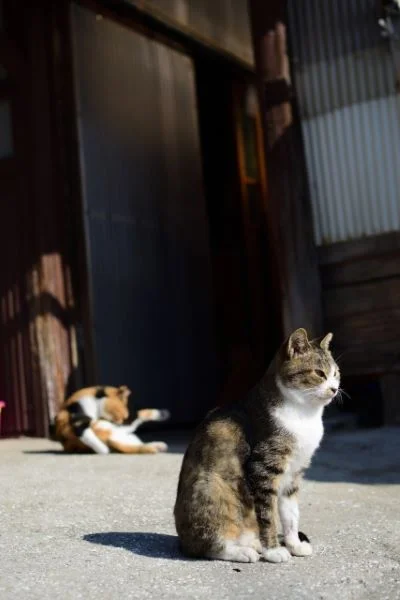
Sanagijima (Kagawa): The Home of the “Jumping Cats”
Located in the Shiwaku Islands of the Seto Inland Sea, Sanagijima (佐柳島) has earned international fame among photographers for its “Flying Cats.” Because the island’s coastal road is separated from the docks by a series of concrete sea walls, the local cats have developed a unique habit of leaping across the gaps to greet visitors or move between vantage points. This “jumping cat” phenomenon has made Sanagijima a viral sensation and a must-visit for anyone looking to capture that perfect, action-packed feline photo against a bright blue maritime backdrop.
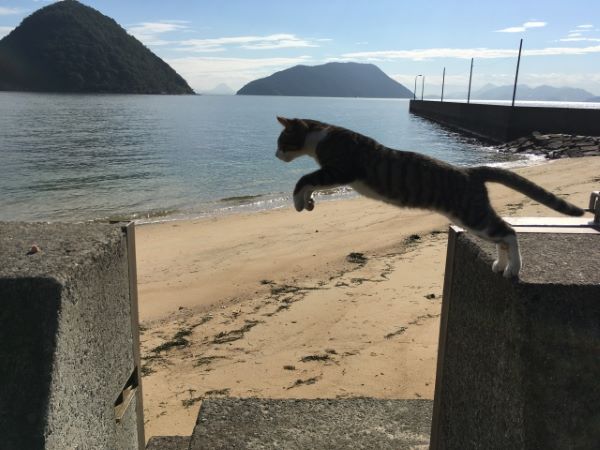
The island itself is peaceful and largely untouched by modern tourism, consisting of two main villages—Honmura and Nagahama—connected by a scenic coastal path. It offers a nostalgic “Old Japan” atmosphere where the sound of the waves is only interrupted by the occasional meow of a resident kitty.
- Access: Take the JR Yosan Line to Tadotsu Station. From there, it is about a 15-minute walk to Tadotsu Port. The ferry to Sanagijima departs four times daily and takes approximately 50 minutes to reach the island.
- Pro Tip: To see the famous “jumping cats,” head to the embankment walls near the Honmura or Nagahama ports. If you have a toy (like a “cat teaser” wand), you can often encourage the cats to show off their jumping skills for a photo. Just be patient—these feline athletes operate on their own schedule!
- Vegetarian Note: Like many remote Seto Inland Sea islands, Sanagijima has no convenience stores or supermarkets. There is a small, charming cafe in a renovated school building (Sanagi Island School) that serves light meals, but its menu is limited and often centers on fish. It is highly recommended to purchase a vegetarian bento or seasonal fruit at the shops around Tadotsu Station before you board the ferry to ensure you have a reliable meat-free lunch.
For more information, please refer to our article on Sanagi Island!
Ogijima (Kagawa): The Hillside “Art Island” of the Seto Inland Sea
Nestled in the heart of the Seto Inland Sea, Ogijima (男木島) is a stunning, vertically inclined village where stone paths wind upward through tiered houses toward the iconic Ogijima Lighthouse. While it is famous as a venue for the Setouchi Triennale art festival, it is equally beloved as a sanctuary for friendly, well-fed cats. These feline residents are often found lounging near the “Ogijima’s Soul” art installation at the harbor or sunning themselves on the flat rooftops of the hillside homes, providing a perfect foreground for panoramic views of the blue sea.
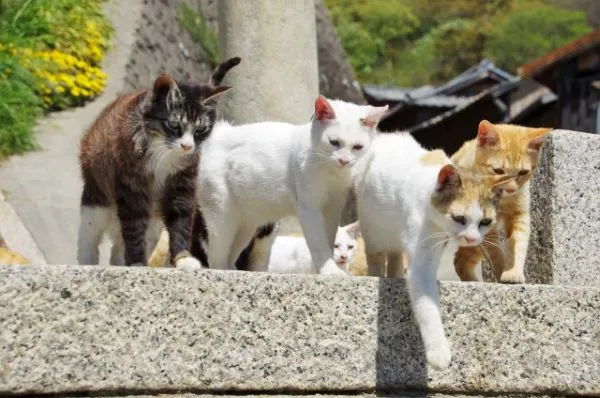
Because the island is largely car-free due to its steep terrain, the cats roam the labyrinthine alleys in total safety. Walking through Ogijima feels like exploring a living gallery where contemporary art, traditional architecture, and over 200 curious cats coexist in perfect harmony.
- Access: Take the “Meon” ferry from Takamatsu Port (near JR Takamatsu Station). The ride takes approximately 40 minutes and usually stops at the neighboring Megijima first.
- Pro Tip: Wear comfortable walking shoes with good grip! The paths on Ogijima are steep and can be slippery. For the best cat encounters, follow the signs to the Ogijima Lighthouse at the northern tip of the island; the trail is scenic and home to several quiet cat colonies.
- Vegetarian Note: Thanks to the art festival influence, Ogijima is more “foodie-friendly” than most cat islands. Several small cafes, such as Onba Cafe or Ogijima Library, offer light meals and coffee. While menus often feature the catch of the day, you can frequently find seasonal pasta dishes. However, many cafes are only open on weekends or during festival seasons, so it is still wise to bring a “backup” vegetarian bento from Takamatsu.
For more information, please refer to our article on Ogijima!
Manabeshima (Okayama): A Journey into “Old Japan” Cinema
Stepping off the ferry at Manabeshima (真鍋島) feels like walking onto a movie set—which isn’t surprising, as this preserved fishing village has been used as a filming location for numerous Japanese movies and even inspired a famous French comic book. Known for its traditional wooden architecture and narrow, nostalgic streets, Manabeshima offers an authentic glimpse into the Shōwa era. The cats here are an integral part of the village fabric, often napping on the warm stone steps of local shrines or waiting patiently by the docks for the fishermen to return.
The island is divided into two main areas: Honmura and Iwatsubo. A pleasant coastal path connects the two, and you will find that the cats are equally social in both neighbourhoods, making it one of the best locations for a slow-paced, atmospheric photo walk.
- Access: Take a regular ferry or high-speed boat from Kasaoka Port (near JR Kasaoka Station). Depending on the boat type, the trip takes between 45 and 70 minutes.
- Pro Tip: If you want to experience the island in total tranquility, aim for the morning high-speed boat. Most day-trippers arrive in the afternoon, so a morning visit allows you to have the “Old Japan” streets and the cats all to yourself.
- Vegetarian Note: Manabeshima is famous for its seafood restaurants (like the renowned Santomo), but these rarely offer vegetarian substitutions. There are no convenience stores on the island. Your best strategy is to visit the supermarkets or bakeries near JR Kasaoka Station to stock up on vegetarian-friendly bread, fruit, and snacks before boarding your boat.
Kaderashima (Saga): The “Untouched Sanctuary” of the Genkai Sea
If you are looking for an escape from the “viral” tourist spots, Kaderashima (加唐島) is the hidden gem of Kyushu. Located at the northernmost point of Saga Prefecture, this rugged island is steeped in legend—it is said to be the birthplace of a King of Baekje. Because the island is shaped like a crescent moon and features steep cliffs, it offers a dramatic backdrop for the hundreds of cats that roam the harbor and the small, traditional village.
The cats here are known for being particularly adventurous; you will often find them balancing on the narrow stone walls of the fishing port or waiting for the morning catch near the colorful boats. It is a quiet, contemplative place where the only sounds are the crashing waves and the occasional meow from a resident tabby.
- Access: Take a 20-minute ferry from Yobuko Port (famous for its morning market). If coming from Fukuoka, take a bus or train to Karatsu, then a local bus to Yobuko.
- Pro Tip: Since the ferry departs from Yobuko, make sure to arrive early to explore the Yobuko Morning Market. It is one of the three largest morning markets in Japan and offers a fantastic atmosphere before you head into the island’s quiet solitude.
- Vegetarian Note: Yobuko is famous for squid, so almost every restaurant menu will reflect that. However, the morning market is a great place to pick up fresh seasonal fruit, pickled vegetables, or steamed buns (check the fillings!) for your island picnic. There are no convenience stores or restaurants on Kaderashima, so packing your own lunch from Yobuko is a must.
Iwaishima (Yamaguchi): The “Stone Wall” Heart of the Seto Inland Sea
Iwaishima (祝島) is one of the most architecturally unique islands in Japan. It is famous for its “Iwai-kanban”—intricate stone walls built by the locals to protect their homes from the fierce sea winds. This rugged, heart-shaped island has a fierce sense of community and a long history of environmental activism. The cats of Iwaishima are an integral part of this tight-knit village, often found napping in the shade of the historic stone walls or congregating around the main pier.
Walking through the narrow, stone-lined alleys feels like navigating a labyrinth. The contrast between the grey stone, the orange tabby cats, and the deep blue sea makes this one of the most photogenic (and least crowded) cat islands in the country.
- Access: Take a 60-minute ferry from Yanai Port (near JR Yanai Station) in Yamaguchi Prefecture. The ferry ride is a beautiful journey through the western Seto Inland Sea.
- Pro Tip: Look for the “Biwa” (loquat) products! Iwaishima is famous for its organic loquats. If you visit in early summer, you can find fresh fruit; other times of year, look for loquat leaf tea or jam as a unique vegetarian-friendly souvenir.
- Vegetarian Note: This is a very traditional community with limited commercial facilities. There are no convenience stores. However, the island has a small “organic” movement, and you may find locals selling fresh produce. To be safe, stock up on vegetarian bento or snacks at JR Yanai Station or the supermarkets in Yanai City before you board the ferry.
Yushima (Kumamoto): The “Crossroads of Cats” and Samurai History
Tucked away in the calm waters of the Ariake Sea, Yushima (湯島) is often called the “Crossroads of Cats” due to its central location between the Shimabara and Amakusa peninsulas. While it is now a peaceful, car-free retreat where the feline population outnumbers the human residents, the island holds a legendary place in Japanese history—it was the secret meeting site where leaders planned the 1637 Shimabara Rebellion. Today, instead of samurai, you will find friendly cats lounging near the historic Taisho-era lighthouse or guarding the island’s famous “Yushima Daikon” fields.
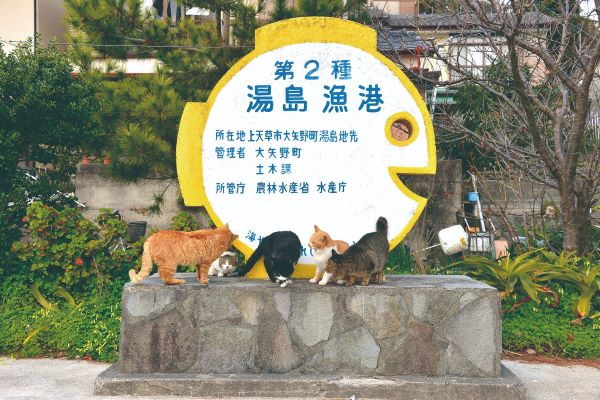
With a circumference of only 4 kilometers, Yushima is incredibly walkable. The cats here are notoriously social and are often seen congregating around the ferry terminal or following visitors through the quiet, retro-styled residential alleys.
- Access: Take a ferry from Ebito Port (located in Kami-Amakusa). The boat ride is a scenic 30-minute trip across the sea. If you are coming from Kumamoto City, take a bus to Amakusa and get off at the “Ebito” stop.
- Pro Tips:
- Look out for the “Cat Information Board” near the harbor! The locals are very proud of their feline neighbors and often post updates or maps showing where the different cat colonies like to hang out. Also, don’t miss the Yushima Lighthouse, which offers a perfect panoramic view of the surrounding mountains and sea.
- In addition to being greeted by a cat god stone statue soon after you get off the ferry, you might bump into a sea turtle from May to July when they visit the island to lay eggs!
- Vegetarian Note: Yushima is famous for its Yushima Daikon, a giant radish known for being exceptionally sweet and juicy. While many local lunch spots focus on seafood, you can sometimes find simple vegetable dishes or pickled daikon during the harvest season (winter). However, because the island is small and remote, it is highly recommended to pack a vegetarian lunch and snacks from Kumamoto City or the convenience stores near Ebito Port before you board the ferry.
For more information, please refer to our article on Yu Island!
Muzukijima (Ehime): The Citrus Grove Sanctuary
If you are looking for a cat island that smells as good as it looks, Muzukijima (睦月島) is the place to be. Located in the Kutsuna Islands near Matsuyama, this island is a major hub for Japan’s famous mikan (citrus) production. The landscape is a beautiful tapestry of orange groves and traditional wooden warehouses. The cats here are famously well-integrated into the farming lifestyle; you will often spot them lounging on top of citrus crates or guarding the entrances to the stone-walled “Nagaya” gatehouses.
The island features a 15km perimeter road, but most of the cat action is concentrated in the main village near the harbor. The cats of Muzukijima are known for their beautiful “orange tabby” coats—fitting, given the island’s primary export!
- Access: Take a ferry or high-speed boat from Mitsuhama Port or Takahama Port (both easily reachable from central Matsuyama). The ride takes between 30 and 60 minutes.
- Pro Tip: Muzukijima is famous for its traditional “Nagayamon” gates. Take a slow walk through the residential district to see these historic structures; the cats love to nap in the shaded archways, providing a perfect “Old Japan” photo opportunity.
- Vegetarian Note: While the island is a paradise for fruit lovers (you can often buy fresh mikan from roadside stalls in season), there are no convenience stores or dedicated vegetarian cafes. Be sure to grab a vegetarian-friendly lunch in Matsuyama City before heading to the port. The bakery inside the Iyotetsu Takahama Station is a great last-minute stop for bread and snacks.
Bonus: Mushima (Okayama): The Heart-Shaped “Art and Cat” Hideaway
We know we said this would be an article about Japan’s top 10 cat islands, but the cat islands are so special that we just needed to include one last one!
Tucked away in the Kasaoka Islands, Mushima (六島) is a tiny, heart-shaped island that feels like a private sanctuary. While its neighbor, Manabeshima, draws the cinema crowds, Mushima is a quiet haven for those who appreciate the intersection of contemporary art and feline companionship. The island is famous for its vibrant yellow daffodils in the winter and its “Mushima Art” installations, which provide a whimsical backdrop for the dozens of friendly cats that roam the narrow, flower-lined paths.
Because it is one of the least-visited islands on this list, the cats here are incredibly calm and curious. Walking through the village feels like exploring a secret garden where the only sounds are the rustling of the sea breeze and the occasional meow from a sun-drenched tabby.
- Access: Take a regular ferry or high-speed boat from Kasaoka Port (near JR Kasaoka Station). The journey takes approximately 45–60 minutes.
- Pro Tip: For the best views and cat encounters, follow the trail up toward the Mushima Lighthouse. Along the way, you will pass through the “Daffodil Road” (best in January and February) and several small cat colonies that congregate near the art-adorned houses.
- Vegetarian Note: There are virtually no shops or restaurants on Mushima. It is absolutely essential to pack a full “Vegetarian Survival Kit” (bento, snacks, and plenty of water) from the supermarkets near Kasaoka Station before you board the ferry.
For more information, please refer to our article on Mu Island!
Love Animal Islands? Don’t Miss “Rabbit Island”!
If your journey through Japan’s cat islands has left you wanting more unique wildlife encounters, your next stop should be the enchanting Okunoshima, famously known as Rabbit Island. Located in the Seto Inland Sea (near the cat islands of Manabeshima and Mushima), Okunoshima is home to hundreds of friendly, wild rabbits that roam free across the island’s lush greenery. While the cat islands offer a quiet, contemplative fishing village vibe, Rabbit Island is a playful, interactive experience where the fuzzy residents will happily hop right up to you for a snack. It is the perfect companion trip for any animal lover exploring Western Japan.
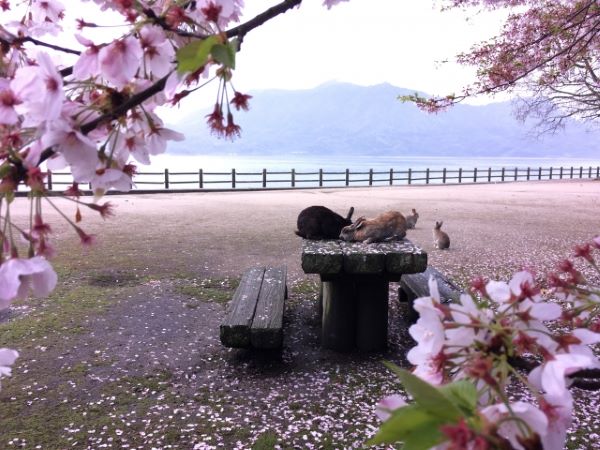
If you are interested, find out more information about this island with our guide on Ōkunoshima, which is filled with a massive rabbit population!