Winding through the dense, untouched forests of Iwate Prefecture, the Hachimantai Jukai Line (八幡平樹海ライン) is one of Northeast Japan’s premier scenic mountain drives. Translating literally to the “Sea of Trees Line,” this free alpine highway connects the historic hot spring villages of Matsukawa Onsen directly to the summit of Mt. Hachimantai. Whether you are chasing vivid autumn foliage, seeking high-altitude outdoor onsen like Tōshichi Onsen, or looking for a tranquil alternative to the busier Aspite Line, this route delivers breathtaking views of Mt. Iwate at every turn. In this guide, discover everything you need to plan the perfect drive, from peak foliage schedules and top attractions to practical vegetarian and vegan travel tips along the route.
The Attractions Along the Hachimantai Jukai Line
- Quick Facts: Hachimantai Jukai Line
- Best Time to Visit & Autumn Leaves Guide: Hachimantai Jukai Line
- Hachimantai Jukai Line vs. Hachimantai Aspite Line: Which Should You Drive?
- Top Attractions Along the Jukai Line Route
- Toshichi Hot Springs Saiunso (藤七温泉 彩雲荘): High-Altitude Outdoor Hot Springs
- Yakehashiri Lava Flow (焼走り熔岩流): Historic Volcanic Field at Mt. Iwate
- Matsukawa Onsen (松川温泉): Hidden Milky-White Sulfur Baths
- Matsukawa Gorge (松川渓谷): Premier Autumn Leaves Spot
- Mori no Ohashi Bridge (森の大橋): Scenic Photo Spot Over Matsukawa Valley
- Nanataki Fall (七滝): Scenic 7-Tier Cascade Hike
- Vegetarian & Vegan Travel Guide: Hachimantai Jukai Line
Important: Hachimantai Jukai Line is closed in 2026.
Quick Facts: Hachimantai Jukai Line
- Distance: ~15 km (~9.3 miles)
- Route: Prefectural Route 318 (connects Matsukawa Onsen to the Hachimantai Mountaintop Rest House)
- Toll Fees: Free (No toll charged)
- Seasonal Closure: Closed from early November to late April; subject to freezing and overnight closures (5:00 PM – 8:30 AM) in late autumn
- Best For: Virgin forest views (Jukai), autumn foliage, access to high-altitude open-air hot springs
- Access:
- By Car: ~50-minute drive from the Tohoku Expressway Matsuwo-Hachimantai IC via Route 318
- By Bus: Public seasonal transit operated by Northern Iwate Transportation runs from JR Morioka Station to the Hachimantai Chōjō (summit) bus stop
| Attraction / Spot | Category | Best Season | Key Highlight / Feature | Time / Difficulty |
| Hachimantai Jukai Line | Scenic Drive | Mid-May & Late Sept–Oct | 15 km forest drive through virgin beech/birch forests | Driving route |
| Toshichi Onsen (Saiunso) | High-Altitude Onsen | Spring through Autumn | Highest hot spring in Tohoku (1,400m) with open mud-bottom baths | Day bath: 8:00 AM–6:00 PM |
| Yakehashiri Lava Flow | Geological Site | Spring through Autumn | 1719 eruption lava field at foot of Mt. Iwate with boardwalk trail | 30 min (Easy) |
| Matsukawa Onsen | Onsen Village | Year-round | Rustic ryokans with historic, milky-white sulfur baths | Day bath / Stay |
| Matsukawa Gorge | Foliage Spot | Mid-to-Late October | Fiery red and yellow beech forest framing basalt cliff walls | Drive / Viewpoint |
| Mori no Ohashi Bridge | Photo Spot | October | Iconic bridge photo vantage point looking over Matsukawa Valley | Quick photo stop |
| Nanataki Waterfall | Waterfall / Hike | June to October | 50m 7-tier cascading fall, listed among “Japan’s Top 100 Waterfalls” | 2–2.5 hours (Moderate) |
Best Time to Visit & Autumn Leaves Guide: Hachimantai Jukai Line
The Hachimantai Jukai Line is one of Tohoku’s premier autumn drives. Translating to “Sea of Trees,” the route weaves through dense virgin beech, birch, and oak forests that transform into a vivid canopy of gold, orange, and crimson every fall.
Peak Autumn Foliage Schedule
Because the road spans significant elevation changes, the leaf-viewing window rolls down the mountain over several weeks:
- Late September to Early October (Summit Area): The highest elevations near the Hachimantai Mountaintop Rest House and Tōshichi Onsen change first. Expect vibrant alpine colors framing open views of Mt. Iwate.
- Early October to Mid-October (Mid-Mountain & Forest Canopy): This is the absolute peak for driving the Jukai Line. The dense forest canopy along the road creates a full “tunnel of leaves” effect, and the views surrounding Matsukawa Onsen reach their prime.
- Late October (Lower Valleys & Matsukawa Gorge): The foliage moves down toward the Matsukawa Gorge and Yakehashiri Lava Flow area, offering rich copper and fiery red oak hues against the dark basalt rocks.
Seasonal Road Closures & Essential Driving Tips
- Winter Road Closure: The Jukai Line closes completely to all vehicular traffic from early November through late April due to heavy snowfall.
- Nighttime Closures (Late Autumn): Starting in mid-to-late October, overnight freezing conditions often force temporary night closures (usually 5:00 pm to 8:30 am). If visiting late in the season, plan your drive for midday.
- Fresh Greenery Season (Alternative Best Time): If you visit in late May to June, the road reopens to reveal lush “fresh green” (shinryoku) foliage and brilliant, snow-capped peaks.
Hachimantai Jukai Line vs. Hachimantai Aspite Line: Which Should You Drive?
When planning a road trip up to Mount Hachimantai, visitors are often torn between taking the Hachimantai Aspite Line or the Hachimantai Jukai Line. Both mountain pass routes connect at the Hachimantai Mountaintop Rest House, but each highway offers a completely distinct landscape, atmosphere, and set of roadside attractions.
| Feature | Hachimantai Aspite Line (八幡平アスピテライン) | Hachimantai Jukai Line (八幡平樹海ライン) |
| Route Scope | Crosses from Iwate Prefecture into Akita Prefecture | Remains within Iwate Prefecture (connects Matsukawa Onsen to the summit) |
| Scenery Type | Open mountain ridges, expansive volcanic panoramas, and alpine vistas | Lush “sea of trees” (Jukai), dense woodland canopy, and close-up views of Mt. Iwate |
| Spring Highlight | Snow Corridor (Yuki no Otōdo): High walls of carved snow along the road in late April | Fresh green foliage (Shinryoku) reopening |
| Autumn Vibe | Sweeping, wide-angle views of colorful mountain slopes | Immersive “tunnel of foliage” drive through beech and birch trees |
| Onsen Stops | Goshogake Onsen | Tōshichi Onsen, Matsukawa Onsen |
| Traffic & Crowds | Higher traffic (the primary tourist artery) | Quieter, more relaxed driving route |
How to Choose
- Choose the Aspite Line if: You are driving between Iwate and Akita, want big panoramic mountain views, or are visiting in late spring (late April to May) to experience the famous Snow Corridor.
- Choose the Jukai Line if: You are looking for a tranquil drive through dense virgin forests, plan to soak in historic hot springs like Tōshichi Onsen or Matsukawa Onsen, or want an intimate foliage experience during peak autumn in October.
Pro Tip for Road Trips: You don’t have to choose just one! The ultimate scenic loop is to take the Aspite Line up to the mountaintop rest house for high-altitude views, then take the Jukai Line down toward Matsukawa Onsen to relax in the hot springs surrounded by nature.
Top Attractions Along the Jukai Line Route
Driving the Hachimantai Jukai Line is an immersive journey through Tohoku’s wild alpine terrain. Connecting the high mountain pass to historic forest valleys, this 15-kilometer highway passes rustic outdoor hot springs, dramatic volcanic rock formations, and sweeping views of Mt. Iwate. Below are the key sights and scenic stops to include on your drive.
Tōshichi Onsen Saiunso (藤七温泉 彩雲荘): High-Altitude Outdoor Hot Springs

Sitting at an altitude of 1,400 meters along the upper stretches of the Jukai Line, Tōshichi Hot Springs Saiunso is the highest hot spring ryokan in the Tohoku region. Perched high on the mountain slope, it offers rustic, mud-rich sulfur baths accompanied by panoramic views of Mt. Iwate and rolling alpine meadows.
Key Highlights & Atmosphere
- Panoramic Mountain Views: The outdoor baths offer an unobstructed 360-degree view of the surrounding peaks. On clear autumn mornings, overnight guests can watch the sunrise or witness a dramatic unkai (sea of clouds) filling the valley below.
- Natural Mineral Mud: Steam vents bubble directly through the floor of the outdoor wooden pools, creating mineral-rich thermal mud that bathers scoop up for a natural skin treatment.
Bathing Details & Etiquette
- Outdoor Pools (Rotenburo): Features several open-air baths built directly into the volcanic slope. Most outdoor pools are mixed-gender, though one dedicated women-only outdoor bath is available.
- Between 7:30 pm and 8:30 pm, the mixed-gendered onsen pools are female-only.
- Indoor Baths: Gender-separated indoor baths are available for guests who prefer a traditional indoor experience (but no private pools.
- Bathing Modesty: You can purchase modesty towels for the mixed-gender pools at the front desk for ¥1,000 (excluding tax).
Similar to Goshogake Hot Spring Hotel, there is a mud pool!
One incentive for staying overnight at Tōshichi Onsen Saiunso is the chance to catch a glimpse of a fabulous sunrise or a sea of clouds. You can enjoy these views while relaxing in their open-air onsen pools.

- The cost of utiilzing the onsen pools for day visitors is
- 700 yen for adults
- 350 yen for elementary school students and younger
- 1,250 yen for onsen + access to the resting hall
- The onsen pools are accessible to day visitors from 8 am to 5 pm.
Tip: Remember to let Tōshichi Onsen Saiunso know about your special dietary requirements if you have one upon booking your stay. Although dinners and breakfasts are usually buffet styles, when there aren’t many guests, set meals will be provided instead.
Important: The ryokan is closed in winter from the end of October to late April.
For more information, you can refer to their official English website.
How to Get to Tōshichi Onsen
- The ryokan provides free pick-up and drop-off from Hachimantai Chōjō (八幡平頂上) bus stop at Hachimantai Mountaintop Rest House and Matsuo Mine Historical Museum (松尾鉱山資料館). If you want to use this service, please let the ryokan know when you book.
- Otherwise, it is a 25-minute walk from the Hachimantai Mountaintop Rest House.
- If you need to contact the ryokan about anything, call them at +81 090-1495-0950.
Important: The free shuttle bus and pick-up services are only for guests who stay overnight at the ryokan.
Yakehashiri Lava Flow (焼走り熔岩流): Historic Volcanic Field at Mt. Iwate

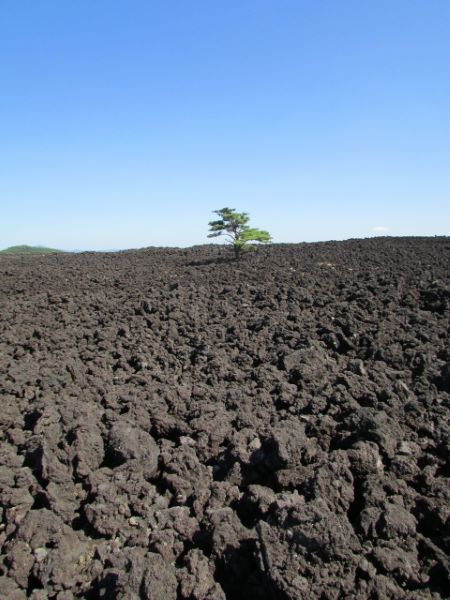
On the northeast side of Mt. Iwate, there is a patch of barren landscape. Around 300 years ago, when Mt. Iwate erupted, the lava was blown as far as four kilometers, creating this ashen, rocky landscape. A few weeds grow among the rocks. However, the standout is the pine tree in the photo (which you will see when you get there). It is a miracle that it has grown so well in this arid landscape!
Stretching roughly 4 kilometers long and up to 1 kilometer wide, this expansive field of dark, jagged basalt rocks offers a dramatic contrast to the lush green forests and autumn foliage surrounding the rest of the mountain.
Volcanic History & Natural Marvels
- The 1732 Eruption: Liquid lava erupted from Mt. Iwate’s side crater, cooling into an uneven, pitch-black rock desert that has remained largely barren for nearly three centuries.
- Resilient Flora: Because topsoil is almost nonexistent among the sharp volcanic stones, only a few hardy mosses, lichens, and stubborn weeds grow here. Keep an eye out for the famous lone pine tree standing near the main path, a miraculous symbol of natural resilience.
The Promenade & Observatory Views
- Walking Trail: A well-paved, 1-kilometer pedestrian boardwalk (Yakehashiri Promenade) cuts directly through the heart of the lava field. This path lets visitors safely explore the lunar-like terrain without scrambling over sharp rocks.
- Yakehashiri Observatory (焼走り展望台): At the end of the promenade is an elevated viewing platform that offers sweeping, wide-angle views of Mt. Iwate’s looming peak above the dark lava field.
Iwate Yakehashiri International Exchange Village (岩手山焼走り国際交流村) and its onsen facility is currently closed.
Matsukawa Onsen (松川温泉): Hidden Milky-White Sulfur Baths
Located at the foot of the Jukai Line, Matsukawa Onsen is a secluded, 260-year-old hot spring village tucked deep inside the Matsukawa Gorge. Famous for its milky-white, sulfur-rich waters and traditional wooden architecture, this hidden valley is widely considered one of Iwate Prefecture’s premier autumn foliage destinations.
Matsukawa Onsen features two rustic ryokan options (Matsukawasō (松川荘) and Kyuonsō (峡雲荘)), each offering day-use bathing (Higaeri Onsen) as well as overnight stays.

Located at the back of the Matsukawa Gorge, the ryokans at Matsukawa Onsen are all surrounded by beautiful nature!
You can utilize their onsen facilities during the day even if you aren’t staying overnight. But do note that none of them has private onsen pools. Also, like many onsen ryokans in northeastern Japan, at least one of their open-air pools is mixed-gender (female guests enjoy having an outdoor onsen pool to themselves).
Tip: If you don’t eat fish or meat and want to stay overnight, Shōfūsō should be able to cater to your dietary requirements. Please let them know when you book to confirm!
Day Trip Onsen Pricing and Opening Hours at Matsukawa Onsen
- Matsukawasō:
- 700 yen for adults
- 300 yen for elementary school students and younger
- Day-trip opening hours are 8 am to 6 pm.
- The last admission is at 5 pm.
- If you plan to have lunch at the ryokan, the restaurant open from 11:30 am to 1:30 pm (last order).
- Kyounsō:
- 700 yen for adults
- 350 yen for children from the age of 5 to elementary school students
- Day-trip opening hours are 8:30 am to 7 pm
- The last admission is at 6 pm.
- If you plan to have lunch at the ryokan, please let the ryokan know by 11:30 am and head to the resting hall at around 12 pm.
Tip: If you have valuable items, you can leave them at the front desk.
Matsukawa Gorge (松川渓谷): Premier Autumn Leaves Spot
If you are coming from the Iwate prefecture, before driving into the Hachimantai Jukai Line, you will pass through the Matsukawa Gorge (from the entrance to the Hachmaintai Aspite Line, it is a 10-minute drive).
The gorge extends from Hachimantai Onsenkyo (八幡平温泉郷) to Matsukawa Onsen (松川温泉).
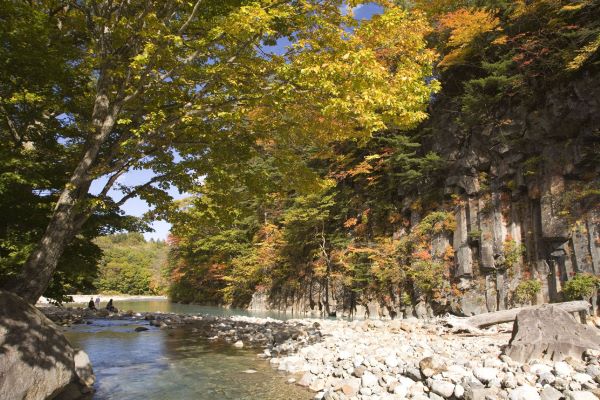
One of the most special things about the gorge is the Matsukawa Genbuiwa (松川玄武岩) and its columnar joint rock walls.
Mori no Ohashi Bridge (森の大橋): Scenic Photo Spot Over Matsukawa Valley

Marking the start of Matsukawa Gorge is the Mori no Ohashi Bridge. From the bridge, you can get a great view of Mt. Iwate and Hachimantai City.
If you are driving, there is a small car park close by. Close to this bridge is a promenade leading to the Matsukawa Genbuiwa mentioned above. You will get there in less than 10 minutes.
For those that enjoy the autumn foliage, these bright, vivid colors will start to cover the gorge from early October and are most vibrant from mid to late October.
How to Get to Matsukawa Gorge
To get to Matsukawa Gorge by public transport, you can catch either the regular bus services or the Hachimantai Shizen Sansaku Bus (八幡平自然散策バス) from JR Morioka Station’s (盛岡駅) east exit’s bus stop no. 3.
If you are catching the Hachimantai Shizen Sansaku Bus from JR Morioka Station, we recommend you drop by the gorge on the way back unless you are staying at the accommodation around Matsukawa Gorge.
For more information, please refer to our How to Get to Hachimantai article.
Nanataki Fall (七滝): Scenic 7-Tier Cascade Hike

Not too far away from the Mori no Ohashi Bridge is the trailhead to Nanataki.
When the trail isn’t covered by thick snow, it will only take you around 30 to 45 minutes to get to this beautiful waterfall.
The difficulty of this course is suitable for pretty much anyone. So when you drop by Hachimantai Onsen Town or Matsukawa Onsen, how about adding this spot to your itinerary?
In winter, usually from late January, the magnificent view of a frozen 30-meter-tall waterfall will appear in front of you after 1.5 hours of trekking in the snow!
One thing that we want to point out here is that the track splits in two, not too far from the 2 km mark from the waterfall. Both lead to the waterfall. Note the one labeled with “登山道” which means hiking trail. You will get to the waterfall quicker with this path, but it is also muddier and steeper when compared to the other path.
Discover the Attractions in Other Parts of Hachimantai
Now that you know the best route to get to the summit, it is time to discover the sightseeing spots at the top of the mountain. One of the most fascinating natural wonders at Hachimantai is the scenery called Dragon Eye, which you can see if you visit the national park from late May to early June each year!
Refer to our Hachimantai article for more details!
Vegetarian & Vegan Travel Guide: Hachimantai Jukai Line
Navigating rural mountain passes in Japan as a plant-based traveler requires a little extra preparation. Because traditional Tohoku regional cuisine relies heavily on dashi (bonito/fish flake broth), finding spontaneous vegan-friendly meals along the Hachimantai Jukai Line can be tricky. However, with the right planning and advance notice, you can enjoy authentic local stays and scenic hot springs without compromise.
To ensure a stress-free trip, use this guide to plan your meals before heading up the mountain.
Dining at the Summit (Hachimantai Mountaintop Rest House)
Located at the highest point of the drive (1,560m altitude), the Hachimantai Mountaintop Rest House (八幡平山頂レストハウス) is the primary stop for food, drinks, and rest.
- Dietary Reality Check: The restaurant menu primarily features regional specialties like Soba, Udon, and Ramen. Almost all noodle broths and dipping sauces here contain fish extract (dashi).
- Accidentally Vegetarian / Vegan Options:
- Miso-Dengaku (味噌田楽): Grilled konjac or tofu skewers coated in sweet miso paste (check that no fish powder is sprinkled on top).
- Baked Sweet Potatoes & Fresh Produce: Seasonal stalls outside often sell baked sweet potatoes (Yaki-imo) or local apples/berries.
- Language Tip for Ordering:“Dashi ni sakana ya niku wa tsukawatte imasu ka?”(Does the broth contain fish or meat extract?)
Where to Stock Up Before the Drive (Morioka & Base Towns)
Because options on the mountain are sparse, the best strategy is to grab a packed lunch (bento) or snacks before ascending.
1. Starting from Morioka City (Recommended)
Morioka has the best vegetarian-friendly infrastructure in the prefecture:
- Dine or Pick Up a Lunch Box: Before heading out of the city, stop by one of the plant-based eateries featured in our guide on Where to Find Vegan-Friendly Restaurants in Morioka to grab a meal or order a portable lunch box.
- Convenience Store Picks:
- Salted Onigiri (Shio-musubi): pure rice without filling.
- Kombu (Kelp) or Umeboshi (Pickled Plum) Onigiri: check labels for hidden fish stock in the seasoning.
- Edamame, Roasted Chestnuts, and Tofu Bars.
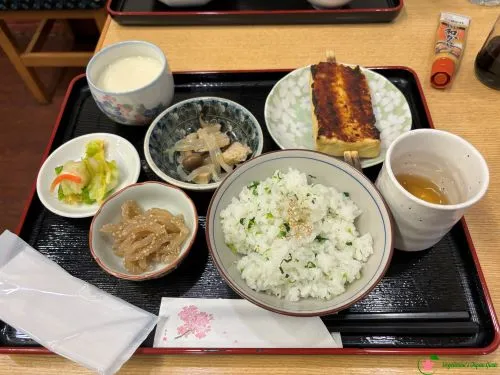
2. Base of the Mountain (Matsuo-Hachimantai Area)
- Michi-no-Eki Matsuo-Hachimantai (Roadside Station): Before starting the steep drive up the Aspite Line, stop at this roadside station. You can find fresh local fruit (apples, grapes, peaches depending on season), steamed corn, and local vegetable snacks.
Quick Packing Checklist for Plant-Based Drivers
Before setting off on the 15 km drive, pack these items in your rental car:
- Portable Snacks: Energy bars, dried fruit, mixed nuts, and soy milk boxes from Morioka.
- Travel-Sized Soy Sauce / Vegan Tsuyu: Essential if you want to enjoy plain tofu or noodles at mountain rest stops safely.
- Emergency Bento / Onigiri: Pick up 2–3 vegan-friendly rice balls before leaving the city in case mountain food stalls are closed or sold out.
Essential Japanese Phrases for Ordering
When communicating your dietary needs along the Jukai Line, use these explicit phrases:
Vegetarian: 私はベジタリアンです。肉、魚、魚のだしを食べられません。
(Watashi wa bejitarian desu. Niku, sakana, sakana no dashi wo taberaremasen.)
Translation: “I am vegetarian. I cannot eat meat, fish, or fish stock.”
Vegan: 私はヴィーガンです。肉、魚、卵、乳製品、鰹節のだしを使わないでください。
(Watashi wa vīgan desu. Niku, sakana, tamago, nyūseihin, katsuobushi no dashi wo tsukawanaide kudasai.)
Translation: “I am vegan. Please do not use meat, fish, eggs, dairy, or bonito stock.”
For more useful phrases, refer to our Essential Japanese Travel Phrases for Vegetarians and Vegans article.
Combine Your Visit to Hachimantai with Appi Kogen Nearby
If you want to extend your Iwate road trip into the highlands, combine your drive with a visit to neighboring Appi Kogen.
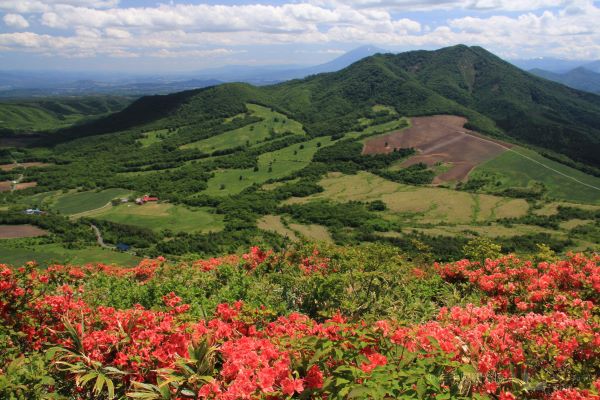
Appi Kogen is an idyllic plateau in western Iwate Prefecture. It is great for a relaxing walk from spring to autumn. When the region transforms into a winter wonderland, many come to Appi Kogen to ski or snowboard on its high-quality snow (Appi Ski Resort is said to be comparable to resorts in Hokkaido)!
Read our detailed guide to Appi Kogen to discover seasonal outdoor activities, summer trekking, and winter ski resorts.

Start Your Journey from Morioka, Iwate’s Prefecture
Most travelers begin their Aspite Line journey from Morioka Station. If you are starting your road trip from Morioka, plan to spend some time exploring the city before heading into the mountains.
From historic sites and ironware shops to famous local noodle spots, check out our guide on what to do and see in Iwate’s capital city, Morioka to build the ultimate urban itinerary before your drive.