Think you have tasted real wasabi? 95% of the “spicy green paste” served globally is actually a mix of horseradish and food coloring. To taste the real thing, you need to head to Daio Wasabi Farm (大王わさび農場) in Azumino, Nagano, Japan’s largest and most scenic wasabi plantation. Known for its pristine Alpine spring water and historic 19th-century watermills made famous by director Akira Kurosawa, the farm is more than just a culinary site. It is a stunning nature escape. Whether you are a fan of classic cinema or simply looking for a serene half-day trip from Matsumoto, this farm offers a peaceful atmosphere of Japan’s rural heritage. In this guide, we will show you how to navigate the farm, what to see, and the best vegetarian-friendly treats, from wasabi-infused soba to the famous wasabi soft-serve ice cream.
What to Do and See at Daiō Wasabi Farm Near Matsumoto
- The Real Wasabi
- What Makes Daio Wasabi Farm the Best in Japan?
- Bridge of Happiness (幸せのかけ橋)
- The Watermill That Appeared in the Movies
- The 50 Years Old Wasabi
- Daiō Wasabi Farm’s Flower Calendar
- Vegetarian and Vegan Food Guide at Daio Wasabi Farm
- What if I Really Want to Buy Fresh Wasabi?
- Daiō Wasabi Farm’s Opening Hours
- How to Get to Daiō Wasabi Farm
- Tōkōji Temple (東光寺)
- Rokuzan Art Museum (碌山美術館)
The Real Wasabi
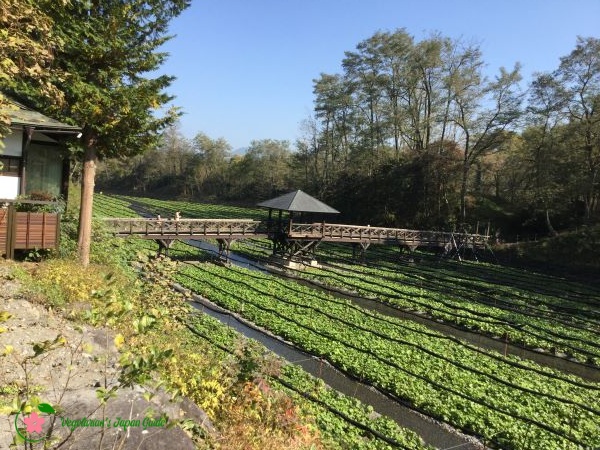
Unlike the fake wasabi you have been eating, which is a mix of mustard, European horseradish, and food coloring, the real wasabi isn’t as pungent and spicy. The taste is actually a lot more pleasant – we promise!
The reason for this shocking truth is that wasabi is the most difficult plant in the world to grow commercially. An environment of half-sun exposure, temperature between 10℃ and 18℃, and clean running streams of water beside gravel beds throughout the year isn’t something that can be found just next door.
What Makes Daio Wasabi Farm in Nagano the Best in Japan?
Daiō Wasabi Farm began over 100 years ago, in 1915. After spending 20 years of their lives, the pioneers of the time turned the former wasteland, full of gravel and weeds, into the thriving wasabi farm you see today by utilizing the clean, flowing water from the Northern Japanese Alps.
The farm was able to satisfy the pristine conditions with clean water from melted snow from the Northern Alps. The clear stream from the mountain was then divided into smaller streams to ensure water flowed through each wasabi plant the farm is looking after. To avoid the summer heat, from May to October, the fields are covered with black tarp sheets to shield them from the sun.
HERE is the farm’s map. It is all in Japanese, but the important facilities are all drawn on the map.
Tip: You can book a tour HERE to make your visit to Japan’s biggest wasabi farm more informative and interesting!
Top Things to Do at Daio Wasabi Farm
Taking a Photo With the Wasabi Statue
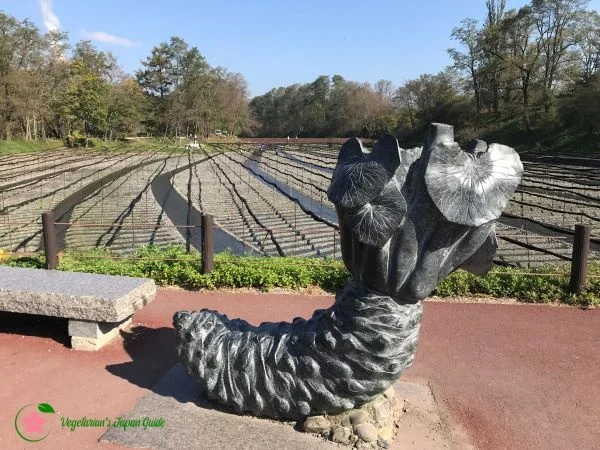
Before you wander around the farm, take a photo with this cute wasabi statue close to the entrance!
As you can imagine, it is quite a popular photo spot with the wasabi field in the background. So, if you see it being left alone, don’t be afraid to snap a photo or two with it (=゚ω゚)ノ.
Crossing the Bridge of Happiness (幸せのかけ橋) and Daiō Shine (大王神社)
At Daiō Wasabi Farm, you can expect more than just wasabi plants.
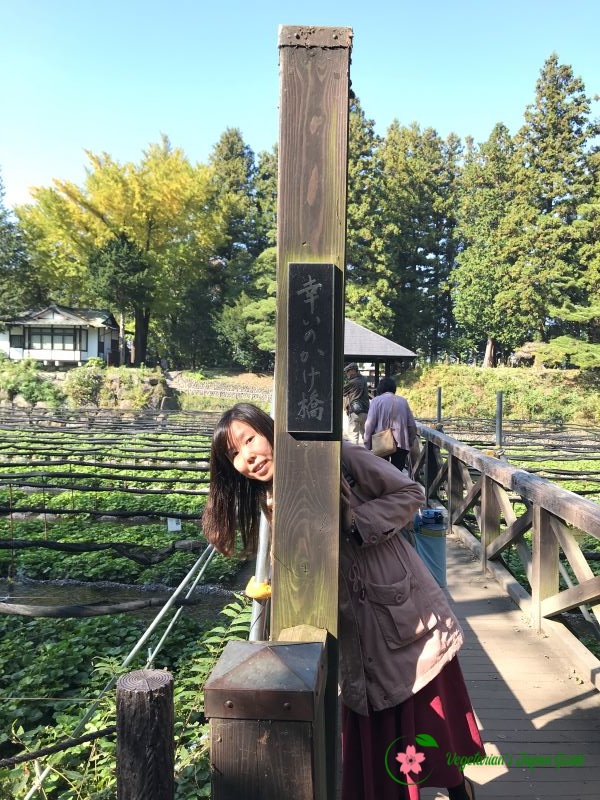
If you pass through this bridge that goes across the main wasabi field (Daiō Hata, 大王畑) with your partner, it is said that you will live happily together thereafter (=゚ω゚)ノ. This is especially true when the wasabi is flowering because the wasabi flower is the flower that carries happiness!
Near this bridge is the Daiō Shine (大王神社). The god of the shrine is said to be looking after the farm’s prosperity. And just next to the shrine is a Tea Room where the Imperial Family rested when they visited the farm in 1976. The Tea Room isn’t open to the public, yet it somehow exudes a sacred, peaceful feeling (*´ω`).
The Iconic Kurosawa Film Watermills and River Rafting
Close to the entrance of the farm, you won’t miss out on this old-fashioned watermill (水車小屋). We thought it was a nice little extra to the farm’s relaxing scenery when we were there. But then we realised it was actually built for the filming of Akira Kurosawa’s movie, Dreams in 1989!
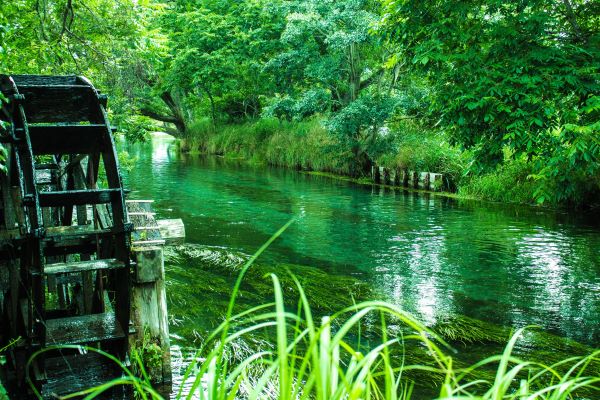
From spring to autumn, you can take a boat tour to view the waterwheels and swaying aquatic plants from the water for a small fee. If you are interested, please refer to Azumino Kisen’s Website for cost and operation hours. A reservation is not required to take the boat.
The Wasabi Museum: Learn the History of True Wasabi
Aside from the scenery, there is also a wasabi museum where you will learn a lot about the spicy condiment.
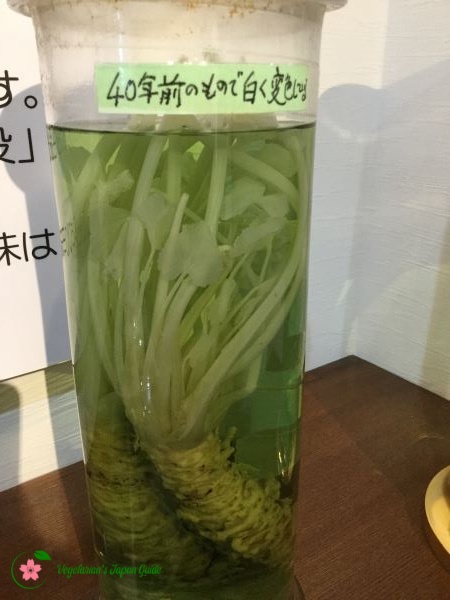
We even found this wasabi harvested 40 years ago (around 50 years now).
Other facilities, including restaurants, can also be found on the farm’s grounds.
Daiō Wasabi Farm’s Flower Calendar
- Plum Blossom: from late February to mid-March
- Cherry Blossom: from late March to early May
- Fall Foliage: from late October to mid-November
Vegetarian and Vegan Food Guide at Daio Wasabi Farm
There is no pure vegetarian menu in restaurants and cafes in Daiō Wasabi Farm. But you can bring your own dipping sauce for their soba noodles with fresh wasabi! Eating the soba noodles with salt is another option to enjoy the fresh wasabi with authentic soba noodles. Although in Japanese, you can refer to Daio Wasabi Farm’s website for the restaurant menu.
If you want some savory dishes, head to the farm’s food court. The wasabi croquette (わさびコロッケ), wasabi croquette burger (わさびコロッケバーガー), wasabi dango rice cake (わさび団子), and wasabi oyaki (わさびおやき) are based on plant-based ingredients.
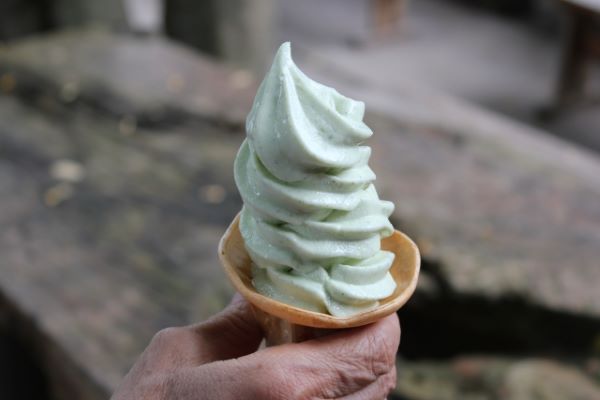
You will also find wasabi-flavored ice cream here! It is definitely a must-try, and you will be pleasantly surprised by the taste (=゚ω゚)ノ.
Important: If you are a vegan or vegetarian, we recommend checking with the staff if the wasabi croquette and wasabi burger are still meat-free. The recipe can change over time.
In Daio’s CAFÉ, you take a rest and enjoy some desserts and drinks.
A visitor information center is near the entrance to Daiō Wasabi Farm. You can find information about the farm and nearby attractions in various languages.
In the souvenir shop next to the visitor center, you will find a variety of wasabi products, from biscuits to chocolate and even curry, all wasabi flavored! Moreover, you can get a couple of packs of 100% real wasabi powder. The powdered wasabi can be stored at room temperature for a long time. Dissolve it in water, seal it tightly with plastic wrap, and let it sit for a while; the powder turns into grated wasabi!
What if I Want to Buy Fresh Wasabi?
If you want to bring some fresh wasabi home, Daiō Wasabi Farm’s shop may have some. If it isn’t available, check out the shops around JR Hotaka Station (穂高駅). We were able to get some from one of the grocery stores there.
And when you visit the shops, you can also use the following phrase:
“すみません、わさびがありますか?” pronouncing as “Sumimasen, wasabi ga arimasu ka?”, meaning “Excuse me, are there any wasabi?”.
Tip: If you want the wasabi spicier, put a little white sugar in your grinder. Then grind from the side where the stem is. Also, you can grind the whole wasabi at once and keep it in the freezer. We were told it would last for a year (but we finished in a month (≧▽≦)).
Daiō Wasabi Farm’s Opening Hours
- March – November: 8 am to 5 pm
- December – February: 9 am to 4 pm
We recommend 2 hours at the farm to get the full experience (=゚ω゚)ノ.
How to Get to Daiō Wasabi Farm from Matsumoto & Tokyo
- From JR Hotaka Station, it is a 10-minute drive to the farm.
- From Tokyo, you can either take an express bus or the Shinkansen to Matsumoto. From Matsumoto Station, take the JR Oito Line to JR Hotaka Station.
- You can also utilize the Azumino Sightseeing Bus services (あづみ野周遊バス) from late April to September.
- HERE is the bus service’s timetable.
- Note that the bus doesn’t operate every day. It only runs on the days that are marked in blue.
- The bus fare is
- 600 yen for adults
- 300 yen for elementary school students
- The cost of the One-Day Bus Pass is
- 1,000 yen for adults
- 500 yen for elementary school students
- The bus fare is
Azumino Itinerary: Exploring Near Daio Wasabi Farm
Tōkōji Temple (東光寺)
If you have time, we recommend walking back to JR Hotaka Station from the farm. This isn’t just for some exercise, but to visit Tōkōji Temple!
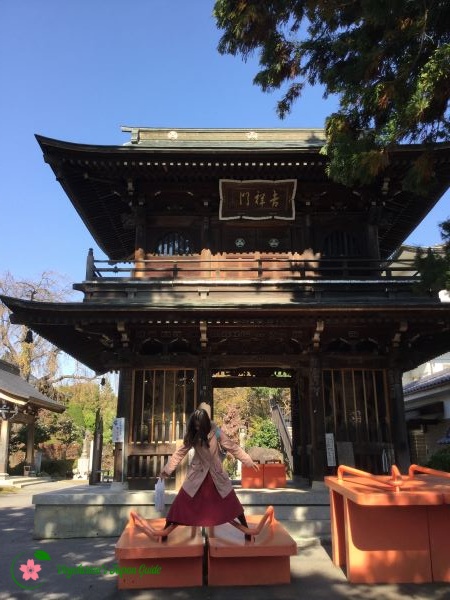
In front of the temple are these two pairs of Geta (traditional Japanese sandals). The gigantic sandals are said to belong to the Buddha being worshipped here.
It is said that making wishes while wearing those sandals will make your wishes come true (=゚ω゚)ノ.
Rokuzan Art Museum (碌山美術館)

If you have more time, thereis a little art museum featuring the sculptures of Japanese sculptor Moriye Ogihara near JR Hotaka Station.
We love the museum’s architecture and were snapping photos from its front gate. The four seasons at this museum are just beautiful!

Frequently Asked Questions about Daio Wasabi Farm
Is there an entrance fee for Daio Wasabi Farm?
No, admission to the farm grounds is completely free. You can walk through the wasabi fields, visit the shrines, and see the famous watermills without a ticket. However, there are fees for optional activities such as the clear-bottom boat tours and wasabi-making workshops.
Is the wasabi ice cream at Daio Wasabi Farm vegetarian?
Yes, the wasabi soft-serve ice cream is vegetarian-friendly. It is made with real wasabi from the farm and has a mild, refreshing kick rather than a sharp heat. Please note that, like most Japanese soft-serve, it contains dairy and is not vegan.
Are there vegan food options at the farm?
While the sit-down restaurants primarily serve soba (often with fish-based dashi), the outdoor food court is much more vegan-friendly. You can find plant-based snacks such as:
- Wasabi Oyaki: A traditional Nagano dumpling (check that the filling is vegetable-based).
- Wasabi Dango: Chewy rice cakes (typically vegan, but verify the glaze).
- Plain Soba: If you bring your own vegan dipping sauce (highly recommended!).
Can I buy fresh wasabi to take home?
Yes, the farm shop sells fresh wasabi roots in various sizes. If you are an international traveller, keep in mind that fresh produce is often not allowed across borders. However, you can buy preserved wasabi products, such as wasabi powder, wasabi salt, crackers, and tube paste, that are travel-safe.
When is the best time to visit Daio Wasabi Farm?
The farm is beautiful year-round, but late April to May is ideal for seeing the wasabi in bloom and the watermills surrounded by lush greenery. To avoid the summer heat (and the black tarps used to shade the plants), aim for a morning visit between October and November for crisp air and autumn colors.
Explore Other Fascinating Attractions in Matsumoto City
While Daio Wasabi Farm is a highlight of any trip to the Japanese Alps, it is just one of many treasures in the area. Most visitors are based in Matsumoto. Besides the “Crow Castle”, you can source delicious natural water in the city center, check out an art museum filled with Kusama Yayoi’s artworks, unique museums to visit, and a lot more!
If you are staying in the area, don’t miss our guide to the Top Attractions in Matsumoto, where we break down the best sights and vegetarian-friendly restaurants in the heart of Nagano.
Combine Your Visit with Other Nearby Popular Destinations and Save on Transportation

Getting to the Azumino area from major hubs like Tokyo or Nagoya can be expensive if you pay for individual tickets. If you are planning to visit the farm as part of a larger trip through Nagano or Gifu, you can save a significant amount by using a regional rail pass.
Check out our comprehensive guide to Chūbu Japan’s Discounted Transportation Deals to see which pass covers the JR Oito Line to Hotaka Station.