Known as the “Kyoto of the North”, Hiraizumi town (平泉町) once rivaled the imperial capital in splendor, with a refined culture and elegant architecture in the 12th century. Retaining its charm and traces of its former greatness, Hiraizumi has a couple of UNESCO World Heritage Sites. Established in the 12th century by the powerful Oshu Fujiwara clan, Hiraizumi was designed as a physical manifestation of the Buddhist Pure Land, or paradise on earth. Today, you can witness this golden legacy at the breathtaking Chuson-ji Temple, the serene Heian-era pond gardens at Motsu-ji Temple, and Takkoku no Iwaya. From the tragic legends of the samurai hero Minamoto no Yoshitsune to the haiku of Matsuo Basho, Hiraizumi offers a soul-stirring blend of history, spirituality, and stunning Tohoku landscapes.
What to See in Hiraizumi
With one day of your time, you can explore all three most well-known monasteries in Hiraizumi. To travel as efficiently as possible, we recommend visiting the three stations in order of distance from JR Hiraizumi Station (平泉駅). That is, with the following sequence:
- About Hiraizumi
- Explore Hiraizumi With a Guided Tour
- How to Get to Hiraizumi
- How to Get to the Attractions in Hiraizumi
- Motsuji Temple (毛越寺)
- The Walking Trail to Chūsonji Temple
- Chūsonji Temple (中尊寺)
- Takkoku no Iwaya Bishamondō (達谷窟毘沙門堂)
- Exploring Hiraizumi with a Rental Bicycle
- Vegetarian-Friendly Restaurants at Hiraizumi
- Genbikei Gorge and the Fascinating Flying Dango Rice Cake
Tip: You can spend a night at Hiraizumi. Hiraizumi Hotel Musashibou is a nice option. The hotel provides free pick-up and drop-off service.
Also, if you prefer to travel between each destination by bicycle, click HERE for more information.
And if you are looking for a restaurant that caters to vegetarians, please click HERE for a few options (=゚ω゚)ノ.
About Hiraizumi
Back in the 12th century, during the reign of the Fujiwara clan, Hiraizumi, the capital of northern Japan, was a wealthy town with a high level of cultural sophistication. The town’s wealth isn’t just the trappings of political power but largely comes from the local gold mines. Under the influence of Buddhism, the Fujiwara clan attempted to recreate the paradise described in Buddhist sutras in Hiraizumi. This is why the palaces, temples, and monasteries built at the time were so elegant and magnificent.
With the decline of the Fujiwara clan, Hiraizumi never recovered its formal glory. But as locals rebuilt the town’s temples, visitors from around the world can still admire its precious historic and cultural treasures.
Explore Hiraizumi With a Guided Tour
If you prefer a guide to introduce you to the historical town, consider joining one of the following tours.
- Hiraizumi Half-Day Private Trip with Government-Licensed Guide
- Hiraizumi Full-Day Private Trip with Government-Licensed Guide
How to Get to Hiraizumi
Hiraizumi can be easily reached by taking the Tohoku Shinkansen to JR Ichinoseki Station, then a 10-minute local train or bus to JR Hiraizumi Station.
Tip: Refer to HERE for the best seats on the Tohoku Shinkansen!
How to Get to the Attractions in Hiraizumi
On weekends and public holidays from early April to late November, you can take the RunRun Hiraizumi Loop Bus (平泉巡回バス るんるん) to get to most of the attractions in Hiraizumi (excluding Takkoku no Iwaya). The sightseeing shuttle departs from JR Hiraizumi Station every 30 minutes.
- While in Japanese only, refer to HERE for RunRun Hiraizumi Loop Bus timetable.
- RunRun Hiraizumi Loop Bus costs 200 yen per ride (100 yen for children).
- You can also get the one-day bus pass for 550 yen.
- RunRun Hiraizumi Loop Bus stops at Hiraizumi Station, Motsu-ji Temple, Chuson-ji Temple, Takadate Gikei-do, and the Hiraizumi Cultural Heritage Center.
On weekdays, you can take Iwateken Kotsu’s Ichinoseki Hiraizumi Line (一関平泉線) to the attractions in Hiraizumi.
- While in Japanese only, refer to HERE for RunRun Hiraizumi Loop Bus timetable.
Motsuji Temple (毛越寺)
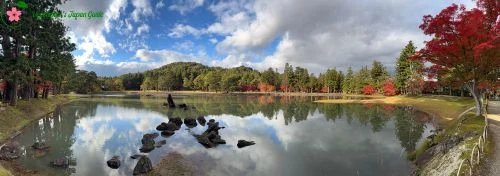
Just a 7-minute walk from JR Hiraizumi Station, you will find the front gate of Motsuji, a temple with the most picturesque Buddhist Pure Land Garden in the country.
Once a massive monastic complex rivaling the greatest temples of Kyoto, Motsuji is now world-renowned for its perfectly preserved Pure Land Garden (Jodo Teien). This 12th-century masterpiece represents a Buddhist vision of paradise on earth. Anchored by the sprawling Oizumi-ga-ike pond, the temple grounds offer a rare glimpse into Heian-period aesthetics, featuring elegant “winding streams” (yarimizo) and ancient foundation stones that tell the story of the powerful Oshu Fujiwara clan.
For more information, please refer to our article on Motsuji Temple!
The Walking Trail to Chūsonji Temple
If you enjoy trekking in the mountains, we recommend following the orange walking trail described in the official pamphlet HERE to reach Chusonji Temple, which takes about an hour! The trail is less well-known, and the entire trail is extra scenic in autumn. You even get to knock on the wooden plate along the trail to alert the bears in the mountain to stay away from you (this part might sound scary to some people, but as big animal lovers, we found it really fascinating) (=゚ω゚)ノ
Chūsonji Temple (中尊寺)
Experience the golden age of the North at Chūson-ji Temple, the spiritual heart of Hiraizumi and a centerpiece of the region’s World Heritage status. Its crown jewel, the Golden Hall, is a breathtaking 12th-century structure completely covered in gold leaf and intricate mother-of-pearl inlay. Whether you are strolling down the ancient, cedar-lined Tsukizaka slope, exploring the treasure hall’s Buddhist statues, or admiring the seasonal beauty of the lotus ponds, Chūson-ji offers a profound journey into the history, art, and soul of Tohoku.
For more information, please refer to our article on Chūsonji Temple!

Takkoku no Iwaya Bishamondō (達谷窟毘沙門堂)

Located just a short distance from Chusonji and Motsuji, this 1,200-year-old monastery is one of Japan’s most striking architectural wonders. The temple’s centerpiece is a brilliant vermillion hall that appears to emerge from the rock face. Moreover, the Ganmen Daibutsu, a giant Buddha etched into the cliff, gazes serenely over the grounds. Even if you aren’t interested in history or Buddhism, Takkoku no Iwaya is worth seeing.
For more information, refer to our Takkoku no Iwaya article!
Exploring Hiraizumi with a Rental Bicycle
As the attractions in Hiraizumi aren’t next to each other, if you don’t want to take a bus or taxi, rent a bicycle from Suwaro Tour Hiraizumi. The roads in Hiraizumi aren’t too hilly and the bicycle will give you more flexibility.
Suwaro Tour Hiraizumi is conveniently located opposite Hiraizumi Tourist Information Center and Hiraizumi Station. They also offer free luggage storage if you rent a bicycle.
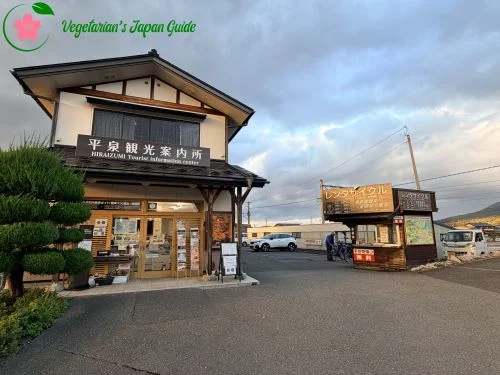
Suwaro Tour Hiraizumi Rental Bicycle (スワローツアー平泉レンタサイクル)
- Normal bicycle rental:
- 700 yen for 4 hours
- 1,300 yen for 1 day
- Electric-assisted bicycle rental:
- 900 yen for 4 hours
- 1,600 yen for 1 day
200 yen is payable for each additional hour for both normal and electric bicycle rentals.
Suwaro Tour Hiraizumi Rental Bicycle is open from 8:30 am to 5 pm from April to November.
Vegetarian-Friendly Restaurants at Hiraizumi
Whilst we currently aren’t aware of any restaurants with a vegetarian menu, the 2 restaurants below can cater to vegetarians if you book in advance (=゚ω゚)ノ.
Note that neither restaurant is open for dinner.
Hiraizumi Rest House (平泉レストハウス)
Bashōkan (芭蕉館)
Genbikei Gorge and the Fascinating Flying Dango Rice Cake
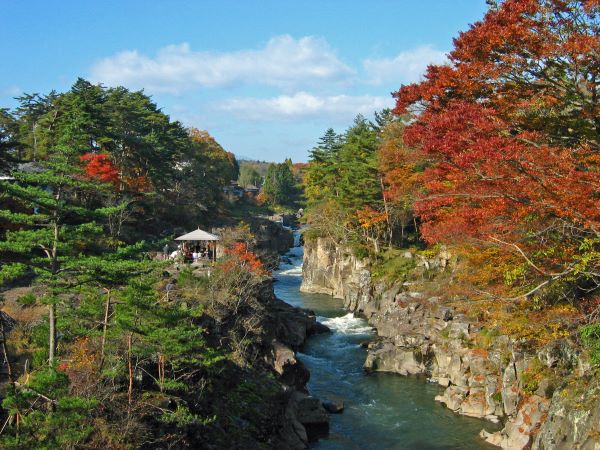
Just a 5-minute drive from Takkoku no Iwaya, Genbikei Gorge is a breathtaking scenic monument in Ichinoseki. Carved over millennia by the rushing waters of the Iwai River, this two-kilometer stretch of rugged rock formations, deep emerald pools, and cascading waterfalls is a must-visit destination in the Tohoku region. While the gorge is famed for its stunning seasonal shifts, it is perhaps best known for the quirky and delicious “Flying Dango” (Kakko Dango).
For more information, please refer to our article on Genbikei Gorge!