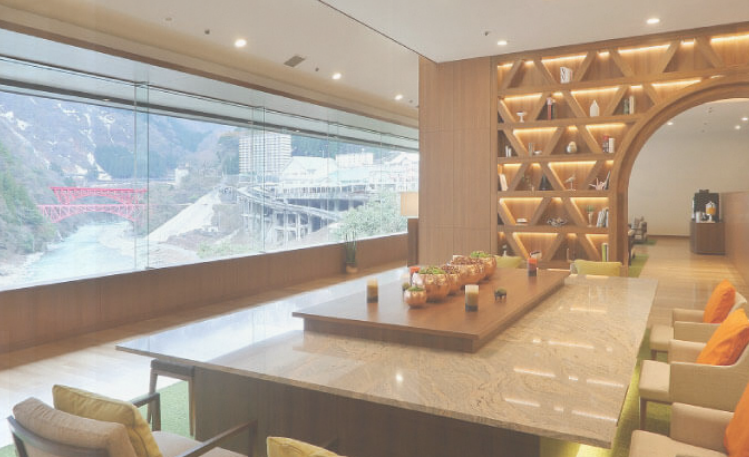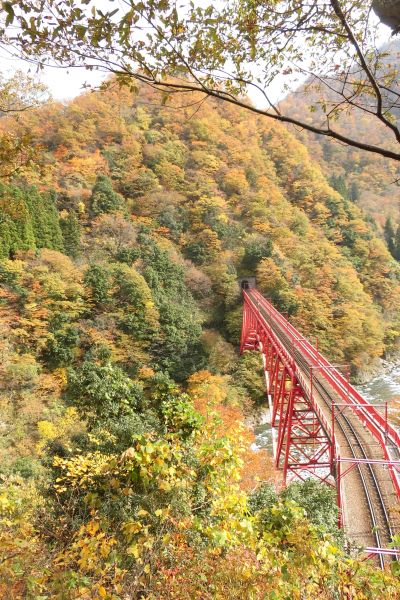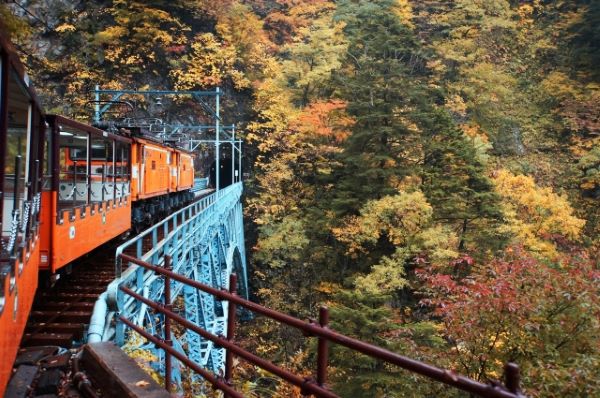
While all of Kaga’s hot spring towns offer rejuvenation, Yamanaka Onsen (山中温泉) is the undisputed choice for those who crave a connection with nature and the fine arts. Praised by the poet Matsuo Basho as one of Japan’s finest springs, this town is a living gallery of Yamanaka Shikki lacquerware. As its name suggested, Yamanaka Onsen (山中温泉) in Kaga City is located deep in the mountains next to a beautiful hidden valley. First discovered 1,300 years ago by an eminent monk of the time, Gyōki (行基), the town was developed into an onsen district in the late 12th century. You will be impressed by how much lacquerware is used to decorate the town. From the stunning lacquered pillars and gold-maki-e coffered ceilings of the Yamanaka-za performance hall to the elegant wooden interiors of the historic Kiku-no-yu public bathhouse, the traditional craft can be found in the least expected corner in Yamanaka!
What to Do in Yamanaka Onsen Town
It is best if you can spend a night at a traditional ryokan to take in what Yamanaka Onsen has to offer fully. But you should still have enough time for most of the attractions we mention in this article for a day trip from Kanazawa.
- How to Get to Yamanaka Onsen
- The Cherry Blossom and Fall Foliage Season at Yamanaka Onsen
- Yuge-Kaido Street (ゆげ街道)
- Kiku no Yu Public Bathhouse (山中温泉総湯 菊の湯)
- Yamanakaza Theatre (山中座)
- Bashō no Yakata Museum (山中温泉芭蕉の館)
- Urushi-za – Yamanaka Lacquerware Museum (うるし座)
- Iōji Temple (国分山 医王寺)
- Kakusenkei Gorge (鶴仙渓)
- The Great Cedars of Kayano (栢野の大杉)
- Events and Festivals
- Top Photo Spots: The Lacquer Architecture of Yamanaka
- Frequently Asked Questions: Visiting Yamanaka Onsen
For a list of accommodations in the district, please refer to the district’s official website HERE.
- Luggage: Kaga-Onsen Station has coin lockers. Many travelers drop their bags there before heading to the baths.
- Getting Around: Once in Yamanaka Onsen, the town is very walkable. The main street (Yuge Kaido) and the scenic Kakusenkei Gorge are best explored on foot.
- Public Baths: The center of town is marked by Kiku no Yu, the historic public bathhouse. Most buses will stop at the “Yamanaka Onsen Bus Terminal,” which is just a short walk from here.
Travel Tip for Plant-Based Travelers
Finding plant-based food in Yamanaka Onsen can be a challenge. It is best to bring plant-based food with you if you plan to visit Yamanaka Onsen. You can also grab vegan-friendly snacks from the convenience stores around Kaga-Onsen Station.
Refer to HERE for a list of vegan food available at convenience stores.
Tip: Soba noodles also taste nice with salt. It’s an option if you want to dine at a restaurant in Yamashiro Onsen.
- Ryokan Dining: Some of the town’s high-end inns, such as Kayotei (かよう亭), are highly regarded for their ability to provide elaborate vegetarian kaiseki (multi-course) meals if requested at least 3 to 5 days in advance.
How to Get to from Kanazawa to Yamanaka Onsen
Yamanaka Onsen is located in Kaga City, Ishikawa Prefecture. The journey typically involves two stages: reaching Kaga-Onsen Station and then taking a short bus or taxi ride into the hot spring town. The two bus services you can take to get to Yamanaka Onsen are:
You can also use one of Japan’s Transportation Apps to plan your visit.
How to Get to Yamanaka Onsen from Kaga Onsen Station
| Method | Duration | Cost | Notes |
| Local Bus (Hokutetsu) | ~30 min | 470 yen | Most frequent (1-2 per hour). Use Bus Stop no. 2. |
| CANBUS (Mountain Route) | ~35 min | 500 yen | A tourist loop bus. Ensure you take the Mountain Route. |
| Taxi | ~20 min | 3,000+ yen | Best for groups or heavy luggage. |
| Hotel Shuttle | ~25 min | Free | Many ryokan offer free pickups; these require advance booking. |
How to Get to Kaga Onsen Station
Kaga Onsen is one of the most accessible hot spring escapes from Kanazawa, making it a perfect destination for a side trip from Ishikawa Prefecture’s capital. Whether you are visiting for a day trip or an overnight stay, here are the best ways to reach the resort towns.
If you plan to visit Kaga Onsen from other parts of Japan, see below for how to get to Kaga Onsen Station.
- From Tokyo: Take the Hokuriku Shinkansen (Kagayaki or Hakutaka). There are direct trains to Kaga-Onsen Station that take approximately 2 hours and 45 minutes to 3 hours.
- From Osaka/Kyoto: Take the Limited Express Thunderbird to Tsuruga Station, then transfer to the Hokuriku Shinkansen for the final leg to Kaga-Onsen Station. The total trip takes about 2 hours to 2 hours 15 minutes.
- From Komatsu Airport: Komatsu Airport is close to Kaga Onsen. You can take a direct bus (CANBUS or local lines) which reaches the area in about 30–40 minutes.
Tip: The Shinkansen trip from Tokyo, Osaka/Kyoto, and Kanazawa Station to Kaga Onsen Station is covered by a few JR Passes. If you plan to travel from Tokyo to Kyoto/Osaka via Kanazawa/Kaga Onsen, there is a great chance that the Hokuriku Arch Pass will save you money.
How to Get to Kaga Onsen from Kanazawa by Train
The quickest way to get to Kaga Onsen from Kanazawa is via the JR Hokuriku Shinkansen (北陸新幹線) or the IR Ishikawa Railway (いしかわ鉄道).
- The travel time by taking the Hokuriku Shinkansen from Kanazawa Station to Kaga Onsen Station (加賀温泉駅):
- Hokuriku Shinkansen Kagayaki (かがやき): Around 15 minutes
- Hokuriku Shinkansen Hakutaka (はくたか) or Tsurugi (つるぎ): Around 18 minutes
- It takes about 45 minutes to get to Kaga Onsen Station by the local IR Ishikawa Railway from Kanazawa Station.
- The Cost to get to Kaga Onsen Station from Kanazawa:
- It will cost 3,170 yen to take the Shinkansen from Kanazawa Station to Kaga Onsen Station.The trip is covered by the following JR Passes.
- If you don’t have a JR Pass and want to save on transportation, it costs only 880 yen to take the local trains operated by IR Ishikawa Railway to Kaga Onsen Station.
Kaga Tour Bus – CANBUS (加賀周遊バス キャン・バス)
Most attractions in Kaga can be accessed by taking the Kaga Tour Bus – CANBUS, which departs from and terminates at JR Kagaonsen Station (加賀温泉駅).
- Single-ride tickets can be purchased from the bus driver. Each ride will cost you 500 yen to board the CANBUS.
- For more information about the service, pricing, and timetable, please refer to their website HERE.
Tip: With your bus ticket, you can get discounts or freebies at some attractions along the bus route.
Eco Ride Coupon (ECO乗りクーポン)
If you don’t think you will visit many attractions in a day, then the 1,000 yen ECO Ride Coupon may be better. It allows you to board the CANBUS twice, have free access to one facility in the city and an exchange voucher for a traditional sweet at participating stores.
For more information, please refer to their website HERE and use Google Chrome’s translation function at the top right of the address bar. HERE is the English pamphlet for ECO Ride Coupons.
Kaga Hot Spring Town Passport (加賀温泉郷パスポート)
Another money saver is the Kaga Hot Spring Town Passport. Depending on how you plan to get around, you can either get a red passport (1,000 yen) that gives you access to three attractions or a blue passport (1,800 yen) for an additional CANBUS ticket. Both passports are valid for two days from the date of purchase.
For more information, please refer to their website HERE.
The Cherry Blossom and Fall Foliage Season at Yamanaka Onsen
- The cherry blossom season usually starts in late March and peaks in early April each year. Below are a few spots where you can find the cherry trees
- Next to the Kiku no Yu Public Bathhouse
- Around Ayatori Bridge at Kakusenkei Gorge
- At Iōji Temple (国分山 医王寺)
- The autumn foliage season usually starts in early November, with the color peaks in mid to late November.
Yuge-Kaido Street (ゆげ街道)
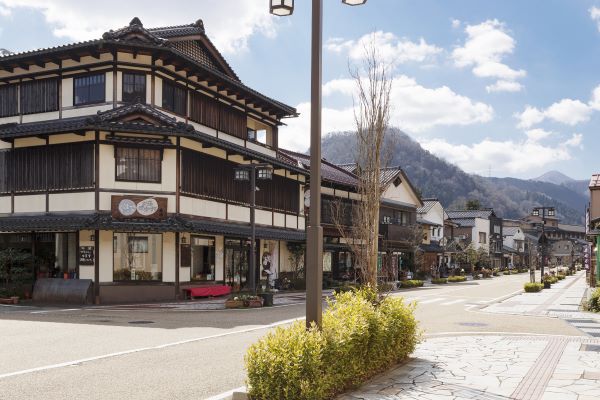
Yamanaka Onsen’s main street – Yuge-Kaido – starts at the Kiku no Yu Public Bathhouse and finishes at the scenic Orogi Bridge.
The short 600-meter street features galleries showcasing Yamanaka lacquerware and Kutani ware, as well as cafes and restaurants. The best thing about this street is that there are no utility poles, which allows for nicer photos of a traditional Japanese onsen town.
Kiku no Yu Public Bathhouse (山中温泉総湯 菊の湯)

Kiku no Yu is the center of Yamanaka Onsen’s development throughout the town’s 1,300-year history.
What is special about this bathhouse is that the male and female baths are in completely different buildings. You are guaranteed that those awkward moments of walking into a bathing area of the opposite gender won’t happen to you here (´▽`*).
While the two buildings of the bathhouse are opposite each other, the entrances face different directions.
The female bathhouse is directly next to the town’s theater for traditional performance arts, Yamanakaza (山中座). Another easy way to determine which building is a female bathhouse is by the curtain hung above the gate. The female bathhouse has a red curtain with “女湯” written, and the curtain at the male bathhouse’s gate says “男湯”.
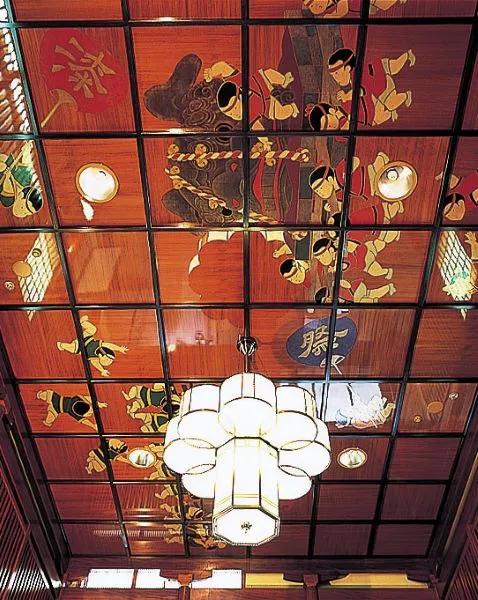
To all the ladies, when you enter the bathhouse, don’t forget to look up. Or after you come out from the onsen, relaxing in the lobby with this luxurious ceiling above you can be another sort of enjoyment (^_-)-☆.
Another special thing about Kiku no Yu is the depth of the onsen pools. The male onsen pool is 1 meter deep, deeper than many of the country’s pools. The female onsen pool is also deeper, but it has a shallower area for those who aren’t as tall.


If you are heading to the male’s bathhouse, please watch for the ongoing traffic as it is located on a small block by itself, with the only pedestrian crossing not on the side of the entrance.
Important:
☛ As the onsen’s temperature is at the hotter end, remember to take short breaks and get sufficient hydration
☛ Towels and toiletry sets aren’t free of charge
Tip: For those who don’t want to bathe with strangers, there is a footbath you can try in front of the men’s bathhouse.
Yamanakaza Theater (山中座)
The local’s lacquer specialty is also used in building decoration.
Completed by 1,500 lacquerware craftsmen, the pillars, ceilings, and walls of Yamanazawa Theatre are all covered with an elegant lacquer layer, making the theatre hall splendid.
On weekends and public holidays from 3:30 to 4:10 pm, traditional performing arts performances such as folk songs and dancing by Geisha are held in the theater.

While entry to Yamanakaza is free, if you would like to see the performance, it will cost you:
- 700 yen for adults
- 350 yen for elementary school students and younger children
- Free for toddlers less than 3 years old
Tip: Get a combo ticket to enjoy the performance and entry to Kiku no Yu Bathhouse for 1,000 yen!
To all the gentlemen, while you won’t be able to see the luxurious ceiling at the female bathhouse, the ceiling at Yamanakaza is even more magnificent!
So please do go near the female area of Yamanaka Onsen even if you aren’t traveling with any female friends/families (=゚ω゚)ノ.
Tip: There are coin lockers in Yamanakaza if you need to lighten yourself.
Kiku no Yu Public Bathhouse’s Opening Hours, Admission Fee, and Access Information
- Kiku no Yu is open from 6:45 am to 10 pm daily except on the 2nd and 4th Tuesdays of the month.
- The last admission is at 9:30 pm.
- If the 2nd or 4th Tuesday is a public holiday, the bathhouse will close the next business day.
- The admission fee is
- 500 yen for adults
- 150 yen for children between the age of 6 and 11
- 70 yen for younger children between the age of 3 to 5
From JR Kagaonsen Station (加賀温泉駅), take one of the bus services below:
- Kaga Tour Bus – CANBUS’s (加賀周遊バス キャン・バス) mountain route (山まわり) and get off at Yamanaka Onsen Kiku no Yu/Yamanaka-za (菊の湯・山中座).
- For the service’s timetable, please refer to their website HERE.
- Hokutetsu Kaga Bus’s (北鉄加賀バス) Onsen Yamanaka Line (温泉山中線) from JR Kagaonsen Station west exit’s bus stop no. 2 and get off at Yamanaka Onsen Bus Terminal (山中温泉バスターミナル). From there, it is a 5-minute walk.
- For the service’s timetable, please refer to their website HERE and click open “運行時刻表を見る”.
- A one-way trip will cost 470 yen.
Bashō no Yakata Museum (山中温泉芭蕉の館)
Bashō was the most famous Japanese Haiku Poet in the Edo period (1603 – 1867). The museum building was the villa next to the Ryokan he stayed in during his 9-day stay in Yamanaka Onsen. It was renovated into the current museum in 2004, which exhibits items related to him, such as calligraphic scrolls.

The museum is also a great place to drop by if you are interested in Yamanaka lacquerware with more than 400 years of history, or just want to rest briefly at the cafe overlooking a wide Japanese garden.
You can go out to the garden from the door next to the big hall. Outdoor slippers should also be there for you to change into (^_-)-☆.
As a side note, regarding the statue in front of the museum, the guy on the left is Bashō. And the guy bowing to him is his student.
Tip: If you visit the district in autumn, drop by the museum as the garden will be extra stunning.
Bashō no Yakata Museum’s Opening Hours, Admission Fee, and Access Information
- The museum is open from 9 am to 5 pm daily except Wednesdays unless it is a public holiday.
- The last admission is at 4:30 pm.
- The admission fee is
- 300 yen for high school students and above
- Free otherwise
- From Yamanaka Onsen Bus Terminal (山中温泉バスターミナル), it is a 5-minute walk.
Iōji Temple (国分山 医王寺)
Proceeding west from Kiku no Yu Public Bathhouse towards the highway, the pathway leading to the Iōji Temple should be in front of you within a 10-minute walk.
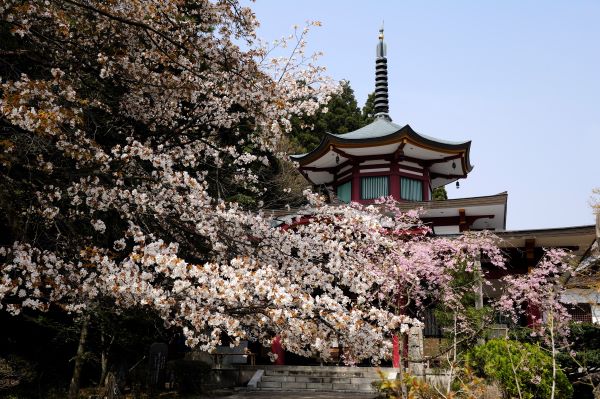
Not only is it a great spot for cherry blossom and autumn foliage, but you will also get a wide view of the Yamanaka Onsen District from here!
As a landmark for directions, there is a three-story traditional building with white walls on the side of the highway. There is a set of stone staircases just next to the building. A pathway to the temple’s worship hall should continue as you climb up the staircases.
Just be careful when crossing the highway, as there is no traffic light. A pedestrian crossing is within 100 meters of the temple, so make sure you use it.
The temple was built in the late 12th century with other onsen ryokans in the district. But the buildings we see today aren’t original but were restored in 1958 after a fire hazard in the early 20th century.
The Buddha here, Yakushi Nyorai (薬師如来), who looks after Yamanaka Onsen, is said to be Japan’s Three Greatest Yakushi Nyorai. In the treasure hall, there are quite a few of Japan’s National Important Cultural Properties, including a picture scroll that traces Yamanaka Onsen’s origins (山中温泉縁起絵巻絵図).
Tip: To see the treasures, please speak with the temple staff, as the exhibition hall is usually closed.
Iōji Temple’s Opening Hours and Access Information
- The temple is open from 8:30 am to 5 pm daily.
- From Yamanaka Onsen Bus Terminal (山中温泉バスターミナル), it is a 10-minute walk.
Urushi-za – Yamanaka Lacquerware Museum (うるし座)
Urushi-za is a must-see attraction for anyone interested in lacquerware. You will learn the end-to-end process by which craftsmen transform a log into beautiful lacquerware here. Whilst the museum isn’t particularly English-speaking-friendly, with most of the explanations written in Japanese, there are videos and illustrations to help you get the big picture.
You will find crafts made by famous Yamanaka lacquerware craftsmen in the display room. If you want to grab a few of them to bring home, head to their souvenir shops. The shop has a complete range of Yamanaka lacquerware that is sold in the district, saving you the time of visiting various stores (^_-)-☆.

Urushiza also offers two workshops for visitors to participate in between 10 am and 5 pm.
- Lacquerware painting workshop (蒔絵体験) costs 1,000 yen.
- The required time is 20 minutes.
- Pottery wheel workshop (ろくろ体験) costs 300 yen. Note that no finished product is delivered.
- The required time is 15 minutes.
- A reservation is required (3 days in advance for weekends and public holidays, and 1 month for weekdays).
Tip: You should find lacquerware sold here cheaper than at Yamanaka lacquerware stores in Kanazawa, as the products are sourced and made locally. But just note that those with a really friendly price tag might be imported from China. So, if you care about where the lacquerware was made, check with the staff before making a purchase.
Urushi-za – Yamanaka Lacquerware Museum’s Opening Hours and Access Information
- Urushiza is open from 9:30 am to 4:30 pm, except on Wednesdays, unless it is a public holiday.
- The museum is closed from December 30 to January 3.
From JR Kagaonsen Station (加賀温泉駅), take one of the bus services below:
- Kaga Tour Bus – CANBUS’s (加賀周遊バス キャン・バス) mountain route (山まわり) and get off at Yamanaka urushi za sanchū shikki dentō sangyō kaikan (山中うるし座 山中漆器伝統産業会館)
- Hokutetsu Kaga Bus’s (北鉄加賀バス) Onsen Yamanaka Line (温泉山中線) from JR Kagaonsen Station west exit’s bus stop no. 2 and get off at Tsukatani (塚谷). From there, it is a 5-minute walk.
- For the service’s timetable, please refer to their website HERE and click open “運行時刻表を見る”.
Kakusenkei Gorge (鶴仙渓)
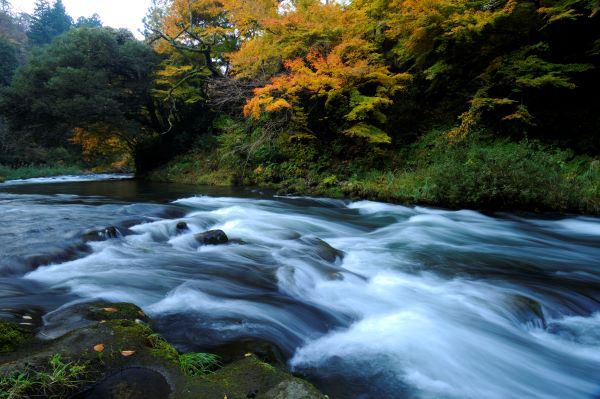
Most of the ryokans and attractions in Yamanaka Onsen Town are located along the Daishōji River. The most stunning part of the river is the 1.3 km Kakusenkei Gorge, which starts at the Korogi Bridge at the river’s upstream. The gorge is particularly famous for its seasonal beauty, transforming with vibrant cherry blossoms in the spring and deep crimson maples in the autumn. In summer, you can enjoy the gorgeous scenery while having the traditional Kawadoko cuisine!
For more information, please refer to our article on Kakusenkei Gorge!
The Great Cedars of Kayano (栢野の大杉)
Trekking further upstream from Kakusenkei Gorge along the Daishōji River, on the precinct of Kayanosugahara Shrine (栢野菅原神社), are two giant cedars over 2,300 years old. As designated National Natural Monuments, the trees have a circumference of 11.5 meters and are over 50 meters tall!
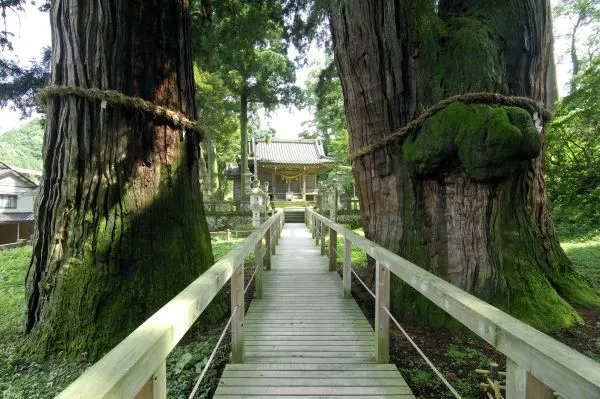
Opposite the trees is a cafe with a history of 800 years, named after the trees, called Ōsugi Chaya (かやの大杉茶屋). This is where you can get some delicious mugwort-flavored rice dumplings/balls (草だんご).
How to Get to The Great Cedars of Kayano
From JR Kagaonsen Station (加賀温泉駅) west exit’s bus stop no. 2, take Hokutetsu Kaga Bus’s (北鉄加賀バス) Onsen Yamanaka Line (温泉山中線) and get off at Kayano (栢野). From there, it is a one-minute walk.
- For the service’s timetable, please refer to their website HERE and click open “運行時刻表を見る”
- A one-way trip will cost 560 yen.
Events and Festivals at Yamanaka Onsen
- Yuzaya Market (湯座屋市): From 6 am to 9:30 am or until sold out on Sundays from April to December in front of Kiku no Yu Public Bathhouse
- Local specialties will be sold. As tourists, you might even get a free cup of coffee!
- Yamanaka Lacquerware Festival (山中漆器まつり): From 9 am to 5 pm from May 3 and 4 around Kiku no Yu Bathhouse
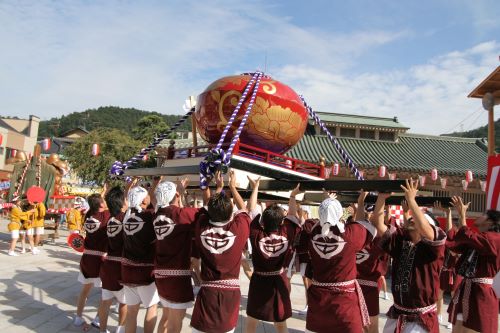
- Furusato Yamanaka Festival (ふるさと山中夏まつり): Early to late August from 7:45 to 9:30 pm at Yamanakaza Square (山中座前広場)
- Your usual Japanese summer festival with performances on stage and temporary stalls around
- Yamanakabushi Parade (山中節道中流し): The Sunday night in September, departing from Yamanakaza Theater at 7 pm
- Where the locals dance and parade in the district while singing the Yamanaka folksongs along with the melody from the traditional instruments
- Koikoi Festival (こいこい祭): On a weekend in late September
- The biggest event in Yamanaka Onsen. The event, with parades and various performances running until late, starts around lunchtime.
- In 2026, the Koikoi Festival will be held on September 19 and 20 from 10 am to 9 pm.
📸 Top Photo Spots: The Lacquer Architecture of Yamanaka
| Spot | What to Capture | Why it’s Special |
| Yamanaka-za Lobby | The Gold Maki-e Ceiling | A stunning vaulted ceiling decorated with detailed gold and silver lacquer motifs by over 1,500 local craftsmen. |
| Yamanaka-za Exterior | Lacquered Pillars | The entrance features prestigious deep-red lacquered pillars that glow beautifully in the late afternoon sun. |
| Kiku-no-yu (Women’s) | Curved Architecture | An elegant, gracefully curved building that reflects the “Tenpyo” style; the interiors use rich wood and lacquer accents. |
| Yuge Kaido Street | Traditional Shopfronts | Historic galleries like Asada or Urushi-za display vibrant lacquerware in windows that reflect the town’s Meiji-era charm. |
| Ayatori Bridge | Modern “S” Curve | Though not lacquer, this wine-red bridge was designed by an avant-garde filmmaker to mimic a dragon; it’s lit up spectacularly at night. |
Tips:
☛ You don’t actually need a ticket for a performance to see the Yamanaka-za lobby. Anyone can walk in to admire the ceiling and pillars. It’s one of the best free “indoor” photo spots if it’s raining.
☛ Visit Ayatori Bridge after dusk. The illumination highlights the deep red color of the bridge, which was chosen specifically to match the local “Yamanaka-nuri” lacquer aesthetic.
Frequently Asked Questions: Visiting Yamanaka Onsen
Is Yamanaka Onsen tattoo-friendly?
The town’s historic public bath, Kikunoyu, is generally welcoming to all bathers. Like most public soyu (communal baths) in the Kaga region, tattoos are typically accepted. However, if you have large-scale tattoos and are staying at a private luxury ryokan, it is always best to double-check their specific policy or book a room with a private open-air bath (kashikiri) for a worry-free soak.
What are the “Three Bridges” of Kakusenkei Gorge?
The 1.3km gorge trail is famous for three distinct bridges that each tell a different story:
- Kurotani Bridge: A classic stone bridge that haiku poet Matsuo Basho famously admired for its “whiteness.”
- Ayatori Bridge: A striking, wine-red steel bridge shaped like an “S.” Its name comes from the Japanese word for “Cat’s Cradle.”
- Korogi Bridge: The symbol of the town, this elegant bridge is made entirely of Japanese cypress (hinoki) and was recently reconstructed using traditional, nail-less methods.
When is the best time to visit the Kakusenkei Gorge?
While beautiful year-round, the gorge peaks during two seasons:
- Early to mid-November: For the famous fiery red maples of the “Koyo” (autumn foliage) season.
- April: For the fresh “Shinryoku” (new green) and cherry blossoms near the entrance of the town.
- Note: The riverside cafe (Kawadoko) is closed during the winter months (December through March).
For more information, refer to our article on Kakusenkei Gorge!
Find Out Other Exciting Attractions in Kaga Onsen

Yamanaka Onsen is part of the larger Kaga Onsen region, a collection of four historic hot spring towns in Ishikawa Prefecture. While Yamanaka is famous for its artisan crafts and deep limestone gorges, the surrounding area offers even more to explore, from the traditional architecture of Yamashiro Onsen to the serene lakeside views of Katayamazu. Navigating between these resort towns is remarkably easy thanks to the local CANBUS loop bus.
For more information on other attractions close to Yamanaka Onsen, please refer to our Kaga Onsen article!