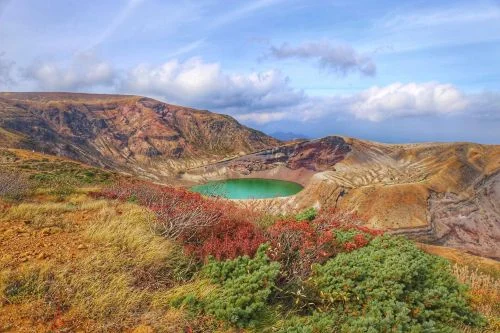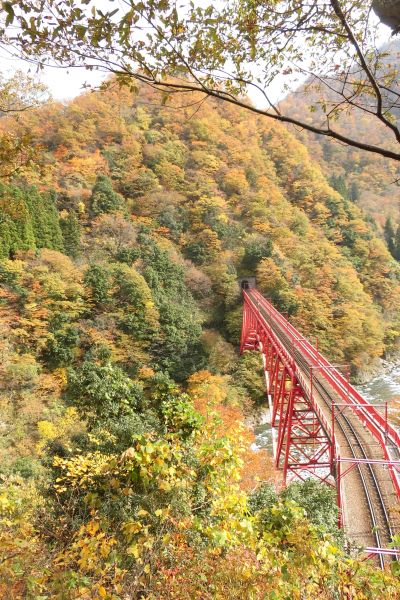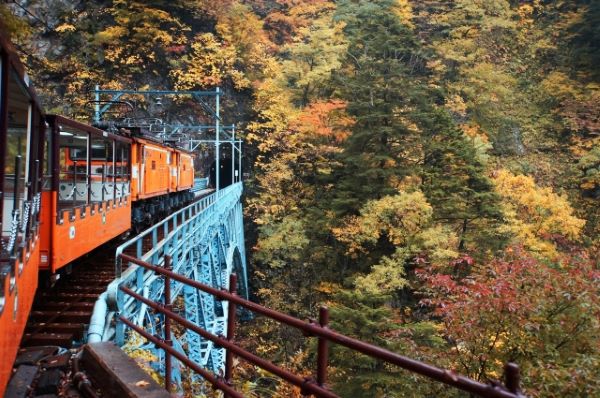
Connecting Miyagi and Yamagata prefectures through the heart of the Mount Zao range, the Zao Echo Line (蔵王エコーライン) is widely celebrated as one of Japan’s most breathtaking mountain drives. This 26-kilometer scenic road winds through lush beech forests, rugged volcanic cliffs, and sweeping alpine plateaus, offering unforgettable landscapes in every season. Whether you are driving between towering 10-meter snow walls during the spring reopening, hunting for vibrant autumn foliage at Takimi Lookout, or relaxing in historic hot spring towns along the route, the Zao Echo Line delivers a classic Tohoku road trip experience. This guide highlights the top scenic pullouts, waterfall viewpoints, seasonal snow corridor events, and local legends to help you make the most of your journey across Mount Zao.
All You Need to Know Before Driving Through the Zao Echo Line
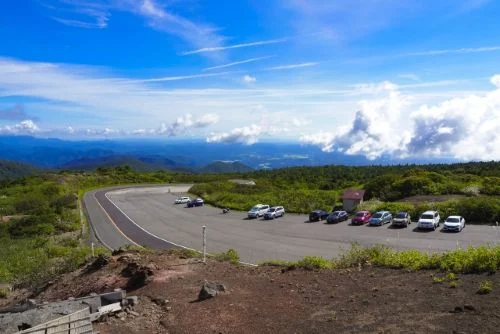
Tip: If you are driving the Zao Echo Line, allow extra time for scenic stops along the way. Highlights such as Takimi Lookout, Komakusa Taira, and the Spring Snow Corridor are well worth the journey before reaching Okama.

Seasonal Highlights Along the Scenic Drive
| Season | Operational Status | Key Highlights | Travel Advice |
| Spring (Late April–June) | Open | Contrast of snowpack against turquoise water; Snow Corridor walls along the Zao Echo Line | Drive early around Golden Week to see towering cleared snow walls. |
| Summer (July–August) | Open | Clear skies, cool mountain breezes, blooming Komakusa (コマクサ) flowers | Temperature at the summit is cooler than lowlands; pack warm outerwear. |
| Autumn (Late Sept–late Oct) | Open | Crimson and gold fall foliage blanketing the mountain slopes | Heavy traffic on weekends; plan to arrive early in the morning. |
| Winter (Nov–Late April) | CLOSED | Roads closed due to snow. Zao Onsen Snow Monsters accessible via Zao Ropeway (蔵王ロープウェイ) | Vehicle and pedestrian access to the crater is strictly forbidden due to ice hazards. Skiing or snowboarding can be enjoyed |
Special Viewing Experiences: Sea of Clouds & Sunrise
- Sea of Clouds (Unkai): During early autumn mornings when temperature inversions occur, low clouds fill the surrounding valleys while the crater lake rests above a sea of white mist.
- Sunrise Palette Shifts: As the morning sun rises over the eastern rim, the shadow cast across the crater walls shifts the lake’s color dramatically from deep gold to brilliant emerald green.
Essential Traffic & Preparation Advice
- Plan Pre-Summit Stops: Always use the facilities at Komakusa Taira or the Fudo Waterfall lot before joining the line for the Zao Highline toll road. Once stuck in summit traffic, there are no roadside turnouts or facilities.
- Keep an Eye Out for Unmarked Lots: The parking area across from Takimi Lookout (Fudo Waterfall) lacks large directional signboards and can be easily bypassed if you are not watching for it.
- Summit Rest House Hours: Note that the main restrooms at the top inside the Miyagi Prefectural Zao Summit Rest House are only accessible during business hours (8:10 AM to 4:10 PM). Early morning or late afternoon drivers should rely on the 24-hour options along the lower Echo Line.
Best Viewpoints Along the Zao Echo Line
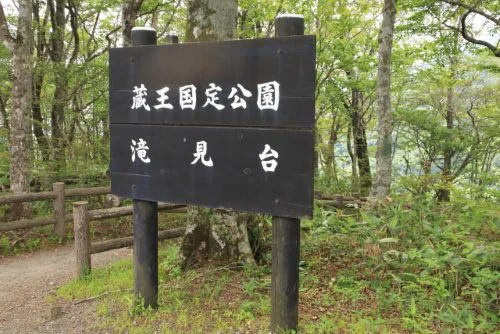
Takimi Lookout (滝見台)
Located at an elevation of approximately 700 meters, Takimi Lookout is one of the most popular viewpoints along the Zao Echo Line. From the observation area, visitors can enjoy panoramic views of three impressive waterfalls nestled within the mountains of Zao:
- Fudo Falls (不動滝), the largest waterfall in the Zao area
- Sankai Falls (三階滝), one of Japan’s Top 100 Waterfalls
- Jizo Falls (地蔵滝)
Although the scenery is beautiful throughout the year, Takimi Lookout is especially famous during the autumn foliage season when the surrounding mountains are covered in brilliant shades of red, orange, and gold.
Sankai Falls (三階滝)
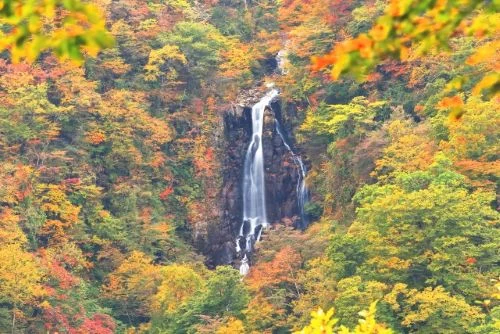
Recognized among Japan’s Top 100 Waterfalls, Sankai Falls has a dramatic drop of 181 meters and cascades down the mountainside in three distinct stages.
The waterfall is surrounded by dense forest and is particularly beautiful during the autumn foliage season. From Takimi Lookout, Sankai Falls can be seen on the left side of the valley.
The Legend of the Crab and the Eel (三階滝のカニウナギ合戦)
Local folklore tells of a giant crab that lived in Sankai Falls waterfall basin and a giant eel that inhabited Fudo Falls. After a fierce battle for control of Fudo Falls, the crab emerged victorious and cut the eel into three pieces. Legend says the eel’s head, body, and tail landed in what are now the hot spring towns of Aone Onsen (青根温泉), Gaga Onsen (峩々温泉), and Toogatta Onsen (遠刈田温泉), causing healing hot springs to emerge wherever they fell.
According to the legend:
- Aone Onsen is good for head-related ailments
- Gaga Onsen is believed to help stomach conditions
- Togatta Onsen is said to benefit the legs
Fudo Falls (不動滝)
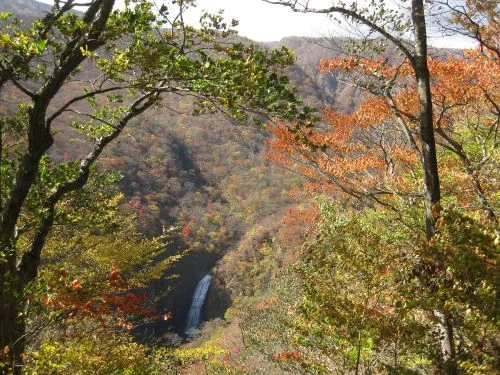
Fudo Falls is the largest waterfall in the Zao mountain range, with a dramatic drop of 53.5 meters and a width of 16 meters. From Takimi Lookout, visitors can admire the waterfall cascading through the forested valley below, where it can be seen on the right-hand side of the panoramic view.
For a closer look, continue driving about 1 kilometer further along the Zao Echo Line to the Fudo Falls Observation Deck (不動滝・不動尊展望台). This viewpoint offers a much more intimate perspective of the waterfall and allows visitors to fully appreciate its power and scale.
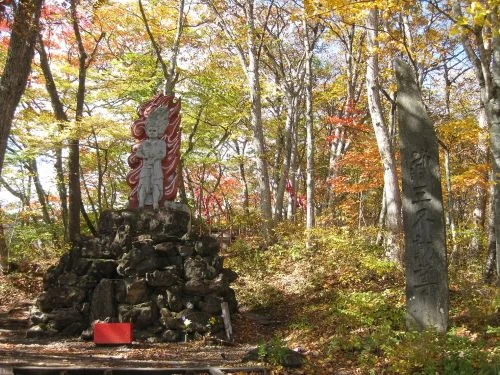
Near the observation area, you will also encounter a striking stone monument engraved with “Zao Fudoson” (蔵王不動尊) and an imposing statue of Fudo Myoo (不動明王) standing before a backdrop of blazing flames. The statue’s intense expression and dramatic setting make it one of the most memorable roadside landmarks on the Zao Echo Line.
- Parking: Free parking available on both sides of the road
- Toilets: Available at the parking area opposite the viewpoint
Zao Bodaira Highlands (蔵王坊平高原)
If you are coming from Yamagata side, you will drive through Zao Bodaira Highlands before reaching Katta Pass where you can turn onto the Zao Highline.
Located at an elevation of around 1,000 meters, Zaō Bōdaira Highlands is a peaceful plateau on the eastern slopes of Mount Zao. About 30 minutes by car from Kaminoyama (上山市街地) via the Zao Echo Line, the highlands offer a refreshing escape with cool temperatures, gentle walking trails, and expansive views. Because the terrain is relatively flat, it is a popular destination for visitors of all ages.
At Zao Bodaira Highlands, you can take the scenic 4.8-kilometer walking course follows the Seninzawa Stream (仙人沢), whose waters originate from the Zao Mountains. It is where you can enjoy hiking, birdwatching, and seasonal wildflowers, while the open grassy areas provide excellent picnic spots.
Komakusa Taira (駒草平)
Before reaching Daikokuten Parking Area (大黒天駐車場), you will come across Komakusa Taira, one of the most dramatic viewpoints along the Zao Echo Line.
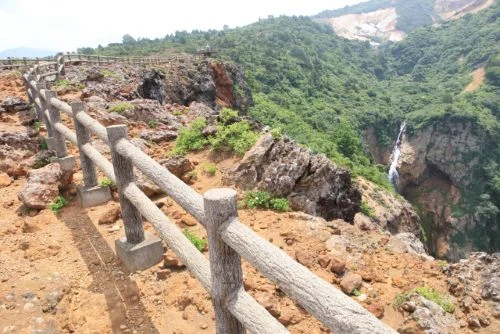
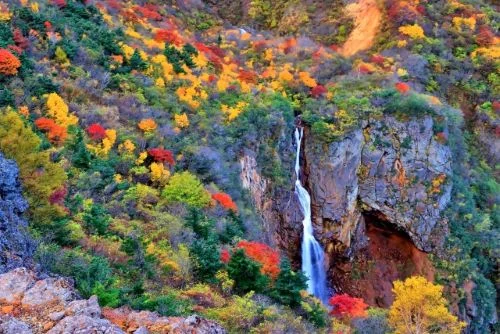
Perched on the edge of a steep cliff, the observation deck offers spectacular views of:
- Kaerazu Falls (不帰の滝)
- The name “Kaerazu” literally means “cannot return.” According to local folklore, a mountain hag once lived near the waterfall and lured travelers to their doom, giving the falls their ominous name.
- Furiko Falls (振子滝)
- Unlike most waterfalls, Furiko Falls only appears when water levels are particularly high, such as during the spring snowmelt. Spotting it is largely a matter of luck, making it one of the area’s hidden treasures.
Visitor Information
- Parking: Free parking (approximately 50 spaces)
- Toilets: Available
Komakusa Flowers (コマクサ)
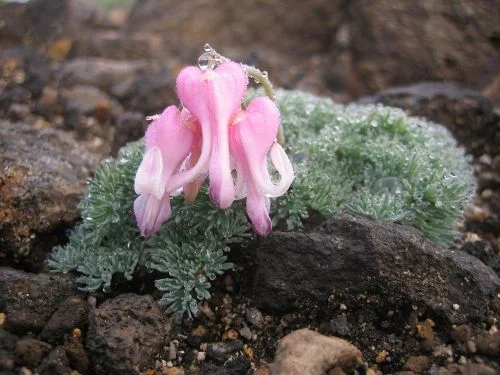
Komakusa Taira is also famous for its colonies of Komakusa (Dicentra peregrina), often called the “queen of alpine flowers” in Japan. The best time to see them is from mid-June to early July, when the delicate pink blossoms blanket portions of the highland landscape.
Spring Snow Corridor (Yuki-no-Kabe / 雪の壁)
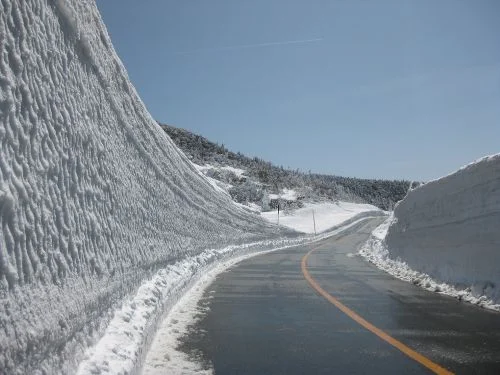
One of the most famous sights along the Zao Echo Line is the spectacular Spring Snow Corridor. When the mountain road reopens in mid-April, a sheer snow walls that reach up to 9 or 10 meters high is created when snowplows carve a path through massive snow drifts.
Driving through these towering snow walls is a unique experience. The contrast between the lingering winter landscape at higher elevations and the blooming cherry blossoms in the valleys below makes this one of the most memorable seasonal drives in Japan.
Snow Wall Walk Event
Before the Zao Echo Line officially opens to traffic each year, visitors have the rare opportunity to experience the Snow Wall Walk (雪の壁ウォーク). This special event allows participants to walk beside the towering snow walls before the road is opened to vehicles.
For 2026, the Zao Echo Line Snow Wall Walk will be held from 10 April to 13 April 2026, offering four days to experience this seasonal phenomenon up close. Participants walk approximately 2 kilometres between Daikokuten Parking Area (大黒天駐車場) and Shimanosawa (縞の沢), surrounded by snow walls that can rise as high as 9 metres.
The event typically includes guidance from experienced mountain guides, providing insights into the area’s natural environment and the snow-clearing process. After the walk, visitors can enjoy complimentary hot soup, making the experience even more memorable.
Important: The Snow Wall Walk requires advance booking through designated tour operators, and private vehicles are not permitted during the event. Once the road officially opens, visitors can continue to enjoy the snow corridor by car, although walking along the roadway is no longer allowed.
Best Time to Visit the Snow Corridor
The snow walls usually remain visible until early May, depending on weather conditions and spring temperatures. Since the snow gradually melts as temperatures rise, the most impressive views are often found shortly after the Zao Echo Line reopens.
Snow-clearing operations begin in mid-March, and by mid-April the famous snow corridor is ready to welcome visitors. If seeing the highest snow walls is your priority, plan your visit as early in the season as possible.
A Unique Combination of Snow and Cherry Blossoms
While snow corridors can be found in several mountainous regions across Japan, Zao offers a particularly special experience. It is one of the few places where visitors can enjoy towering snow walls and cherry blossoms on the same trip. Around the same time, popular sakura spots at lower elevations include:
- Hitome Senbonzakura along the Shiroishi River (白石川堤一目千本桜)
- Shiroishi Castle Park (白石城)
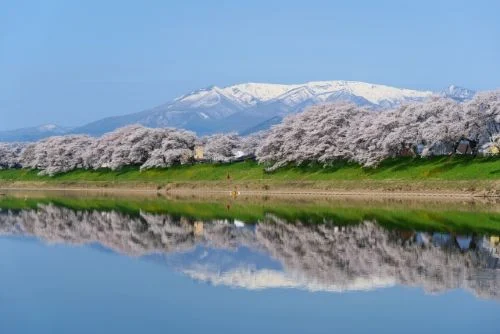
The combination of snow-covered mountains, spring sunshine, and blooming cherry blossoms makes the Zao region one of the best spring destinations in Tohoku.
Relax at Toogatta Onsen (遠刈田温泉)
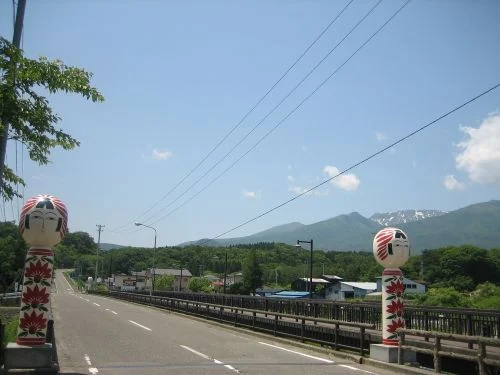
After exploring the Snow Corridor, consider stopping at Toogatta Onsen, a historic hot spring town at the foot of Mount Zao.
With more than 400 years of history, it has long been a base for mountain pilgrims and travellers seeking relaxation. Soaking in the mineral-rich waters is the perfect way to unwind after a day of sightseeing along the Zao Echo Line.
Mount Zao Summit Highlight: Okama Crater Lake Guide
The ultimate reward for driving the Zao Echo Line is reaching Mount Zao’s summit to view the breathtaking Okama Crater Lake. Known as Japan’s “Five-Color Pond”, this magnificent volcanic crater is the region’s signature highlight.
Before driving up the mountain pass, read our complete guide to Okama Crater Lake: How to Visit Japan’s Five-Color Volcanic Wonder to plan your summit visit, including live webcam checks, volcanic alert safety rules, rest house amenities, and optimal viewing times!