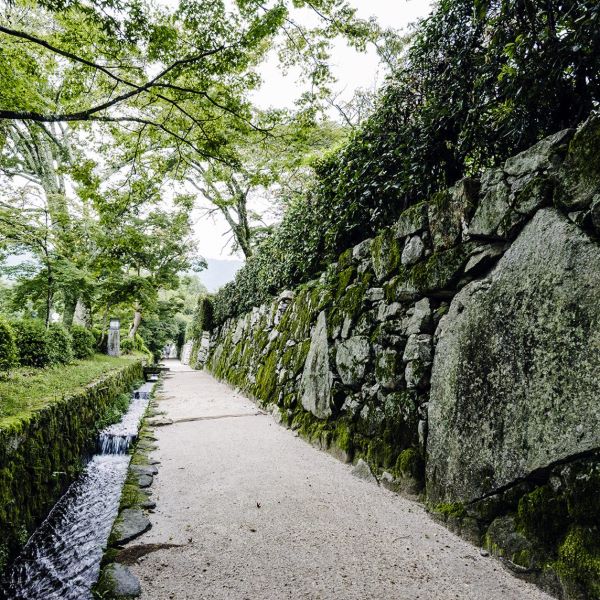
Escape the crowds of Kyoto and journey into the heart of Sakamoto (坂本) in Otsu City, a serene and historic temple town nestled at the foot of Mount Hiei in Shiga Prefecture. Known as the gateway to the UNESCO World Heritage site Enryaku-ji Temple, Sakamoto is famous for its unique “Anozurazumi” stone walls, meticulously crafted by the legendary Anōshu masons (穴太衆) using natural, uncut stones. The “village of stone piles” remains a hidden gem for travelers seeking a deep dive into Japan’s spiritual past, featuring the vibrant vermillion gates of Hiyoshi Taisha Shrine and the longest funicular railway in Japan, the Sakamoto Cable. Whether you are chasing reflected garden views in the Former Chikurin-in Temple garden or walking the quiet paths once trodden by retired warrior monks, our guide to Sakamoto covers the best hidden viewpoints, artisan history, and seasonal tips for your perfect lakeside escape.
Where to Go and What to Do in Sakamoto
Refer to HERE for the Sakamoto Area Map. The temples and attractions highlighted in yellow are accessible to tourists. Use the facility’s Japanese name to read.
Tip: Hiyoshi Taisha, the Former Chikuri-in, usually has nighttime illumination events from the beginning of November to the beginning of December, from around 5 pm to 9 pm.
Explore Former Sakamoto With a Guided Tour
If you prefer to be guided on your visit to Sakamoto, consider joining the tour below.
Sakamoto’s Autumn Foliage Season
Sakamoto is one of Shiga’s premier spots for fall foliage. The autumn foliage season usually peaks from mid to-late November.
How to Get to and Get Around Sakamoto
- The closest train station to Sakamoto’s attractions is JR Hieizan-Sakamoto Station (比叡山坂本駅) or Keihan’s Keihan Sakamoto-hieizanguchi Station (坂本比叡山口駅).
- While most attractions in Sakamoto aren’t too far away from each other, you can also take a bus operated by Kojak Bus.
- Note that the number of services can be limited.
Tip: If you want to visit Mt. Hiei and Sakamoto on the same day, consider getting the Sakamoto Sightseeing Bus and Cable Car One-Day Ticket (坂本周遊バス・ケーブル一日乗車券). It includes a return ticket for the Sakamoto Cable Car and unlimited bus rides on bus routes 41, 31, 39, and a part of route 126. The ticket is on sale from late March to January the following year. The cost is 1,700 yen for adults and 900 yen for children.
1-Day Sakamoto Sample Itinerary
Except for Mt. Hiei, allocating an hour to each of the other attractions in Sakamoto is usually enough. If you want to explore Mt. Hiei properly, you will need a day. However, if you are only after a panoramic view of Lake Biwa from the top of the mountain, you can allocate an hour or two to the Enryaku-ji Temple.
- 8:30 AM | Arrival at JR Hieizan-Sakamoto Station: Arrive via the JR Kosei Line (15 minutes from Kyoto). Walk toward the mountains. You will notice the Anozurazumi stone walls lining the residential streets. These walls were built without mortar by the legendary Anoshu masons.
- 9:00 AM | Shiga-in Monzeki Visit this former residence of high-ranking monks. It features a stunning rock garden and is the best place to see how the stone walls integrate into the temple architecture.
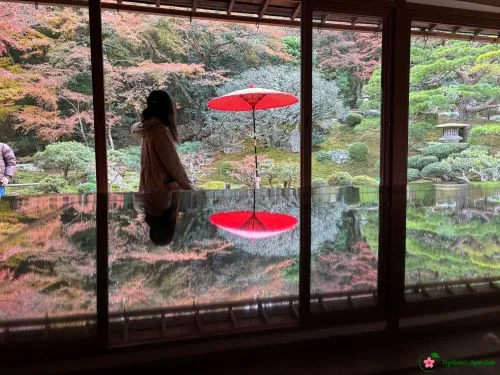
- 10:00 AM | Kyu Chikurin-in (Former Chikurin-in): You will find the polished black tables on the ground and second floor of the main building that create the famous garden reflection photos. The temple is a tranquil alternative to Kyoto’s crowded Rurikoin.
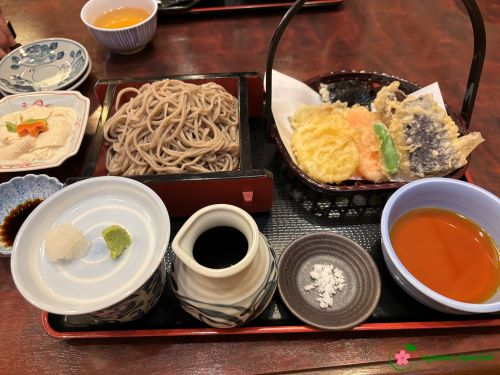
- 11:00 AM | Soba Lunch at Tsuruki Soba Sakamoto is famous for its buckwheat noodles. Tsuruki Soba has been serving monks and pilgrims for over 300 years in a registered Tangible Cultural Property building.
- 12:30 PM | Hiyoshi Taisha Shrine Walk through the unique “Sanno” torii gate (which has a mountain-shaped top). Look for the Masaru (sacred monkeys) carved into the buildings, believed to ward off evil.
- 2:00 PM | Sakamoto Cable & Mt. Hiei Take the Sakamoto Cable Railway (Japan’s longest) to the top for a panoramic view of Lake Biwa. You can explore the Enryaku-ji (To-do area) before taking Eizan Ropeway’s last gondola back down.
- Refer to our How to Get to Mt. Hiei article for information about how to get to Eizan Ropeway.
Tip: You can also reverse the sample itinerary and have vegan lunch sets while overlooking Lake Biwa at Enryakuji Kaikan.
Ōtsushi Sakamoto Information Center (坂本観光案内所)
Before you explore Sakamoto, dropping by the tourist information center is always a great idea. Not only to get sightseeing maps, tips, and advice, but also to check out if there are any coupons or sightseeing discount deals that you can take advantage of!
At Ōtsushi Sakamoto Information Center, you can rent an electric-assisted bicycle for 1,000 yen per day (or 250 yen per hour).
- The center is open from 9:30 am to 4:30 pm.
- It is just in front of Keihan’s Sakamoto-hieizanguchi Station (坂本比叡山口駅).
Tip: Give the center a call at +81-77-578-6565 to reserve your bicycle to avoid disappointment on arrival.
Kunin Yashiki (公人屋敷)
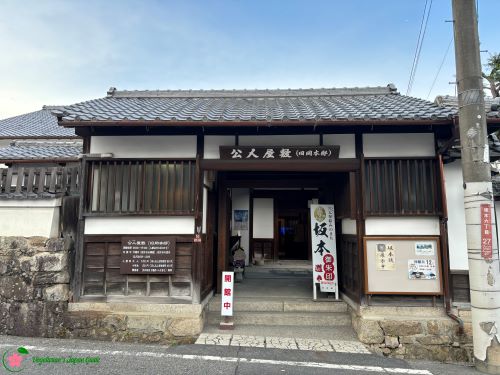
In Sakamoto, apart from the temples and shrines, there is a spot that introduces visitors to the life of a local government official in the Edo period. Unlike the grand satobo villas of high-ranking priests, this remarkably preserved Edo-period estate offers a rare glimpse into the lives of the Kunin, who played a vital role in supporting the Enryaku-ji Temple. The samurai-style residence features a peaceful inner garden and authentic living quarters that reveal the daily routines of Sakamoto’s working-class community in the 1800s.
For more information, refer to our article on Kunin Yashiki!
Honke Tsuruki Soba (本家 鶴㐂そば)
When lunchtime approaches, it is time to finish exploring the temple or shrine you are in and find a restaurant. As a town in the countryside, Sakamoto has no vegan-friendly restaurants. The closest place to enjoy a vegan meal is the Enryakuji Kaikan in Mt. Hiei. But if you don’t mind bringing a bottle of vegan dipping sauce, a good place to stop for lunch or dinner is Honke Tsuruki Soba!
For more information, refer to our article on Honke Tsuruki Soba!
Shigain Monzeki Temple (滋賀院門跡)

Step into the “Inner Sanctuary” of Mount Hiei at Shigain Monzeki Temple, the most prestigious of the satobo (monk residences) in the historic town of Sakamoto, Shiga. Originally the residence of the head priest of Enryaku-ji, this magnificent temple complex is renowned for its formidable Anozurazumi stone walls and its breathtaking Karesansui (dry landscape) garden, attributed to the legendary designer Kobori Enshu.
For more information about the highlights of this spot, refer to our Shigain Monzeki Temple article!
Former Chikurin-in Temple (旧竹林院)
Amongst all the Satobō, the Former Chikurin-in is probably the most famous temple nowadays. Not only is the Chikirin-in one of the highest-ranked temples in Enryakuji, but the stunning garden was also designated as a National Place of Scenic Beauty in 1998. The picture-perfect garden is renowned as a photography spot, where you can get an amazing reflection of the garden from the low table set up in the Japanese-style rooms.
For more information, please refer to our article on the Former Chikurin-in!
Hiyoshi Taisha Shrine (日吉大社)

Discover the spiritual heart of the “Sacred Mountain” at Hiyoshi Taisha Shrine, a sprawling World Heritage site. As the head of over 3,800 Hiyoshi, Hie, and Sanno shrines across Japan, this ancient complex has served as the divine protector of the Tendai Buddhist Sect and the Enryaku-ji Temple for over 2,000 years. In addition to the Masaru (sacred monkeys) , which are believed to ward off evil, it is a top autumn foliage spot in the Lake Biwa region.
For more information, please refer to our article on Hiyoshi Taisha (=゚ω゚)ノ.
Hiyoshi Tōshōgū Shrine (日吉東照宮)
Experience the “Nikko of the West” at Hiyoshi Toshogu Shrine, a dazzling architectural hidden gem perched on the slopes of Mount Hiei. Established in 1623, this stunning shrine was built to deify Tokugawa Ieyasu and served as the prototype for the world-famous Nikko Toshogu, featuring the same intricate carvings and brilliant gold leaf that define the flamboyant Gongen-zukuri style.
For more information about the highlights of this spot, refer to our Hiyoshi Tōshōgū Shrine article!
Saikyō-ji Temple (西教寺)

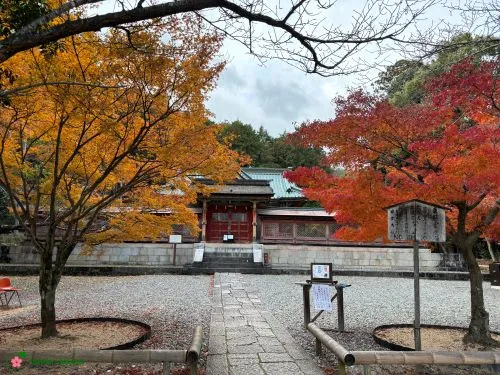
Unlike many surrounding sites, Saikyo-ji is famously associated with the tragic history of the samurai general Akechi Mitsuhide, whose family grave lies within the temple’s peaceful grounds, overlooking Lake Biwa. Whether you are chasing the brilliant autumn foliage that blankets the temple in November or exploring its connection to the Sengoku period, our guide to Saikyo-ji offers the best travel tips for discovering this profound architectural and historical landmark in Ōtsu City.
For more information about this gorgeous and historically rich temple, refer to our article on Saikyō-ji!
Taking the Cable Car to Explore Mt. Hiei (比叡山)
Ascend to the “Mother Mountain of Japanese Buddhism” at Mount Hiei. As the home of the sprawling Enryaku-ji Temple, a UNESCO World Heritage site founded in 788, this sacred peak served as the training ground for the monks who established almost every major sect of Japanese Buddhism. As a premier, lesser-known destination near Kyoto, it is a great spot if you are seeking a mix of profound history, ancient cedar forests, and panoramic views of Lake Biwa.
To find out more about this sacred destination, please refer to our article on Mt. Hiei!
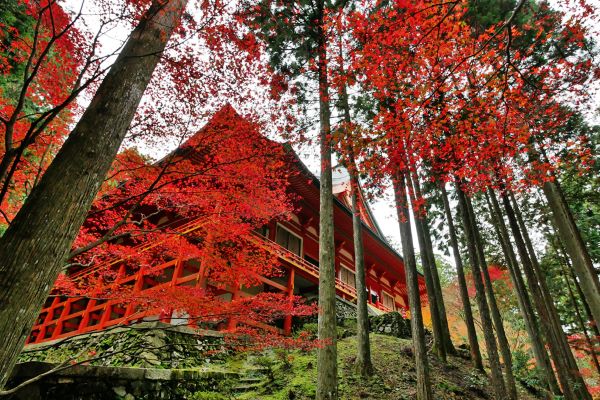
Discover Other Attractions in Ōtsu City
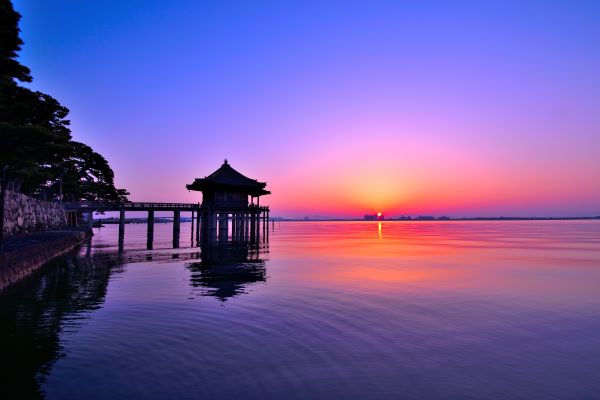
In addition to Mt. Hiei, the lakeside city of Otsu serves as the perfect gateway to discovering the diverse cultural treasures of Shiga Prefecture. As the historic capital of Japan for a brief period in the 7th century, Otsu offers a captivating blend of spiritual depth and scenic beauty, stretching from the monumental Mii-dera Temple to the picturesque Ishiyama-dera. Moreover, you will find the world’s largest fountain.
For more information, please refer to our article on Ōtsu City (=゚ω゚)ノ.