Transport yourself back to the era of the shogun with our comprehensive guide to the Nagamachi Samurai District (長町武家屋敷跡) in Kanazawa. Nestled at the foot of the former Kanazawa Castle, this remarkably preserved neighborhood is a living time capsule of Edo-period Japan, famous for its winding cobblestone alleys, historic canals, and iconic earthen mud walls. Visitors can step inside authentic bukeyashiki (samurai residences) like the world-renowned Nomura Clan House, home to a Michelin-starred garden, or explore the modest quarters of the Ashigaru Museum to see how foot soldiers once lived. Whether you are visiting in winter to see the protective komogake straw mats lining the walls or seeking a peaceful afternoon of traditional tea and crafts, Nagamachi offers an immersive glimpse into the daily lives of the Kaga Domain’s warrior elite. Moreover, it is where you can source famous Kutani Ware (九谷焼)!
What to Do at Nagamachi Samurai District
- About Nagamachi Samurai District
- How to Get to Nagamachi Samurai District
- Nagamachi Buke Yashiki Rest House (長町武家屋敷休憩館)
- Nomura-ke Samurai Residence (武家屋敷跡 野村家)
- Kanazawa City Ashigaru Museum (金沢市足軽資料館)
- Takada Family House (旧加賀藩士 高田家跡)
- The Recommended Wagashi Cafés in Nagamachi Samurai District
- The Recommended Shops in Nagamachi Samurai District
- Discover Other Fascinating Attractions in Kanazawa City
About Nagamachi Samurai District
Unlike many samurai districts in Japan, Kanazawa’s district has only a couple of traditional houses open to the public, which we will introduce below. Other houses have been turned into shops, and almost half are still someone else’s home!
If you come to the district in winter between early December and mid-March, the outer walls of the houses will be covered by woven straw mats called komogake. This is to protect the mud walls from snow infiltration.
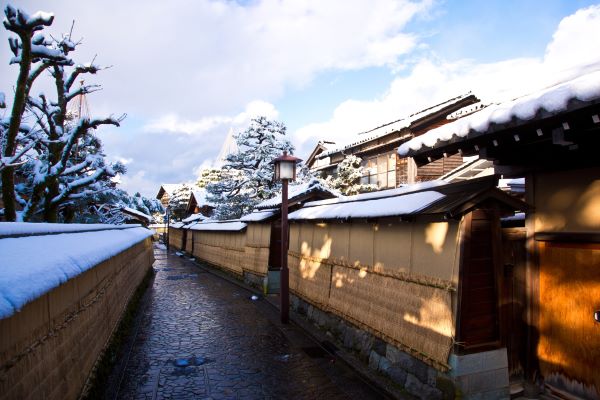
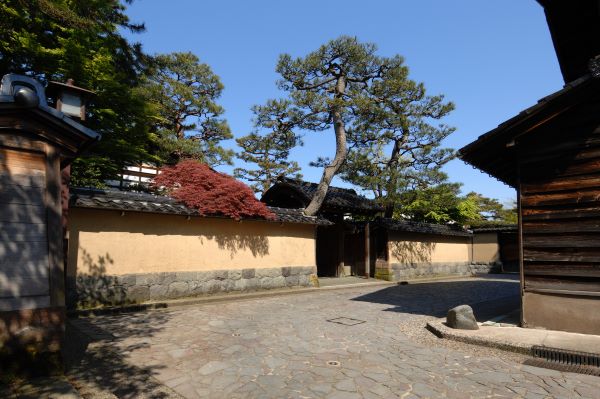
At the intersections in the district, you might see a stone on the ground by itself. Those stones aren’t there to trip you over, but to knock the snow off the samurais’ sandals back then (and yes, they didn’t have covered shoes then).
Tip: The Ashigaru Museum and the Takada Family House are free to enter, making the district a great choice for budget-conscious travellers.
How to Get to Nagamachi Samurai District
- It is around a 10-minute walk from the 21st Century Museum of Contemporary Art, Kanazawa or Nichi Chaya District or Kanazawa Castle Park Gyokusenin Maruguchi Gate (金沢城公園 玉泉院丸口).
- From the bus stop Kōrinbō (香林坊), it is a 5-minute walk.
- From JR Kanazawa Station, it is a 25-minute walk.
For more information about bus services in Kanazawa, please refer to our How to Get Around Kanazawa article.
Tip: You can make a reservation HERE to be dressed up in a kimono before exploring the Nagamachi Samurai District and the rest of Kanazawa!
Nagamachi Buke Yashiki Rest House (長町武家屋敷休憩館)
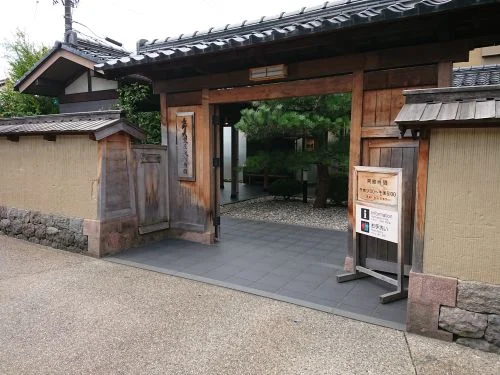
Nagamachi Buke Yashiki Rest House is a unique building that evokes the atmosphere of a samurai residence, using modern materials such as iron and stainless steel. It acts as the area’s tourist information corner. There are plenty of pamphlets available, including a Nagamachi walking map, so be sure to visit the rest house first before exploring the rest of the Nagamachi Samurai District!
While conducted in Japanese only, volunteer guides stand by here and will guide you for free. You can learn more about Kanazawa’s charms by listening to explanations about its history and culture as you walk.
If you get tired of walking, Nagamachi Buke Yashiki Rest House is the perfect spot for a rest. You can also utilize its toilet facility.
Tip: You can use one of the Translation Apps to communicate the guides and staff.
Naga-machi Buke Yashiki Rest House’s Opening Hours and Access Information
- Naga-machi Buke Yashiki Rest House is open from 9 am to 5 pm. From December to March 15, it opens late at 9:30 am.
- The rest house is a 5-minute walk from the bus stop Kōrinbō (香林坊).
Nomura-ke Samurai Residence (武家屋敷跡 野村家)

Among all the samurais’ homes, the must-visit one is Nomura-ke Samurai Residence. The residence of a high-ranking official will demonstrate to you the lifestyle of those of high social status.
The intricate painting on the fusuma sliding doors, the Japanese swords, and the armour handed down through generations of samurai are all must-sees inside the house.
The Japanese garden in the residence is another key attraction here.
Chosen as one of the top three gardens by the American gardening magazine, Journal of Japanese Gardening, in 2003, the beautifully designed garden features trees more than 400 years old standing quietly on one side. Around the tree, you will find stone lanterns, ponds, and small canals with koi fish enjoying their lives at this old house in the warmer seasons.
In 2009, Nomura Clan Samurai Home received a two-star ranking from the Michelin Green Guide Japan. Since then, more and more international tourists have visited this place!
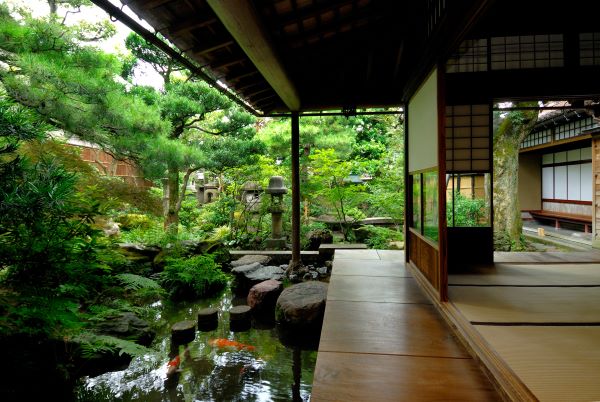
A set of stone staircases is at the end of the corridor next to the garden. The tea room – Fubaku-an (不莫庵), is at the top of those staircases. From the window in the tea room, you can admire the garden with a cup of matcha green tea and a Japanese sweet, which is another way to appreciate Japanese culture (=゚ω゚)ノ.
For more information about Nomura-ke Samurai Residence, refer to their website HERE and change it to English at the top!
Nomura-ke Samurai Residence’s Opening Hours, Admission Fee, and Access Information
- The residence is open from 8:30 am to 5:30 pm from April to September.
- From October to March, it will close earlier at 4:30 pm.
- The last admission is 30 minutes before the residence’s closing time.
- The residence won’t open on December 26 and 27, as well as January 1 and 2.
- The admission fee is
- 550 yen for adults
- 400 yen for senior high school students
- 250 yen for elementary and junior high school students
- A cup of matcha that comes with a dry Japanese sweet will cost 300 yen.
Kanazawa City Ashigaru Museum (金沢市足軽資料館)
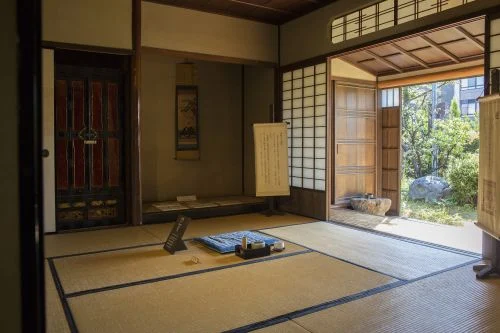
Contrasting the Nomura-ke Samurai Residence, the two houses in the Kanazawa City Ashigaru Museum belonged to the foot soldiers, or Ashigaru in Japanese.
The facility, which opened in 1997, is free to enter. The roof of the buildings is made of old-fashioned stone, creating an atmosphere of the time. The exhibit inside the houses not only explains the facilities within the building but also covers a wide range of topics, including the work, income, and studies of foot soldiers during the feudal period, as well as samurai society in the Kaga domain.
In other domains, foot soldiers often lived in communal housing called ashigaru tenements. However, in the wealthy Kaga domain, even the lowest-ranking samurai, the foot soldiers, were given their own detached homes. In fact, their houses were much bigger than those of people living in apartments in Japan’s big cities! Although they were all single-story wooden houses surrounded by hedges, they came with a garden and three bedrooms.
That said, considering the size of the families during the feudal era, foot soldiers’ houses were usually too small to accommodate everyone. The salary wasn’t enough, so each family had to take on side jobs to make ends meet.
The houses were donated by the Shimizu and Takanishi families, descendants of foot soldiers from the Kaga domain. They were both used as actual residences by the Shimizu family (高西家) until 1990 and by the Takanishi family (清水家) until 1994. The families’ nameplates are still hanging at each entrance.
Kanazawa City Ashigaru Museum’s Opening Hours and Access Information
- Kanazawa City Ashigaru Museum is open from 9:30 am to 5 pm.
- From the bus stop Kōrinbō (香林坊), it is a 7-minute walk.
Takada Family House (旧加賀藩士 高田家跡)
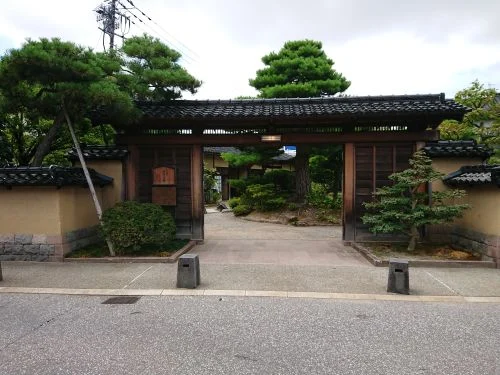
The middle-ranked samurai residence, Takada Family House, will complete the picture of samurai life in Kanazawa. While not as splendid as the Nomura-ke Samurai Residence, Takeda Family House also has a water strolling garden. Despite the building’s size, its garden is impressive. Plus, entry is free!
Like the Kanazawa City Ashigaru Museum, explanatory panels are set up inside the residence to explain the living conditions of the samurai who held the same rank as the Takada Family and their servants.
Instead of hedges, the middle-ranked Takada Family has earthen walls to mark their territory. The rank also determines the type of entrance gate. The Takada Family had a Nagaya-mon (長屋門). The type of gate got its name from its structure, which resembled the traditional Nagaya, a cramped row of houses. Thus, Nagaya-mon isn’t just a gate. It was the living quarters of the family’s servants, who also guarded the entrance to the residence and closely monitored who came and went. The gate even has a stable built in!
It is believed that the Takada family’s Nagaya-mon was originally built between 1861 and 1864. The current gate was restored to its original layout based on traces of changes visible on the faces of its old posts.
The water garden draws water from the Ōnoshō irrigation canal that flows next to the earth wall.
Takada Family House’s Opening Hours and Access Information
- Takada Family House is open from 9:30 am to 5 pm.
- From the bus stop Kōrinbō (香林坊), it is a 7-minute walk.
The Recommended Wagashi Cafés in Nagamachi Samurai District
Wagashi means Japanese confectionery. It is a must-eat when you visit a traditional area like Nagamachi Samurai District. Moreover, Kanazawa is one of the three major centers of Japanese sweets, another reason to order one of those delicately made sweets.
In Nagamachi Samurai District, there are several shops and cafés where you can enjoy traditional Kanazawa sweets. We have listed a few places where you can enjoy wagashi while taking in the historic scenery and well-maintained gardens.
Café Murakami Nagaya-mon (菓ふぇ MURAKAMI nagaya-mon店)
Café Murakami Nagaya-mon is run by the popular Japanese traditional sweets maker, Wagashi Murakami (和菓子村上). The café is located at the back of the confectionery maker’s shop in Nagamachi Samurai District. In addition to traditional Japanese sweets, the shop also sells Kutani ware, local sake, and souvenirs.
Established in 1911, the sweets maker has kept up with the trend and offers not only traditional sweets but also parfaits, pancakes, and Kanazawa’s famous soft-serve covered in gold foil. The café is also popular for its photogenic sweets, sure to look great on Instagram.
An English menu is available, making it easy to order and understand what you are purchasing.
- Cafe Murakami Nagaya-mon is open from
- 10 am to 4:30 pm on weekdays
- 10 am to 5 pm on weekends and public holidays
Kayūan (金沢長町菓遊庵)
For a more traditional experience, head to Kayūan. The quiet traditional café is where you can relax in a homely atmosphere. The café is run by a very kind grandmother and her granddaughter, an old family business which is well worth visiting and supporting. The premium traditional sweets change with the seasons, allowing their customers to enjoy each season to the fullest.
At Kayūan, you can even make yourself a cup of matcha using the tea ceremony utensils! While you won’t be making tea on tatami mats, you will be guided on how to purify the utensils before adding an adequate amount of matcha powder and hot water into the tea bowls. Whisking can be a little tiring for your wrist, but it will all be worth it when you swallow down the creamy matcha!
Besides the wabashi, Kayūan’s rich and creamy ice cream or shaved ice is also very popular.
- Kayūan is open from 10 am to 5 pm from Thursday to Monday.
Sakakobo Tarō Onigawa Store (茶菓工房たろう 鬼川店)
For some unique wagashi, visit Sakakobo Taro. The confectionery maker has a branch in Nagamachi Samurai District. Starting with the most popular “Cacao Chocolate Yokan (カカオチョコようかん),” the shop next to the famous Nomura-ke Samurai Residence offers plenty of sweets that bring a new twist to Japanese sweets. Different from the Michelin-starred spot next door, Sakakobo Taro is where you can adore Nomura-ke’s beautiful garden in peace!
Like other wagashi makers, the high-quality sweets change with the seasons. No matter what is on the menu, the delicious sweets are always photogenic.
- Sakakobo Taro Onigawa Store is open from 8:45 am to 5:30 pm.
The Recommended Shops in Nagamachi Samurai District
The Nagamachi Samurai District retains the atmosphere of an old town, and is home to plenty of shops where you can buy souvenirs and even experience making traditional crafts. Why not experience Kanazawa’s traditional culture while you stroll around?
Kanazawa Kutani Museum (金沢九谷ミュウジアム)
If you are interested in Japanese porcelain and stoneware, don’t miss out on the Kanazawa Kutani Museum. The shop is housed in a charming Japanese-style building that resembles a high-end Japanese restaurant. Everything from affordable crockery to Kutani ware artwork can be found at the Kanazawa Kutani Museum. Not only can you purchase Kutani ware from the shop, but the Kaburagi family’s Kutani ware collections are also exhibited.
The shop also has a restaurant, Oishii Ippuku Kaburagi (おいしいいっぷく鏑木), where you can enjoy a meal while looking out at the garden. Just note that the meals aren’t plant-based. But you can enjoy desserts here.
Kanazawa Kutani Museum is run by Kaburagi Shōho (鏑木商舗), a Kutani ware specialist founded in 1805. In addition to selling products purchased from each kiln in the Kaga domain, the shop also gathered master craftsmen in their workshop and produced splendidly painted porcelain. In the early 20th century, Kaburagi’s Kutani ware was recognized as of the highest quality.
- Kanazawa Kutani Museum is open from 9 am to 6 pm.
- Oishii Ippuku Kaburagi is open from 10 am to 6 pm.
atelier&gallery creava (クリーヴァ)
If you want to experience making pottery in Japan, atelier&gallery creava is the best place to head to in the Nagamachi Samurai District. The pottery studio, renovated from a Meiji-period storehouse, allows customers to make pottery on an electric pottery wheel. The instructor will give you detailed guidance and advice, so even a first-timer can make a ceramic easily. You can also learn glazing ceramics, using the method called Uwa-etsuke (上絵付け).
There is also a gallery, shop, and cafe in this art complex. The gallery, which retains the atmosphere of the Edo period, is the best place to admire Kanazawa’s crafts and art. Monthly exhibitions of a variety of artworks by the local artists are held in the gallery. So, you can always come back to creava and find new paintings, sculptures, crafts, and more!
creava’s shop and cafe are in the same space. Beautiful works by the local artists are displayed in the stylish space. If any tableware or accessories catch your attention, bring them home and support the locals!
For more information, refer to creava’s website HERE.
- creava is open from 11 am to 5 pm from Friday to Tuesday.
Discover Other Fascinating Attractions in Kanazawa City
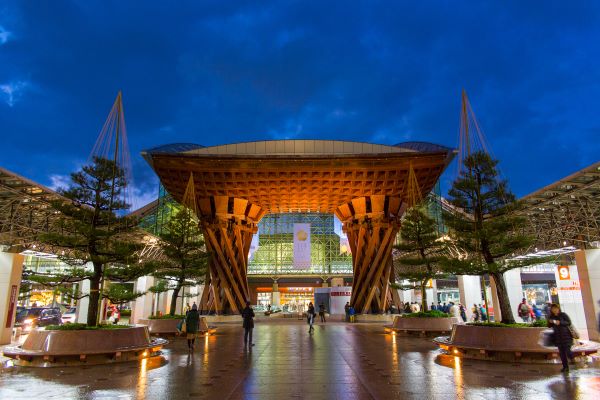
Step into a world where samurai legacy and modern artistry collide with our guide to Kanazawa (金沢), Japan’s “Little Kyoto.” Whether you are wandering the perfectly preserved wooden teahouses of the Higashi Chaya geisha district or admiring the circular architecture of the 21st Century Museum of Contemporary Art, Kanazawa offers a deep dive into Edo-period culture without the overwhelming crowds of larger cities.
Refer to our Kanazawa article for more awesome attractions, including where to meet the Geishas!