Immerse yourself in the timeless elegance of Kanazawa with our guide to the city’s Three Tea House Districts. Established in 1820, these historic neighborhoods, Higashi Chaya, Nishi Chaya, and Kazue-machi, remain the beating heart of geiko (geisha) culture and Edo-period architecture. From the bustling main street of Higashi Chaya, famous for its gold-leaf ice cream and the historic Shima Teahouse, to the tranquil riverside alleys of Kazue-machi and the intimate charm of Nishi Chaya, each district offers a unique window into Japan’s feudal past.
What to Do in Kanazawa’s Chaya Districts
- What Does Chaya Mean in Japanese
- Explore Kanazawa and the Chaya Districts With a Guided Tour
- The Best Time for a Photography Session at Higashi Chaya District in Kanazawa
- A Couple of Attractions in the Higashi Chaya District
- Higashi Chaya Kyūkei-Kan Rest House (ひがし茶屋休憩館): Higashi Chaya District's Information Center
- Ochaya Shima (金沢ひがし廓 志摩)
- Hakuichi Higashiyama (箔一 東山店)
- Kazuemachi Chaya District (主計町茶屋街)
- Nishi Chaya District (にし茶屋街)
- A Couple of Attractions in Nishi Chaya District
- Kanazawa-shi Nishichaya Museum (金沢市西茶屋資料館)
- Moroeya Nishi Chaya Karyo (落雁諸江屋 にし茶屋菓寮)
- Nakatani Tofu (中谷とうふ)
- Discover Other Fascinating Attractions in Kanazawa City
What Does Chaya Mean in Japanese
A chaya (茶屋) means a tea house in Japanese. Although it is a “tea” house, alcohol is served to its customers. It used to be home to beautiful and talented Geishas (芸者), who are masters of various traditional Japanese arts such as Buyō (舞踊) and Shamisen (三味線), which are the Japanese traditional dance and Japanese guitar.
Similar to Kyoto’s Gion (祇園) district, Kanazawa also has a geisha district. In fact, there are three of them in Japan’s “Little Kyoto”. Among the three, Higashi Chaya (ひがし茶屋街) is the most prominent one. Surviving from the damage of World War II, the traditional houses here are more than 200 years old!
Explore Kanazawa and the Chaya Districts With a Guided Tour
If you prefer a guide to introduce you to Kanazawa’s charms or a photographer to take professional photos for you, how about joining one of the following tours?
- Kanazawa Private Tour with a Local – Highlights & Hidden Gems
- Photoshoot session by a professional photographer in Kanazawa
- Discover the Secret Gems in Kanazawa
The Best Time for a Photography Session at Higashi Chaya District in Kanazawa
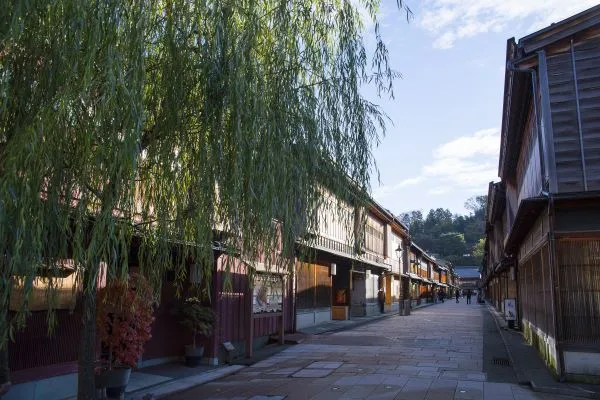
In the early morning and after sunset, the streets in the district may be as empty as in the photo. But it is definitely not the case from late morning to late afternoon!
So if you don’t want many strangers serving as the backdrop of your selfies in this gorgeous district, start your day from Higashi Chaya for your photo sessions. Later, you can return for trendy cafés, restaurants, art galleries, Japanese craft stores, and cultural experiences such as tea ceremonies!
Strolling around the maze-like small alleys in the district was what we enjoyed the most, apart from Kenrokuen Garden. As the day gets darker, you might be able to spot the Geisha and Maiko (apprentice Geisha), who are on their way to one of the banquets hosted by one of the tea houses.
It can be even harder to snap a decent photo of them here because, unlike in Kyoto, there are no traffic lights that can stop them from their unusually fast steps (´▽`*). On the other hand, if you just want to enjoy the sound of their musical performances, take a walk at night here, and you will have a good chance to be one of their unintended guests!
How to Get to Higashi Chaya District
- If you take Kanazawa Loop Bus (城下まち金沢周遊バス) or West Japan JR Bus ( 西日本JRバス), get off at Hashibachō (橋場町) stop. The district is just a 5-minute walk away.
- If you take the Machi Bus (まちバス), the closest bus stop is Musashigatsuji Ōmichōichiba (武蔵ヶ辻・近江町市場). The district is a 15-minute walk away from that bus stop.
For more information about bus services in Kanazawa, please refer to our How to Get Around Kanazawa article.
A Couple of Attractions in the Higashi Chaya District
- Higashi Chaya Kyūkei-Kan Rest House (ひがし茶屋休憩館): Higashi Chaya District’s Information Center
- Ochaya Shima (金沢ひがし廓 志摩)
- Hakuichi Higashiyama (箔一 東山店)
Higashi Chaya Kyūkei-Kan Rest House (ひがし茶屋休憩館): Higashi Chaya District’s Information Center
Close to the entrance of the Higashi Chaya District, you will find the information center, Higashi Chaya Kyūkei-Kan Rest House. The information center was renovated from an old house.

On top of sourcing useful tourist information, it is there for anyone who wants a peek at the interior of a house back in the Edo period (1603 – 1867).
If it rains, they also have umbrellas that you can borrow. This is also where volunteer tour guides are stationed. While it currently seems the approximately one-hour guided tour is only offered in Japanese, things can always change. So don’t be afraid to check with them when you get there!
Lastly, if you are traveling with someone less mobile, you can rent one of the two wheelchairs for free from them.
- Entry is free
- The opening hours of the Higashi Chaya Kyūkei-Kan Rest House are from 9 am to 5 pm daily
- From December 1 to March 15, it opens later, at 9:30 am.
Tip: If you ever need a toilet during your time in Higashi Chaya District, visit Higashi Chaya District’s Infomation Center!
Ochaya Shima (金沢ひがし廓 志摩)
Shima was a high-ranking tea house during the Edo period. Being designated as a National Important Cultural Property, it is now open to the public.
The interior of the tea house is adorned with traditional wall scrolls and various instruments on the floor. It is exactly one of those settings you might have seen in a Japanese historical TV drama, and the perfect place for a glimpse of the stylish adult social gatherings at the time.
The tea house also has a tea room, Kanson-an (寒村庵), with a small Japanese garden in front. A bowl of matcha green tea with a piece of traditional sweets is probably the best way to enjoy Ochaya Shima. There are two kinds of Japanese sweets to choose from, each with a different price.
- Wet confectionery (生菓子): usually made with sugar, gluten rice powder, and red and/or white bean paste
- 1,000 yen
- Dry confectionery (干菓子): usually made with sugar of the best quality
- 800 yen
Ochaya Shima’s Opening Hours, Admission Fee, and Access Information
- It opens from 9:30 am to 5:30 pm normally, but closes early at 5 pm from December to February.
- The admission fee is
- 500 yen for adults
- 300 yen for primary and middle school students
Hakuichi Higashiyama (箔一 東山店)
When it comes to gold leaf, the Japanese think of Kanazawa. Among all the shops selling gold leaf-related products, Hakuichi (箔一) is probably the most famous. And what you don’t want to miss out on is the gold leaf soft serve ice cream. Yes, you will literally be eating GOLD!
This luxurious local specialty was meant to be a one-off thing to commemorate the newly opened bullet train line – Hokuriku Shinkansen (北陸新幹線), in March 2015.
The idea was to give the first 1,000 customers a wonderful surprise: an unforgettable experience of witnessing the moment the gold leaf is transferred to the ice cream. Thanks to all the media promoting the gold leaf ice cream that attracted hundreds and thousands of customers at the time, nowadays, anyone who visits Kanazawa gets to enjoy a few moments of luxury when they visit one of Kinpaku’s shops.
Apparently, even though the staff at Kinpaku are as experienced as they are, they are as nervous as we customers when they perform this craftsmanship!
How Much Does the Gold Leaf Ice Cream Cost
The price of the ice cream is 891 yen because the number can be pronounced as “Hakuichi”, which is the same as the shop’s name. And just in case you are wondering if the soft golden serve tastes any different from the regular ones, the answer is, unfortunately, “NO”. The gold leaf is really just there to allow you to experience what it is like to be rich (´▽`*).
Of course, the gold leaf ice cream isn’t the only thing the shop sells. Everything in the shop has a golden element, from chopsticks and plates to cosmetics. Whether it is the gold powder in the toner or the intricately gold-leaf attached to one of the lacquerware, if you have bought something from the shop, you won’t be leaving without carrying some amount of the precious metal with you!
Hakuichi Higashiyama’s Business Hours and Access Information
- The shop is open from 9 am to 6 pm.
- The café corner closes earlier at 5 pm.
- It is a 5-minute walk from the bus stop, Hashibachō (橋場町).
Kazuemachi Chaya District (主計町茶屋街)
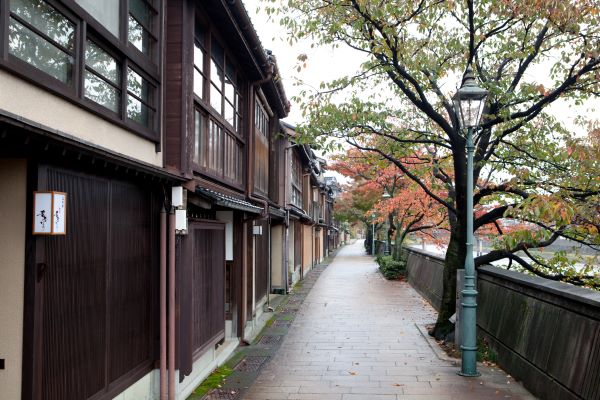
If you find yourself buried in a crowd of people in the Higashi Chaya District and can’t have a proper photo with the lovely old streets, cross the Asano River (浅野川) to Kazuemachi Chayagai.
Mainly consisting of high-class restaurants and tea houses, this third tea house district in Kanazawa is best for those who just want a quiet stroll along the river with traditional housing on one side.
The best part about this Chaya district is probably the different faces it shows depending on when you visit. Located in a hilly area, the district has many small alleys, and parts of it will still be dark during the day. And after sunset, when street lights mostly illuminate the Higashi Chaya District, the Kazuemachi Chaya District will have a fantasy-like atmosphere, with light seeping from the tea houses’ windows.
This is why, if you don’t have any other plans for the night, leaving Kazuemachi Chaya District for last is advisable!
How to Get to Kazuemachi Chaya District
It is a 5-minute walk from the Hashibachō (橋場町) bus stop.
For more information about bus services in Kanazawa, please refer to our How to Get Around Kanazawa article.
Nishi Chaya District (にし茶屋街)
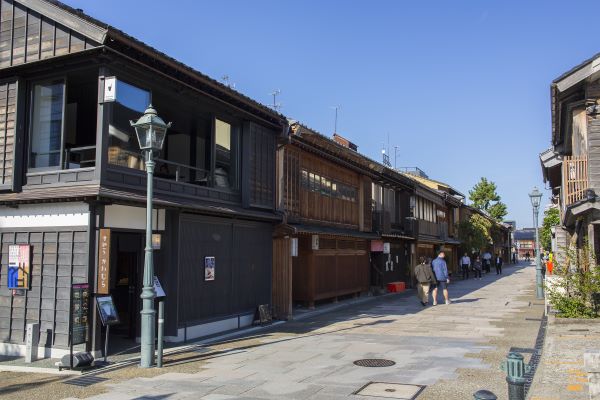
Although built at the same time as the Higashi Chaya District in 1820, the Nishi Chaya District is much smaller. With a lot fewer tourists visiting this district, it doesn’t mean it will be a waste of your time to come here. In fact, it can be the opposite, depending on where your interest lies.
Among the three Chaya districts in Kanazawa, Nichi Chaya District has the most Geisha. In fact, during our visit, we saw a couple of them go into a tea house for training sessions!
How to Get to Nishi Chaya District
It is a 3-minute walk from the bus stop – Hirokōji (広小路).
For more information about bus services in Kanazawa, please refer to our How to Get Around Kanazawa article.
A Couple of Attractions in Nishi Chaya District
- Kanazawa-shi Nishichaya Museum (金沢市西茶屋資料館)
- Moroeya Nishi Chaya Karyo (落雁諸江屋 にし茶屋菓寮)
- Nakatani Tofu (中谷とうふ)
Kanazawa-shi Nishichaya Museum (金沢市西茶屋資料館)
On the second floor of Kanazawa-shi Nishichaya Museum, the traditional red wall tea house is reproduced, giving you plenty of room to imagine what it would be like to be entertained at one of the tea houses back in the Edo period!
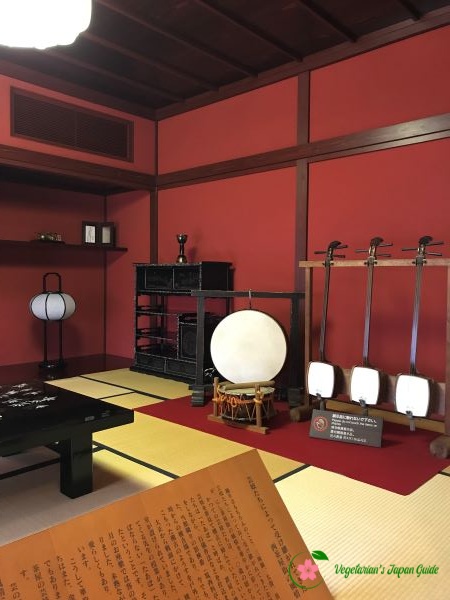
- Kanazawa-shi Nishichaya Museum is open from 9:30 am to 5 pm.
- Entry to the museum is free.
If you have some understanding of Japanese, volunteers on the first floor will give you a brief introduction to this part of Kanazawa.
Moroeya Nishi Chaya Karyo (落雁諸江屋 にし茶屋菓寮)
If you have a sweet tooth, you won’t want to miss out on Nishi Chaya District either. The district is famous for its Japanese and Western sweets shops and cafés. It is also where you buy the Kanazawa local specialty, Rakugan (落雁), from one of the shops.
At night, you will get the greatest chance to spot the fully dressed-up Geishas walking on the historical streets and/or enjoy a free musical performance by them by standing close to one of the tea houses!
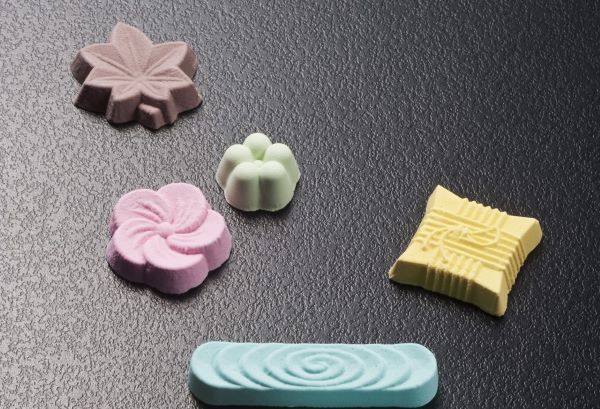
Rakugan is a type of dry Japanese confectionery special to Kanazawa. It is made by mixing rice, soy, or barley flour with sugar, then pressing it into a pattern.
As there are several Rakugan makers in the Nishi Chaya District, visit Moroeya Nishi Chaya Karyo (落雁諸江屋 にし茶屋菓寮) if you are unsure where to get the traditional sweet. It has been making Rakugan since the Edo period!
The café has a stylish interior that blends Japanese and modern elements in harmony. It also has a small garden at the back, so if you secure a window seat, you can enjoy a traditional Japanese dessert while admiring the garden!
In addition to their signature Rakugan, you also get to grill mochi rice cake over charcoal if you order a zenzai!
Refer to HERE for Moroeya Nishi Chaya Karyo’s menu.
Moroeya Nishi Chaya Karyo’s Business Hours and Access Information
- The shop is open from 10 am to 6 pm daily except on Tuesdays from March to October.
- From November to January and February’s weekdays, it closes early at 5:30 pm.
Nakatani Tofu (中谷とうふ)
For all the tofu lovers, Nakatani Tofu, just opposite the Kanazawa-shi Nishichaya Museum, is a local favourite! From April to October, grabbing one of their seasonal special, soy milk soft-serve ice cream (豆乳ソフトクリーム), is highly recommended. The shop uses two or three times the usual amount of soybeans to make soy milk, which is then transformed into ice cream! So you are guaranteed a thick and rich tofu flavor when you hand over the 350 yen.
In fact, instead of the “soy milk” flavor, you might have expected, the ice cream tastes more like “tofu”! With the sugar level adjusted according to the season, soy sauce goes nicely with this ice cream!

Another popular product of the shop is its tofu gelato (とうふアイスクリーム). The gelato, available year-round, is made with handmade silk tofu and pairs perfectly with soy sauce again.
As a tofu shop, you can also find various types of soybean products in their small display fridge. As a tourist, the number of choices is limited, but there are certainly other readily edible menus sold in small portions for you to enjoy on the wooden bench outside the shop!
If you come in late morning, you might be able to grab a few freshly made thick, deep-fried tofu (=゚ω゚)ノ.
Nakatani Tofu is open from 10 am to 5:30 pm daily except Sundays.
Discover Other Fascinating Attractions in Kanazawa City
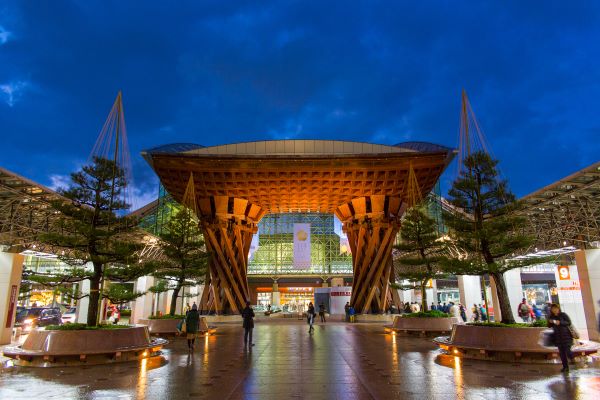
Step into a world where samurai legacy and modern artistry collide with our guide to Kanazawa, Japan’s “Little Kyoto.” Whether you are wandering the perfectly preserved wooden teahouses of the Higashi Chaya geisha district or admiring the circular architecture of the 21st Century Museum of Contemporary Art, Kanazawa offers a deep dive into Edo-period culture without the overwhelming crowds of larger cities.
Refer to our Kanazawa article for information about our recommended spots in Kanazawa, including where to meet the Geishas and an amazing art museum!