Tucked away in the scenic countryside of Nagano Prefecture, Obuse (小布施) is a charming historic town renowned for its sweet local chestnuts, rich Hokusai art heritage, and peaceful, uncrowded streets. Just 30 minutes from Nagano Station on the way to the Jigokudani Monkey Park, Obuse offers a rare glimpse of traditional Japan away from mass tourism. Whether you want to explore private residential gardens, sample famous chestnut sweets, or enjoy authentic plant-based dining, this comprehensive Obuse travel guide covers the best things to do, seasonal highlights, and vegetarian-friendly tips for an unforgettable trip.
All You Need to Know to Plan Your Visit to Obuse
- How to Get to Obuse
- Best Time to Visit Obuse
- Chestnuts Alley (小布施栗の小径)
- Obusedō (小布施堂)
- Chikufūdō (竹風堂)
- Chestnut Festival At Obuse (おぶせ栗祭り)
- Hokusai Museum (北斎館)
- Ganshoin Temple (岩松院)
- Jōkōji Temple (浄光寺)
- Floral Garden Obuse (フローラルガーデンおぶせ)
- Vegetarian-Friendly Dining At Obuse
Tip: If you are after an onsen ryokan in Obuse, Obuse Hot Spring Akebi no Yu can be perfect for you!
Explore Obuse With a Guide
If you would like a guide to introduce you to the beautiful township and surrounding attractions, consider one of the tours below.
- Nagano Full-Day Cycling Tour with Snow Monkey, Obuse Town, Apple Orchards
- Full-Day Private Nagano Tour: Zenkoji Temple, Obuse, Jigokudani Monkey Park
How to Get to Obuse
To get to Obuse, you will need to take a train from Nagano Electric Railway’s (長野電鉄) Nagano Station. It is right next to JR Nagano Station (長野駅), so it shouldn’t be hard to find.
From there, it is approximately a 30-minute train ride to the Obuse Station (小布施駅).
How to Get Around in Obuse
Bicycle Rental at Obuse
There are a few Bicycle rental options in Obuse. If you are planning to catch the train to Obuse and only spend a couple of hours in town, the most convenient option is to rent a bike from the Obuse Information Center (小布施総合案内所) inside Obuse Station (小布施駅).
- Bicycle rental service is available between 9 am and 4:30 pm from April to November
- The cost is
- 600 yen for a normal bicycle for 2 hours and 300 yen for each additional hour afterwards
- 1,000 yen for an electric-assisted bicycle for 2 hours and 500 yen for each additional hour afterwards
maaru Nagano Obuse Sports Bike Rental Cafe
Another preferred option is maaru Nagano Obuse Sports Bike Rental Cafe. The bike rental shop offers high-quality hybrid, road, and electric-assist bikes at good rental prices, with a couple of discount options.
The shop’s bikes are great for those who want to explore Obuse’s town center and go further into the mountains, such as the picturesque Yamada Onsen Village.
Moreover, the shop’s second floor is an Airbnb. Discounts on bicycle rental fees are available for those who stay overnight at the shop.
For more information, please refer to our article on maaru Nagano Obuse Sports Bike Rental Cafe!
Shuttle Bus: Obuse Roman-gō (おぶせロマン号)
Obuse’s sightseeing bus, Obuse Roman-gō, stops at the major attractions in town from Friday to Sunday and on public holidays from early April to late November.
- In 2026, the bus operates from April 25 to November 23.
- The cost of the 1-Day Bus Pass is
- 600 yen for adults
- 300 yen for elementary school students
- You can purchase the ticket in a few places in Obuse, including the Obuse Information Center inside Obuse Station (小布施駅).
- Refer to Nagaden Bus website for Obuse Roman-gō’s timetable. Since it is only in Japanese, please read it using the attraction’s Japanese name specified for each attraction in this article.
- Note that there are two services.
Tip: If you have a valid Nagaden Railway and Bus 1-Day Free Ticket or Nagaden Railway and Bus 2-Day Free Ticket, you can board Obuse Roman-gō for free.
Best Time to Visit Obuse
The optimal time to visit Obuse depends on whether you are chasing seasonal colors or looking for peaceful flower viewing:
- Mid to Late April (Spring): Ideal for avoiding major tourist crowds while enjoying cherry blossoms. The late-blooming Yaezakura (double-blossom cherry trees) along the Chikuma River peak during this window.
- September to November (Autumn): The ultimate season for foodies. Autumn marks the harvest season when fresh chestnuts and crisp apples are available everywhere throughout town.
🌸 Spring: Cherry Blossoms without the Crowds
If you want to escape the massive tourist crowds during cherry blossom season, Obuse is a serene alternative for admiring pink blooms.
Along the Chikuma River Embankment (千曲川堤防), a 4-km stretch of sakura trees bursts into full bloom from mid to late April. With plenty of space to spread out, it is the perfect spot to pack a picnic or simply relax underneath a canopy of vibrant flowers.
Take a virtual walk through the full bloom at Chikuma River:
🌰 Autumn: Fresh Roasted Chestnuts & Crisp Apples
Autumn brings the highly anticipated chestnut harvest to Obuse. A highlight of visiting this season is trying freshly roasted chestnuts straight from local vendors.
These chestnuts stand out for several reasons:
- Impressive Size: On average, Obuse chestnuts are nearly twice the size of those typical in Australia.
- Naturally Sweet: They carry a rich, candy-like sweetness and are remarkably easy to peel.
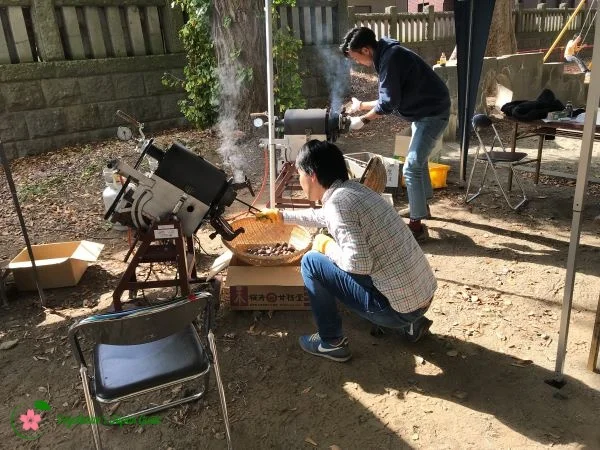
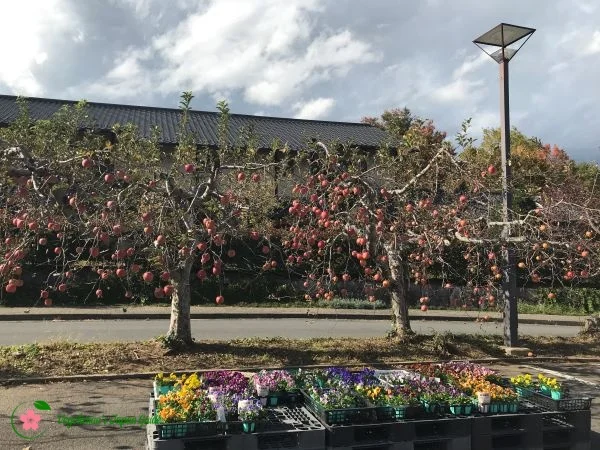
Autumn is also peak apple season in Obuse, making it the best time of year to sample fresh local produce alongside hot chestnut treats.
About Obuse

Nestled in nature, Obuse offers a glimpse into authentic Japan—a peaceful town reminiscent of the days before mass tourism. Despite covering just 20 square kilometers, it is rich in cultural heritage, housing historic temples, art museums, traditional sake breweries, and local restaurants, all easily accessible near Obuse Station.
Blessed with fertile soil and a cool climate, the town is famous for producing some of the sweetest chestnuts and fruits in Nagano. In autumn, apple trees line the streets, heavy with fruit that is almost impossible not to reach out and pick!
Tip: Obuse features a unique Open Garden initiative. If you see a sign that reads “Welcome to My Garden, OBUSE Open-Garden HOME,” you are invited to step onto the property and enjoy the owner’s private garden. No permission needed!
Obuse’s Chestnuts Alley (小布施栗の小径)
You will find this chestnut alley in the photo at the back of all the shops and restaurants. The pavements are made of old chestnut tree trunks, which are really comfy to walk on barefoot.
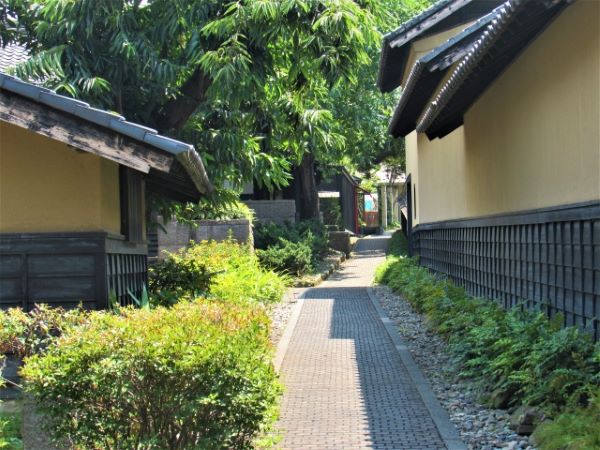
Also, if you notice the big tree in the photo, it is a chestnut tree planted relatively recently. Because of the overwhelming requests for chestnut tree planting, they planted this large tree to make the alley even more “chestnutty”!
Kōtai Shrine (皇大神社) and Chestnut Festival at Obuse (おぶせ栗祭り)
Each year on the last weekend of October, to show people’s appreciation of a good chestnut harvest, the Obuse Chestnut Festival is held at the Kōtai Shrine (皇大神社).

We were lucky to get to participate in the festival because we only learned about it when we saw all the posters as we arrived!
Festival coupons were sold at most local facilities, including restaurants, sweets shops, museums, etc. You will want to buy coupons because a 1,200 yen coupon will cost only 1,000 yen!
Therefore, we advise you to pre-calculate how much you plan to spend during your time at Obuse and get coupons accordingly.
Important: A few popular shops might not participate in the event, meaning you can’t use the coupon there (when we were there, we couldn’t use the coupon at Chikufūdō). You will find a list of participating shops at the back of the brochure, which will be distributed around town.
The Shinto Ritual takes place on the Sunday of the 2-day festival. Five local shop representatives will offer freshly picked chestnuts to God.
If you have time, watch how this is done, as this is not something that happens every day!

After the chestnuts are offered to God, the sweet shops participating in the festival give away free chestnut soup with rice cake (we all know about red bean soup, which is the chestnut version).
So make sure while you watch the ritual, save yourself a spot in the queue (which wasn’t too long when we went)!
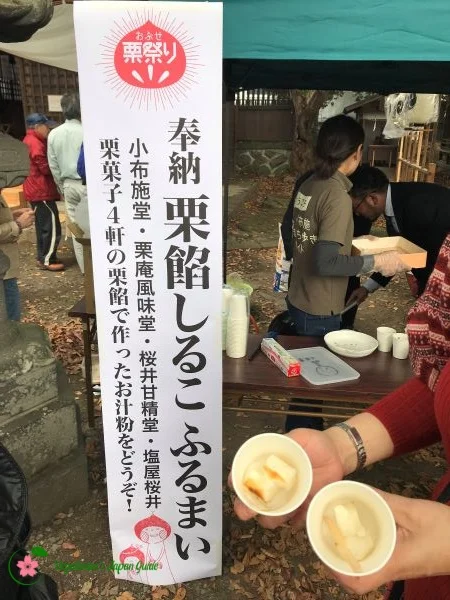
Tip: The soup doesn’t come with any cutlery, so it might be a good idea to bring your own spoon or fork.
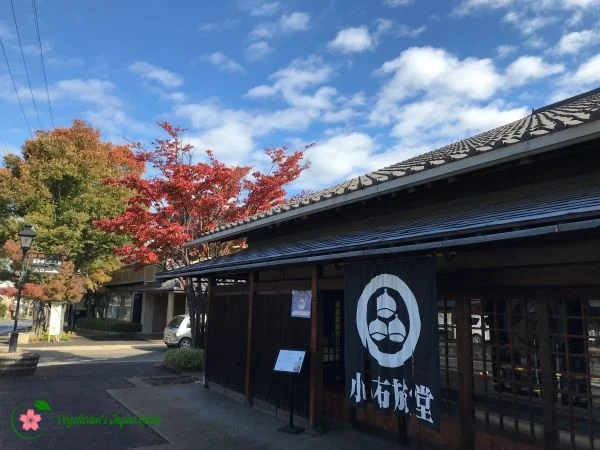
Obusedō (小布施堂)
Obusedō is widely regarded as the ultimate destination for chestnut confectioneries in Nagano Prefecture. Using locally harvested chestnuts and traditional recipes, this historic shop offers a range of naturally vegan-friendly Japanese sweets alongside seasonal autumn specials.
Check out our detailed article on The Most Delicious Chestnut Sweets at Obusedō for menu highlights, location information, and peak season ordering tips.
Chikufūdō (竹風堂)

One of the most famous sweets sold at Chikufūdō is called Hosun (方寸). It is a dry Japanese sweet made of chestnut powder and top-class sugar.
To us, the best thing about this sweet is that its best-before date is only one year, but it still tastes the same even after two years! We didn’t do it on purpose, though; we just bought too many!
You can see photos of other sweets sold at Chikufūdō on their website (note the website is in Japanese). You will also see what Hosun looks like!
On the 2nd floor of Chikufūdō, a café serves Teishoku (set menu) and various traditional desserts.
As vegetarians, we chose the vegetarian Teishoku called Kuriokowa Yamazato (栗おこわ 山里定食). The chestnut rice had lots of chestnuts, which made the rice taste even sweeter than usual. If you aren’t a big fan of sweet food, we highly recommend having the sweet rice with the side dishes because it balances your meal out perfectly (=゚ω゚)ノ.
Please note that if you follow a strict vegetarian diet, you will want to leave the miso soup out, as it contains bonito broth.
Chikufūdō’s Access Information and Business Hours
- 1F sweets shop: 8 am – 6 pm
- 2F Cafe: 10 am – 6 pm
- The last order is taken 30 minutes before closing.
- Chikufūdō is closed on January 1.
- From Nagano Dentetsu’s Obuse Station, it is an 8-minute walk to Chikufūdō
Hokusai Museum (北斎館)
Ukiyo-e is a genre of Japanese art that flourished from the 17th through 19th centuries. Obuse is a town famous for this type of art because one of the most well-known Ukiyo-e artists used to live there!
So if you are interested in Ukiyo-e, be sure to visit the Hokusai Museum.
The museum focuses on the renowned Ukiyo-e artist Hokusai Katsushika. You will find some of his rare 3D work and masterpieces such as the famous series Thirty-Six Views of Mt. Fuji, the Great Wave, and the ceilings of 2 festival floats.
Strolling through the museum and watching the two information-rich short films will deepen your understanding of Hokusai and his many beautiful works. You will also learn how different colors are added to a woodblock print.
While English notations are sporadic in the museum, you can still enjoy the visit because the artworks and the videos help paint the big picture!
For more information about the Hokusai Museum, please visit the Hokusai Museum website.
Hokusai Museum’s Opening Hours, Admission Fee, and Access Information
- Hokusai Museum is open from 9 am to 5 pm
- The last admission is at 4:30 pm.
- On New Year’s Day, the museum is only open between 10 am and 3 pm.
- The museum is closed on December 31.
- The admission fee is
- 1,800 yen for adults
- 500 yen for senior high school students
- 300 yen for elementary and junior high school students
The price may differ if there is a special exhibition.
Ganshoin Temple (岩松院)
If you are a Ukio-e fan, then the Hokusai Museum and Ganshoin Temple go hand in hand. Ganshoin Temple is just a 30-minute walk from the museum. And there, you will find Hokusai’s elaborate ceiling mural, one of his final large-scale installations.
Even if you aren’t into artwork, Ganshoin Temple is still high on our recommended places to visit in Obuse. It is a quiet spot with a beautiful and attractive setting (especially during spring, with cherry blossoms in the background).
In summer, you will find that the pond in the temple is filled with frogs singing in harmony.
For more information, refer to Ganshoin Temple’s website.
Tips:
☛ Don’t miss out on the scenic view of Obuse town from a hilltop behind the temple. It is just a 10-minute climb, and you won’t regret making an effort! Note: the path up the hill is narrow and steep, so proper footwear is recommended.
☛ If you understand Japanese, a short 10-minute tour is held every 20 minutes from 9 am. Between 11:30 am to 12:30 pm, an audio guide replaces the tour.
Ganshoin Temple’s Opening Hours, Admission Fee, and Access Information
- Ganshoin is open from
- 9 am to 4:30 pm between April to October
- 9 am to 4 pm in November
- 9:30 am to 3:30 pm between December and March
- Please also check the temple’s calendar to make sure the temple is open to the public on the day you plan to visit.
- The admission fee is
- 600 yen for adults
- 300 yen for elementary and junior high school students
Jōkōji Temple (浄光寺)
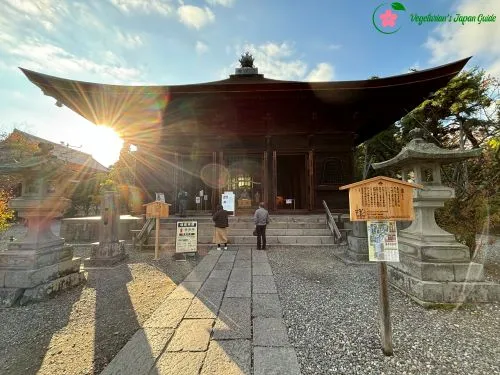
Jōkōji Temple was originally erected in the 14th century. It depicts what you might picture as an old mountain temple.

The temple is popular for curing cancer and finding you a great partner. One of the temple’s mysteries for pilgrims making regular visits is that, even though the main temple was damaged by fire several times in the past, the Buddha statue was never destroyed.
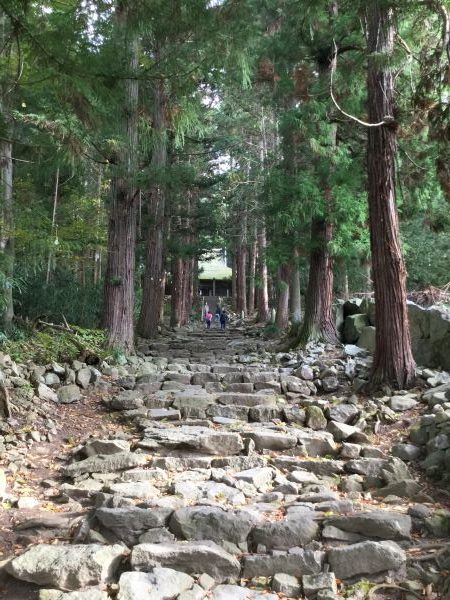
From the temple’s front gate at the foot of the mountain, it is a 5-minute climb up a rugged staircase before you can make your wishes to the Buddha.
Like most parts of Obuse, you can enjoy some peace at the main temple without being disturbed by other tourists.
Close to this beautiful temple, this lovely restaurant serves a delicious and cheap tofu set menu. Even people who don’t normally like tofu cuisine love it!
Click our Sabō Mameya article to find out more about the restaurant!
Floral Garden Obuse (フローラルガーデンおぶせ)
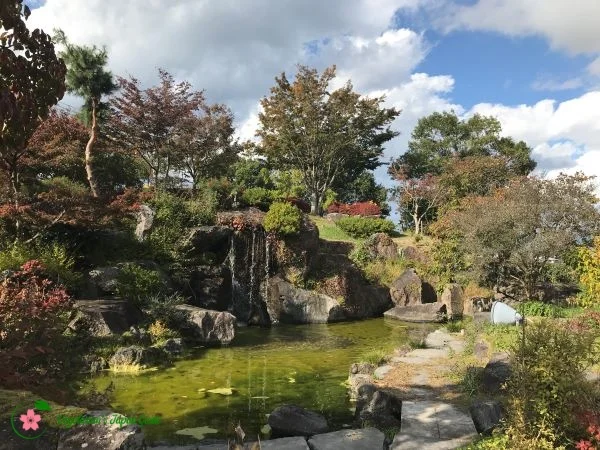
Floral Garden Obuse is a 15,000-square-meter garden with seasonal flowers for visitors to enjoy. The flowers change regularly, so you can be sure your visit won’t disappoint!
A restaurant overlooking the garden also lets visitors dine on-site. And next to the restaurant, a small shop sells floral products, seeds, and gardening goods.
Floral Garden Obuse’s Opening Hours and Admission Fee
- Floral Garden Obuse is open from 9 am – 5 pm daily except Thursdays in the winter months
- The last admission is at 4:30 pm
- From the end of December to the beginning of January, the garden is closed
- The admission fee is
- 200 yen for adults
- 100 yen for high school students
- Free otherwise
Tip: If you are lucky like us, the admission fees are waived when they are changing the flowers in the garden. It was still a great garden to visit, as they were just replacing the flowers on the flower beds here and there. The majority of the plants in the garden remain unchanged.
Vegetarian & Vegan Survival Guide to Obuse
While traveling in rural Japan can sometimes feel tricky for plant-based travelers, Obuse is surprisingly welcoming! Thanks to its focus on chestnuts, seasonal fruits, and local soy produce, you won’t have to settle for basic white rice.
However, traditional Japanese dishes often contain hidden non-vegetarian ingredients (like fish broth or animal fat). Use this guide to navigate Obuse’s local food scene smoothly.
Sabō Mameya (茶房まめ家): Best for Tofu & Plant-Based Multi-Course Dining
For an authentic, sit-down Japanese dining experience, Sabō Mameya is a must-visit. While many associate tofu with basic bean curd or deep-fried cubes, this restaurant takes soybean cuisine to an extraordinary level. From appetizers to desserts, every dish cleverly incorporates soybean ingredients, often in ways that will surprise even non-tofu fans!
Important Dietary Note: Although the dishes focus heavily on legumes and mountain vegetables, standard Japanese broths frequently use fish stock (dashi). Be sure to mention your dietary requirements when booking or ordering so the chef can prepare a fully vegetarian broth.
📖 Plan Your Visit: Read our dedicated guide on Sabō Mameya’s Vegetarian Tofu Course Menu for reservation instructions, full menu prices, and transport options.
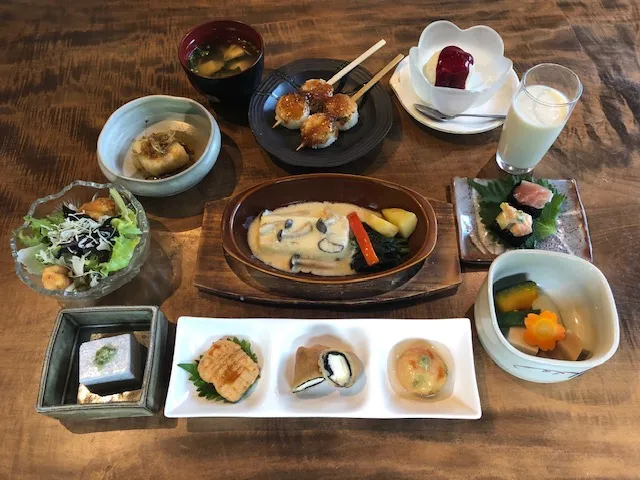
Nagano Donabe Ramen Takesan Obuse Branch (長野土鍋ラーメンたけさん): Best for Comfort Food
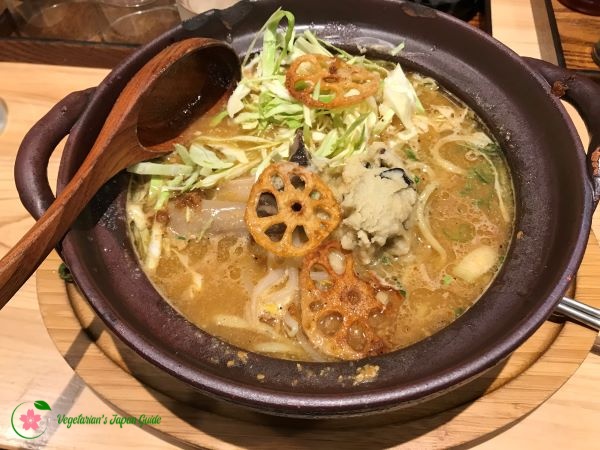
Craving a steaming bowl of plant-based comfort food? Nagano Donabe Ramen Takesan serves an incredible, 100% vegan Shinshu Miso Ramen served boiling hot in traditional clay pots (donabe). Loaded with fresh seasonal vegetables, locally sourced mushrooms, and tofu, this rich soup is a real treat in rural Nagano.
- What to Order: Try the signature Shinshū Misozō Rāmen and add an order of their clearly labeled Vegan Gyoza (pan-fried dumplings).
- Pro Tip: Don’t let your leftover soup go to waste, ask the staff to transform your remaining ramen broth into a rich, savory risotto!
🍜 Read the Full Review: Check out our guide to Nagano Donabe Ramen Takesan’s Vegan Ramen in Obuse to learn how to navigate the ticket vending machine, find opening hours, and order your ramen soup risotto.
Chikufūdō (竹風堂): Best for Chestnut Rice Set Meals
Chikufūdō’s 2nd-floor café serves Kuriokowa Yamazato (栗おこわ 山里定食), a traditional set menu featuring sweet, fragrant steamed chestnut rice accompanied by mountain vegetable side dishes.
- Important Ingredient Warning: The set meal is largely plant-based, but the included miso soup is made with traditional bonito (katsuobushi) broth. Be sure to ask them to omit the miso soup if you follow a strict vegetarian or vegan diet.
Obusedō (小布施堂) and Its Chestnut Sweets
Obuse’s famous chestnut sweets are a huge win for plant-based sweet tooths! Traditional Japanese confectioneries here use minimal, clean ingredients.
- Kuri Yōkan (栗羊羹): A rich, firm dessert block made purely of chestnut paste, sugar, and agar (kanten).
- Rakugan / Hosun (方寸): Traditional dry tea-ceremony sweets made from chestnut flour and fine sugar.
- Kuri Kanoko (栗鹿ノ子): Whole sweetened chestnuts preserved in smooth chestnut paste.
- Watch Out For: Modern Western-style desserts in town (such as Mont Blanc cakes or chestnut soft-serve ice cream), which usually contain dairy, eggs, or gelatin.
Just note that most standard white sugar in Japan is refined using animal bone char, meaning it is not strictly considered vegan by strict vegan standards.
Dietary Watchlist: What to Avoid in Obuse
To avoid accidental non-vegetarian ingredients while exploring the town, keep an eye out for these culprits:
| Local Specialty | Potential Non-Veg Ingredient | Plant-Based Alternative |
|---|---|---|
| Soba Noodles | The dipping sauce (tsuyu) almost always contains fish broth (dashi). | Ask for plain soy sauce (shōyu) or bring your own vegan tsuyu packet. |
| Oyaki Dumplings | Vegetable fillings (like Nagamono greens) are great, but some stalls brush the dough with lard or animal oil. | Ask if the dough uses vegetable oil (shokubutsu-yushi). |
| Local Miso Soup | Virtually all local restaurants use bonito (katsuobushi) flakes in their miso base. | Omit the soup or ask for hot water with plain miso paste. |
Useful Japanese Phrases for Obuse
Print or bookmark these phrases to show restaurant staff:
- I am vegetarian / vegan:
- 私はベジタリアン / ヴィーガンです。 (Watashi wa bejitarian / vīgan desu.)
- Does this contain meat, fish, or fish broth?
- 肉、魚介類、出汁(だし)は入っていますか? (Niku, gyokairui, dashi wa haitte imasu ka?)
- Please do not include dashi (fish stock) or meat:
- 出汁と肉を使わないでください。 (Dashi to niku o tsukawanaide kudasai.)
Discover the Awesomeness of Zenkōji Temple and the Surrounding Attractions Around Nagano Station
Exploring Nagano City: Before or after your trip to Obuse, take time to visit Zenkōji Temple, a 1,400-year-old historic landmark near Nagano Station. The lively approach to the temple features local spice shops, cozy cafés, and sub-temples offering authentic vegan shōjin ryōri meals.
💡 Explore the Area: Check out our comprehensive Guide to Zenkō-ji Temple and Around Nagano Station to discover top attractions, transport details, and plant-based dining recommendations nearby.