Looking to experience Japan’s iconic spring beauty without the overwhelming Kyoto crowds? While most travelers flock to the packed parks of Arashiyama, the best-kept secret of the cherry blossom season is just a 10-minute train ride away in Shiga Prefecture. Boasting breathtaking lakeside views and historic castles, Shiga offers a peaceful, authentic alternative for those seeking the perfect sakura photo and a bit of breathing room. In this guide, we have curated the 12 best cherry blossom spots in Shiga, ranging from the legendary ‘Sakura Tunnel’ at Kaizu Ōsaki to the architectural marvel of the Miho Museum. These hidden gems provide a soul-cleansing escape from the city. Discover why Shiga is the ultimate day trip from Kyoto for an unforgettable and crowd-free spring adventure!
The Top Cherry Blossom Destinations in Shiga Prefecture
- 2026 Shiga Cherry Blossom Spots: Quick Reference Guide
- Shiga vs. Kyoto: Why a 10-Minute Trip from Kyoto Is Worth It
- Kaizu Ōsaki (海津大崎)
- Hiyoshi Taisha Shrine (日吉大社)
- Mii-dera Temple (三井寺)
- Ōjigaoka Park (皇子が丘公園)
- Biwako Canal (Biwako Sosui, 琵琶湖疎水)
- Mizunomori Water Botanical Garden (草津市立水生植物公園みずの森)
- Zeze Castle Park (膳所城跡公園)
- Tenson Shrine (天孫神社)
- Sanami-dera Temple (酒波寺)
- Ishiyama-dera (石山寺)
- Nagahama Castle (長浜城)
- Lake Yogo (余呉湖)
- Hikone Castle (彦根城)
- Okubiwako Parkway (奥琵琶湖パークウェイ)
- Ayukawa Village (鮎河の千本桜)
- Oozuchi Dam (青土ダム)
- Miho Museum (ミホ・ミュージアム)
- 🏆 The Iconic Big Three: Hikone Castle, Kaizu Ōsaki, Mii-dera.
- 🧘 The Quietest Spots: Sanami-dera, Tenson Shrine, Lake Yogo.
- 📸 Most Instagrammable: Miho Museum, Biwako Canal, Okubiwako Parkway.
2026 Shiga Cherry Blossom Spots: Quick Reference Guide
| Destination | 2026 Predicted Full Bloom | Highlight / Unique Appeal | Difficulty | Closest Station & Last-Mile |
| Tenson Shrine | Mar 28 – Apr 4 | Quiet city-center “hidden gem” | 🟢 Easy | JR Otsu: 5-min walk from North Exit. |
| Mii-dera Temple | Mar 28 – Apr 4 | Spiritual atmosphere & Lake Views | 🟢 Easy | Keihan Miidera: 7-min walk. |
| Biwako Canal | Mar 28 – Apr 4 | Spectacular “Sakura Tunnel” over water | 🟢 Easy | Keihan Miidera: 2-min walk. |
| Ishiyama-dera | Mar 28 – Apr 4 | Ancient rocks & literary history | 🟢 Easy | Keihan Ishiyamadera: 10-min walk. |
| Ōjigaoka Park | Mar 28 – Apr 5 | Panoramic views of Lake Biwa | 🟢 Easy | JR/Keihan Otsukyo: 5-7 min walk. |
| Zeze Castle Park | Mar 28 – Apr 5 | Lakeside ruins & local picnics | 🟢 Easy | Keihan Zezehonmachi: 15-min walk. |
| Hikone Castle | Mar 29 – Apr 5 | Historic castle with night moats | 🟢 Easy | JR Hikone: 15-min flat walk. |
| Hiyoshi Taisha | Mar 29 – Apr 5 | Sacred mountain shrine approach | 🟢 Easy | JR Hieizan-Sakamoto: 20-min walk. |
| Nagahama Castle | Mar 30 – Apr 6 | Lakeside park & 600 cherry trees | 🟢 Easy | JR Nagahama: 5-min walk. |
| Mizunomori Garden | Apr 1 – Apr 8 | Botanical diversity & lake views | 🟡 Mod | JR Kusatsu: 25-min bus ride. |
| Sanami-dera | Apr 2 – Apr 9 | Secluded countryside temple | 🔴 Hard | JR Omi-Imazu: 10-min taxi. |
| Kaizu Ōsaki | Apr 4 – Apr 11 | 4km tunnel of lakeside blossoms | 🟡 Mod | JR Makino: Shuttle or rental cycle. |
| Okubiwako Parkway | Apr 5 – Apr 13 | Dramatic 18.8km scenic drive | 🔴 Hard | JR Nagahama/Kinomoto: Car only. |
| Oozuchi Dam | Apr 5 – Apr 13 | Nature immersion & massive dam | 🔴 Hard | JR Kibukawa: 30-min bus or car. |
| Ayukawa Village | Apr 6 – Apr 14 | 1,000 trees along the river | 🔴 Hard | JR Kibukawa: 30-min Community Bus. |
| Lake Yogo | Apr 8 – Apr 15 | “Mirror of the North” reflections | 🟢 Easy | JR Yogo: Directly outside station. |
| Miho Museum | Apr 10 – Apr 17 | Tunnel of weeping cherry trees | 🟡 Mod | JR Ishiyama: 50-min bus (#150). |
Shiga vs. Kyoto: Why a 10-Minute Trip from Kyoto Is Worth It
| Feature | Kyoto (Maruyama / Arashiyama) | Shiga (Hikone / Kaizu Ōsaki) |
| Crowd Density | 🔴 Extremely High (Shoulder-to-shoulder) | 🟢 Low to Moderate (Breathing room) |
| Travel Time | 0 mins (Central) | 🟢 9–50 mins from Kyoto Station |
| Photography | Challenging (strangers in every shot) | 🟢 Clearer shots of castles and lake views |
| Atmosphere | Touristy & Fast-paced | 🟢 Local, peaceful, and spiritual |
| Vegan Snack Availability | High (City cafes) | 🟡 Limited (Traditional & Local) |
Kaizu Ōsaki (海津大崎)
The best place to adore the cherry blossom in Shiga Prefecture has to be Kaizu Ōsaki, where a breathtaking 4-kilometer stretch of over 800 Yoshino cherry trees lines the rugged northern shores of Lake Biwa.
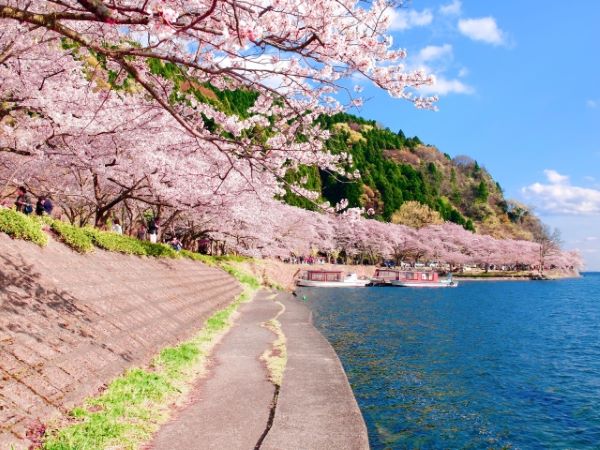
This iconic “Sakura Tunnel” creates a magnificent canopy of pink that reflects beautifully against the deep blue water, offering a scale of beauty rarely seen in more crowded city parks. Because of its northern location and the lake’s cooling effect, these blossoms typically reach full bloom about a week later than those in central Kyoto, making it the premier destination for a “second chance” at peak viewing. Whether you experience the tunnel by rental cycle or by sightseeing boat on the lake, Kaizu Ōsaki offers a majestic, panoramic escape well worth the journey.
💡Pro Tips for Kaizu Ōsaki
- Rent a bicycle at JR Makino Station: The 4km cherry blossom tunnel is narrow and becomes incredibly congested with cars. Cycling allows you to breeze past traffic, stop instantly for photos at any of the 800 trees, and reach the deeper, quieter sections of the tunnel that most tourists never see.
- The Sightseeing Boat: For a truly grand view, the Lake Biwa Cruise departs from Nagahama or Imazu. Seeing the 4km wall of pink from the water offers a scale of beauty that you simply cannot capture from the road. It’s also a great way to avoid the “last-mile” transit stress entirely.
- The “Second Chance” Timing: Kaizu Ōsaki is in the north and cooled by lake breezes. The cherry blossoms here usually peak about 7 to 10 days after Kyoto. This makes it the ultimate “Plan B” for travelers who arrived in Japan just a few days too late for the main season.
- Early Bird or Sunset: To avoid the heaviest crowds, aim to arrive before 9 am. Alternatively, stay for the late afternoon. The sun sets over the mountains to the west, with the light hitting the blossoms against the deep blue water, creating spectacular photography.
- Check the Shuttle: During the weekends, special shuttle buses run from JR Makino Station. However, they can have long lines. If the weather is nice, the 20 to 30-minute walk from the station to the beginning of the tree line is a lovely way to see the local lakeside neighborhoods.
- From Kyototo Kaizu Osaki: Take the JR Kosei Line to JR Makino Station. During peak cherry blossom season, a shuttle bus runs from Makino Station to the cherry blossom tunnel (approx. 10 mins).
- Travel Time from Kyoto: ~65 to 75 minutes.
Tip: For a unique perspective, take the Sakura Cruise from Imazu or Nagahama ports to see the 4km tunnel from the water.
For more information, please refer to our article on Kaizu Ōsaki.
Hiyoshi Taisha Shrine (日吉大社)
Hiyoshi-taisha Shrine provides a powerful combination of spiritual history and natural beauty. As the head of over 3,800 Sanno shrines across Japan, its expansive grounds at the foot of Mt. Hiei offer a more tranquil, “sacred” cherry blossom experience than the bustling parks in central Kyoto.
The cherry blossoms at Hiyoshi-taisha Shrine offer a serene, sacred atmosphere, characterized by a mix of iconic “sakura tunnels”. The shrine’s location at the foot of Mt. Hiei often results in a slightly later blooming period than central Kyoto, making it a perfect spot for “chasing” the late-peak season.
If you visit in mid-April, you may witness the blossoms intersect with one of the region’s most important cultural events. The Sanno Festival (Sannosai) rituals often take place under the falling petals. The sight of massive portable shrines (mikoshi) being carried through the blossom-lined approach is a highlight for many visitors.
💡Pro Tips for Hiyoshi Taisha
The journey to the shrine is as much a part of the experience as the grounds themselves. Visitors often describe the approach as one of the most peaceful walks in Ōtsu.
- The Sakura Avenue: The long, straight road leading from the Sakamoto stations to the shrine entrance is lined with mature cherry trees. The branches arch over the stone-walled streets, creating a natural pink canopy.
- The Red Romon Gate: A primary photography spot where the vibrant vermilion of the shrine’s entrance gate contrasts sharply with the soft pink of the surrounding Somei Yoshino blossoms.
- Evening Illuminations: During the peak season, the areas around the main bridges and gates are often lit up at night, highlighting the blossoms against the dark forest backdrop.
- Peak Timing: While the first blooms usually appear in late March, the shrine’s higher elevation means you can often find beautiful blossoms well into the second week of April, aligning perfectly with the festival’s climax.
For more in-depth tips on exploring this sacred spring sanctuary, including transportation details and the best photo spots, refer to our Hiyoshi Taisha article!
Mii-dera Temple (三井寺)
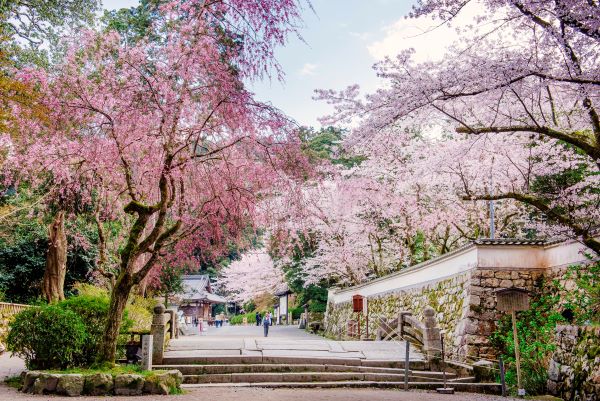
As one of the four largest temples in Japan, Mii-dera is a sprawling complex that comes alive with over 1,000 cherry trees in early April. The view from the temple’s observation deck is legendary, offering a perspective where pink blossoms frame the historic cityscape of Ōtsu and the sparkling waters of Lake Biwa. After all, the view of this spot was chosen to be one of the Eight Views of Ōmi Province. In addition to the beautiful scenery, the temple houses not one but 10 National Treasures within its precinct and 42 Important Cultural Properties!
💡Pro Tips for Mii-dera Temple
- The “City-Lake” Panorama: For the best view at Mii-dera, climb the stairs to the Kannon-do observation deck. From here, you can capture a single shot that includes the temple’s historic rooftops, a sea of cherry blossoms, the Otsu cityscape, and the sparkling blue horizon of Lake Biwa.
- The Evening Illumination: Mii-dera hosts one of the most famous night light-ups in the region. The trees are lit from below, casting a magical glow against the dark, weathered wood of the temple buildings. It creates a much more somber and majestic atmosphere than the festive “party” vibes found in Kyoto’s Maruyama Park.
- The Spiritual Sound: Mii-dera is famous for its bell, which is one of the “Three Famous Bells of Japan.” For a small donation, you can strike the bell yourself—the deep, resonant tone vibrating through the spring air and the cherry trees is a core Shiga memory.
- Plant-Based Snack: Don’t leave without trying Miidera Chikara-mochi. These are small, skewered rice cakes covered in a secret-recipe green soybean powder (kinako) and syrup.
- Combine with Biwako Canal: The temple entrance is less than a 5-minute walk from the Biwako Canal. It is incredibly easy to see the canal’s “Sakura Tunnel” and the temple in a single morning or afternoon.
- From Kyoto to Mii-dera: Take the JR Kosei Line to Otsu-kyo Station, then transfer to the Keihan Ishiyama-Sakamoto Line to Miidera Station. A 10-minute walk from Miidera Station along the canal (which is also lined with cherry blossoms!) will get you to Mii-dera.
- Travel Time from Kyoto: ~25–30 minutes.
For more information about the temple, please refer to our Mii-dera article.
Ōjigaoka Park (皇子が丘公園)
Located on a scenic hillside overlooking the southern basin of Lake Biwa, Ōjigaoka Park is a premier “high-ground” hanami spot that offers one of the best panoramic views in the prefecture. This park is home to several hundred cherry trees, including early-blooming Kanhizakura and the classic Yoshino variety. Because of its terraced layout, the pink blossoms appear to “stack” against the backdrop of the blue lake and the Otsu city skyline, making it a favorite for landscape photographers. It is significantly more spacious than Kyoto’s city parks, offering a breath of fresh air and plenty of room for a traditional blue-tarp picnic.
Moreover, it is a favourite among local families, as the park is the ideal spot to lay out a picnic mat and enjoy a “Hanami” lunch with a view that rivals any observation deck in the region.
💡Pro Tips for Ōjigaoka Park
- The “Compression” Shot: For the best photos, head to the upper sports fields or the top-tier walking paths. If you use a zoom lens from a higher elevation, you can “compress” the cherry blossoms so they appear to float directly on top of the Lake Biwa bridge and the water.
- The “First Bloom” Advantage: If you are slightly early for the main season, this park is a great bet. The Kanhizakura (Taiwan cherry) trees here bloom in deep pink hues earlier than the Yoshino trees, often providing color when other spots are still in bud.
- Avoid the Climb: While it is only a 5–7 minute walk from JR Otsukyo Station, it is an uphill trek. If you have heavy picnic gear or are traveling with small children, a quick 2-minute taxi from the station to the top of the park is a worthwhile investment.
- Access: A 5-minute walk from JR Otsukyo Station or Keihan Otsukyo Station.
For more information, please refer to our article on Ōtsu City.
Biwako Canal (Biwako Sosui, 琵琶湖疎水)
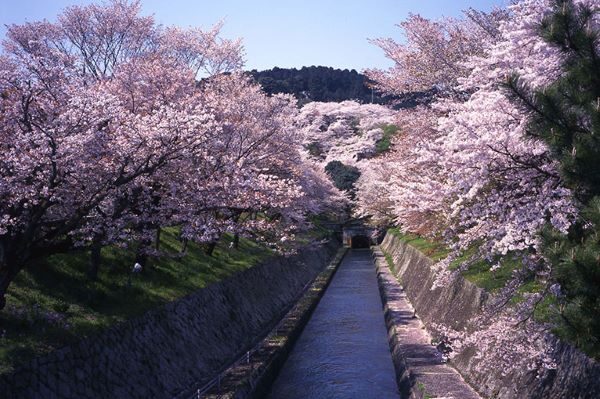
The Biwako Canal (Biwako Sosui) is one of the most scenic yet relatively tranquil cherry blossom spots in the Kyoto and Shiga area. Built during the Meiji era to transport water and goods from Lake Biwa to Kyoto.
With approximately 200 to 500 cherry trees, the waterway is now lined with hundreds of cherry trees that create a “sakura tunnel” effect over the water. In many sections, the branches lean far over the water, reflecting the pink blossoms on the surface.
The Lake Biwa Canal Cruise
One of the most unique ways to experience the blossoms is from the water.
- 3 routes: Small sightseeing boats run between Ōtsu and Keage (Kyoto), passing through historic red-brick tunnels.
- Ōtsu Port <-> Keage or Ōtsu Port -> Yamashina
- Miidera <-> Keage Keage or Miidera -> Yamashina
- Yamashina -> Keage
- 2026 Schedule: The spring cruise season is scheduled to run from March 26 to June 14.
- Reservations: This is a very popular activity and typically requires booking well in advance via the official Lake Biwa Canal Cruise website.
- Availability: Booking is on a first-come, first-served basis. If seats are available, online reservations remain open until 11 am, two hours before the boarding time on the day of travel.
The boat isn’t very big. However, it is very stable while moving. Those prone to seasickness can ride with peace of mind.
While on the boat, you might encounter passersby who wave to you. Feel free to wave back!
💡Pro Tips for Biwako Canal
- Yamashina Canal: This 4km stretch in Kyoto is famous for the simultaneous blooming of pink cherry blossoms and yellow rapeseed flowers (nanohana) along its banks, creating a vibrant color contrast.
- Keage Incline: Near the Kyoto end of the canal, you will find this famous disused canal railway. It features about 90 trees along a slope where you can walk directly on the tracks under a canopy of blossoms.
- The “Early Bird” Strategy: Because the canal path is a public walking route, we recommend arriving by 7:30 or 8 am. This allows you to experience the canal in near-silence, catching the perfect reflections on the water before the crowds arrive.
- Lake Biwa Canal Boat reservations for the spring peak usually open in late February. For 2026, these will sell out in days, so mark your calendar to book via the official “Biwako Sosui Boat” website as soon as they go live.
- The Photography “Sweet Spot”: The bridge near Keihan Miidera Station offers the most iconic head-on view of the canal’s sakura tunnel. For a unique angle, walk farther downstream toward the tunnel entrance, where the water disappears underground; the contrast between the dark tunnel mouth and the bright blossoms is fantastic.
- The Evening Light-Up: The canal is typically illuminated from late March to early April from 6 pm to 9:30 pm. The lights are placed low to the water, making the blossoms look like they are glowing from within. It is an easy, romantic add-on after a day at Mii-dera.
- Plant-Based Food: Just a 7-minute walk from the canal is Enman-in Monzeki, a temple that serves traditional Shojin Ryori. It is a sophisticated way to enjoy a plant-based lunch in a more historic setting.
- Please ensure you reserve for the vegan option.
- Rainy Day Pro-Tip: If you book the boat and it rains, umbrellas are not allowed on board for safety. The cruise operates in the rain, so pack a high-quality raincoat or poncho in your “Sakura Bag” to stay dry while enjoying the moody, misty blossoms.
Mizunomori Water Botanical Garden (草津市立水生植物公園みずの森)
While Mizunomori Water Botanical Garden is famous for having one of Japan’s largest collections of lotuses and water lilies, it is also a serene, less-crowded alternative for cherry blossom viewing. The garden is known for its weeping cherry trees (shidarezakura), which were planted to commemorate its 1996 opening. The highlight of the season is seeing the pink blossoms reflected in the water lily ponds, creating a picturesque, mirror-like effect.
💡Pro Tips for Mizunomori Water Botanical Garden
- Best Viewing: The cherry blossoms at Mizunomori generally peak in early April.
- Combined Trip: The garden is located on the Karasuma Peninsula, right next to the Lake Biwa Museum. You can often buy a combined admission ticket for both.
- Local Specialty: While visiting, many people try the Lotus Leaf Soft Serve (made with lotus powder) at the Lotus Hall restaurant.
- Access: From JR Kusatsu Station, take the Ohmi Railway bus (approx. 25 mins) to the “Mizunomori” stop.
Zeze Castle Park (膳所城跡公園)
Zeze Castle Park (Zeze-jo Koen) in Otsu is a historic and scenic choice for cherry blossom viewing, offering a classic combination of castle ruins and lakefront views. While the castle itself was dismantled in the 19th century, the park remains a beloved local “hanami” spot. The park sits directly on the shores of Lake Biwa. The contrast between the expansive blue water and the pink blossoms creates a refreshing, open atmosphere compared to the more enclosed canal spots.
Moreover, Zeze Castle Park is a family-friendly spot for picnic. Unlike some of the narrower paths in Kyoto, Zeze Castle Park has spacious lawns. It is a popular place for locals to spread out picnic mats under the trees for traditional flower-viewing parties.
💡Pro Tips for Zeze Castle Park
- Cherry blossom festival (膳所桜まつり): Will be held on April 5 from 10 am to 3 pm (Canceled is rained).
- Access: The park is a 10 to 15 minute walk from JR Zeze Station or Keihan Zeze Station. It is just a few stops away from the Biwako Canal area, making it easy to visit both in one day.
Tenson Shrine (天孫神社)
Nestled in the quiet residential streets of Otsu City, Tenson Shrine is a true “hidden gem” that offers an intimate and serene viewing experience just a short 5-minute walk from the main JR Otsu Station. As the guardian shrine of Ōtsu, it is famous for hosting the massive Otsu Matsuri in October (one of Shiga’s “Big Three” festivals). But what many aren’t aware of is Tenshon Shrine transforms into a peaceful sanctuary in early April.
Because it isn’t on the main tourist trail for many international visitors, you can often enjoy the classic cherry blossom scene of the vermillion shrine structures and the historic purification fountain (chozuya) without having to fight for a clear photo.
💡Pro Tips for Tenson Shrine
- The “Secret” Frame: For the perfect shot, stand near the main wooden torii gate and use the overhanging cherry branches to frame the shrine’s central hall. The contrast between the dark wood of the shrine and the soft pink of the Yoshino blossoms is stunning.
- Evening Charm: The shrine is small enough that the streetlights and a few traditional lanterns often provide a gentle, natural glow to the blossoms in the evening. It is a perfect spot for a quiet “Night Sakura” walk before catching your train back to Kyoto.
- Access: A flat, 5-minute walk from the North Exit of JR Otsu Station.
For more information, please refer to our article on Ōtsu City.
Sanami-dera Temple (酒波寺)
Located in the quiet, northern countryside near Imazu, Sanami-dera Temple is arguably the most secluded cherry blossom destination in Shiga. Often described as a “hidden sanctuary,” this ancient temple belongs to the Shingon sect and is perched on a hillside, offering a meditative atmosphere far removed from the bustling crowds of central Japan. The temple is famous for its “Sakura Tunnel” entrance, a winding path lined with mature cherry trees that leads visitors toward the historic wooden gate and main hall. Because it sits at a slightly higher elevation in the northern part of the prefecture, it is an excellent choice for those who are a few days late for the peak in Otsu or Hikone.
Furthermore, a majestic cherry tree on the side of the staircases leading to the Sanmon Gate is regarded as a tree of special power. The Prunus Itosakura, or Gyoki-zakura, is 21 meters tall and over 300 years old. This tree tends to blossom in early to mid-April, delighting visitors.
For more information, please refer to our Takashima City article.
💡Pro Tips for Sanami-dera Temple
- Access: it is about a 10-minute taxi ride, or about 30 minutes by local bus.
- Respect the Silence: This is a functioning temple in a very quiet village. Remind your readers to keep voices low and be mindful of the local residents who maintain this beautiful site.
Ishiyama-dera (石山寺)

As a site of immense literary and spiritual importance, Ishiyama-dera is a standout destination where nature and history are physically fused. Known as the “Temple of the Stony Mountain,” it is built upon a massive outcrop of Wollastonite. This rare geological formation provides a dramatic, jagged grey backdrop to the soft pink cherry blossoms.
Moreover, this is the very spot where Lady Murasaki Shikibu is said to have been inspired to write The Tale of Genji while gazing at the moon over Lake Biwa, making it a “must” for anyone interested in Japanese literature.
At other times of the year, plum blossoms, as well as peonies, azaleas, irises, wisteria, and many other blooming flowers, can be seen!
For more information, please refer to our Ishiyama-dera article.
💡Pro Tips for Ishiyama-dera
- The “Genji” View: Head to the Genji-no-ma, a small room where Murasaki Shikibu allegedly stayed. Looking out at the blossoms from this historic frame provides a powerful connection to Japan’s Heian-era past.
- Footwear and Fitness: The temple grounds are extensive and involve climbing several stone staircases built directly into the rock. Wear sturdy, slip-resistant shoes, and be prepared for a bit of a workout—the views from the upper pagodas are worth every step.
- Accessibility Note: While the main approach is flat, the upper areas are not wheelchair or stroller-friendly due to the natural rock terrain.
- Access: A 10-minute walk from Keihan Ishiyamadera Station.
Nagahama Castle (長浜城)
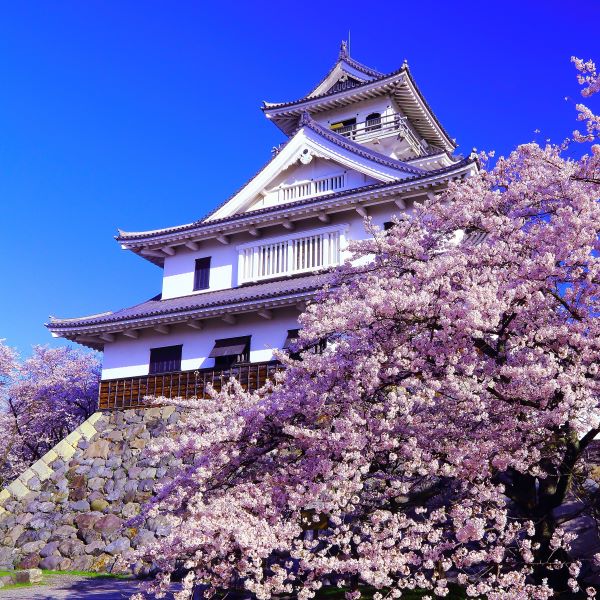
Reconstructed on the scenic edge of Lake Biwa, Nagahama Castle and the surrounding Hokoen Park offer a quintessential Japanese spring landscape. Originally built by Toyotomi Hideyoshi, the castle now serves as a history museum, but during the cherry blossom season, its primary draw is the “sea of pink” created by approximately 600 Yoshino cherry trees. The combination of the white castle keep, the expansive blue lake, and the dense cherry blossoms makes this one of the most popular photography spots in northern Shiga. The scenery here is so breathtaking that Nagahama Castle was voted one of Japan’s Top 100 Cherry Blossom Spots!
For more information, please refer to our article on Nagahama Castle.
💡Pro Tips for Nagahama Castle
- The Tower Perspective: For the best view in the park, head to the castle’s top-floor observation deck. Looking down, the cherry blossoms appear to surround the fortress, creating a “floating” effect against the water.
- Sunset Magic: Because the park faces west over Lake Biwa, it is one of the few spots where you can photograph cherry blossoms silhouetted against a spectacular lakeside sunset. Stay until the “golden hour” for the most dramatic colors.
- The “Double Castle” Strategy: Since Nagahama is on the JR Shinkansen/Special Rapid line, it is incredibly easy to visit both Hikone Castle and Nagahama Castle in a single day. They are only two stations apart, allowing you to compare two very different architectural styles.
- Explore Kurokabe Square: After viewing the blossoms, walk 10 minutes inland to the Kurokabe Square district. It’s a beautifully preserved area of black-walled glass workshops and traditional buildings.
- Access: A 5-minute walk from the West Exit of JR Nagahama Station.
Lake Yogo (余呉湖)
Lake Yogo (Yogoko), often called the “Mirror Lake” of Shiga, offers a mystical and tranquil cherry blossom experience quite different from the busier spots in Kyoto or southern Lake Biwa. It is a smaller, circular lake located just north of Lake Biwa, separated by Mt. Shizugatake.
Walking on the well-maintained flat path circles the entire 6.4km circumference of the lake is the best way to admire Lake Yogo’s beauty. On calm days, the lake’s surface becomes perfectly still, reflecting the surrounding cherry blossoms and the snow-capped peaks of the northern mountains. This “mirror” quality is the lake’s most famous feature. Furthermore, similar to the Yamashina Canal, the southern banks of Lake Yogo feature a stunning combination of pink cherry blossoms and bright yellow rapeseed flowers (nanohana) blooming simultaneously.
You can also rent a bicycle to cut the peaceful 90-minute walk to a quick 30-minute bike ride through tunnels of blossoms.
💡Pro Tips for Lake Yogo
- Bicycle Rentals: You can rent bicycles directly at JR Yogo Station (9 am to 4:30 pm). This is the best way to see the various clusters of trees scattered around the lake.
- The rental cost for a normal bicycle is 500 yen per day. You can also rent an electric-assisted bicycle for 1,000 yen.
- A deposit of 800 yen will be charged and refunded to you upon bicycle return.
- Access by Train: Take the JR Hokuriku Main Line to Yogo Station. From Kyoto Station, it takes about 60 to 75 minutes (you may need to change at Maibara or Nagahama depending on the train). The lake is right in front of the station.
Hikone Castle (彦根城)
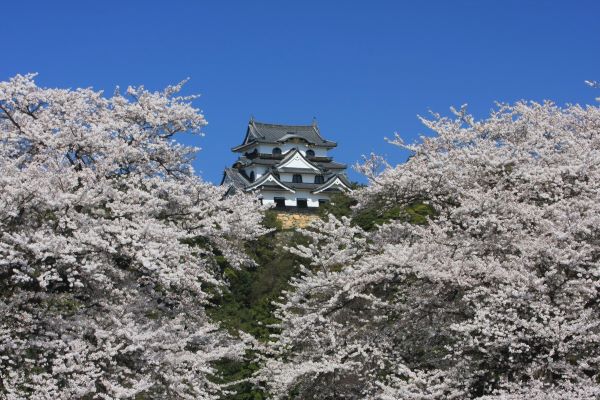
As a National Treasure and one of only five original castle keeps remaining in Japan, Hikone Castle is the other castle in Shiga Prefecture that you must visit in early spring. The fortress is surrounded by a massive double-moat system lined with over 1,100 cherry trees, creating a stunning reflection of white castle walls and pink blossoms on the water.
The castle offers a prestigious, “regal” atmosphere that feels like stepping back into the Edo period, especially when the petals begin to fall, covering the moats in a thick pink carpet.
For more information, please refer to our Hikone Castle article.
💡Pro Tips for Hikone Castle
- The Moat Cruise (Night & Day): To truly appreciate the scale of the castle, take a ride on the reconstructed wooden canal boats. During the day, it’s the best way to see the “Hana-ikada” (flower rafts) up close.
- Visit Genkyuen Garden: Included in your castle ticket is this beautiful daimyo-style garden at the base of the hill. The view of the castle keep framed by cherry blossoms from across the garden’s pond is arguably the most famous photo in Shiga.
- Timing the Crowds: Hikone is popular. Aim to arrive right at 8:30 am when the gates open, before most tour buses arrive around 11 am.
- From Kyoto to Hikone Castle: Take the JR Biwako Line (Special Rapid) from Kyoto Station to JR Hikone Station. A flat, 15-minute walk from the West Exit of Hikone Station leads straight to the castle moats.
- Travel Time from Kytoto: ~50 minutes.
- Cost: ¥1,170 (Free with JR Pass/Kansai Area Pass).
Okubiwako Parkway (奥琵琶湖パークウェイ)

Another place in Shiga Prefecture where cherry blossoms line the sides of the motorway is the Okubiwako Parkway that winds along the mountainside of Mt. Shizugatake. With nearly 3,000 cherry trees lining the route, it offers a “driving through the clouds” experience where the pink canopy meets the vast, panoramic horizon of northern Lake Biwa.
Because of the higher elevation and the cooler northern climate, this is one of the best spots to catch the blossoms if you are visiting in mid-April.
If you enjoy hiking, there are multiple nature trails with picturesque scenery to explore along Okubiwako Parkway. You can also drive all the way to Tsuzura Ozaki Observation Deck, which has stunning views at sunset.
For more information, please refer to our Nagahama City article.
💡Pro Tips for Okubiwako Parkway
- The Observatory Goal: Make sure your destination is the Tsuzura Ozaki Observatory. It is the highest point on the parkway and features a large parking area, a small shop, and the famous “Lovers’ Sanctuary” bell. The 360-degree view of the blossoms against the lake is unmatched.
- Traffic Flow: Be aware that large sections of the parkway are one-way only (moving from east to west). If you miss a photo op, you may have to drive the entire loop to get back to it. Plan your “slow drive” accordingly!
- Access: Best reached by car or the seasonal “Sakura Bus” from JR Nagahama or JR Kinomoto stations.
Ayukawa Village (鮎河の千本桜)
Our recommended off-the-beaten-path spot in Shiga Prefecture for cherry blossom hunting is Ayukawa Village. The small village near the border of Mie Prefecture has many cherry trees planted on the banks of the Ugui River. Deep in the mountains of Kōka City, the “Senbonzakura” (1,000 cherry trees) line both banks of the crystal-clear Umawatari River, creating a dense, low-hanging canopy of pink that reflects in the water. Surrounded by rolling green hills and traditional rural architecture, Ayukawa offers a sense of “hidden Japan” rarely found in the more manicured castle parks of the cities.
For more information, please refer to our Kōka City article.
💡Pro Tips for Ayukawa Village
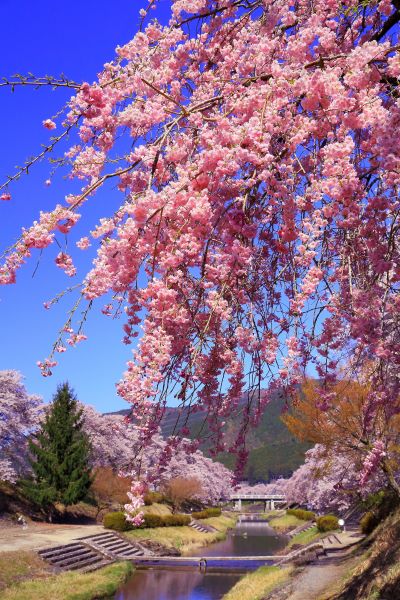
- The “Riverside Mirror” Shot: The best photos are taken from the small bridges crossing the river. Look for the spots where the water slows down; the reflection of the massive cherry trees against the backdrop of the mountains is breathtaking.
- Evening Illuminations: Despite its remote location, the village often lights up the trees along the river at night. If you have a rental car, staying for the evening glow is magical, as the white blossoms pop against the dark mountain silhouettes.
- The “Late Bloom” Backup: Because of the higher elevation and mountain air, Ayukawa typically peaks several days after Otsu. If the blossoms are starting to fall elsewhere, this village is often just reaching its prime.
- Pack a Bento: There are very few restaurants in the immediate village area. Bring a bento box and picnic by the riverbank.
- Access: From JR Kibukawa Station, take the Koka City Community Bus (bound for Ayukawa-Shinko) for about 30 minutes.
- Logistics Warning: This is one of the most remote spots on your list. The Koka Community Bus from JR Kibukawa Station is small and infrequent.
- Pro-tip: Take a photo of the return bus schedule at the stop immediately upon arrival so you don’t get stranded!
Oozuchi Dam (青土ダム)
Located just a short distance from Ayukawa Village in Koka City, Oozuchi Dam is a fascinating destination where modern civil engineering meets the soft beauty of spring. The dam is famous for its unique “overflow” system, two massive, funnel-like holes in the reservoir that look like something out of a sci-fi movie.
During cherry blossom season, the expansive park surrounding the water is blanketed in pink, offering a rugged, wide-open landscape that feels much more adventurous than a typical city park.
The dam is a secluded, peaceful spot that offers you awesome photography opportunities all year round. From mid to late November, the foliage of the trees will turn into bright autumn colors for you to enjoy.
For more information, please refer to our Kōka City article.
💡Pro Tips for Oozuchi Dam
- The Engineering Shot: Walk across the top of the dam to get a perspective of the cherry blossoms framing the “overflow” funnels. When the water level is high, the sight of the lake “swallowed” by the earth, surrounded by pink petals, is an incredible contrast.
- The “Slow-Motion” Picnic: Because this area is so vast, it never feels as crowded as the city spots. It is an ideal location for a long, relaxed afternoon. Bring a waterproof mat and set up in the Oozuchi Dam Echo Park area, which has plenty of green space under the trees.
- Access: Take a bus from JR Kibukawa Station toward the Oozuchi area (approx. 30 mins). A car is highly recommended for this remote spot.
- Logistics Note: Like Ayukawa, this spot is best accessed by car. If you are using the community bus from JR Kibukawa Station, be sure to coordinate your visit so you can see both the Dam and Ayukawa Village in one trip, as they are in the same general direction.
Miho Museum (ミホ・ミュージアム)
Miho Museum, buried in the mountainous area south of Lake Biwa, is another hidden gem in Shiga Prefecture. While the museum’s design immediately stuns visitors upon arrival, the rows of vivid cherry trees along the 500-meter promenade are the standout visual highlight.
Designed by the world-renowned architect I.M. Pei, the Miho Museum is a stunning destination where futuristic design harmonizes with the natural landscape. The approach to the museum is an architectural masterpiece: a sleek, silver-toned tunnel that opens up to a suspension bridge. In mid-April, this exit reveals a breathtaking valley of weeping cherry trees (shidare-zakura). The soft, cascading pink branches reflect off the tunnel’s metallic walls, creating a dreamlike “Sakura Portal” that has become one of Japan’s most iconic images of spring.
For more information, please refer to our Miho Museum article.
💡 Pro Tips for the Miho Museum
- The “Later Bloom” Advantage: Because the museum is tucked away in the Shigaraki mountains, the weeping cherry trees here typically peak mid-to-late April. If you think you have missed the cherry blossoms in Kyoto or Otsu, the Miho Museum is your best chance for a spectacular late-season viewing.
- Timed Entry during the cherry blossom season: To preserve the serene atmosphere, the museum recommends making online reservations.
- The “First Bus” Strategy: Most visitors take the bus from JR Ishiyama Station. To get the iconic tunnel shot without crowds of people in the frame, take the very first bus of the morning and head straight for the tunnel before exploring the museum’s interior.
- Shigaraki Pottery: Since you are in the Shigaraki area, keep an eye out for the famous Tanuki (raccoon dog) statues. The museum shop also carries beautiful, locally crafted ceramics that make for sophisticated, authentic souvenirs.
- Plant-Based Tip: The museum’s Peach Valley Restaurant is world-renowned for its philosophy of organic, “Shumei” natural agriculture and offers exceptional vegetarian and vegan-friendly meals, including handmade tofu.
- Access: Take the Teisan Bus from JR Ishiyama Station (Bus Stop #3) for a 50-minute scenic ride directly to the museum.
Planning a Return Trip? Shiga’s Autumn is Just as Magical
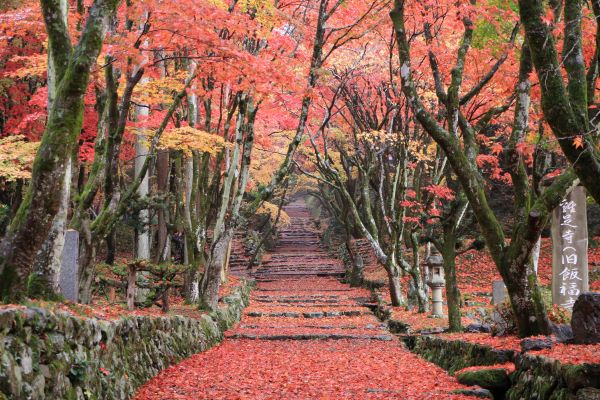
While the cherry blossoms in spring are breathtaking, Shiga undergoes another dramatic transformation once the temperature drops. Many of the spots on that we have introduced, especially Ishiyama-dera and Mii-dera, swap their soft pink flowers for the fiery reds and deep oranges of Japan’s most underrated autumn foliage.
If you want to see these same lakeside views painted in gold, check out our Guide to the Best Autumn Foliage Spots in Shiga Prefecture to start planning your fall itinerary.”
The Top Attractions in Shiga Prefecture That Are Awesome All Year Round
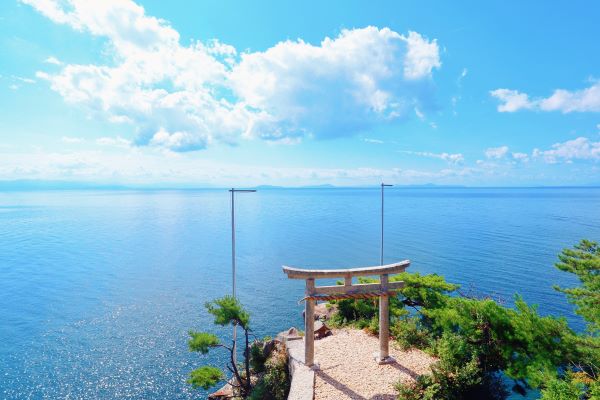
While the cherry blossoms are a spectacular reason to visit, Shiga’s charm goes far beyond a single season. From the ‘Ninja’ history hidden in the mountains of Koka and the spiritual heights of Mount Hiei, to the stunning lakeside torii gate of Shirahige Shrine, there is so much more to explore around Japan’s largest lake.
To discover the prefecture’s must-visit landmarks and local hidden gems, dive into our comprehensive guide to The Best Attractions to Visit in Shiga Prefecture.