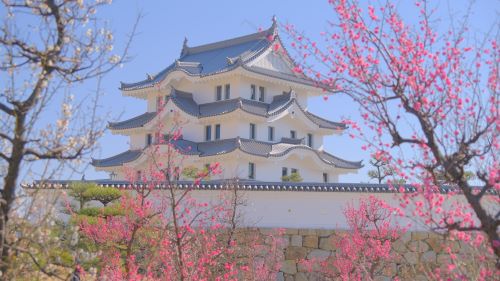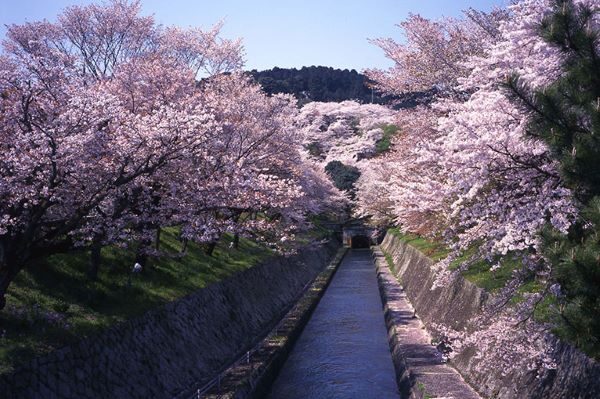
Experience the delicate beauty of late winter with our curated guide to the best plum blossom spots in Kobe. As the fragrant heralds of spring, plum blossoms (ume) transform the city’s parks and hillsides into a sea of vibrant pinks and whites long before the cherry blossoms arrive. From the breathtaking “weeping plums” of Okamoto Ume Park, historically famous as Japan’s top ume site, to the sprawling orchards of Sumaura Sanjo Amusement Park overlooking Osaka Bay, Kobe offers diverse landscapes for flower viewing. Whether you are looking for a peaceful stroll through Kitano Tenman-gu Shrine or a scenic hike to find hidden groves, our guide provides essential tips on peak blooming times, local festivals, and how to reach these stunning floral displays via the Hankyu and JR lines.
The Best Plum Blossom Spots in Kobe
- Kitano Tenman Shrine (北野天満神社)
- Suma Rikyū Park (神戸市立須磨離宮公園)
- Sumaura Sanjō Yūen Park (須磨浦山上遊園)
- Tsunashiki Tenmangū Shrine (綱敷天満宮)
- The Plum Blossom Festival is held on February 24 and 25. Nighttime illumination is also usually on.
- Okamoto Bairin Park (岡本公園)
- Okamoto Plum Festival (摂津岡本梅まつり) is usually held on a Sunday in late February.
- Hokura Plum Grove (保久良梅林)
- Uzumori Sankaku Park (渦森三角公園)
- The Plum Blossoms in Arima Onsen
- Mekkosan Plum Grove (雌岡山梅林)
- Vegetarian & Vegan Lunch Guide: Near Kobe’s Plum Spots
Tips:
☛ Kobe’s plum blossoms usually peak from mid-February to early March.
☛ The plum blossoms at Sumaura Sanjō Yūen Park usually bloom a little bit later than those at Suma Rikyū Park.
☛ The plum blossom season at Hokura Plum Grove is usually two weeks behind Okamoto Park.
☛ The plum blossom season at Uzumori Sankaku Park is usually two weeks behind that at Okamoto Park.
Quick Tips for “Ume-Mi” (Plum Viewing) in Kobe
- Fragrance First: Unlike cherry blossoms, most plum blossoms are highly fragrant. Take a moment to enjoy the sweet, spicy scent.
- Weather Watch: February in Kobe can be windy and chilly. Dress in layers, especially when visiting the hillside parks like Okamoto or Sumaura.
- Local Treat: Many plum festivals serve Amazake (sweet fermented rice drink). It’s the perfect way to stay warm while strolling through the groves.
Plum Blossom vs. Cherry Blossom: How to Tell the Difference
While both are iconic symbols of Japanese spring, plum blossoms (ume) and cherry blossoms (sakura) have distinct characteristics. Use this quick guide to identify them during your trip to Kobe.
| Feature | Plum Blossoms (Ume) | Cherry Blossoms (Sakura) |
| Blooming Timing | February to mid-March | Late March to April |
| Petal Shape | Rounded tips | Split/notched tips (heart shape) |
| Fragrance | Strong, sweet, spicy scent | Very faint or no scent |
| Growth Pattern | Individual flowers on the branch | Clusters on long stems |
| Tree Bark | Dark, rough, and “cracked” | Light grey with horizontal lines |
| Symbolism | Resilience (blooms in the cold) | Transience (ephemeral beauty) |
Kitano Tenman Shrine (北野天満神社)
Kitano Ijinkan-gai is one of Kobe’s top tourist spots. If you are there between late February and early March, stop by Kitano Tenman Shrine for the plum blossoms. The little flowers make the precinct more colorful, and their sweet scents will make your visit more pleasant!
The plum grove is at the highest point of the entire shrine. So even if the flower condition isn’t good or only average looking, you will get a better view of Kobe’s cityscape!
For more information, refer to our Kitano Tenman Shrine article!
Suma Rikyū Park (神戸市立須磨離宮公園)
Visiting a place related to the imperial family always feels a bit special. Why not stop by the Suma Rikyū Park if you visit Kobe in spring? Among Japan’s Top 100 Urban Parks, the Suma Rikyū Park is the only park where you can find remains of an imperial villa.
Apart from the roses and irises, in the Botanical Garden Area, the 160 plum blossoms of 25 varieties at Suma Rikyū Park usually bloom from early February to mid-March.
Refer to our Suma Rikyū Park for more information, including a plum blossom tea party!

Sumaura Sanjō Yūen Park (須磨浦山上遊園)
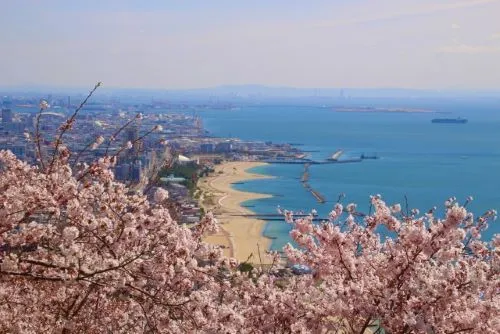
Away from Kobe’s city center, Sumaura Sanjō Yūen Park is a scenic amusement park overlooking Awaji Island and Akashi-Kaikyō Bridge. Once a battlefield for the Battle of Yashima in 1185, this park is now a famous place to admire plum and cherry blossoms!
The park’s plum grove has around 310 red and 350 white plums. Many of them usually bloom between late February and early March.
Refer to our Sumaura Sanjō Yūen Park article for more information!
Tsunashiki Tenmangū Shrine (綱敷天満宮)
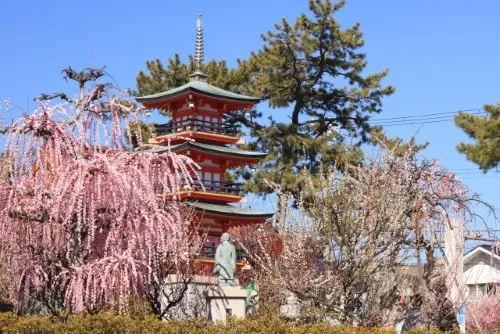
Speaking of plum blossoms in Japan, many Japanese would think of Sugawara no Michizane (菅原道真). The famous scholar is known for his love towards plum blossoms. So, at Tsunashiki Tenmangū, which venerates him, you can find around 120 plums of 30 varieties in the precinct.
The plum blossom season at Tsunashiki Tenmangū is usually between mid-February and early March. The Plum Blossom Festival is held on February 24 and 25. Nighttime illumination is also usually on.
For more information, refer to our Tsunashiki Tenmangū article!
Okamoto Bairin Park (岡本公園)
The Okamoto area was a renowned plum blossom destination in the Kansai region. The spot is famous for the plum blossom, so much so that the waka poem goes: Plums in Okamoto, cherry blossoms in Yoshino, mandarins in the Kii province, and chestnuts in Tamba (梅は岡本、桜は吉野、みかん紀の国、栗丹波).
However, the plum grove in Okamoto was lost to flooding in 1938, the Kobe Air Raid in 1945, and post-war residential development. In 1982, Okamoto Park was built. The park, filled with 200 plum trees of 42 varieties, was a step toward making Okamoto a popular plum blossom spot in the region again. It even received a Tobi-Ume Plum (飛び梅) from the Dazaifu Tenman-gū shrine in Fukuoka!
The peak plum blossom season at Okamoto Bairin Park is usually between late February and early March. The season usually runs from mid-February to mid-March. In late February, the Okamoto Plum Festival (摂津岡本梅まつり) is held. If you understand Japanese, you can listen to the guide explaining the plums. Plum-related products are also on sale.
In 2026, the Okamoto Plum Festival (摂津岡本梅まつり) was held on February 22. The event commenced at 10 am.
Another reason to visit Okamoto Park is to enjoy views of the cityscapes of Kobe and Osaka Bay.

How to Get to Okamoto Bairin Park
Okamoto Bairin Park is a 10 to 15-minute walk from Hankyu’s Okamoto Station (阪急 岡本駅).
Note that the slope is slightly on the steeper end. So if you are traveling with an elderly person, getting a taxi from the station to the park might be better.
Hokura Plum Grove (保久良梅林)
Between early to mid-March, take a 30-minute hike from Okayama Park to Hokura Plum Grove (保久良梅林). Around 150 white plums and 100 red plums are planted. Compared to Okayama Park, the cityscape and Osaka Bay are better seen from Hokura Plum Grove. In autumn, the fall leaves make parts of the promenade into an autumn foliage tunnel.
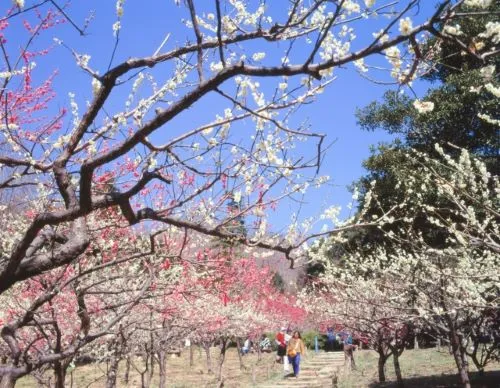
Please note that the promenade from Okayama Park to Hokura Plum Grove consists of paved and earthen roads. Sneakers are highly recommended.
Tips:
☛ The plum blossom season at Hokura Plum Grove is usually two weeks behind Okamoto Park.
☛ Hokura Plum Grove will be fully exposed to the sun in the late morning.
Hokura Shrine (保久良神社)
On the way back, head east to Hokura Shrine. The stone lantern in front of the shrine’s torii gate is known as Nata no Hitotsubi (灘の一つ火). The lantern’s light served as a lighthouse for ships in Osaka Bay for centuries. Apparently, Japan’s semi-legendary prince, Yamato Takeru (日本武尊), was able to safely return to Namba in Osaka at night thanks to the light.
The current stone lantern was installed in 1825. Although it fell down the hill during the Great Hanshin-Awaji Earthquake in 1995, only the firebox was damaged. Nowadays, an LED light bulb replaces a rapeseed oil lamp and continues to be lit during the night.
Close to the Nata no Hitotsubi, there is a large sewing needle. It marks the spot as one of the top 15 places in Kobe for scenic views. Moreover, remember to check out the stone statues of the 12 zodiacs on the ground after passing the Torii gate. They are really cute (refer to the 2nd photo in the IG post)!
How to Get to Hokura Plum Grove
- Hokura Plum Grove is a 30-minute walk from Okamoto Park.
- From Hankyu’s Okamoto Station (阪急 岡本駅), it is a 40-minute walk.
Uzumori Sankaku Park (渦森三角公園)
While less famous, Uzumori Sankaku Park, which opened in 1971, was the first spot in the initiative to restore the plum groves in Okamoto to their past glory. Usually, between early and mid-March, the park is surrounded by the sweet scent of plum blossoms.
Because Uzumori Sankaku Park is a hidden gem in a residential area, you will likely have the entire park to yourself, even on a Sunday! Most of the plum trees among the 110 plums are white plums. The occasional red flowers make the whole scene more beautiful to admire.
Hiking up from Uzumori Sankaku Park, you will reach Uzumori Observatory Park (渦森展望台公園) in around 10 minutes. On a clear day, the park, at an altitude of over 300 meters, is a nice, quiet place for a picnic with Osaka Bay and the surrounding mountains in front of you!
Uzumori Observatory Park is the trailhead of the Kanten Mountain Trail (寒天山道) to the Rokkō Mountains (六甲山系), so you might see a couple of hikers resting or preparing for their walk or marathon at the park.
Tip: The plum blossom season at Uzumori Sankaku Park is usually two weeks behind Okamoto Park.
How to Get to Uzumori Sankaku Park
- Take Kobe City Bus route 31 from JR Settsu-Motoyama Station (摂津本山駅) and get off at Uzumoridai 3-chōme (渦森台3丁目). Uzumori Sankaku Park is 110 meters from the bus stop.
- Refer to HERE for the timetable for route 31.
- You can also take route 38 from JR Sumiyoshi Station (JR住吉駅).
- Refer to HERE for the timetable for route 38.
- You can also use one of Japan’s Transport Apps to plan your visit.
- Note that Uzumori Sankaku Park doesn’t have a car park. There is only a coin parking nearby.
The Plum Blossoms in Arima Onsen
If you plan to do a day trip to Arima Onsen from Kobe, there are two spots in the hot spring town where you can see plum blossoms.
Ayagoyama Plum Grove (愛宕山梅林)
One is on the way to Atagoyama Park (愛宕山公園). The plum grove halfway up the hill is within a kilometer of the town center. You can overlook the township from the observation deck nearby.
If you are a history buff, you will be interested in checking out the Turtle Wash Basin (亀の手洗鉢) used by Toyotomi Hideyoshi. Note that the large stone wasn’t actually carved into the shape of a turtle. It just looks like one.
If you follow the promenade from Tōsen Shrine’s (湯泉神社) torii gate, you will reach an intersection. The road on the right leads to Atagoyama Park (follow the road sign in the FB post). It is a 10-minute walk to the plum grove. The observation deck is around a 5-minute walk from the plum grove.
Rinkei-ji Temple (林渓寺)
Hiking up the road from Kin no Yu Hot Spring (金の湯), you will reach the other place in Arima Onsen, known for the plum blossom. The Rinkei-ji Temple belongs to the Higashi Honganji (東本願寺). It is known for its red plum blossom, which is over 200 years old. In 1781, when Higashi Honganji’s head priest, Jōnyo Shōnin (乗如上人), visited Rinkei-ji, he was impressed by the red flower buds on the tree. Thus, he named the tree Mikaikou (未開紅), which means red before blooming.
In addition, it is said that the person who eats the plums from the tree will be blessed with children. The locals also refer to it as Harmi no Ume (はらみの梅) or Nimushin no Ume (にむしんの梅).
Other than the Mikaikou, there are a couple more white and red plums at Rinkei-ji. While they are of different varieties, the plum blossoms at Rinkei-ji usually bloom between early and mid-March.
Expert Tip: While the legend of the “Harmi no Ume” (fertility plums) is famous, please remember that Rinkei-ji is a quiet, sacred space. Even if you visit during peak bloom in March, ensure you respect the temple grounds as you search for the legendary red blossoms.
Mekkosan Plum Grove (雌岡山梅林)
Further from Kobe’s city center, Mekkosan Plum Grove has over 500 plum trees. It is a hidden gem for hikers. From the Kande Shrine (神出神社) at the top of Mt. Mekko (雌岡山), you can even see the spectacular Akashi-Kaikyo Bridge and Awaji Island (淡路島)!
Mekkosan Plum Grove is in Kamide Shrine’s precinct. Local volunteers planted the plum grove after the Great Hanshin earthquake. Nowadays, regular hikers also contribute to the maintenance of the plum grove. So when you visit the plum grove, please refrain from touching the trees when taking photos. Picking flowers and fruits from the trees is also forbidden.
The plum blossom season at Mekkosan Plum Grove usually runs from mid-February to mid-March.
About Kande Shrine
Mt. Okko (雄岡山) on the east and Mt. Mekko (雌岡山) on the west have been worshipped by the locals since ancient times. In Japanese mythology, many gods were born in the precincts of Kande Shrine. Hence, the shrine was named Kande (神出), where the gods appear.
Of course, the gods didn’t just appear from nowhere. They are the children of two gods who descended. The couple used herbal medicine to heal the diseases that the locals were suffering from. They also taught the locals how to farm.
When you are at the shrine, you will notice a large sewing needle in the observation area (refer to the 3rd photo in the IG post). It marks the spot as one of the top 15 places in Kobe for scenic views (神戸らしい眺望景観)!
Note that the approach from Mekkosan Plum Grove to Kande Shrine is steep. However, most parts of the road are paved, so you can even walk up while pushing a pram!
How to Get to Mekkosan Plum Grove
- Take a bus from Akashi Station (明石駅) and get off at Oinokuchi (老ノ口). The plum grove is a 30-minute walk away.
- If you plan to drive, the closest trailhead to Mekkosan Plum Grove is from the Kanabo Pond (金棒池登山口). It will take around 10 minutes. There is also a car park nearby.
Vegetarian & Vegan Lunch Guide: Near Kobe’s Plum Spots
To help you plan your day, we’ve selected the best plant-based dining options from our Complete Kobe Vegan Guide that are conveniently located near the top plum blossom groves.
Vegetarian & Vegan Lunch Guide Near Kitano Tenman Shrine (Kitano District)
Since Kitano involves a steep climb, these nearby spots are excellent for refueling without having to trek all the way back to the harbor.
- Kusum Indian Restaurant Located in the heart of the historic “Foreigner’s District,” Kusum Indian Restaurant is a legendary local favorite. It is entirely vegetarian and well-versed in accommodating vegan diets.
- Offers an authentic, no-frills North Indian “Thali” (set meal) featuring multiple curries, dal, and fresh chapati.
- Known for using natural spices without artificial coloring, providing hearty, healthy lunches.
- Malabar Kitchen If you prefer South Indian cuisine, which is often naturally lighter and very vegan-friendly, Malabar Kitchen is a fantastic choice nearby.
- The chef is highly attentive to dietary requirements and can guide you through the best vegan-safe options.
- Features a warm, welcoming vibe that makes it a great spot for tourists to relax.
- Yidaki Cafe: A favorite for locals and travelers alike. Their “Special Plate” is a nutritionally balanced vegan meal featuring seasonal deli salads and brown rice. It’s the perfect place to relax after exploring the shrine’s hillside plum grove.
Vegetarian & Vegan Lunch Guide Near Suma Rikyu & Sumaura Sanjo (Suma Area)
The Suma area is scenic but can be tricky for vegetarians. Your best bet is to head back toward the central Sannomiya/Motomachi area (about 15 mins by train), where the best variety exists:
- Thallo: If you are visiting the Suma parks, stop at Thallo in the Motomachi area on your way back. They offer a completely gluten-free and vegan menu, including delicious quiches and seasonal plates that are perfect for a spring lunch.
- Modernark Pharm Cafe: Located just a short walk down from the Kitano area toward Sannomiya. This legendary spot offers a 100% vegetarian menu with many vegan options, including their famous “Veggie Lunch Plate.”
Vegetarian & Vegan Lunch Guide Near Okamoto Bairin Park (Okamoto/Motoyama Area)
There aren’t any cafes and restaurants offering plant-based food. So, after exploring the historic plum groves of Okamoto, head toward the central shopping district for food. Alternatively, grab some quick bites at a convenience store and picnic at Okamoto Bairin Park!
- At any 7-Eleven or Lawson (near the port/station):
- Onigiri (Rice Balls): Look for Ume (Pickled Plum) rice balls.
- Snacks: Edamame, salt-flavored potato chips, or mixed nuts.
- Refer to HERE for a list of vegan food available at convenience stores.
Want More Plant-Based Options in Kobe?
Kobe’s food scene is about much more than just beef! Whether you’re looking for a quick vegan snack, a cozy organic cafe, or a full-course meal, we’ve done the legwork for you.
Read our Full Guide: The 10 Best Vegan & Vegetarian-Friendly Restaurants in Kobe →
Our guide includes opening hours, price ranges, and our personal “must-try” dish for every location!
Discover the Plum Blossom Spots in Osaka
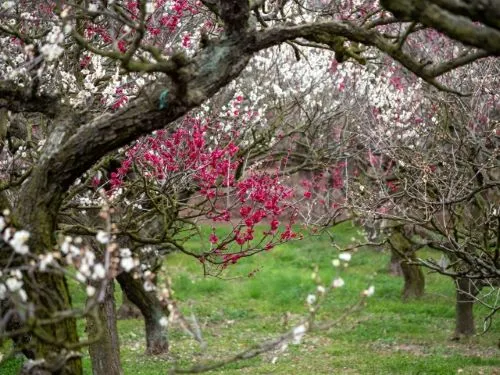
“Ready to see more? While Kobe offers spectacular hillside views, the neighboring Osaka Prefecture is home to some of Japan’s most expansive plum orchards. If you are flying into Kansai International Airport or heading toward the city center, you can easily combine these Kobe locations with several world-class groves nearby.
Check out our Full Guide to the Best Plum Blossom Spots in Osaka to continue your early spring pilgrimage!”
The Plum Blossom Spots in Hyōgo Prefecture
“Beyond the city limits of Kobe, Hyogo Prefecture is home to vast, hidden plum groves that many international tourists miss. If you want to escape the crowds and see how the locals celebrate early spring, there are several stunning locations across the prefecture, from castle ruins to sprawling mountain orchards.
Dive into our Complete Guide to Plum Blossom Spots in Hyogo to discover the prefecture’s best-kept secrets!”