Discover the breathtaking beauty of the Kerama Islands (慶良間諸島), a subtropical island group just a short ferry ride from Okinawa’s main island. Renowned for “Kerama Blue”, a crystal-clear ocean hue found nowhere else, this national park is a bucket-list destination for snorkeling, scuba diving, and humpback whale watching in early spring. Whether you are planning a day trip from Naha to the vibrant shores of Tokashiki Island, seeking the laid-back village vibes of Zamami, or exploring the hidden beaches of Aka Island, our updated guide has you covered. We provide essential travel tips on ferry schedules from Naha, the best beaches for sea turtle encounters, and how to find the best vegetarian and vegan-friendly meals in this remote island cluster.
Table of Content
- Explore the Kerama Islands With a Guided Tour
- Kerama Islands' Profile
- The Beaches at Kerama Islands and the Kerama Blue
- Naha to Kerama Islands Ferry: Prices, Schedule, Booking & Tips
- Getting Around the Kerama Islands: Buses, Bikes, and Feet
- Humpback Whale Watching in the Kerama Islands
- Kerama Islands: Whale Watching vs. Snorkeling
- Essential Things to Bring to the Kerama Islands
- The Islands in Kerama Island National Park
- The Chibishi Islands (チービシ環礁)
- The Kerama Islands (慶良間諸島)
- The Uninhabited Islands Close to Zamami and Aka Island
- Geruma Island (慶留間島)
- Fukaji Island (外地島)
- Vegetarian Survival Guide: Kerama Islands
- Kerama Islands FAQ
- 1. Can you do a day trip to the Kerama Islands from Naha?
- 2. Which Kerama Island is best for snorkeling?
- 3. Are there ATMs on the Kerama Islands?
- 4. When is the best time to visit for whale watching?
- 5. Is reef-safe sunscreen required in Okinawa?
- 6. Are there vegetarian or vegan restaurants on the islands?
- Discover the Attractions in Naha
- Discover the Stunning Spots in Miyakojima City
- Miyakojima vs. Kerama Islands: Which "Blue" is Best?
Explore the Kerama Islands With a Guided Tour
If you prefer a guide to introduce you to the charms of the Kerama Islands, how about joining one of the following tours?
- Kerama Tokashiki Island Swimming, Snorkeling, and Turtle-Finding Tour (Naha Departure)
- Whale Watching and Popular Activity Package (Naha Departure)
- Half-Day Zamami Island Kayak and Snorkel Tour
- Japan Okinawa Kerama Islands Diving Experience
- Okinawa Zamami SUP & Snorkel! Private Beach Half-Day Tour
Kerama Islands’ Profile
The Kerama Islands are a subtropical island group comprising more than 20 islands. The average temperature is between 15 and 20 degrees in winter, so a wide range of watersports can be enjoyed throughout the year. But unlike many Japanese islands that have been completely developed into resorts, a large part of the Kerama Islands remains natural. By 2014, all the islands in the Kerama Islands group were designated as Kerama Island National Park (慶良間諸島国立公園).
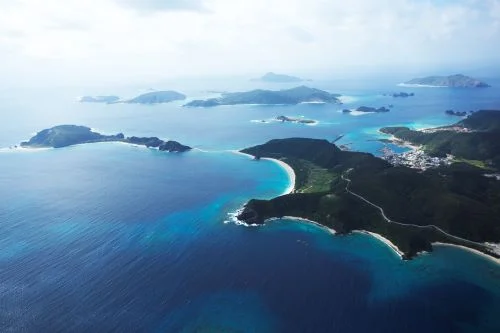
As the island group is only around 40 km southwest of Okinawa’s main island, ferry services depart from Naha’s Tomarikō Ferry Wharf for the three most populous inhabited islands among the Kerama Islands. Not only are the islands easily accessible from Naha, but their beauty is another main reason that the Kerama Islands remain a popular tourist destination. Since the Michelin Green Guide Japan awarded the Furuzamami Beach on Zamami Island a two-star rating in 2009, this part of Okinawa has also attracted overseas travellers!
The three islands that you can reach from Naha are Tokashiki Island (渡嘉敷島), Zamami Island (座間味島), and Aka Island (阿嘉島). All of them are known for their beautiful scenery, surrounded by the breathtaking blue sea, where a variety of colorful coral reefs and tropical fish live. As you enjoy various watersports and adore the sunset and starry sky, we are sure you will forget the hustle and bustle of your busy life!
The Beaches at Kerama Islands and the Kerama Blue
The main charm of the Kerama Islands has to be the seawater’s high transparency. While the beaches around Okinawa’s main island are also known for their high transparency, they can’t be compared with those at the Kerama Islands. The water there is so transparent that you can see tens of meters ahead!
The high transparency makes it the best living environment for gorgeous coral reefs and tropical fish. Not only are the number of coral reefs in the Kerama Islands National Park said to be 60% of all coral reefs in Japan, but the number of species is around 250!
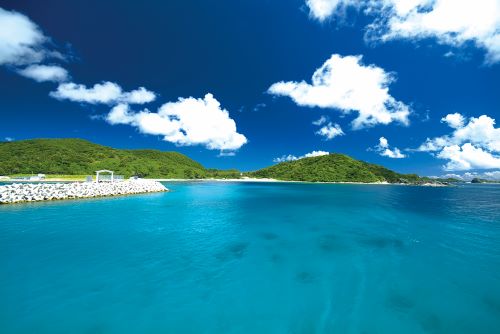
Because of these coral reefs, the seawater color at the Kerama Islands is known as the “Kerama Blue”.
While many may think of corals as plants, corals are actually cnidarians, like sea anemones and jellyfish. Because it lives symbiotically with zooxanthellae, corals can carry out photosynthesis when the sunlight comes in from the sea surface. This process also releases minerals that have a purifying effect, further increasing the water’s transparency.
Moreover, the white coral sands formed by the dead corals that accumulate at the bottom of the sea reflect the sunlight. The reflected light then further enhances the sea’s enchanting azure color!
Furthermore, the Kerama Islands are a famous spawning ground for sea turtles. Some sea turtles even live close to the shore, so you are almost guaranteed to see them while snorkeling or diving!
In addition, because the beaches at the Kerama Islands have different characteristics, whether you are experienced in watersports or not, there is certainly a beach suitable for discovering the underwater world.
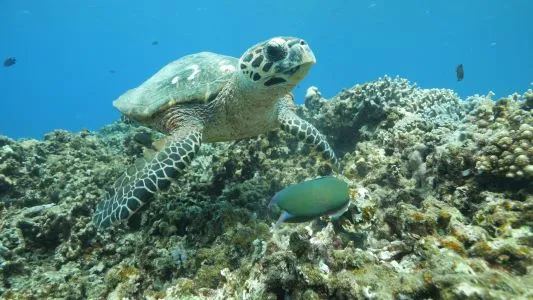
Snorkeling gear and other watersports equipment can be rented from the local rental shops, especially during the swimming season, so all you need to bring is your swimming suits and possibly a set of towels.
Of course, you can also join one of the snorkeling or diving tours where instructors will accompany you (=゚ω゚)ノ.
Naha to Kerama Islands Ferry: Prices, Schedule, Booking & Tips
All ferries depart from Tomari Port (Tomarin) in Naha. We recommend booking at least 1 month in advance during peak season (July–August). Refer to HERE for the boarding point at Tomari Port for Marine Liner and Ferry Tokashiki.
| Route | Vessel Type | Duration | Adult Fare (Round Trip) | Best For |
| Naha ↔ Tokashiki | Marine Liner (Fast) | 35–40 min | ¥4,810 | Day-trippers to Aharen Beach |
| Naha ↔ Tokashiki | Ferry Tokashiki (Slow) | 70 min | ¥3,210 | Travelers with heavy gear/cars |
| Naha ↔ Zamami/Aka | Queen Zamami (Fast) | 50–70 min | ¥7,510 | Maximizing time on the islands |
| Naha ↔ Zamami/Aka | Ferry Zamami (Slow) | 90–120 min | ¥5,510 | Budget travelers & scenic views |
Pro Tip: If you want to island-hop between Tokashiki and Zamami, you must use the “Mitsushima” Inter-Island Ferry. It requires a phone reservation at least one day in advance (+81 98-987-2614). Refer to our How to Get to Zamami Island article for more information.
Important: The ferry schedule can change, especially during ‘Golden Week’ (the end of April to the beginning of May) and Obon (mid-August). Refer to HERE for the latest timetable. The timetable up to two months in advance is available under the “各月の運航予定表” section.
Getting Around the Kerama Islands: Buses, Bikes, and Feet
Once you arrive at the port, you still need a plan to reach the best beaches. Here is the breakdown of how to navigate the islands without a car.
| Transport Type | Estimated Cost | Best For |
| Village Bus | ¥300 – ¥400 | Direct beach access |
| Bicycle Rental | ¥1,000 – ¥1,500 / day | Zamami & Aka exploration |
| Electric Bike | ¥2,500 – ¥3,000 / day | Reaching hilly observatories |
| Scooter Rental | ¥4,000 – ¥5,000 / day | Freedom to see the whole island |
How to Travel Between the Attractions on Tokashiki Island
Tokashiki is large and very mountainous. Walking between the port and the beaches is not recommended unless you are an experienced hiker!
- Village Buses: The most reliable option. Buses wait at the port for every ferry arrival and take you directly to Aharen Beach or Tokashiku Beach. (Fare: ~¥400).
- Rental Cars/Scooters: If you want to visit the remote observatories (like Teruyama), renting a scooter is the way to go.
- Bicycles: Not recommended here due to the extremely steep hills.
How to Travel Between the Attractions on Zamami Island
Zamami is more “walkable” than Tokashiki, but wheels still help.
- Village Bus: Runs frequently between the Port, Furuzamami Beach, and Ama Beach. (Fare: ~¥300).
- Bicycle Rentals: Very popular. You can easily cycle to Furuzamami Beach in about 15 minutes. Note that the road to the observatories is still quite steep, so consider an electric-assist bike.
- Walking: You can walk to Furuzamami Beach in about 20 minutes, but in the Okinawan heat, the bus or a bike is usually better!
How to Travel Between the Attractions on Aka Island
- Walking & Cycling: This is the best way to see Aka. The island is flatter than the others. You can walk across the bridge to Geruma Island or bike to Nishibama Beach in 10 minutes.
- Kerama Deer: Keep an eye out! You will likely see the protected Kerama deer wandering near the roads and beaches on Aka.
Humpback Whale Watching in the Kerama Islands
Winter in the Keramas isn’t just about the “Kerama Blue” water; it’s the peak season for the majestic Humpback Whales. These giants migrate 5,000km from Russia and Alaska to the warm, protected waters of the Kerama Islands to breed and raise their calves.
- Season: Late December to Early April
- Peak Viewing: February to mid-March
- Cost: Approximately 6,000 to 6,500 yen per adult (2 to 3-hour tour).
- Success Rate: Local operators report a 95%–99% encounter rate during this window. If no whales are spotted, many tours offer a “Re-ride” voucher or a partial refund.
Where to Book Humpback Whale Watching in the Kerama Islands?
- From Naha: Ideal for day-trippers. Tours depart from Miegusuku or Tomari Port.
- From Zamami Island: For a more intimate experience, the Zamami Whale Watching Association (座間味村ホエールウォッチング協会) coordinates local boats. Since they use “spotters” on the island’s hilltops to radio the whale locations to the boats, your time to find a whale is significantly shorter.
Kerama Islands: Whale Watching vs. Snorkeling
While you can technically do both in the spring, the “vibe” of your trip will change depending on the month you choose.
| Feature | Whale Watching Season | Prime Snorkeling Season |
| Best Months | January – March | May – October |
| Water Temp | Chilly (15 – 22°C) | Warm (23°C – 31°C) |
| What to Wear | Windbreaker & thick wetsuit | Swimsuit or thin rash guard |
| Main Highlight | Humpback whale breaches & “singing” | Sea turtles, coral reefs & tropical fish |
| Sea Conditions | Can be choppy (North winds) | Generally calm (except during typhoons) |
| Crowd Level | Quiet (Great for photography) | High (Vibrant island energy) |
Strategic Seasonal Gerama Islands Visiting Tips
- The “Sweet Spot” (Late March): If you visit in late March, you catch the tail end of the whale season while the air temperature begins to hit a pleasant. You’ll still need a 5mm wetsuit for snorkeling, but you might get lucky and see a whale from your snorkel boat!
- Whale “Singing”: Did you know? In February and March, if you dive underwater or even just keep your head still while snorkeling, you can often hear the Humpback whales “singing” to each other in the distance.
- Typhoon Warning: If planning a snorkeling trip between July and September, always build 1–2 “buffer days” into your itinerary. Ferries to the Keramas are frequently cancelled if a typhoon is approaching, even if the weather in Naha seems fine.
Essential Things to Bring to the Kerama Islands
A day trip to the Keramas requires a bit of planning since facilities can be sparse once you leave the main ports. Use this checklist to ensure you have a seamless experience.
- Swimwear & Quick-Dry Towel: Wear your swimsuit under your clothes to save time, as changing facilities at beaches like Aharen or Furuzamami can get crowded.
- Sun Protection: The Okinawan sun is intense. Pack reef-safe sunscreen, a wide-brimmed hat, and a rash guard.
- Snorkeling Gear: While rentals are available at major beaches (approx. 1,000 to 2,000 yen for a set), bringing your own mask and snorkel ensures a better fit and hygiene.
- Waterproof Bag & Phone Case: Essential for keeping your valuables dry during ferry rides and boat tours.
- Motion Sickness Medicine: The “Queen Zamami” and “Marine Liner” are fast catamarans that can get bumpy in open water. Take your medicine 30 minutes before boarding.
- Japanese Yen: Many small island shops, bus drivers, and rental stalls are cash only. There are very few ATMs on the islands.
- Offline Maps: While 4G/5G is generally good near the villages, download Google Maps for offline use to navigate hiking trails to observatories.
The Islands in Kerama Island National Park
So what are the must-visit attractions and must-do things at Kerama Island National Park? Below is a list of islands that you can visit and what you can do on the islands:
The Chibishi Islands (チービシ環礁)
The Chibishi Islands lie between mainland Okinawa and the Kerama Islands. Three uninhabited sand dunes form it. Because the Chibishi Islands are located so close to Naha, if you don’t have much time, it is possible to experience the charm of the Kerama Island National Park by making a half-day trip to the Chibishi Islands.
In addition to watersports activities, humpback whales can also be spotted from January to March!
For more information, refer to our article on the Chibishi Islands!
The Kerama Islands (慶良間諸島)
Nowadays, island hopping is possible at the Kerama Islands. So by taking the ferries sailing on the Kerama Route (ケラマ航路), you can visit Tokashiki Island, Zamami Island and Aka Island without needing to head back to Naha!
Tokashiki Island (渡嘉敷島)
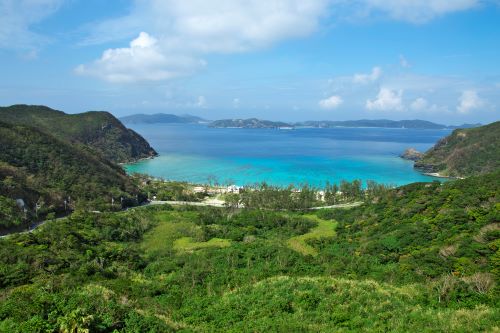
Just a 35-minute boat ride from Okinawa‘s capital, Naha, you will encounter an island with some of the world’s most beautiful beaches. Tokashiki Island is one of the best day-trip destinations from Naha. With close to 20 diving spots on the island, not only is it a diver’s paradise, but during the winter, you can join one of the whale-watching tours departing from Tokashiki Island!
For more information, refer to our article on Tokashiki Island!
Zamami Island (座間味島)
Aside from Tokashiki Island, Zamami Island is probably the second most-visited island amongst the islands in Kerama Island National Park. Why? Because one of the beaches on Zamami Island was given a two-star rating by the Michelin Green Guide Japan! In addition to the Kerama-Blue colored beaches where sea turtles linger, Zamami Island is another spot in the area where you can see humpback whales from January to March!
For more information, refer to our article on Zamami Island!
Aka Island (阿嘉島)
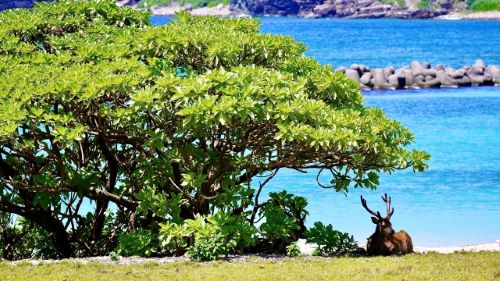
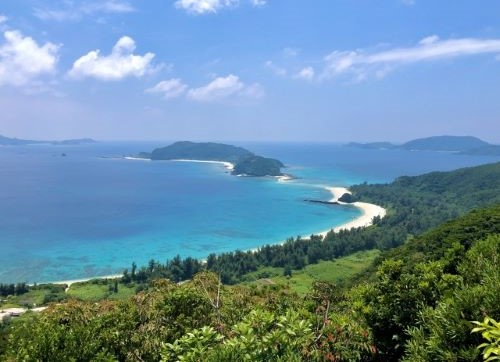
Whilst it is increasingly popular as a day-trip destination from Naha, Aka Island remains a relatively less-visited inhabited island within the Kerama Islands group. In addition to the trendy cafes and bars facing the sea in the village, what pleasantly surprises most tourists is the Kerama Deer that live on the island!
For more information, refer to our article on Aka Island!
Tokashiki vs. Zamami vs. Aka: Which Island is Right for You?
While all three islands share the famous “Kerama Blue” water, they each offer a completely different atmosphere. Use this table to match an island to your travel style.
| Feature | Tokashiki Island | Zamami Island | Aka Island |
| Best For | Dramatic views & Day trips | Village vibes & Socializing | Nature, Deer & Serenity |
| Vibe | Rugged and mountainous | Trendy and international | Quiet and authentic |
| Top Beach | Aharen Beach | Furuzamami Beach | Nishibama Beach |
| Wildlife | Sea Turtles (Tokashiku) | Humpback Whales (Winter) | Kerama Deer (Everywhere) |
| Walking? | Difficult (steep hills) | Moderate (hilly) | Easy (mostly flat) |
| Veggie Food | Limited (bring snacks) | Best (several cafes) | Fair (limited cafes) |
| Crowds | High (near Aharen) | Medium to High | Low (very peaceful) |
Tokashiki Island: The Adventure Seeker’s Choice
Choose Tokashiki if you only have one day and want the most “Instagrammable” panoramic views. The island is defined by massive cliffs and the famous Tokashiku Beach, where you are almost guaranteed to snorkel with sea turtles.
- Vegetarian Note: Most plant-based options among the three islands.
Zamami Island: The Social Hub
Choose Zamami if you want to stay overnight and enjoy a “village” feel. It is the most English-friendly island and has a great variety of small bars and cafes. It’s the perfect base for winter whale watching and has the best infrastructure for tourists.
- Vegetarian Note: This is your best bet for a “real” meal. Spots like Zamami Burger.
Aka Island: The Nature Lover’s Escape
Choose Aka if you want to escape the crowds entirely. It feels like stepping back in time. You’ll share the roads with the protected Kerama Deer, and the bridge connection to Geruma Island makes it perfect for a long, slow bicycle exploration.
- Vegetarian Note: This island has the fewest dining options. However, you will enjoy food at Hahna Cafe are your friends here.
The Uninhabited Islands Close to Zamami and Aka Island
While the Michelin Green Guide Japan gave Zamami Island‘s Furuzamami Beach a two-star rating, it is not a beach for experienced snorkelers to enjoy snorkelling anymore. Unfortunately, the beach now has a designated swimming area marked by lane dividers. Because the coral reefs inside this restricted area aren’t as beautiful, snorkeling at other beaches is highly recommended if you are experienced.
The best beaches for snorkeling or diving in the region are probably the uninhabited islands close to Zamami Island. As many tourists are unaware of these hidden gems or how to get there, the condition of the coral reefs near these islands is exceptional!
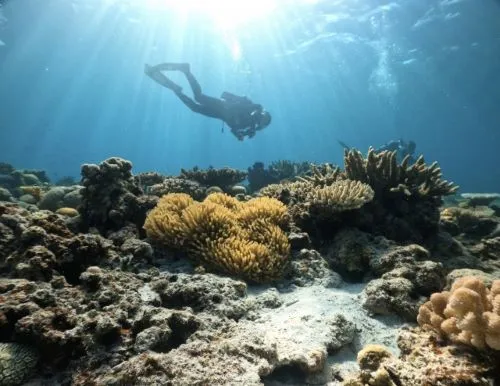
For more information, refer to our article on the Kerama Islands’ Hidden Uninhabited Islands!
Geruma Island (慶留間島)
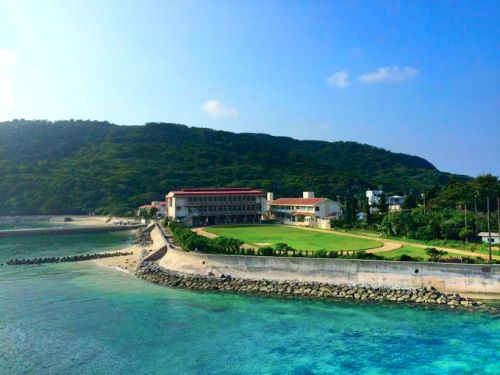
As you approach Aka Port, you will surely notice Aka Bridge, which connects Geruma Island with Aka Island. It is the best destination if you are seeking true solitude. If the main beaches of Zamami and Tokashiki feel a bit too busy, consider crossing the bridge from Aka Island to the tiny, tranquil Geruma Island. With a population of just 60 people and a colony of protected Kerama deer, it is the ultimate “hidden gem” of the archipelago.
For a detailed look at the island’s historic Ryukyu architecture and how to find its most secluded snorkeling spots, read our Complete Guide to Geruma Island.
Fukaji Island (外地島)
The uninhabited Fukaji Island beyond Geruma Island can also be reached by ferry to Aka Island. All you need to do is cross the Aka Bridge and Geruma Bridge (慶留間橋). Although Kerama Airport is located on Fukaji Island, it only has charter flights. But you can still enjoy the stunning view of the Kerama Islands from Fukuaji Observatory (外地展望台), close to the airport!
Just note that the road beyond the Geruma Bridge is hilly. So think twice before you explore Fukaji Island by bicycle!
Fukaji Observatory (外地展望台)
Fukaji Observatory is the perfect spot for a magnificent view of the entire island. Because Kerama Airport is visible from the lookout, it offers a slightly different view than other observatories in the area.
Fukaji Observatory is around a 10-minute drive from Aka Port. The stairs to the observatory are found on one side of Kerama Airport’s car park. The fence in front of the airport’s main gate has a small door. Although the door is normally closed, it is not locked. So you can open it yourself and climb up. The staircase leading to Fukaji Observatory is just beyond the gate. If you are lucky, you might even encounter a Kerama Deer!
From May to June, the azalea flowers should bloom along the promenade!
Tip: You can park your car, motorbike, or bicycle at Kerama Airport’s parking lot.
Kerama Airport (慶良間空港)
Kerama Airport, completed in 1982, is the only airport in the Kerma Islands. Unfortunately, scheduled flights were suspended in 2006, so only chartered flights or helicopters from Naha Airport to Fukaji Island are currently available.
Although there is most likely no staff at Kerama Airport when you get there, you can still go inside the airport. What you will find there is a vending machine, which can be a lifesaver on a hot summer day!
- Kerama Airport is around a 10-minute drive or 20 minutes by bicycle from Aka Port.
Vegetarian Survival Guide: Kerama Islands
Finding plant-based food on remote islands can be a challenge. While most island noodle shops use fish-based dashi (broth), these spots are known to be more accommodating. Note that these spots are small local businesses. Hours can be irregular, so it’s always a good idea to have a backup snack from the convenience stores in Naha!
Important: There are no large supermarkets on the islands. We highly recommend buying vegan-friendly snacks (nuts, soy bars, instant vegan ramen) at the FamilyMart or Lawson near Tomari Port in Naha before you board. Refer to HERE for a list of vegan food available at convenience stores.
Vegetarian Options on Zamami and Aka Island
- Zamami Burger & Pizza: Offers a dedicated vegetarian menu. Their pumpkin (kabocha) pizza is a local favorite.
- Hahna Cafe (Aka Island): A short walk from the port, this cozy bistro serves smoothies with soy milk and pasta with tomato sauce that can be made vegan upon request.
- Umibaru: During dinner hours, they often have a “secret” vegetarian menu featuring stir-fried papaya and sweet potatoes. Always ask the server for the separate menu!
Vegetarian Options on Tokashiki Island
- Cafe Shimamun+: A cozy Italian-style restaurant in the Aharen area that serves meat but is very accommodating to vegans. They can prepare vegan pizza and fresh salads upon request. It is highly recommended to book at least 1 day in advance to ensure a table.
- HARVEL KITCHEN: This Asian fusion spot offers a variety of Japanese, Thai, and Chinese-inspired dishes. They can customize several meals to be vegan, such as stir-fried tofu and Pad Thai, provided you specify your dietary needs when ordering.
- Summer Snow Bar & Eatery: A home-style cooking restaurant located near the beach. They are able to accommodate vegan guests upon request; just be sure to mention it before you place your order.
- Tokachiki Parlor: A convenient food truck in Aharen, perfect for a quick beach lunch. They offer soy meat taco rice (request it without cheese for a vegan version), fresh fruit juices, and coffee with plant-based milk.
- Sunny Coral: Located near the port, this coffee shop is great for a light bite. They serve an avocado and pumpkin sandwich and are happy to show you the ingredient list upon request.
- Coffee & Snacks at the Port: For travelers just arriving or departing, Mauntain Hill Coffee (inside the ferry port building) and bonvoyage – Coffee Cart both offer plant-based milk alternatives for their coffee drinks.
| Restaurant | Location | Type | What to Order |
| Cafe Shimamun+ | Aharen Village | Italian | Custom Vegan Pizza & Fresh Salad |
| HARVEL KITCHEN | Aharen Village | Asian Fusion | Tofu Stir-fry or Vegan Pad Thai |
| Tokachiki Parlor | Aharen (Food Truck) | Quick Bite | Soy Meat Taco Rice (No Cheese) |
| Summer Snow | Aharen Village | Japanese | Home-style Veggie Plates (Request) |
| Sunny Coral | Near the Port | Cafe | Avocado & Pumpkin Sandwich |
| Mauntain Hill | Inside Ferry Port | Coffee | Soy/Plant-based Milk Lattes |
Kerama Islands FAQ
1. Can you do a day trip to the Kerama Islands from Naha?
Yes. The most popular islands for day trips are Tokashiki (35–40 mins) and Zamami (50–70 mins) via high-speed catamaran from Tomari Port. For the best experience, take the earliest ferry and book your return ticket at least two months in advance during the peak summer season (July–August).
2. Which of the Kerama Islands is best for snorkeling?
While all islands offer world-class visibility, Zamami Island is often cited as the best for variety, with Furuzamami Beach offering coral “bomis” right off the shore. If your goal is to swim with sea turtles, Tokashiki Island (Tokashiku Beach) is your most reliable bet.
3. Are there ATMs on the Kerama Islands?
Cash is still king on the islands. While there is one ATM at the Post Office on both Tokashiki and Zamami islands, they have limited hours and may not accept all international cards. It is highly recommended to withdraw enough Yen at Tomari Port in Naha before you board the ferry.
4. When is the best time to visit for whale watching?
The Humpback whale migration season runs from late December to early April, with peak sightings in January and February. Tours typically depart from Zamami and Aka islands, but you can also book full-day whale-watching cruises directly from Naha.
5. Is reef-safe sunscreen required in Okinawa?
As of the time this article was updated, there is no official government ban on chemical sunscreens in Japan, but most local tour operators in the Kerama National Park strongly recommend using mineral-based (non-nano zinc oxide) sunscreens. This helps protect the 250+ coral species that make the “Kerama Blue” waters so famous.
6. Are there vegetarian or vegan restaurants on the islands?
Options are limited but growing. Tokashiki and Zamami Island is the most vegan-friendly, with a couple of cafes offering plant-based burgers or pizzas. On Aka Island, it is best to stay in a guesthouse that can accommodate dietary needs (notify them 48 hours early) or bring snacks and vegan food from Naha.
Discover the Attractions in Naha
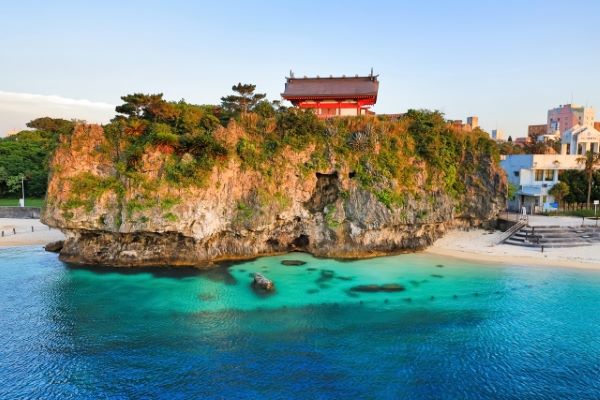
While Naha’s beaches certainly doesn’t represent Okinawa’s breathtaking beaches, the capital of Okinawa has a wealth of cultural properties. It is where you want to be if you love shopping too! Since you must stop by Naha to get to the Kerama Islands, how about allocating a day or two to discover the city when you visit Okinawa next time?
For more information about what to do and where to eat, refer to our article on Naha City!
Discover the Stunning Spots in Miyakojima City
If the quiet, rustic charm of Geruma Island has left you craving more of Okinawa’s turquoise magic, but you are ready for a change of pace, your next stop should be Miyakojima. It offers a grander scale of ‘Blue’ with Japan’s longest toll-free bridges and expansive white-sand beaches like Yonaha Maehama. It’s the perfect logistical follow-up for travelers who want to combine the remote ‘National Park’ feel of the Keramas with the vibrant cafe culture and resort comfort of the southern islands.
Dive into our Top 12 Attractions in Miyakojima City to start planning the next leg of your upcoming Okinawa adventure.
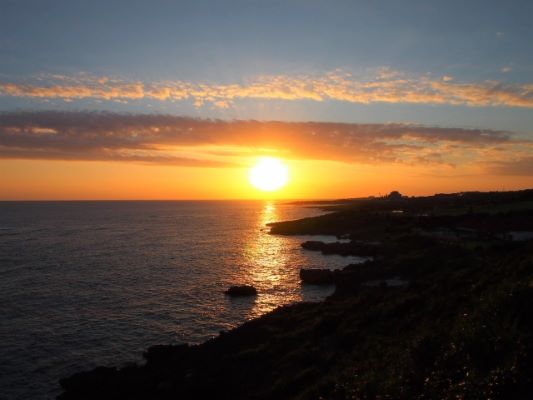
Miyakojima vs. Kerama Islands: Which “Blue” is Best?
While both destinations are world-renowned for their water clarity, the travel experience on Miyakojima (The “Miyako Blue”) is vastly different from the Kerama Islands (The “Kerama Blue”).
| Feature | Miyakojima | Kerama Islands |
| Primary Access | 50-minute flight from Naha | 35–70 minute ferry from Naha |
| Getting Around | Rental Car & Village Buses | Bikes & Village Buses |
| Vibe | Resort-style, luxurious, spacious | Authentic, rugged, “Back-to-basics” |
| Landscape | Flat with massive bridge links | Mountainous with dramatic cliffs |
| Snorkeling | Excellent (Easy beach access) | World-Class (National Park status) |
| Vegetarian Food | Good (More mainland-style cafes) | Limited (Requires “Port-Prep” strategy) |
| Crowd Level | Medium (Resort clusters) | High (Day-trippers) / Low (Overnight) |
Choose Miyakojima if…
You want a luxury resort experience with the freedom of a rental car. Miyakojima is famous for its massive bridges (like Irabu Bridge) and long, sandy stretches like Yonaha Maehama. It’s perfect for families or travelers who want a wide variety of dining options and modern amenities.
Choose the Kerama Islands if…
You are a nature purist or an avid snorkeler/diver. The Keramas feel more “untouched” because they are part of a protected National Park. If you want to wake up and see wild deer on the beach (Aka/Geruma) or swim with turtles just meters from your towel (Tokashiki), this is your paradise.