Known as Japan’s mythical “Castle in the Sky,” the Takeda Castle Ruins (Takeda Jōseki, 竹田城跡) offer one of the most breathtaking views in Hyogo Prefecture. Perched 353 meters above sea level atop Mt. Kojōzan (古城山) in Asago City, these historic ruins appear to float on a breathtaking sea of clouds during clear autumn mornings, closely resembling Studio Ghibli’s Laputa. Castle ruins may not sound very exciting or appealing to some people, but the location and its rich history have made it one of the Top 100 Castles in Japan! While this spectacular destination is a bucket-list spot for photographers and hikers exploring the Kansai region, navigating this remote mountain area comes with unique logistical hurdles. This ultimate Takeda Castle travel guide covers everything you need to know, from the best viewing conditions and transportation options to essential tips for vegetarian and vegan travelers.
All You Need to Know Before Visiting Takeda Castle Ruins
- Takeda Castle Ruins: Fast Facts At a Glance
- What Are the Takeda Castle Ruins? (History & Overview)
- How to See the Famous “Sea of Clouds” Phenomenon
- How to Get to Takeda Castle Ruins
- Hiking Routes: Walking Up to the Castle Ruins
- When You Are at Takeda Castle Ruins
- Cherry Blossom and Autumn Foliage Seasons at Takeda Castle Ruins
- Takeda Castle Ruins’ Admission Fee and Opening Hours
- Where to Get the Best View: Ritsuunkyō Viewpoint
- An Alternative to Ritsuunkyō to See the Castle in the Sky: Fujiwatōge (藤和峠)
- What to Pack: Essential Gear for the Hike
- Vegetarian & Vegan Dining Tips Around Takeda Castle
☛ Check out the English Takeda Castle Ruin Map for an idea of the castle’s location related to JR Takeda Station, hiking trails, and the nearby roadside station, Yamajiro no Sato.
☛ Check out the Takeda Castle Ruins Area Map that marks the cherry blossoms, observation decks close by, and other attractions in town. English notation is underneath the Japanese.
Tip: Stay at EN Takeda Castle Town Hotel (竹田城 城下町 ホテルEN). The hotel near takeda castle ruins is the perfect base if you plan to see the Takeda Castle in the Sky in the early morning.
Takeda Castle Ruins: Fast Facts At a Glance
| Category | Details |
| Admission Fee | • Adults (High School and above): 500 yen • Children (Junior High and under): Free |
| Peak Season | • The Sea of Clouds: Late September to early December (Best conditions occur at sunrise until around 8 am) • Cherry Blossoms: Late March to early April |
| Location & Address | 169 Aza Kojosan, Takeda, Wadayama-cho, Asago-city, Hyogo Prefecture 〒669-5252 (兵庫県朝来市和田山町竹田古城山169番地) |
| Nearest Transit Hub | JR Takeda Station (竹田駅) via the JR Bantan Line |
| Annual Closures | Fully closed to mountain entry from January 4 through the end of February due to winter conditions. |
What Are the Takeda Castle Ruins? (History & Overview)
Often referred to as Japan’s Laputa, a nod to Studio Ghibli’s famous animated film Castle in the Sky, the Takeda Castle Ruins are the striking remnants of a 15th-century mountain fortress.
The stronghold is built directly onto the summit of Mt. Kōjōzan, a rugged mountain with an altitude of 353.7 meters above sea level. Because the contours of the entire mountain look exactly like a tiger lying down, the fortress earned the historic and poetic nickname Torafusujō (虎臥城), or the “Tiger Couchant Castle.”

Architecturally, Takeda Castle features a layout that sets it apart from typical Japanese fortifications of the era. Rather than following a traditional rectangular footprint, the castle’s ground plan is uniquely triangular. With the central castle tower (tenshu) at its center, the fortress territory extends aggressively outward in three distinct directions along the mountain ridges, maximizing its defensive advantage.
The fortress was originally constructed in 1431 by Otagaki Mitsukage, a high-ranking samurai under the powerful Yamana clan, serving as a vital border outpost protecting the Tajima region. Over the next two centuries, the castle found itself at the heart of intense warring states conflicts, eventually falling under the control of Toyotomi Hideyoshi, one of Japan’s great unifiers, during his historic Western campaign. Following the pivotal Battle of Sekigahara in 1600, the castle was abandoned.
Although the castle was completely destroyed during past civil wars and its wooden towers vanished long ago, its spectacular stone walls remain beautifully intact today. Constructed using the legendary Ano-shu technique, in which natural, unsculpted stones are perfectly interlocked without mortar, these enduring walls are recognized as one of the finest surviving examples of Sengoku-era military engineering in Japan.
How to See the Famous “Sea of Clouds” Phenomenon
The ethereal “Sea of Clouds” (Unkai / 雲海) is the primary reason travelers journey from all over the world to Asago City. When the Maruyama River valley fills with thick, low-lying morning fog, the stone foundations of Takeda Castle are isolated above the mist, making the ancient fortress appear to float through space.
However, this magical view is not a daily occurrence. Seeing it requires a mix of perfect seasonal timing, precise early-morning execution, and favorable weather.
When Will Takeda Castle Be Surrounded by the Sea of Clouds
As Takeda Castle is an awesome spot for both hiking and general relaxation, you might as well kill two birds with one stone by visiting it in autumn. Why? You will also see the sea of clouds!
For thick clouds/fog to form around Takeda Castle, a key requirement is a large temperature difference between daytime and nighttime (at least 10 degrees). Especially if the day before was a sunny day with no clouds, you are almost guaranteed that a thick layer of cloud will cover up the lower part of the mountains and landscapes around the castle.
Quick Summary: Best Conditions for the Sea of Clouds at Takeda Castle
- Peak Season: Late September to early December (Late autumn is best)
- Best Time of Day: Sunrise until around 8 am
- Ideal Weather: A clear, sunny day with little to no wind
- The morning forecast must be clear and sunny. High wind or rainy conditions will immediately disrupt and scatter the delicate fog layer.
- The Temperature Trigger: A sharp drop between day and night temperatures (at least 10°C difference)
- Recent Rainfall: Mist is highly likely to manifest in the early mornings roughly two to three days after a rainstorm, as the lingering humidity in the valley gets trapped by the dropping temperatures.
Tip: Check out Asago City‘s Sea of Clouds Forecast before you go. The page is in Japanese, so copy the words in the “雲海予報” section onto Google Translate to read. Please note that this is a forecast based on past data, and there is no guarantee it will be 100% accurate. In short, if the day you are visiting has “期待できる”, you have a high chance of seeing it.
How to Get to Takeda Castle Ruins
Reaching the remote ruins requires a bit of planning, as you will need to navigate regional rail lines or local mountain roads. Whether you are traveling by train, car, or local bus, arriving at the base of the mountain is the first major step of your journey.
Traveling from Kyoto, Osaka, or Kobe by Train to Takeda Castle
For most international travelers, the journey to the ruins begins at a major Kansai transit hub. Your primary destination is JR Takeda Station (竹田駅), a small regional stop located directly at the foot of the mountain.
- From Osaka Station: Take the JR Fukuchiyama Line Express (such as the Kounotori Limited Express) to Fukuchiyama Station, then transfer to the JR San-in Main Line to Wadayama Station. From Wadayama, take the JR Bantan Line directly to Takeda Station.
- The entire journey takes roughly 2.5 hours.
- From Kyoto Station: Take the JR San-in Main Line (such as the Kinosaki Limited Express) to Wadayama Station, then catch the local JR Bantan Line southbound to Takeda Station.
- This route takes about 2 hours and 15 minutes.
- From Himeji Station: If you are coming from the south, take the local JR Bantan Line northbound directly to Takeda Station, which takes around 1 hour and 15 minutes.
Driving and Parking Near the Mountain Base
If you prefer flexibility or want to arrive early enough to catch the sunrise sea of clouds, renting a car is highly recommended.
- Parking Rules: Please note that private vehicles are strictly prohibited from driving up the mountain road directly to the Takeda Castle Ruins. You must park your vehicle at one of the designated public parking lots near the base of the mountain or around Takeda Station and proceed on foot or by public transit.
- You can park your car at Yamajiro no Sato (山城の郷) to the east of the castle. From the car park, the same Tenkū Bus (天空バス) will pick you up and take you to Takeda Castle Ruins stop (竹田城跡).
- You can also park your car at either Takeda Machinaka Car Park (竹田まちなか観光駐車場) or Takeda Jokamachi Car Park (竹田城下町駐車場) and catch the Tenkū Bus (天空バス) from JR Takeda Station.
- Be aware that the Takeda Machinaka Car Park is not accessible from 9 pm to 7 am.
Yamajiro no Sato (山城の郷)
Yamashiro no Sato is known as the “sky side station (天空の駅)” for Takeda Castle. Basically, it is just like any other roadside station in Japan: a spot for drivers and travellers to take a break or source local specialties.
One thing to note is that there are no vegetarian options at the station’s restaurant, as the noodle soup broth contains seafood extract. Besides that, the station is surrounded by abundant nature and is a great place to discover the history of Takeda Castle Ruins.
Taking the Tenkū Bus to Takeda Castle from JR Takeda Station
If you want to save your energy for the main ruins rather than hiking up from the very bottom of the mountain, the local transit system offers a convenient shuttle service.
- The Route: The local community operates the Tenkū Bus (天空バス), which runs in a loop from Takeda Station up to the Yamajiro no Sato rest area and the Takeda-jo-ato bus stop.
- The 20-minute Hike from the Bus Stop: Taking the bus eliminates the steepest part of the climb, dropping you off closer to the summit. From the final bus drop-off point, it is a relatively moderate 20-minute uphill walk along a paved path to reach the actual ticket gate of the Takeda Castle Ruins.
- Note that the climb will be quite an exercise if you don’t normally work out.
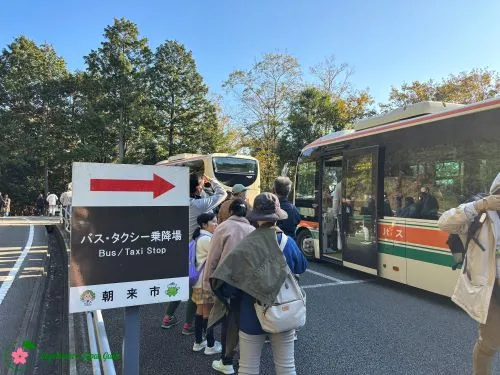
- Seasonal Schedules: Keep in mind that the bus schedule changes with the seasons, with extra early-morning runs added during the peak autumn unkai months to accommodate sunrise hikers.
As we hiked from the closest bus stop to Takeda Castle, we thought the feudal lords in the past must have had a hard time living in the castle. The climb was tiring for us who don’t exercise much! Then we realized from reading the castle’s pamphlet that they had a separate residence close to JR Takeda Station. The lords only moved to the castle during wars.
Tip: You can also utilize Zendan Bus’s sightseeing bus Tajimawaru Premium-gō (たじまわるプレミアム号) to get to Yamajiro no Sato (山城の郷) from JR Toyooka Station or Kinosaki Onsen. Refer to the How to Get to Izushi in our Izushi article for more information.
Tenkū Bus (天空バス) Timetable and Bus Fare
Please refer to Zentan Bus Website for Tenkū Bus timetable. As only the Japanese version is only available, please use the bus stops’ Japanese name to read it.
The table below shows how much it would cost you for a one-way trip.
| Machinaka Car Park(まちなか駐車場) | Takeda Castle Ruins(竹田城跡) | Yamajiro no Sato(山城の郷) | JR Takeda Station(竹田駅) | |
| JR Takeda Station (竹田駅) | 200 | 300 | 240 | — |
| Yamajiro no Sato (山城の郷) | 240 | 200 | — | 240 |
| Takeda Castle Ruins (竹田城跡) | 250 | — | 200 | 300 |
| Machinaka Car Park (まちなか駐車場) | — | 250 | 240 | 200 |
Tip: For the bus fare, if you plan to take a return trip from JR Takeda Station, it is worth getting the 1-Day Free Ticket (Ichinichi Furī Jōsha-ken, 1日フリー乗車券) for 500 yen (250 yen for children) from the bus driver.
Important:
☛ Please note that the bus has a capacity of 30 people. Once that capacity is reached, you will have to wait to catch the next bus. We recommend that you arrive at the bus stop early if you are traveling during the peak season (i.e., autumn).
☛ You have to pay the bus fare in cash.
Takeda Castle Ruins Hike
If you love hiking, there are 4 hiking trails that you can take to get to Takeda Castle. Depending on your fitness level and how much time you have, two primary walking tracks lead directly up to the ancient stone foundations.
Refer to the Takeda Castle Hiking Map, which marks each hiking trail. From the mountain gate, it will be a short walk before you reach the ticket gate, and from there, it is another climb to Takeda Castle.
1. The Nishi Mountain (The Main Trail)
The Nishi Mountain Trail (西登山道) is the most popular, well-maintained, and family-friendly path up to the ruins. It follows the historic main entrance route used by samurai centuries ago.
- Starting Point: This trail officially begins near the Yamajiro no Sato rest area. If you take the Tenku Bus or a taxi from Takeda Station, this is where you will be dropped off.
- Trail Conditions: The path is fully paved, wide, and gently graded. It features moderate inclines and gentle slopes rather than exhausting vertical climbs, making it highly accessible even if you aren’t an experienced hiker.
- Duration: From the mid-mountain bus drop-off point, it takes roughly 20 to 25 minutes of continuous uphill walking to reach the main castle ticket gate.
- Best For: Travelers carrying heavy camera gear, families with children, or anyone looking for a smooth, predictable walk to the top.
2. The Minami Mountain Trail (The Long & Scenic Route)
If you want to spend more time immersing yourself in the surrounding mountain landscapes and prefer a trail that avoids the steep, packed stairwells of the station routes, the Minami Mountain Trail (南登山道) is your best option.
- Starting Point: This trail approaches the castle grounds from the southern ridge of the mountain. It requires a slightly longer walk from the town area to reach the official trailhead.
- Trail Conditions: This is a much longer, winding trail. While it is less steep and step-by-step than the Shrine or Station Behind routes, it requires sustained physical effort over a longer distance.
- Duration: Expect roughly 60 minutes of steady walking to complete the climb via this route.
- Important Gate Closure Note: Keep in mind that due to security and safety regulations, the castle’s Minami gate closes 30 minutes earlier than the main ticket gates across all seasons (usually at 4:00 PM during peak months). Make sure you budget your descent or entry time accordingly so you don’t find yourself locked out.
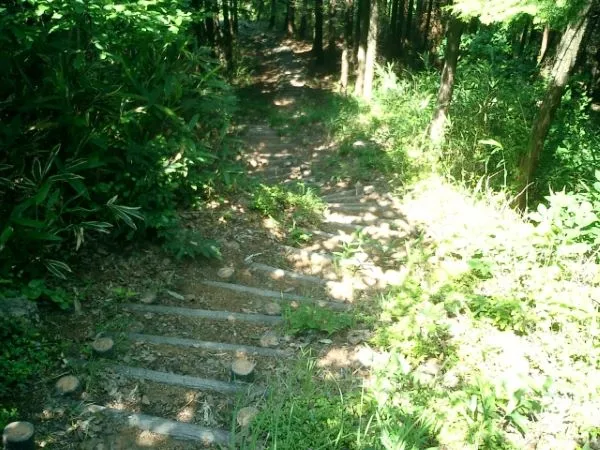

3. The Station Behind Trail (The Short, Steep Route)
If you prefer a traditional mountain hike or want to skip the bus entirely and start walking directly from your train carriage, the Station Behind Trail (駅裏登山道 / Ekiura Tozandō) is a highly popular option.
- Starting Point: As the name suggests, this trail begins directly behind the platforms of JR Takeda Station. You will see clear signage directing you to the trailhead right as you exit the station building.
- Trail Conditions: This is an authentic dirt mountain trail. It is heavily forested, rustic, and consists almost entirely of steep, uneven stone steps and exposed tree roots. It can become incredibly slick and muddy immediately following a morning fog or autumn rain.
- Duration: Because it cuts straight up the mountainside rather than winding around it, the hike takes about 30 to 40 minutes from the station to the summit gate.
- Best For: Hikers looking for a physical workout, those wanting to experience the mountain’s natural forest, or sunrise visitors who arrive before the first Tenku Bus begins operating for the day.
4. The Hyomai-Jinjya Shrine Mountain Trail (The Historic Approach)
The Hyomai-Jinjya Shrine Mountain Trail (表米神社登山道) is an exceptional route for travelers who want to blend cultural sightseeing with a rigorous morning climb.
- Starting Point: From JR Takeda Station, walk about 8 minutes down Teramachi-dori Street to reach Hyomai Shrine. Pass directly through the shrine grounds (which are famous for featuring a rare, historic sumo wrestling ring), pass through the designated animal protection fence gate, and you will find the trailhead on your left.
- Trail Conditions: This route is notoriously steep and physically demanding. It consists of a relentless, continuous flight of rough mountain stairs cutting straight up a sharp incline. It will heavily test your knees and lower back.
- Duration: It takes approximately 40 minutes of steady climbing to connect from the shrine grounds to the main paved pathway near the upper mountain parking lot.
- Best For: Travelers who want to visit a scenic shrine before their hike, and those looking for an intense leg workout up a historical path. (Sneakers or hiking boots are mandatory here!)
Safety & Trail Etiquette Note: Whichever route you choose, there are no trash cans along the mountain trails or inside the ruins. You must carry all of your waste back down the mountain with you. Additionally, because the ancient stone walls lack modern safety railings, stay firmly on the designated viewing paths at the top.
When You Are at Takeda Castle Ruins
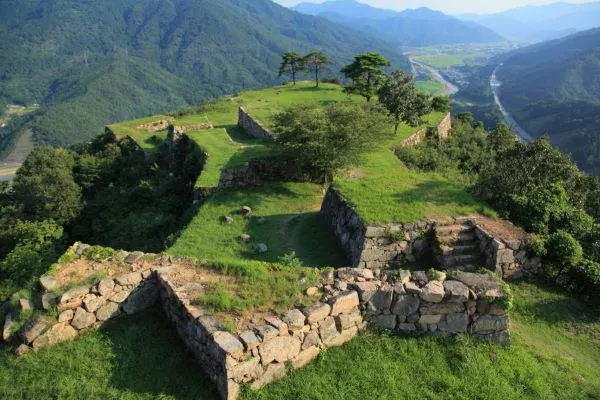
As Taketa Castle is located at the top of a mountain, with strong winds occasionally, please follow the planned one-way only route after you pass the ticket booth. Simple fences mark the promenade at Takeda Castle Ruins. Please don’t go beyond the fence, as you risk being blown away by the strong winds in the area.
A couple of benches are placed on the ground of the castle ruins. The view of the surrounding mountain ranges and Takeda Town from the benches is stunning.
As you might be hungry, remember to bring snacks, drinks, or even a bento box for a picnic! Do remember to dispose of all rubbish responsibly.
The Structure of Takeda Castle Ruins
Because Takeda Castle’s buildings are gone, what remains for us to examine is the castle’s stone foundation. The castle’s stone foundation was made in two styles: Anozumi (穴太積) and Sangizumi (算木積). The Anozumi style was used by the stone-masonry group called Anō-shu (穴太衆) in Sakamoto, Shiga Prefecture. The style was also employed to build famous castles in the Kansai region, such as Himeji Castle (姫路城) and Azuchi Castle (安土城).
Sangizumi is another technique applied to strengthen the stone wall’s stability. You can see the Sangizumi at Takeda Castle’s castle keep (Tenshu, 天守), the inner quarter (Honmaru,本丸), and Kita Senjou (北千畳).
The Dos and Don’ts at Takeda Castle Ruins
- No fire is allowed. This includes smoking cigarettes
- No camping
- Do not remove or keep any objects from the ruins
- No graffiti and climbing on stone walls
- No littering
- High heels and walking sticks are forbidden on the castle grounds, as they may damage cultural property
- Wear suitable footwear for hiking
Cherry Blossom vs. Autumn Foliage Seasons at Takeda Castle Ruins
While the Takeda Castle Ruins are beautiful year-round, they experience two major seasonal transformations that draw visitors from across Japan. Depending on whether you want to witness the dramatic misty atmosphere of late autumn or the soft, romantic pastel colors of spring, here is how the two peak seasons compare:
| Feature | Autumn Season (Sept – Dec) | Spring Season (Mar – Apr) |
| Main Draw | The legendary “Sea of Clouds” (unkai) | 300+ blooming Cherry Blossoms (sakura) |
| Scenery Colors | Deep reds, brilliant oranges, and heavy white valley fog | Pastel pinks, soft whites, and fresh spring greens |
| Best Viewing Time | Dawn until 8 am (for the fog effect) | All day (plus stunning nighttime illuminations) |
| Weather/Temperature | Freezing cold mornings; heavy layers and gloves are required | Mild, comfortable hiking weather with crisp afternoon breezes |
Autumn Foliage: The Peak “Sea of Clouds” Window
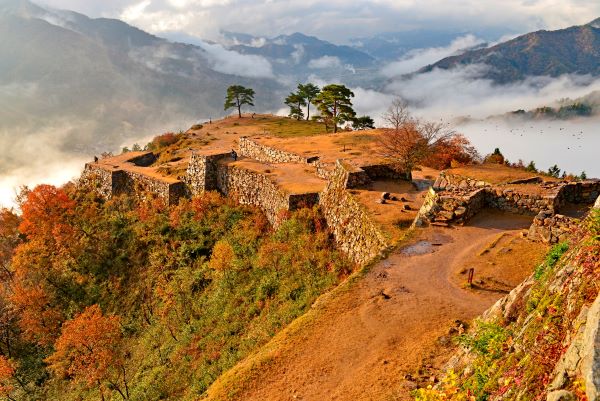
For the vast majority of travelers, autumn is the definitive time to visit Takeda Castle because you can capture both the “Castle in the Sky” phenomenon and the stunning seasonal colors in one go.
Tip: Be at the observatories in the mountains nearby at dawn for a stunning view of the castle in the sky. As soon as the cloud/fog clears up, you head to the castle for a panoramic view of the surrounding nature!
- The Timeline:
- Peak from mid to late November for autumn foliage
- Late September to early December (with late November to early December being the absolute peak months) for Sea of Clouds
- The Experience: This is the only time of year when the temperature drops sharply enough between day and night to generate the legendary unkai (sea of clouds). The mountains surrounding the Maruyama River valley light up with rich hues of deep amber, bright orange, and fiery red.
- The Atmosphere: The vibe is mystical, crisp, and energetic. Hundreds of photographers and hikers gather in the dark before dawn, wrapped in heavy winter jackets, waiting for the sun to break over the misty horizon.
Cherry Blossom Season: The Pastel Castle in the Sky
Takeda Castle Ruins is also a relatively hidden cherry blossom spot. If you plan to visit Takeda Castle Ruins in spring, don’t forget to drop by Ritsuunkyō. Although you might not be able to see the castle floating in the sky, you will be amazed by the beauty of the cherry blossoms.
If you visit in the spring, you will experience a completely different, softer side of the mountain fortress.
Bonus Spring Tip: During peak cherry blossom season, the local tourism board often runs special evening illumination events from 6 pm to 8 pm. The stone walls and cherry trees are lit up with spotlights after dark, creating a breathtaking, romantic night view that you can see right from the town below.
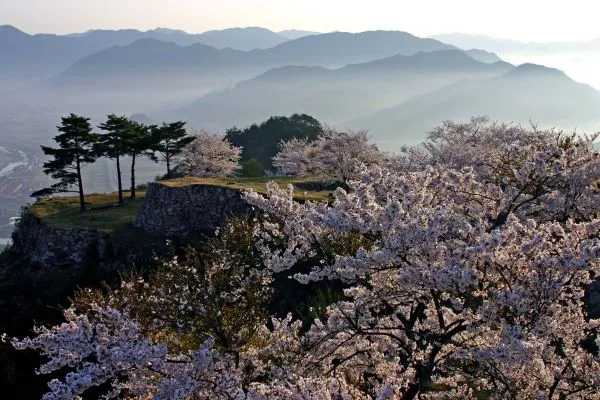
- The Timeline: Late March to early April (the exact peak shifts slightly each year depending on local temperatures).
- The Experience: Around 300 cherry blossom trees (sakura), including majestic Yamazakura (wild mountain cherries) and Yoshino cherry trees, erupt into bloom all along the ancient stone walls and pathways.
- The Atmosphere: The scene looks like a classical Japanese painting. Instead of floating in fog, the ancient, rustic grey stone walls are framed by clouds of soft pink blossoms. Ritsuunkyō (the opposite mountain ridge) is especially famous during this time, as its slopes turn into a pink forest looking across at the castle ruins.
Takeda Castle Ruins’ Admission Fee and Opening Hours
- The admission fee is 500 yen for adults and free for elementary school students and below
- Remember to bring cash with you
- Most people spend around 30 to 60 minutes at Takeda Castle Ruins, so plan your visit according to the following opening hours. The last admission is 30 minutes before the closing time (except in December, it closes for entry at 1 pm)
- From March to May: 8 am to 5 pm
- From June to August: 5 am to 5 pm
- From September to November: 5 am to 5 pm
- From December to January 3: 10 am to 3 pm
In January and February, the castle ruins are usually covered by heavy snowfalls. Entry is forbidden during this period of the year for safety reasons.
Where to Get the Best View: Ritsuunkyō Viewpoint
If you want to capture or experience the iconic, postcard-perfect view of the Takeda Castle Ruins floating completely isolated above a thick blanket of morning fog, you need to leave the castle mountain entirely. The famous vista is mostly photographed from Ritsuunkyō (立雲峡), a lush gorge located halfway up Mount Asago (朝来山) on the exact opposite side of the valley. Clambering up this mountainside is highly recommended, as it gives you a complete panoramic perspective of the “Castle in the Sky” phenomenon that you cannot experience while standing inside the ruins themselves.
How to Access the Ritsuunkyō Trailhead
Because sunrise is the prime viewing window, planning your early-morning transport to the opposite ridge is vital.
- By Car: This is by far the most convenient option for early-morning photography. You can drive directly up to the designated Ritsuunkyō Parking Lot (立雲峡駐車場) at the base of the trail. Space is limited during the peak autumn months, so arriving well before dawn is highly advised.
- By Taxi: If you are staying in a local guesthouse near Takeda Station, you can pre-arrange a local taxi to drop you off at the Ritsuunkyō parking area.
- On Foot: If you are feeling energetic, you can walk from Takeda Station to the Ritsuunkyō parking lot trailhead. It is a roughly 45-minute walk along local roads before you even begin the actual mountain trail ascent.
The Observation Decks at Ritsuunkyō & Hiking Times
From the parking lot, a steep, rustic mountain path winds up through the forest, passing 3 distinct numbered observation decks. The higher you climb, the more dramatic the perspective becomes. The best scenery is from Ritsuunkyō First Observatory Deck (立雲峡第一展望台).

- Observation Deck 3 (Lower Deck): A relatively easy 5 to 10-minute walk from the parking lot. It offers a clear view, but you are still quite low down relative to the castle ruins across the valley.
- Observation Deck 2 (Middle Deck): Approximately a 15 to 20-minute hike up from the base. This deck is surrounded by stunning cherry blossom trees, making it an incredibly popular vantage point during the spring blooming season.
- Around 10 minutes from No. 3 Observatory Deck
- Observation Deck 1 (Top Deck): The absolute premier viewing spot. It requires a rigorous 30 to 40-minute steep uphill trek from the parking lot. This is where professional photographers line up their tripods to catch the sunrise unkai (sea of clouds).
- Around a 70 – 90 minutes hike from JR Takeda Station
- Around 25 minutes from No. 2 Observatory Deck
Be aware that if you choose to station at Observatory Deck 2 or 3, you may not be able to see much as you might be inside the clouds.
Important:
☛ The only toilet is in the car park
☛ If you plan to hike before dawn, the trail from 2 Observatory Deck 2 to Observatory Deck 1 can be confusing, as it splits a few times. So remember to take a photo of the map in the car park.
Quick Visitor Information for Ritsuunkyō
- Environmental Fee: Visitors are asked to pay a small 300 yen environmental cooperation fee at the trailhead entrance to help maintain the mountain paths and observation decks.
- Trail Conditions: The path is an authentic, rustic mountain trail made of dirt, wood ties, and stone steps. It is completely unlit, meaning you must bring a reliable headlamp or flashlight if you are hiking up in the pitch black before sunrise.
- Best Season: While autumn is peak season for the sea of clouds, Ritsuunkyō is also legendary in the spring (typically early April) when thousands of mountain cherry blossoms (yamazakura) bloom along the slopes, framing the distant castle walls in soft pink.
An Alternative to Ritsuunkyō to See the Castle in the Sky: Fujiwatōge (藤和峠)
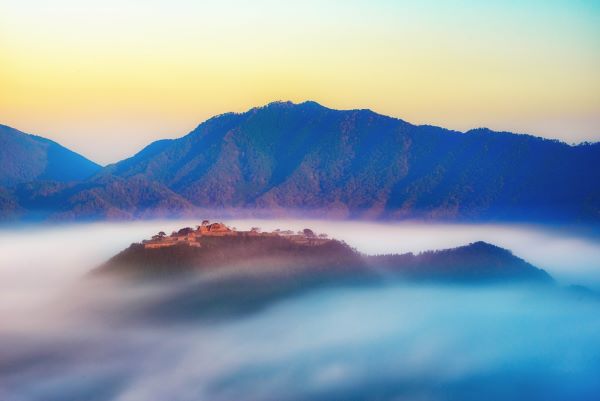
If you don’t want to hike your way to observatories and only want a photo of the Takeda Castle Ruins with the stunning sunrise, then Fujiwatōge is the place you want to be in!
Located west of Takeda Castle Ruins and just left of the small car park, there is a spot that fits around ten people, allowing you to capture the most astonishing views of the castle as the sun rises over the mountains.
Given that Fujiwatōge is less well-known to tourists, you don’t need to worry about the place being flooded with people or having to fight over parking spaces!
Again, to reach Fujiwatōge, you will have to either drive or take a taxi.
What to Pack: Essential Gear for the Hike
Because a trip to Takeda Castle or the Ritsuunkyō Viewpoint to see the sea of clouds phenomenon usually involves hiking in the dark before dawn, standard tourist attire won’t cut it. To ensure a safe, warm, and comfortable climb, you should pack these essentials in your daypack:
- A Reliable Headlamp or Flashlight: This is the absolute most important item if you are hiking before sunrise. The mountain trails, especially the Station Behind Trail and the paths up Ritsuunkyō, are completely unlit, heavily forested, and full of tripping hazards, such as exposed tree roots and uneven stone steps. Using your smartphone’s flashlight in the cold will drain your battery quickly.
- Sturdy Footwear with Good Grip: Leave the sandals and casual slip-on shoes at your hotel. The mountain trails can become incredibly slick and muddy due to heavy morning dew, valley fog, or recent rain. Wear proper hiking shoes, trail runners, or sneakers with excellent traction to prevent slipping on the steep inclines.
- Check out Top 3 Comfortable Walking Shoes for Overseas Travel article for recommendations if you need a new pair of hiking shoes!
- Layered Clothing (The Three-Layer System): Temperatures drop significantly overnight in the Asago valley. While waiting at the viewpoints before sunrise, you will feel freezing cold. However, once you start climbing those steep mountain stairs, you will warm up and sweat.
- Base layer: A moisture-wicking shirt.
- Mid-layer: A warm fleece or sweater.
- Outer layer: A windproof and waterproof jacket to protect against the damp morning mist.
- Warm Accessories (Gloves and Beanies): Autumn mornings can dip easily into the freezing range. A lightweight pair of gloves is especially useful, as you may want to hold onto rustic wooden handrails or trees for balance along the steeper sections of the dirt trails.
- Hydration and Fuel: There are no convenience stores, trash cans, or water fountains once you pass the trailheads. Bring a full water bottle and pack some high-energy vegetarian snacks (like nuts, soy bars, or rice crackers) to keep your energy up during the climb.
- Cash (100-Yen Coins): Keep plenty of loose change ready. You will need coins for the automated ticket machines at the castle ruins gate, the environmental cooperation fee at Ritsuunkyō, local vending machines at the bus stops, or the local community shuttle bus.
Pro-Tip for Photographers: The thick morning fog that creates the beautiful “Sea of Clouds” also carries heavy moisture. If you are bringing expensive camera gear or multiple lenses, make sure to pack a waterproof rain cover for your backpack and a microfiber cloth to wipe condensation off your camera lens while waiting for the sun to rise.
Vegetarian & Vegan Dining Tips Around Takeda Castle
Visiting remote mountain areas in Japan can be intimidating when you follow a plant-based lifestyle. Because Takeda Castle is situated in rural Asago City, Hyogo Prefecture, finding dedicated vegan or vegetarian restaurants in the immediate vicinity of the ruins or Takeda Station is incredibly difficult. Most local rest stops and souvenir hubs, like Yamajiro no Sato, primarily feature dishes with meat bases or fish-derived dashi (bonito broth).
However, with a little strategic planning, you won’t have to hike on an empty stomach. Use this survival guide to seamlessly navigate your trip.
Quick Summary: Plant-Based Checklist for Takeda Castle
- Dining Availability: None near the castle ruins; limited options at the station base.
- Best Practice: Buy a bento box or stock up on vegan snacks at a convenience store near a major station before boarding the train to Takeda.
- Hydration Tip: Bring your own water flask or keep coins ready for the vending machines at the mountain bus stops; there are no convenience stores once you begin the trail hikes.
Crucial Warning for Plant-Based Diners: Standard Japanese noodle dishes (udon and soba) or vegetable sides at traditional countryside stops almost always use a fish-based dashi stock. Always verify ingredients before ordering.
1. The Power-Up Strategy: Pack Your Bento Before You Leave
Because sit-down vegetarian options are virtually non-existent around the base of the mountain, the absolute best strategy is to buy a plant-based meal at your major transit starting point.
- Leaving from Kyoto or Osaka? Swing by the major station basements (depachika) or dedicated health food hubs to grab a macrobiotic or vegetable-forward bento box.
- If you are based in Kyoto, Gen offers vegan bento boxes.
- The Convenience Store (Conbini) Backup: If you are grabbing breakfast or lunch on the go from a Lawson, 7-Eleven, or FamilyMart near your starting station, look for these safe, accidentally vegan/vegetarian fuel options:
- Umeboshi (Sour Pickled Plum) Onigiri: Double-check the ingredients, but plain salted plum rice triangles are a reliable staple.
- Kombu (Kelp) Onigiri: Be careful here—some brands add bonito flakes to the seasoning. Check the label or scan it with a translation app.
- Soyjoy Bars: Specifically check for the fruit-and-soy flavours (like strawberry or blueberry) that are dairy-free.
- Refer to Is It Vegan’s Website for a list of vegan food you can get at convenience stores.
2. Strategic Pit Stops: Himeji and Kobe
If you are taking the JR Bantan Line to Takeda via Himeji Station, use the transfer window to eat a hearty meal or buy supplies.
- Himeji Castle Stopover: If you are pairing Takeda with Himeji, head to Cafe Kotonaki right near Himeji Castle. It is a fully vegan café that serves gorgeous, locally sourced seasonal lunch plates and plant-based muffins that pack perfectly into a backpack.
- Refer to our Guide to Himeji’s Vegan-Friendly Restaurants for more vegan-friendly spots in Himeji.
- Kobe Stopover: If your base is further south in Kobe, look out for Modernark Pharm Café in the Sannomiya area for an exceptional selection of take-out vegetarian savory items and treats.
- Refer to our Guide to Kobe’s Vegan-Friendly Restaurants for more vegan-friendly spots in Kobe.
3. Essential Phrases for Local Ordering
If you decide to sit down at a traditional Japanese diner near Takeda Station, simply saying “I am vegetarian” can sometimes be misunderstood, as some local cooks may assume you still eat fish broth or seafood. To help you order with absolute confidence anywhere in Japan, we have compiled a comprehensive breakdown of Essential Japanese Travel Phrases for Vegetarians and Vegans. You can save that guide to your phone for your trip, but for your day hike around Takeda Castle, here are the most critical phrases to use:
- English: “I am vegan. I do not eat meat, fish, eggs, or dairy.”
- Japanese: ビーガンです。肉・魚・卵・乳製品は食べません。
- Romaji: Bīgan desu. Niku, sakana, tamago, nyūseihin wa tabemasen.
- English: “Is animal-based stock (dashi) used in this?”
- Japanese: 出汁に動物性のものは使われていますか?
- Romaji: Dashi ni dōbutsusei no mono wa tsukawarete imasu ka?
Is Takeda Castle Worth Visiting?
The short answer is: Absolutely, yes. The Takeda Castle Ruins offer one of the most uniquely rewarding and visually spectacular experiences in all of Japan. Unlike fully reconstructed modern castles made of concrete, the ancient stone foundations at Takeda retain an untouched, atmospheric mystique that feels deeply connected to Japan’s warring states history. Standing atop the misty summit at sunrise is a bucket-list moment that genuinely rivals the country’s most famous landmarks.
However, to ensure your trip goes smoothly without any unexpected surprises, keep these final travel tips in mind before you head out:
- Manage Your Visual Expectations: The iconic “Sea of Clouds” floating phenomenon is a natural weather event and is never guaranteed. If you climb the mountain on a windy or overcast day, you will still see spectacular, panoramic mountain valley views, but you might not get the thick, Ghibli-style mist. Check the weather forecasts meticulously the night before.
- Watch the Seasonal Closures: Do not plan a trip in the dead of winter. The mountain paths and castle ruins are completely closed to all visitors from January 4 through the end of February due to dangerous ice and heavy snow accumulation on the steep stone steps.
- Combine with Neighboring Gems: Because exploring the ruins and viewpoints takes around half a day, consider turning your journey into a full-day itinerary. You can easily pair your trip with a visit to the historic Ikuno Silver Mine nearby, or head north to explore the traditional samurai town and castle ruins of Izushi.
- The Final Plant-Based Reminder: Remember that this is a highly rural pocket of Hyogo Prefecture. Eat a hearty meal before you depart your main transit hub, pack plenty of convenience store pocket snacks in your bag, and keep your phrase guide handy when ordering at the small local diners around the station.
With a little bit of physical effort and the right weather conditions, your journey to Japan’s “Castle in the Sky” will undoubtedly be an unforgettable highlight of your travels.
Loved the “Castle in the Sky” experience? Check Out Bitchū Matsuyama Castle: Another Castle in the Sky With Less Hiking
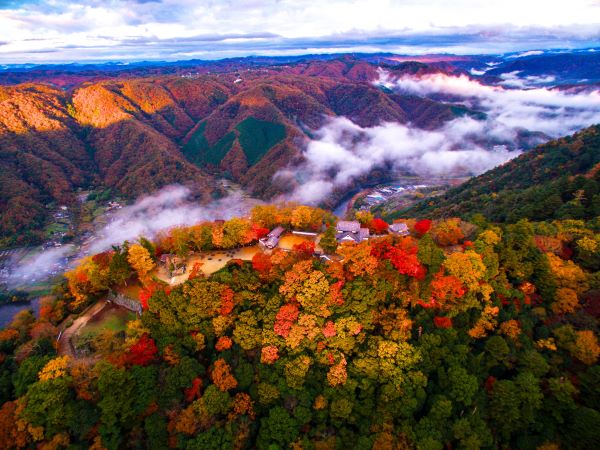
If you are fascinated by Japan’s floating fortresses, Takeda Castle is not the only one! If you travel slightly further west into Okayama Prefecture, you can visit the incredible Bitchu Matsuyama Castle. While Takeda features only surviving stone foundations, Bitchu Matsuyama holds the title of the only original mountain castle (yamajiro) in Japan, with its 17th-century wooden keep still fully intact.
Check out our comprehensive travel guide on How to Visit Bitchu Matsuyama Castle, Japan’s Other Magnificent Castle Floating in the Sky, to plan your next peak-top adventure.
Explore More Around Asago City
While Takeda Castle is undoubtedly the crown jewel of the region, the surrounding area is packed with hidden cultural gems, historic industrial ruins, and stunning nature trails that most international tourists completely miss.
To make the absolute most of your trip to this beautiful part of Hyogo Prefecture, take a look at our curated itinerary detailing the Top 10 Places to Visit in Asago City to discover the best local shrines, mountain viewpoints, and regional attractions nearby.