

Welcome to Naha (那覇), the vibrant, sub-tropical capital of Okinawa! While many travelers use Naha merely as a stepping stone to Okinawa’s northern beaches or outlying islands, this historic port city deserves a top spot on your itinerary. From the majestic ruins of Shurijo Castle and the bustling alleys of Kokusai-dori to hidden pottery districts and lush Chinese gardens, Naha seamlessly blends ancient Ryukyu Kingdom heritage with modern Japanese charm. Whether you are a history buff, a souvenir shopper, or a plant-based foodie looking for the city’s best vegan-friendly eateries, this comprehensive Naha City guide has you covered. Drawing from first-hand travel experience, we have grouped Naha’s absolute best attractions by interest to help you maximize your time in Okinawa’s captivating capital.
To help you plan your visit to Naha, we have compiled a list of Naha tourist attractions to consider. You can easily build a 2-day itinerary from the spots below (=゚ω゚)ノ.
The Top Things to Do in Naha
🛍️ Best Shopping & Local Markets in Naha
Perfect for travelers looking to shop, hunt for souvenirs, or experience local street life.
- Kokusai-dōri Street (国際通り) – Naha’s main shopping and entertainment strip.
- Heiwa-dōri Street (平和通り) – A retro, covered arcade stretching off Kokusai-dōri, filled with local shops.
- Sakaemachi Arcade (栄町市場) – A nostalgic daytime market that transforms into a vibrant local nightlife/izakaya alley after dark.
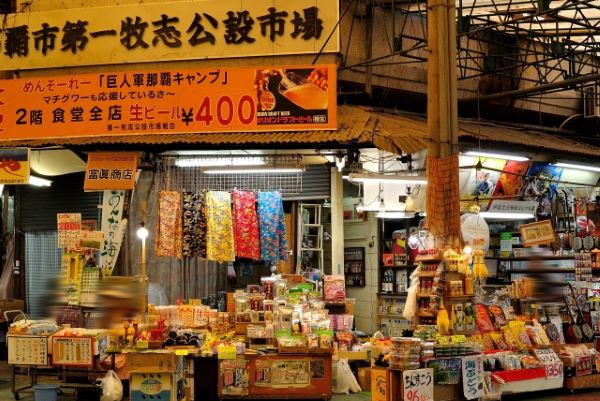
- First Makishi Public Market (第一牧志公設市場) – The famous “kitchen of Okinawa,” great for seeing local ingredients and fresh seafood.
- T Galleria Okinawa (T ギャラリア 沖縄) – A massive, luxury duty-free shopping mall located in the Omoromachi district.
- Okashigoten (御菓子御殿) – The iconic souvenir shop instantly recognizable by its castle-like facade, famous for purple sweet potato (Beni-imo) tarts.
🏯 Royal Ryukyu History & Cultural Sites
For travelers interested in Okinawa’s unique history as the independent Ryukyu Kingdom.
- Shurijō Castle Park (首里城公園) – The historic heart of the Ryukyu Kingdom, featuring the iconic castle grounds and its ongoing, historic reconstruction.
- Shikinaen Garden (識名園) – The beautiful, sprawling secondary residence of the Ryukyu kings, featuring a blend of Chinese and Japanese garden architecture.
- Binnuutaki (弁之御嶽) – A sacred, historic Ryukyuan place of worship (utaki) located near Shurijo Castle.
🏮 Traditional Arts, Crafts, & Cultural Experiences
Best for hands-on travelers wanting to experience or take home authentic Okinawan craftsmanship.
- Tsuboya Yachimun Street (壺屋やちむん通り) – Naha’s historic pottery district, lined with beautiful stone walls, artisan shops, and cafes.
- Ryūkyū Outfit Studio Chura Bijin (琉装スタジオ ちゅら美人) – A cultural studio where visitors can try on and take photos in traditional Ryukyuan dress.
- Shuri Ryūsen (首里琉染) – A craft studio famous for Sango-zome (coral dyeing), where you can use real fossilized coral to dye textiles.
🕊️ Shrines, Temples, & Spiritual Spots
Peaceful stops showcasing Okinawa’s unique spiritual blend of Japanese Shintoism and local ancestral worship.
- Naminoue Shrine (波上宮) – Naha’s most famous Shinto shrine, strikingly perched on a cliff overlooking the ocean.
- Okinogū Shrine (沖宮) – A historic, sacred Shinto shrine located within Onoyama Park.
- Shuri Kannon-dō (首里観音堂) – A peaceful Buddhist temple in the Shuri district, known for its beautiful architecture and a famous clever dog that “prays” with visitors.
🎨 Museums, Entertainment, & Modern Culture
Great for rainy days, indoor entertainment, and deep dives into local art and modern history.
- Okinawa Prefectural Museum and Art Museum (沖縄県立博物館・美術館 (おきみゅー) – A massive museum shaped like a Ryukyuan fortress, offering a deep dive into Okinawa’s natural history, culture, and art.
- Sakurazaka Theater (桜坂劇場) – An indie cultural hub featuring art-house films, a trendy café, a bookshop, and local artisan goods.
🌿 Parks, Nature, & Scenic Gardens
For travelers wanting to escape the concrete and enjoy Naha’s sub-tropical greenery and scenery.
- Fukushūen Garden (福州園) – A breathtaking, walled Chinese garden in central Naha, symbolizing the historic ties between Okinawa and Fuzhou, China.
- Naminoue Beach (波の上ビーチ) – Naha City’s only swimming beach, located right below Naminoue Shrine.
- Sueyoshi Park (末吉公園) – A lush, almost jungle-like nature park that feels miles away from the city, featuring historic temple ruins.
- Lake Man (Manko, 漫湖) – A protected wetland ecosystem famous for its sprawling mangrove forests, mudflats, and incredible birdwatching.
Tips:
☛ If you would like to explore Naha in a traditional Japanese Kimono, refer to HERE. Wearing the traditional Ryukyu costume is another way to explore Naha in style.
☛ Refer to HERE to book a pick-up and drop-off service from Naha Airport. You can also book a luggage delivery service HERE between Naha Airport and your hotel.
☛ You can explore Naha with an electric-assisted bicycle. Refer to HERE to book.
☛ We have a section on Where to Find Vegan and Vegetarian-Friendly Spots at the end of the article.
Enjoy Naha With a Guided Tour
If you prefer a guide to introduce you to the charms of Naha and the surrounding destinations, how about joining one of the following tours?
- Okinawa Hip Hop Bus Tour: Okinawa Churaumi Aquarium and More
- Naha Full-Day Private Tour with Government Licensed Guide
How to Get Around Naha City
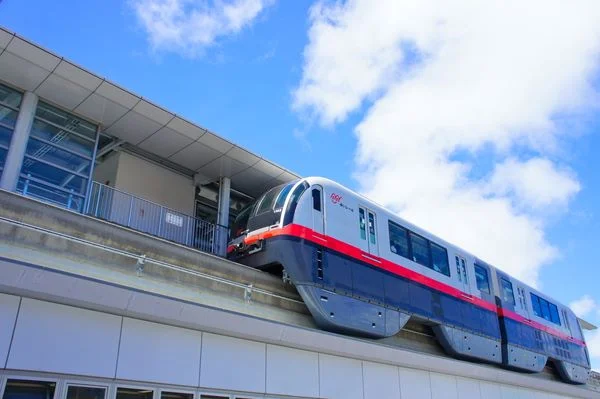
If you only plan to stay in the city center, instead of renting a car, taking the Okinawa Urban Monorail, commonly known as Yui Rail (ゆいレール), is recommended. Not only would you not be stuck in traffic, but if you purchase the 1-Day or 2-Day Free Pass, you will also get unlimited rides and a discount on the admission fee to many attractions in Naha City!
For more information about Yui Rail, please refer to the Official Website.
Kokusai-dōri Street (国際通り): Naha’s Main Shopping and Entertainment Strip
Just a 15-minute drive from Naha Airport, Kokusai-dōri is the main street of Naha. No trip to Okinawa’s capital is complete without experiencing its beating heart: Kokusai-dori Street. Stretching for roughly 1.6 kilometers through the center of Naha, this legendary “Miracle Mile” is a sensory wonderland packed with colorful souvenir shops, lively street performers, and incredible street food.
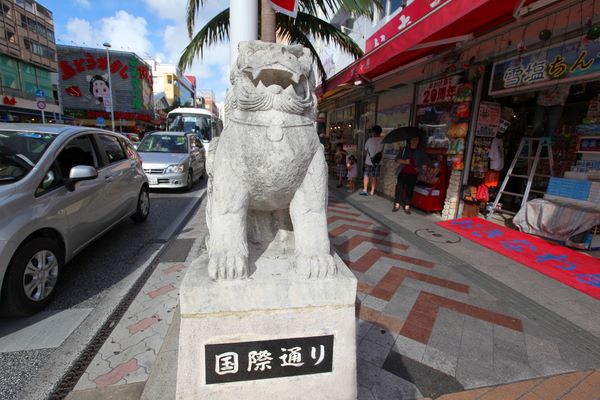
However, because it is the city’s primary tourist hub, finding authentic experiences and navigating the food stalls if you have dietary restrictions requires a bit of insider knowledge. To help you skip the tourist traps and find the absolute best hidden gems, sweet treats, and cultural stops along the main drag, check out our comprehensive Comprehensive Guide to Naha’s Must-Visit Kokusai-dori Street.
Naha’s Historic Markets & Covered Arcades
If you want to step off the main tourist drag and experience where the locals actually shop, eat, and socialize, Naha’s network of traditional covered alleys is where the real magic happens. Branching right off Kokusai-dori, these nostalgic arcades offer a fascinating glimpse into old-school Okinawa. From the bustling, multi-story energy of the First Makishi Public Market to the retro, lantern-lit drinking alleys of Sakaemachi, navigating these maze-like streets is an absolute must-do. To help you weave through the crowds and find the best local crafts, read our complete companion piece: The Best Markets and Arcades to Visit in Naha.
Okashigoten (御菓子御殿 国際通り松尾店): The Iconic Souvenir Shop
A great spot to experience Okinawa is Okashigoten Kokusai-dōri Matsuo Shop. You will definitely be thrilled by the confectionery shop’s appearance and the number of attractively packaged, delicious snacks sold there. But before purchasing them, just remember to ask for samples so you know what to get for your family and friends!
Many items for sale are also served at the café in Okashigoten Matsuo Shop, making it a pleasant place for coffee sipping and pastries. If you are just around Kokusai-dōri during lunch hours, order a plate of their tofu burger and enjoy how the Okinawans turn plain tofu into a mouthwatering meal!
Also, remember to check out the sweet factory at the back of the store!
Tip: Make sure you try the Beni-Imo-related sweets (purple sweet potato), such as the Beni-Imo Tart or Beni-Ino soft serve.
Okashigoten Kokusai-dōri Matsuo Shop’s Business Hours and Access Information
- Okashigoten Kokusai-dōri Matsuo Shop is open from 9 am to 10 pm.
- The cafe/restaurant on the second floor is open from 11 am to 6 pm.
- The last order is taken at 5:30 pm.
- From Yui Rail’s Prefectural Office Station (県庁前駅), it is less than a 5-minute walk.
Sakurazaka Theater (桜坂劇場)
The area between Kokusai-dōri Street and Makishi Public Market (refer to below) is called Sakurazawa. While Sakurazawa is probably known for its bars and Izawaya, the landmark has to be Sakurazawa Theater.
The theater, opened in 1953, has become a cultural hub in Okinawa. In addition to the movies and live performances, Sakurazawa Theater is also a place to discover local art cultures. From picture books to craftwork to pottery, you will be amazed by the rich artistic culture of Fukura-Sha (ふくら舎) (located on the first and second floors)!
The theater’s café, Sangoza Kitchen (さんご座キッチン), is a trendy spot that retains an Okinawan retro atmosphere. Whether you are at Sakurazawa Theater for a movie session or not, Sangoza Kitchen is a place for you to enjoy some relaxing time out of your busy itinerary. Plus, the drinks are served in gorgeous, locally made pottery!
How to Get to Sakurazaka Theater
Sakurazaka Theater is around a 5-minute walk from Yui Rail’s Makishi Station (牧志駅).
Tip: Show your Yui Rail 1-Day Pass for a discount on the movie ticket. Furthermore, Friday is Sakurazaka Theater Service Day. You can watch a movie for just 1,300 yen instead of 1,900 yen.
Yogi Park (與儀公園)
For cherry blossom hunting, Yogi Park, a popular spot in Naha, is around a 15-minute walk from Kokusai-dōri Street. The more than 400 cherry trees in the park usually blossom from mid-February.

Yogi Park is around a 10 to 15-minute walk from Yui Rail’s Asato Station (安里駅).
Ryūkyū Outfit Studio Chura Bijin (琉装スタジオ ちゅら美人)
If you love or want to try on traditional clothing, Okinawa has its own costume, which you can wear before you explore the beauty of Naha. One of the few kimono rental shops we recommend is Ryūkyū Outfit Stadio Chura Bijin. The studio is relatively close to Kokusai-dōri Street, and the staff are friendly, patient, and can speak English. Plus, their customer service is top-notch!
All their packages are reasonably priced. The packages usually include a simple hair setting, too! They also have an excellent range of Ryūkyū traditional outfits and standard Japanese kimonos. So whether you want casual or formal attire, they can cater to all your needs!
If that all sounds exciting, make a reservation through Klook!
Tip: If you explore around Naha while wearing the Ryūkyū outfit, the shops and restaurants might give you some freebies!
Ryūkyū Outfit Studio Chura Bijin’s Business Hours and Access Information
- Ryūkyū Outfit Stadio Chura Bijin is open from 10 am to 6:30 pm from Monday to Saturday.
- The studio is around a 10-minute walk from Kokusai-dōri Street and a 2-minute walk from Yui Rail’s Miebashi Station (美栄橋駅).
Fukushūen Garden (福州園)
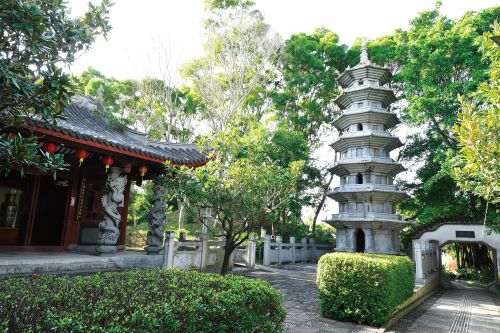
For a serene break from the urban energy of central Naha, Fukushūen Garden offers an incredibly unique cultural experience. Built in 1992 to celebrate the historic sister-city relationship between Naha and Fuzhou, China, this traditional walled oasis beautifully reflects the profound Chinese influence on Ryukyu Kingdom history. Featuring dramatic rock waterfalls, an observation pavilion, and sweeping bridges, it feels worlds away from the city despite being just a short walk from the monorail line. To plan your visit, check out our dedicated guide: Fukushūen Garden: The Must-Visit Fusion Garden in Naha.
Coastal Wonder: Naminoue Beach (波の上ビーチ) & Naminoue Shrine (波上宮)
Perched dramatically atop a jagged coral cliff overlooking the East China Sea, Naminoue Shrine is Naha’s most spiritually significant Shinto site. Historically known as the “Shrine Above the Waves,” this sacred space was used for centuries by Ryukyuan kings to pray for safe sea voyages, abundant harvests, and prosperous international trade. Today, its brilliant vermilion architecture contrasting against the ocean backdrop makes it an absolute visual highlight of the city. It is a peaceful place to collect a unique regional shrine stamp (goshuin) and experience Okinawa’s deep coastal spirituality.
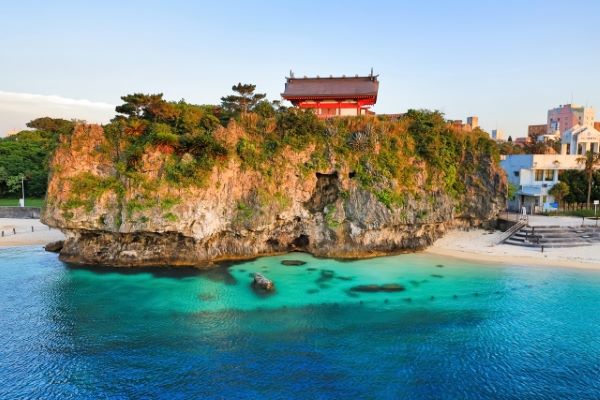
To read about the history, proper etiquette, and how to access this iconic landmark, see our detailed section: The Best Guide to Naminoue Beach and Naminoue Shrine.
Sueyoshi Park (末吉公園): A Hidden Jungle
If you want to completely escape the concrete and crowds of central Naha, Sueyoshi Park is the city’s ultimate hidden gem. Often overlooked by casual tourists, this sprawling, lush valley feels more like an untamed subtropical jungle than a city park. Crisscrossed by stone pathways, ancient moss-covered bridges, and a rushing river, it is a haven for local wildlife, giant ferns, and banyan trees. Deep within the forest, you will also discover the historic ruins of Sueyoshi Gu, a sacred, secluded shrine built into the hillside. It is a fantastic spot for a morning hike or a peaceful breath of fresh air.

To find the hidden trailheads and learn what to pack for your trek, check out our full explorer’s guide: Sueyoshi Park: The Hidden Jungle Park in Okinawa’s Capital.
Shuri Ryūsen (首里琉染): A Coral Dyeing Studio

If you are not in a hurry, an activity you should try is coral dyeing! While coral fossils can be easily obtained in Okinawa (as the island is surrounded by the ocean), picking up or buying natural coral is forbidden by law. There is only one place in Japan where you can do this unique activity: Shuri Ryūsen!
Refer to our Shuri Ryūsen article for more information about the coral dyeing experience!
Shuri Kannon-dō Temple (首里観音堂): Quirky Spiritualism
For one of the most heartwarming and unique spiritual encounters in Okinawa, make your way to Shuri Kannon-dō Temple (also known as Jishō-in). This peaceful Buddhist temple sits on a hillside in the historic Shuri district and has served as a guardian of safe travel since the 17th century. While it features beautiful traditional architecture and a quiet atmosphere, the temple has won international fame for a reason completely different from its architecture: a clever resident dog named Conan. Trained by the monks, Conan has delighted visitors for years by sitting back on his hind legs and politely joining his front paws together in a “prayer” gesture in front of the altar. It is an unforgettable stop that perfectly bridges authentic local history with absolute charm.
To find out when to visit and learn more about this beloved tradition, read our full article: Shuri Kannon-do Temple and Its Famous Paw-Joining Dog.
Shurijō Castle Park (首里城公園): The Heart of Ryukyu
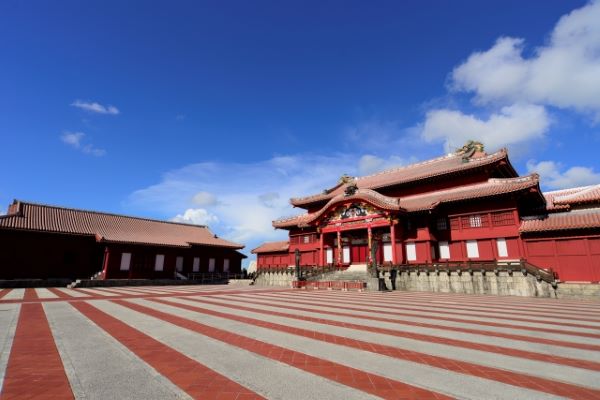
No historical exploration of Naha is complete without visiting Shurijō Castle Park, the grand emotional and cultural center of the Ryukyu Kingdom. For centuries, this stunning hilltop fortress served as the royal palace, administrative hub, and religious core of Okinawa. Walking the grounds today offers a rare, historic opportunity to witness ancient architectural techniques reborn in real time. To learn about ticketing, the best panoramic viewpoints over Naha, and essential history before you walk the gates, see our full guide: A Guide to Shurijo Castle: The Spiritual Symbol of Okinawa.
Binnuutaki (弁之御嶽)
About 1.3 km from Shurijō Castle Park, the Binnutaki is the sacred land that covers the entire Bengatake (弁ヶ嶽), Naha City’s tallest peak. When the Ryūkyū kingdom ruled Okinawa, Binnuutaki was where many important national rituals took place. On an auspicious day in January, May, and September, the king of Ryūkyū used to climb up the Bengatake and pray for his country. Therefore, the remains of the places of worship scattered atop the 165.5-meter-tall mountain were built for the kings. Commoners like you and me wouldn’t be able to access it!
Besides being a designated National Historic Site, Binnuutaki is the only place in Naha where you can overlook Shurijō Castle.
T Galleria Okinawa (T ギャラリア 沖縄)
T Galleria Okinawa is the best place for shopaholics! Directly connected to Yui Rail’s Omoromachi Station (おもろまち駅), the duty-free mall features many high-end brands and premium snacks. The best thing? You can shop in downtown Naha and collect your purchases at Naha Airport!
- T Galleria Okinawa is open from 10 am to 8 pm.
Okinawa Prefectural Museum and Art Museum (沖縄県立博物館・美術館 (おきみゅー))
If you are interested in Okinawa’s history and culture, a must-visit attraction is the Okinawa Prefectural Museum and Art Museum. From the five permanent exhibition sections, you will get a good understanding of Okinawa’s nature, archeology, crafts, history, and folklore.

In the museum’s Touch and Experience Room, various items are displayed for you to feel Okinawan nature and crafts. The most exciting thing for English speakers is probably trying on the traditional Okinawan kimono!
Tips:
☛ As only the name of the exhibits has an English translation, remember to rent an audio guide or download the museum’s app, ON THE TRIP.
☛ The cafe should have a vegetarian dish that you can order. Utilize the phrases in our Essential Japanese Travel Phrases for Vegetarians and Vegans to confirm when you get there!
Okinawa Prefectural Museum and Art Museum’s Opening Hours, Admission Fee, and Access Information
- Okinawa Prefectural Museum and Art Museum is open from
- 9 am to 6 pm from Tuesday to Thursday and Sundays
- 9 am to 8 pm on Fridays and Saturdays
- The last admission is 30 minutes before the closing time.
- The museum will close on the next business day if Monday is a public holiday.
- The museum shop and Touch and Experiment Room are closed at 6 pm.
- The museum’s permanent collection admission fee is
- 530 for adults
- 270 yen for senior high school and university students
- 150 yen for elementary and junior high school students
- The admission fee for the art museum is
- 400 for adults
- 220 yen for senior high school and university students
- 100 yen for elementary and junior high school students
- Okinawa Prefectural Museum and Art Museum is around a 10 to 15-minute walk from Yui Rail’s Omoromachi Station (おもろまち駅).
Okinogū Shrine (沖宮)
☀️ Mythological Roots: Okinogū Shrine
Nestled inside the tranquil greenery of Onoyama Park, Okinogū Shrine holds a deeply revered place in local folklore as one of the Eight Shrines of Ryukyu. According to ancient spiritual beliefs, this sacred site marks the exact grounds where Amaterasu, the Shinto Goddess of the Sun, descended to earth. Beyond its profound mythological significance, the shrine grounds feature a striking contrast of traditional vermilion accents against lush sub-tropical foliage, offering a peaceful, contemplative escape from the surrounding city. It is an ideal stop for travelers wishing to understand the unique blending of mainland Shintoism with indigenous Okinawan nature worship.
To find out how to locate this hidden spiritual gem inside the park and make the most of your visit, read our deep-dive article: Okinogu Shrine: The Site Where the Goddess of Sun Descended.
Lake Man (漫湖)
A bit south of Okigū Shrine, Lake Man is a popular spot for birdwatching. Although the waterfowl habitat has the word “lake” in its name, it is actually a wetland.
For information about the creatures that have called Lake Man their home since its formation, visit Manko Waterbird and Wetland Center (漫湖水鳥・湿地センター). A surprising fact is that Lake Man is partially man-made to provide a better habitat for waterfowl.
Moreover, there is also an observation zone for the tidal flat.
Tip: Lake Man is also a great spot to adore the beautiful sunset!
Shikina-en Garden (識名園): Royal Heritage
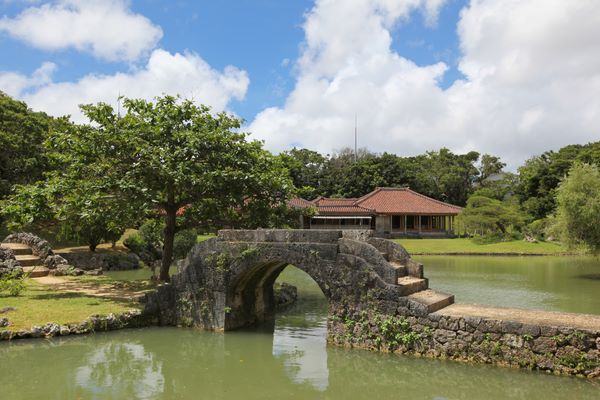
Designated as a UNESCO World Heritage Site, Shikinaen Garden is a breathtaking testament to the artistic heights of the Ryukyu Kingdom. Established in the late 18th century, this sprawling estate served as the royal family’s secondary palace and country retreat, and was famously used to entertain visiting Chinese imperial diplomats.
What makes Shikinaen truly spectacular is its masterful “fusion” design, it seamlessly blends a traditional Japanese stroll-garden layout with distinct Chinese architectural features, such as hexagonal pavilions and elegant arched stone bridges, all framed by native Okinawan flora. It offers an incredibly peaceful, scenic look at the islands’ diplomatic history. To explore ticket prices, opening hours, and tips on how to capture the perfect reflection photo across the central pond, check out our dedicated guide: Shikina-en: Okinawa’s World Heritage Garden.
Umikaji Terrace Senagajima (瀬長島 ウミカジテラス)

Umikaji Terrace Senagajima is an island resort that opened in 2015. While the resort isn’t in Naha City, we included it because it is a 10-minute drive from Naha Airport. It is definitely a nice destination to visit before flying home.
Unlike Naminoue Beach, which is artificial and has a bridge blocking the ocean view, the more than 100-meter-long Senaga Beach (瀬長ビーチ) is natural. You can also see airplanes taking off from Naha Airport across the water!
In addition, there is a free hot spring tub for your tired feet! Apparently, the onsen is gushing out from 1,000 meters underground!
One thing to keep in mind is that the food at Umikaji Terrace Senagajima isn’t the best and not exactly cheap either. But each of the shops and restaurants in the European-style resort has its charm, and it won’t hurt to just window shop (^_-)-☆.

Tips:
☛ The sunset from Umikaji Terrace Senagajima is really stunning.
☛ The lighting show, Senaga Starry Night (Senaga Starry Night 陽が沈む島の星物語), occurs five times a day from 7:30 pm at a 30-minute interval.
How to Get to Umikaji Terrace Senagajima
- From Yui Rail’s Akamine Station (赤嶺駅), Naha Airport (那覇空港), or Kokusai-dōri Iriguchi (国際通り入口), you can take the Umigaji Liner (ウミカジライナー) to get to Umikaji Terrace Sengajima.
- Refer to HERE for the price table and timetable.
- From Naha Airport, it takes around 20 to 30 minutes by bus.
Recommended Day Trip from Naha: Keruma Islands National Park
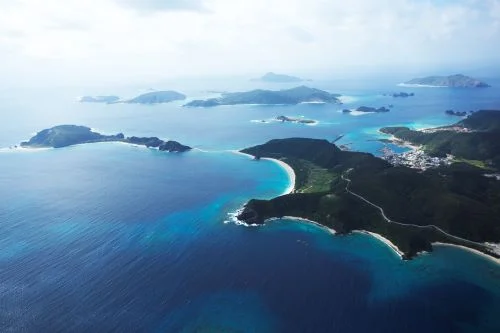
If you have an extra day or two in Naha and want to experience world-class marine life, a day trip to the Kerama Islands is an absolute must. Located just 30 to 40 kilometers southwest of Naha’s Tomarikō Ferry Wharf, this subtropical archipelago comprises over 20 islands renowned globally for “Kerama Blue”, a stunningly clear, deeply vibrant turquoise seawater.
The islands are a protected national park and home to roughly 60% of Japan’s coral reef species. It is one of the premier spots in the world for snorkeling and scuba diving, where you are almost guaranteed to swim alongside wild sea turtles or encounter majestic humpback whales migrating through the channels between January and March.
Whether you want to relax on the Michelin-starred sands of Furuzamami Beach on Zamami Island, explore the pristine, quiet shores of Aka Island, or take a quick 20-minute speed-boat ride to the uninhabited sand dunes of the Chibishi Islands, escaping the capital for a few hours is incredibly easy. To compare ferry timetables, booking strategies, and the best island itineraries departing from Naha, check out our ultimate island-hopping resource: Kerama Islands: The Most Stunning Island Groups Near Naha.
✈️ Next Stop on Your Itinerary: Exploring Miyakojima City
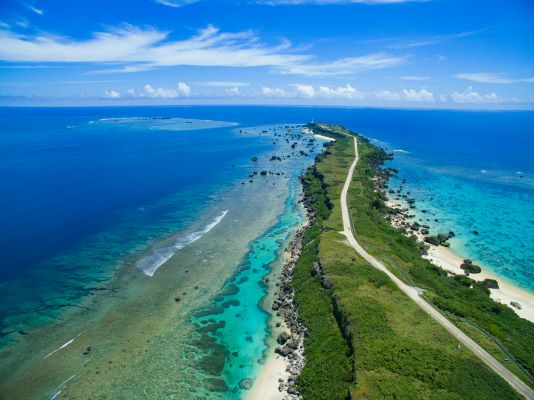
If your travels take you beyond Okinawa Main Island, your next destination should undoubtedly be Miyakojima City. Located a short 50-minute domestic flight from Naha Airport, this stunning island paradise is famous for having what locals and international divers widely consider the most beautiful beaches and clearest waters in all of Japan. Unlike Naha, Miyakojima is all about raw, breathtaking coastal nature. The island is surrounded by vibrant coral reefs, dramatic limestone caves, and expansive sea bridges that allow you to drive right over the sparkling ocean. It is a dream destination for snorkeling, paddleboarding, and discovering pristine white sands like Yonaha Maehama Beach.
If you are currently sketching out your broader tropical itinerary and want to know how to get around the island, where to spot sea turtles, and how to find hidden viewpoints, dive straight into our comprehensive island companion guide: The Top Attractions in Miyakojima City.
Where to Eat: Vegetarian & Vegan-Friendly Restaurants in Naha
While traditional Okinawan cuisine heavily features pork and bonito fish flakes (dashi), Naha has emerged as one of the most plant-based-friendly cities in Japan. From high-end organic dining to budget-friendly local buffets, you don’t have to compromise on taste to enjoy the capital.
Here are the best vegetarian and vegan restaurants in Naha, conveniently located near the city’s top attractions. You can also refer to HappyCow for more vegan and vegetarian spots in Okinawa’s capital.
Ukishima Garden (All-Vegan Ryukyu Cuisine)
Located just a short walk from the bustling Kokusai-dori, Ukishima Garden is the crown jewel of Naha’s vegan scene. Housed in a beautifully restored traditional building with an intimate courtyard, this restaurant transforms local, organic Okinawan vegetables and ancestral grains into plant-based masterpieces.
- The Food: At lunch, they offer a casual menu featuring a spectacular vegan take on Okinawa’s famous Taco Rice (using seasoned tofu instead of meat), burgers, and curries. Dinner shifts to an elegant multi-course set menu accompanied by organic wines.
- Location: Near Kokusai-dori (Closest Station: Miebashi)
We have a detailed review of Ukishima Garden in our Kokusai-dori Street article.
Organic Vegan Café Mana (Cozy Plant-Based Comfort)
Tucked away in the quiet, artistic alleyways of the Tsuboya Pottery District, Café Mana is a charming oasis perfect for a relaxing lunch after souvenir shopping.
- The Food: They are famous for their balanced lunch plates which feature brown rice, hearty dal curries, seasonal vegetable tempura, and soy-based “chicken.” Don’t leave without trying their legendary lemon cheesecake, crafted from local Okinawan tofu and organic citrus.
- Location: Tsuboya District (Closest Station: Makishi)
Kintsubo Shokudo (Budget Taiwanese-Okinawan Buffet)
If you are looking for an authentic, no-frills local experience that won’t break the bank, Kintsubo Shokudo is a must-visit. This long-standing, casual eatery serves Taiwanese Buddhist vegetarian food infused with local Okinawan ingredients.
- The Food: They are famous for their balanced lunch plates, which feature brown rice, hearty dal curries, seasonal vegetable tempura, and soy-based “chicken.” Don’t leave without trying their legendary lemon cheesecake, crafted from local Okinawan tofu and organic citrus.
- Location: Near Heiwa-dori Arcade (Closest Station: Makishi)
Rakuen Café (Trendy Mall Eats with a View)
Need a reliable, modern spot while exploring central Naha? Head to the second floor of the Ryubo Department Store right next to the main monorail terminal to find Rakuen Café.
- The Food: This airy, stylish café features a clearly marked menu with explicit green leaf symbols for vegan options. They serve fantastic plant-based comfort food, including vegan soy burgers, plant-based taco rice, fluffy vegan pancakes, and seasonal fruit parfaits.
- Location: Inside Ryubo Department Store (Closest Station: Prefectural Office / Kencho-mae)
Shimabukuro (Authentic Izakaya Experience)
For travelers who want to experience a classic Japanese izakaya (pub) atmosphere while staying entirely plant-based, Shimabukuro is a hidden gem that welcomes vegetarians with open arms.
- The Food: While the restaurant is omnivorous, the English-speaking owner completely understands veganism and will happily modify traditional Okinawan pub dishes for you. Be sure to request the fried Jimami Dofu (Okinawan peanut tofu—the texture is incredibly creamy!), green papaya salad, and their locally sourced herb tempura.
- Location: Makishi District (Closest Station: Makishi)
💡 Pro-Tips for Vegan and Vegetarian Travelers in Naha
- Watch out for Hidden Dashi: Traditional Okinawan noodle soups (Okinawa Soba) and vegetable stir-fries (Chanpuru) are almost always seasoned with fish broth (bonito dashi) or topped with dried fish flakes. Always specify “Dashi mo sakana mo dame desu” (No fish broth or fish).
- Look to the Airport: If you need a quick bite before your flight home, head to the 4th floor of Naha Airport’s domestic terminal to find Donburi Nantoya. They serve a dedicated veggie menu featuring seaweed and vegetable tempura bowls and plant-based mapo tofu.
- Carry Cash: While larger cafes like Rakuen take credit cards, small local institutions like Kintsubo Shokudo and Shimabukuro are strictly cash-only.