Discover the soul of Northern Japan in Morioka (盛岡), the charming capital of Iwate Prefecture that perfectly balances samurai history with a vibrant, modern “slow-travel” appeal. Surrounded by the majestic peaks of Mt. Iwate and the rushing waters of the Kitakami River, Morioka gained global fame after being named one of the New York Times’ top places to visit. From the legendary “Wanko Soba” noodle challenge and artisan ironware shops to the ruins of Morioka Castle and its iconic Cherry-Tree-Shattering Rock, this city offers a rich cultural tapestry just two hours from Tokyo via the Tohoku Shinkansen. Moreover, it is a good base to explore the famous destinations in the surrounding prefectures, such as Aomori in the north and Kakunodate in the west! Whether you are a foodie, a history buff, or a rail enthusiast stopping to witness the famous bullet train coupling, our guide to Morioka covers the best hidden cafés, traditional crafts, and seasonal festivals that make this city the heart of the Tohoku region.
Things to Do in Morioka
- How to Travel Between the Attractions in Morioka
- Morioka’s Profile
- What Are the Top Festivals in Morioka
- The Best Cafés in Morioka
- The Must-Visit Temples and Shrines in Morioka
- Morioka’s Top Cherry Blossom Spots
- The Top Museums and Historical Spots in Morioka
- Where to Visit in Morioka to Enjoy Nature
- East side of JR Morioka Station
- West side of JR Morioka Station
- What Is Nambu Ironware?
Tips:
☛ Daiwa Roynet Hotel Morioka Ekimae is a good base to stay for exploring Morioka. It is conveniently located close to Morioka Station.
☛ If you want to stay closer to most attractions in Morioka, stay at Daiwa Roynet Hotel Morioka.
☛ If you plan to explore Morioka and the Tōhoku region, consider getting the JR EAST PASS or the JR Tohoku-South Hokkaido Rail Pass.
☛ If you fly into or out of Hanamaki Airport, you can book a pick-up and drop-off to Morioka HERE.
☛ Refer to HERE for Morioka map. If you are interested in exploring the area beyond Morioka’s city center, refer to HERE.
Explore Morioka With a Guided Tour
If you prefer a guide to introduce you to the charms of Morioka, how about joining one of the following tours?
- Morioka Half-Day Private Tour with Government-Licensed Guide
- Morioka Town Half-Day Walking Shared Tour With Wanko Soba
- Morioka Full-Day Private Tour with Government-Licensed Guide
How to Get to Morioka From Tokyo
Getting to Morioka from Tokyo is easy. Take the Tohoku Shinkansen, and you will be at Morioka in 2 hours and 10 minutes! As the bullet train Hayabusa travels up north only has reserved carriages/seats, refer to our article on The Best Seats on the Shinkansen from Tokyo to Hokkaido before booking your seats!
Moreover, if the Tohoku Shinkansen you board has a couple of red train carriages, don’t head off straight away after getting off Hayabusa. The bullet train you just got off will decouple at Morioka, so the Akita Shinkansen Komachi can head toward Akita while the green Hayabusa continues its journey to Hokkaido!
How to Travel Between the Attractions in Morioka
The cheapest way to reach the next attraction in Morioka that isn’t close to JR Morioka Station is to take the city’s loop bus, Dendenmushi (でんでんむし). The bus service that departs from Morioka Station every 15 minutes runs clockwise and anticlockwise.
The bus is easy to identify. It has a white body with a couple of snails drawn on it!
The cost is 150 yen per ride. If you plan to take the bus three times or more during the day, get a 1-Day Free Pass, as it only costs 400 yen. Showing your bus pass also gives you a discount on admission fees at certain attractions in the city!
5Refer to HERE for Dendenmushi’s route map.
Bicycle Rental at Morioka
Renting a bicycle is another economical way toexplore Morioka. There are a couple of places where you can rent a bicycle. Refer to the city’s official website HERE and translate it into English using Google Chrome’s translation feature at the top right of the address bar.
You can also consider using HELLO CYCLING, Japan’s bicycle-sharing service. While their Official Website is in Japanese only, their app, available in Apple’s App Store and Google Play, has an English-language setting.
Morioka’s Profile
Morioka is the biggest city in Iwate Prefecture. Surrounded by various mountains, the magnificent mountains can be seen from the city center. In fact, around 70% of Morioka is covered by forest!
Because Morioka’s average temperature is lower, its cherry blossom season is usually a month behind Tokyo’s. So, if you can’t make it to Tokyo in late March, visit Morioka between mid to late April!
Wanko Soba (わんこそば), Morioka Reimen (盛岡冷麺), and Morioka Jajamen (盛岡じゃじゃ麺) are the three best-known noodle dishes in Morioka. While the soup and broth used in restaurants are most likely non-vegetarian, you can still enjoy the gourmet food by bringing your own sauce!
As Morioka was originally called Kozukata (不来方), Morioka Castle was called Kozukata Castle in the early Edo period. The name means “the direction where the demons won’t return”. Morioka Domain’s lord disliked the name as it was associated with demons. Thus, he gave the city a different name, “a Thriving and Prosperous Hill (盛り上がり栄える岡)”, with “Mori” meaning “thriving” and “Oka” meaning “hill”.
If the name is not auspicious, it is avoided.
The Top Festivals in Morioka
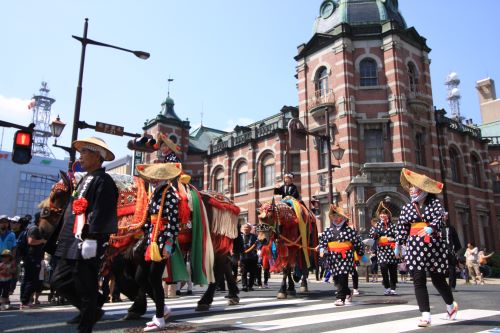
As a city with a long history, there are a couple of representative festivals that you could consider joining. During festivals, the city is packed with visitors to witness the grand events unique to the city. Yatai stalls selling every kind of festival food you could hope for also line the approach to the shrines that host them.
For more information, refer to our article on What Are Morioka’s Top Festivals!
Morioka’s Top Cherry Blossom Spots
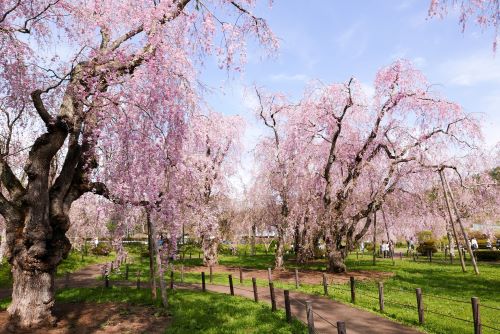
Admiring Japan’s cherry blossoms is one of the main reasons people around the world visit Japan. So if you plan to visit Morioka in early spring, there are a couple of spots in the city where you will be amazed by the beauty of Japan’s national flower. Some of them are well-known, whereas others are hidden!
For more information, refer to our article on Morioka’s Top Cherry Blossom Spots!
The Best Cafés in Morioka
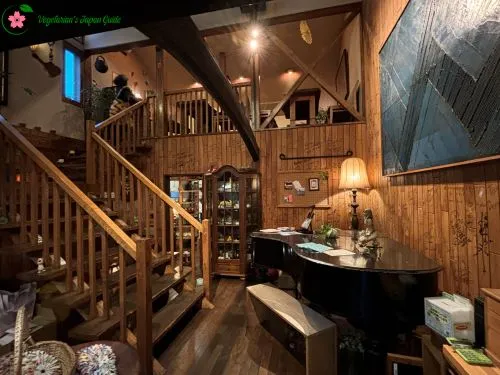
Morioka is a city where historic tea houses meet a sophisticated modern roasting scene. Recently spotlighted by the New York Times for its unique “slow-travel” charm, Morioka has become a sanctuary for coffee lovers. Whether you’re looking for a quiet spot to watch the passersby or a vibrant hub to enjoy a post-soba dessert, our curated list explores the must-visit Morioka coffee shops that make the city a premier destination for caffeine enthusiasts.
Refer to our article on The Best Cafés in Morioka for more information!
The Must-Visit Temples and Shrines in Morioka
During your stay in Morioka, there are a couple of temples and shrines we highly recommend you visit, even if you are an atheist or already have your fill of Japanese shrines and temples. While they are all religious facilities, what makes them interesting and unique is not the gods enshrined, but the unusual objects placed in their precincts. One of them is even where Iwate Prefecture’s name originated!
For more information, refer to our Must-Visit Temples and Shrines in Morioka article!

The Top Museums and Historical Spots in Morioka

Uncover the cultural soul of Iwate Prefecture with our article on the Top Museums and Historical Spots in Morioka. From the formidable stone foundations of Morioka-jō Castle Site Park to the elegant architecture of the Bank of Iwate Red Brick Building, Morioka is home to a wealth of heritage sites that blend samurai tradition with Western-inspired design. Whether you are admiring the “Chūsonji Hasu” lotus flowers at Ichinokura House or exploring the serene Nanshōsō villa, discover why Morioka is a premier destination for travelers seeking a deep dive into the stories and scenery of Northern Japan.
Where to Visit in Morioka to Enjoy Nature
Morioka isn’t just about Wanko soba, Morioka cold noodles, and Nambu Ironware. The old city also has picturesque natural destinations for stunning scenery, gorgeous flowers, and fall foliage. One of the lakes in Morioka is even famed to be Japan’s most beautiful artificial lake! A couple of them also allow you to enjoy hiking and water activities!
For more information, refer to our article on The Best Destinations to Enjoy Nature in Morioka!
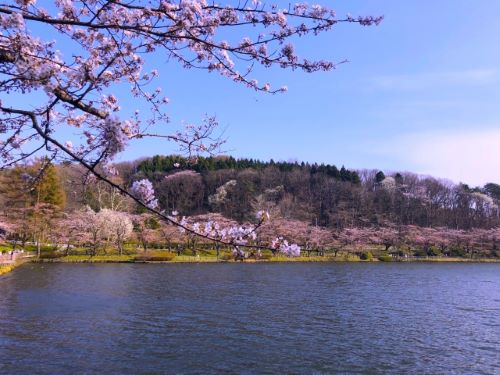
Kōgensha (光原社)

Step into the artistic heart of Morioka at Kōgensha, a legendary sanctuary for traditional Japanese crafts and the birthplace of a literary masterpiece. Originally founded as a publishing house for the renowned poet Kenji Miyazawa, this enchanting complex in the Kyozawa district has evolved into one of Japan’s most respected craft shops. Many also queue to sip the hand-dripped coffee at its famous Café Bakuyosho.
For more information, refer to our article on Kōgensha!
Fukuda Pan (福田パン)
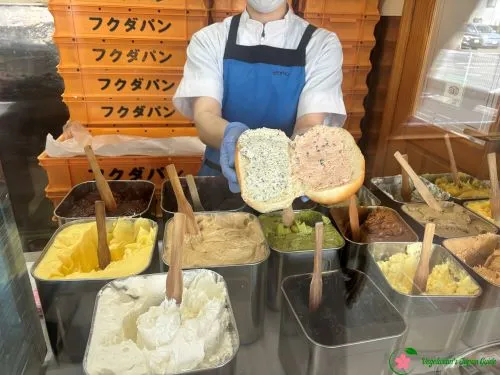
Apart from the noodle dishes, there is a bread shop that is also quite well-known. The shop specializes in putting various types of spreads between hot-dog-bun-like bread. In addition to the typical flavors, such as peanut butter or fried noodles, uncommon flavors are also available for those who want to feel adventurous. Because you can choose two spreads/fillings from more than 50 options, the number of flavors available at Fukuda Pan is endless!
For more information, refer to our Fukuda Pan article!
Kenji Shimizu Water Fountain (賢治清水)
If your water bottle is empty, visit the square close to Morioka-jō Castle Site Park. Kenji Shimizu is a water fountain where the locals source fresh water. Because the water source is the same as the well used by Miyazawa Kenji (宮沢賢治) when he was a student, the fountain was named after the great poet. The actual well he used is preserved and located in a car park near Kenji Shimizu.
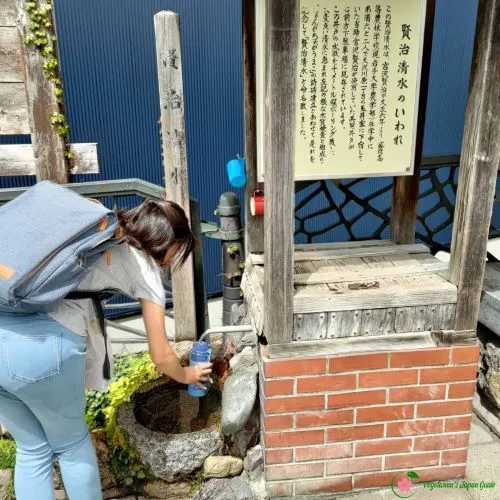
The spring’s quality has been tested, giving you that peace of mind when drinking it. The fountain is also maintained regularly. If you are still worried, bring it back and boil it in the kettle in your hotel room.
The water from Kenji Shimizu tasted a lot nicer than the water boiled with the kettle in our hotel room. When we went there the second time, a local brought several large water containers to carry the spring back. Apparently, her family don’t drink tap water anymore, so she has to get water from Kenji Shimizu every couple of days.
Miyazawa Kenji was a famous novelist and poet in the early 20th century.
How to Get to Kenji Shimizu
- Kenji Shimizu is a 20-minute walk from JR Morioka Station (盛岡駅).
- If you plan to take Dendenmushi, get off at Moriokajō-ato Kōen (盛岡城跡公園). The water fountain is a 5-minute walk away.
Kokeshi Dolls Goyōsha (もりおかこけしの五葉社)
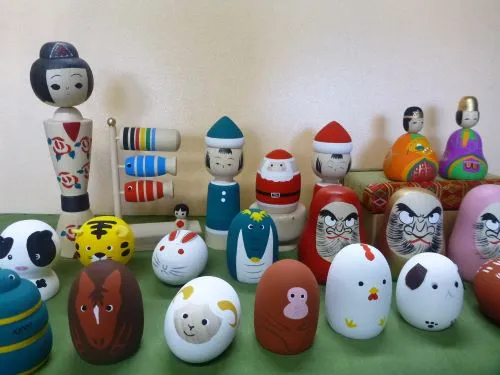
The Kokeshi dolls are a nice souvenir to bring back from Japan for your family and friends. While these wooden dolls with no arms or legs look rather simple, they still make a cute home decor. In Morioka, Kokeshi Goyōsha is the place to visit for these Kokeshi dolls. The workshop, which opened in 1937, specializes in making dolls and other small wooden toys and utensils.
Stepping into the wood-scented workshop, you will see a lot of wood and work-in-progress dolls scattered about. Not only can you see the dolls made by skilful artists, but you can also make one yourself!
Kokeshi Dolls Goyōsha’s Business Hours and Access Information
- Goyōsha is open from 10 am to 5 pm.
- The workshop is a 20-minute walk from Morioka Station (盛岡駅).
- You can also take a bus and get off at Tatesakabashi (館坂橋).
Morioka-jō Castle Site Park (盛岡城跡公園)

Morioka-jō Castle Site Park, not far from Morioka Station, is one of Japan’s top 100 city parks. Renovated from the ruins of Morioka Castle in 1906, it is a convenient spot in the city center to admire cherry blossoms, fall foliage, and snow scenery. The park is an ideal place in the city center to experience both the natural scenery and historical significance.
For more information, refer to our Morioka-jō Castle Site Park article!
LaLa Iwate Morioka (らら・いわて 盛岡店)
Lala Iwate Morioka is a convenient spot in the city center for last-minute souvenir shopping. From traditional crafts such as Nambu ironware to food and alcohol, a wide selection of specialty products from the city and other areas of Iwate Prefecture is gathered there!
While the store isn’t big, it is packed with Iwate’s local specialties, saving you the time to travel across the vast prefecture to buy the souvenirs you are after. Furthermore, if you prefer not to purchase the local snacks in boxes, come to LaLa Iwate Morioka. Yes, you can purchase them separately! Tirol‘s amazing cheesecakes are also sold there!
The store also has a small resting space for tourists to take a break.
LaLa Iwate Morioka’s Business Hours and Access Information
- LaLa Iwate Morioka is open daily from 10 am to 6 pm except the 2nd and 4th Sunday of the month.
- The shop is a 15-minute walk from JR Morioka Station (盛岡駅). If you plan to take a bus, get off at Kenchō Shiyakusho-mae (県庁・市役所前).
Baigetsudō (梅月堂)
For traditional confectionery, Baigetsudō is the best place to stop by. The traditional sweets maker, which opened in 1912, is particular about making sweets without preservatives or additives.
Unlike many confectionery shops, Baigetsudō has a rather ordinary shopfront. The freshly made traditional sweets, such as Dango, are placed in the showcase without being wrapped. Don’t assume that the rice cakes are of lower quality than those in the fancy stores. In fact, the sweets made from flat black beans (黒平豆) are recognized as Morioka’s Delicious Sweets Ambassador (盛岡の美味いもんアンバサダー)!
The must-try at Baigetsudō is Ochamochi (お茶もち). It is Morioka’s local specialty. The flattened mochi skewers are brushed with sweetened walnut oil-infused soy sauce. The taste is just different from the usual Dango rice cakes found across Japan.
The staff we met was nice. Although it was shortly before the confectionery maker’s business hours, she introduced what was available at the time and gave us some recommendations.
Baigetsudō’s Business Hours and Access Information
- Baigetsudō is open from 9 am to 6 pm or until sold out from Monday to Saturday.
- It is a 5-minute walk from the bus stop, Kenchō Shiyakusho-mae (県庁市役所前).
Tip: Arrive early. The sweets can be sold out around 4 pm.
Plaza Odette (盛岡市観光文化交流センター「プラザおでって」)
Odette (おでって) means “Please come” in the Morioka dialect. This is why the city’s tourism and cultural exchange center was named Odette. The complex has an English-speaking tourist information centre on the 2nd floor and a bicycle rental service, making it the best place to visit before you start exploring Morioka.
Furthermore, tickets for various cultural events are also sold at the Morioka Tourist Information Center.
- Bicycle rental at Plaza Odette is available from 8 am to 7 pm, when the plaza is open.
- If the 2nd Tuesday is a public holiday, the service is unavailable on the next business day.
- The service won’t be available if the weather isn’t suitable for cycling.
- The cost of a bicycle rental is:
- 400 yen for an hour
- 600 yen for 4 hours
- 1,200 yen per day
- A 1,000 yen deposit is required, which will be returned to you upon returning the bicycle.
- The bicycle rental is located on B1.
In addition to tourism-related services, Plaza Odette also has a farmers’ market. On the 6th floor, there is a small museum called Morioka Tegami-Kan (盛岡てがみ館). Valuable materials, such as old letters, book manuscripts, and the diaries of historical figures related to Morioka, are on display.
Tip: Free small lockers are available, but aren’t big enough to fit a suitcase.
Plaza Odette’s Opening Hours and Access Information
- Plaza Odette is open from 9 am to 9:30 pm.
- The tourist information corner is open from 9 am to 8 pm.
- The plaza is closed on the 2nd Tuesday of each month and from the 29th of December to the 3rd of January.
- Plaza Odette is around 2km from JR Morioka Station (盛岡駅). If you plan to take a bus, get off at Morioka Bus Center (盛岡バスセンター).
Gozaku (茣蓙九・森九商店)

If you are after some traditional items to bring home, visit Gozaku. The store inside a traditional wooden townhouse has many household items made from natural materials, such as straw sandals and bamboo crafts (竹細工). Sandwiched between modern buildings, the shop, which opened in 1813, is one of a couple of Japanese-style private houses in Morioka’s city center.
While it isn’t fancy-looking, it has supported Morioka’s citizens’ livelihood since the Edo period.
Most of the handicrafts are sourced within Iwate Prefecture, so if you want to support the local economy, Gozaku is the perfect spot to do so. Furthermore, Gozaku’s courtyard has been opened as a gallery, giving you another reason to visit this little store that has stood the test of time!
At the back of the store, the Nakatsu River (中津川) flows (refer to the 4th and 5th photos in the IG post). Walking along the riverside, you can see the back of the Gozaku. Focusing on the river and the traditional house’s roof and mud wall, it is as if you have traveled back in time to the Edo period.
Gozaku’s Business Hours and Access Information
- Gozaku is open from 8:30 am to 5:30 pm from Monday to Saturday.
- If you take Dendenbushi-gō, get off at Morioka Bus Center (盛岡バスセンター). For the local bus services, get off at Nakanohashi-dori Icchome (中ノ橋通1丁目).
Azumaya Honten (東家本店)
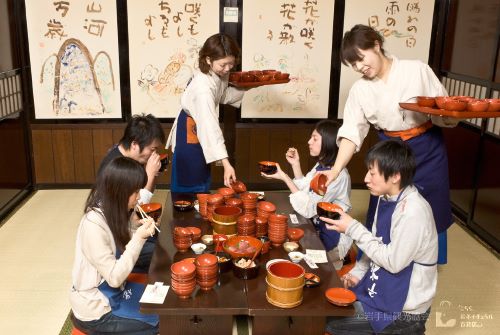
Experience the ultimate culinary challenge at Azumaya Honten, the most iconic destination for Wanko Soba in the historic heart of Morioka. Established in 1907, the restaurant is world-renowned for its high-energy “all-you-can-eat” noodle service, where dedicated servers fill your bowl with lightning speed to the rhythmic chant of “Hai, jan-jan!” Depending on how many plates of noodles you finish, you can earn a commemorative wooden certificate!
For more information about this fun session, refer to our Azumaya Honten article!
The Attractions in the Natayachō Area
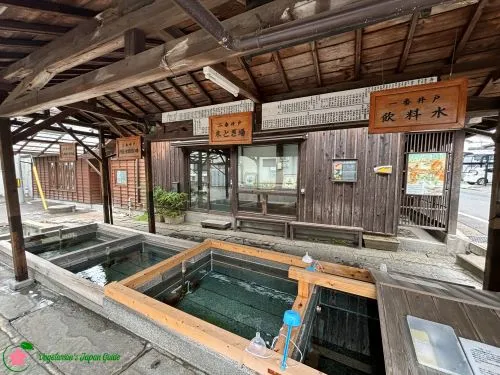
Natayachō, on the banks of the Kitakami River, was an area in Morioka that once flourished as a key shipping hub. Due to the high-quality natural water sources from Daijiji Temple and Gidaji Temple, many sake breweries, tofu shops, soba noodle makers, and cafés surround the neighbourhood. Besides the commercial facilities, you will also learn how the locals have shared the precious water source for centuries!
For more information, refer to our Natayachō Area article!
Mikoda Morning Market (神子田朝市)
Mikoda Morning Market is a must-visit for those who love strolling around the local markets. The morning market filled with freshly harvested fruits and vegetables is known as Morioka’s kitchen. The price of the fresh produce here is unbeatable. Food stalls, coffee carts, and handicraft stalls are also a part of Mikoda Morning Market!
A traditional sweet you can try is Kirisensho (きりせんしょ). Inside the rice cake is sweet walnut sauce. The freshly made sweets are so popular that there are usually long lines for them!
Hittsumi (ひっつみ) is another must-try Iwate Prefecture’s local specialty. The most popular food stall selling Hittsumi is Dekunobou (木偶の坊). A queue is usually formed when the sky is still dark. But note that the flat noodle dish’s broth contains meat.
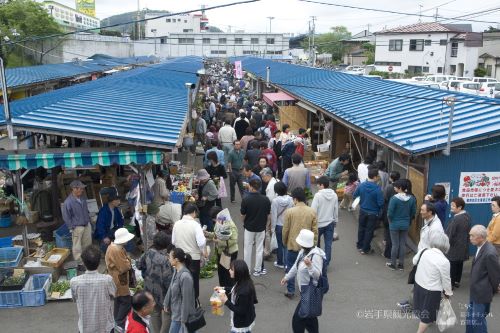
Mikoda Morning Market is open from 5 am to 8:30 am, Tuesday through Sunday, so get up early if you are interested in going! Note that the market is open on Monday if a public holiday falls between May and December.
Tip: The 5th of May is the best day to visit Mikoda Morning Market. It is when rice cakes are thrown at the crowd! But note that it is also the most crowded day.
How to Get to Mikoda Morning Market
- Mikoda Morning Market is open from 5 am to around 8 am. In winter, the opening and closing times are delayed by around 30 minutes.
- Note that stalls may start closing around 7 am.
- If you arrive at 5 am, most stalls may still be preparing to open.
- Mikoda Morning Market is a 15-minute drive from JR Morioka Station (盛岡駅).
- You can also take a taxi from JR Sembokucho Station (仙北町駅). The market is a 7-minute drive or a 25-minute walk from there.
Malios Observatory (マリオス展望室)
To overlook Morioka’s cityscape, visit Malios at JR Morioka Station’s west exit. The 20th floor of the city’s landmark features an observatory offering a 360-degree view of the surroundings. On a clear day, Mt. Iwate’s magnificence can be adorned from Malios Observatory. As the observatory is usually closed at 6 pm, visit it during the daytime!
On New Year’s Day, Malios Observatory is open from 6 am to 9 am for visitors to watch the first sunrise of the year from the observation deck.
- Malios Observatory is open from 9 am to 6 pm.
Tip: Malios Observatory’s opening hours are extended when Morioka Fireworks Festival (盛岡花火の祭典) and Funekko Nagashi (舟っこ流し) are held in August.
Morioka Handi-Works Square (盛岡手づくり村)

Step into a world of living tradition at Morioka Handi-Works Square, a unique “theme park of craftsmanship” where the artisan soul of Iwate comes to life. The immersive facility brings together 15 traditional workshops under one roof, allowing visitors to watch master artisans create world-renowned Nambu Tekki ironware, delicate pottery, and intricate woodwork.
For more information, refer to our Morioka Handi-Works Square article!
Tsunagi Onsen (つなぎ温泉)
Tsunagi Onsen is a small hot spring town on Gosho Lake‘s southeast shore. The onsen is sulfur-base so that some people may dislike the smell. The hot spring promotes blood circulation and metabolism. In addition, it also contains metasilicic acid, a natural moisturizing ingredient that is good for your skin!
The town’s history can be traced back to the mid-1000s when Minamoto no Yoriyoshi (源頼義) was sent by the imperial court to suppress Abe no Sadato (阿部貞任), who rebelled against the imperial court. The venue Yoriyoshi chose for the main stronghold is close to today’s Tsunagi Onsen. He soon found out that the hot spring source had helped his horse’s wound heal, so he tied his horse to a rock close by and indulged in the onsen himself. The hot spring town is thus named “Tsunagi” as it means ‘tether’.
If you are interested in seeing the rock that Yoriyoshi tied his horse to, you can! The stone called Tsunagi-ishi has been preserved.
While the hot spring town does not have many leisure facilities like most onsen towns in Japan, the hot spring town isn’t packed. We had the free hand and foot spas to ourselves!
In addition, it is a good base to Lake Gosho Park and exploring the nature around Gosho Lake (御所湖), including the Morioka Handi-Works Square.
While there wasn’t many flowers blooming around the lake when we visited it in late April, we enjoyed the scenic view from Tsunagiohashi Bridge (繋大橋).
If you are unable to spend a night at Tsunagi Onsen, you can enjoy the free foot spa instead. The tourist information center (つなぎ温泉観光案内所) is just near the bus stop for Tsunagi Onsen (つなぎ温泉). Visit the center if you need a sightseeing map, advice, or directions!
How to Get to Tsunagi Onsen
- Take the bus bound for Tsunagi Onsen (つなぎ温泉) from Morioka Bus Center.
- The bus trip takes around 40 minutes.
- The number of services is limited, so use one of Japan’s Transport Apps to plan your visit.
- Tsunagi Hot Spring Information Center is open from 9 am to 6 pm from Thursday to Tuesday.
- It is closed on the 1st, 3rd, and 5th Sunday.
Discover Ichinoseki: A City to Enjoy Breathtaking Landscape and the Unique Rice Cake Cuisine
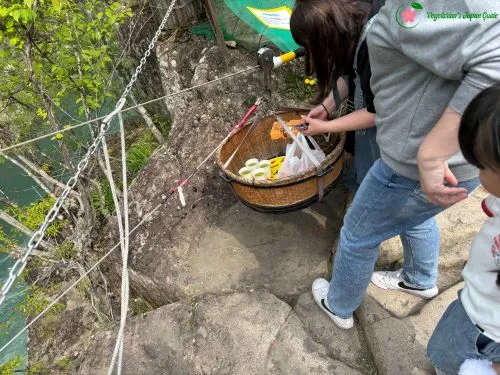
Expand your journey through the Tohoku region by venturing south to Ichinoseki, the scenic gateway to the breathtaking Iwate Prefecture countryside. While Morioka captures the urban artisan spirit, Ichinoseki is where the raw beauty of nature and ancient spiritual history converge, home to the emerald waters of Geibikei Gorge and the soaring cliffs of Genbikei Gorge. You can also explore the offering a unique “Mochi Culture” and some World Heritage sites!
For more information, refer to our article on Ichinoseki!