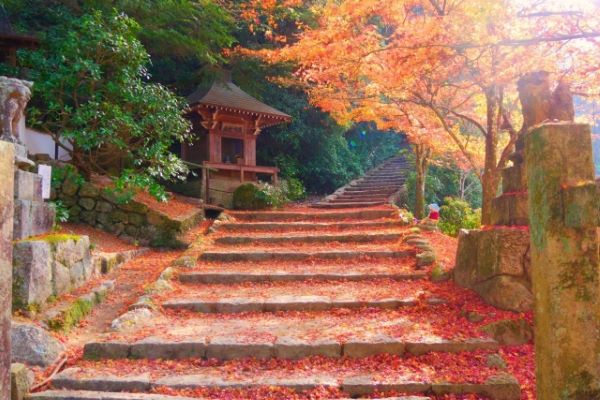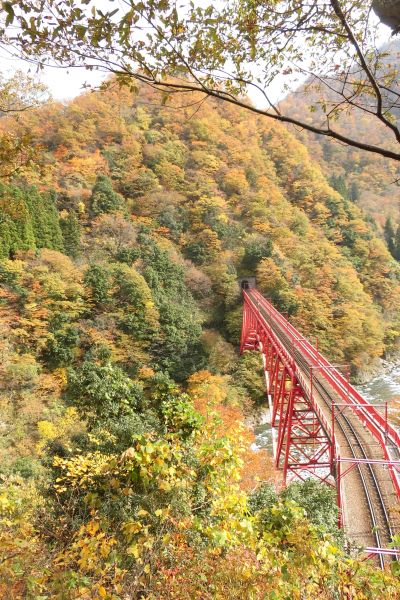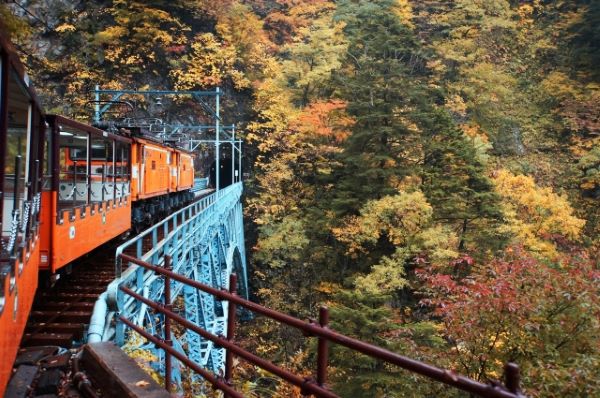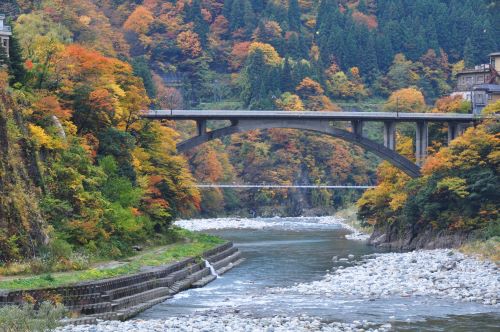
Planning a trip to Japan but want to escape the crowds of Tokyo and Kyoto? Look no further than the Tohōku Region. The Northeastern part of Japan is renowned for its stunning natural beauty. With two weeks in Japan, you will have enough time to experience a land of ancient samurai towns, breathtaking landscapes, and vibrant festivals. From the serene temples in Hiraizumi to the dramatic eastern coastline in Hachinohe, this itinerary provides a detailed, day-by-day plan to help you discover the authentic heart of northern Japan.
Needless to say, autumn is the best season to appreciate the natural scenery when it is dyed with rich and vivid colors. Thus, the Japan itinerary below is arranged in sequence according to when the attractions’ fall foliage typically peaks. A one-day difference can make all the difference for your photo!
Summary of the Japan 14-Day Itinerary
The below two-week Japan itinerary is planned for a trip from mid-October to early November. With that being said, it is suitable from late April to November. From Tokyo Station to Shin-Aomori Station, the journey takes approximately 3 to 3.25 hours by bullet train. You can also take a connecting domestic flight to Aomori after landing in Tokyo.
If you plan to drive, we recommend renting a car at Aomori and returning it to Hachinohe. Driving from Tokyo to Aomori can be pretty tiring.
| Destination | Accommodation in | Attractions | |
| Day 1 | Tokyo/Aomori | Aomori | Aomori Museum of Arts and other attractions in Aomori’s city center |
| Day 2 | Mt. Hakkōda | Tsuta Onsen/Lake Towada | From Hakkōda Ropeway to Jōgakura Bridge |
| Day 3 | Mt. Hakkōda | Lake Towada | The Picturesque Ponds around Tsuta Onsen and Oirase Gorge |
| Day 4 | Lake Towada | Lake Towada | Lake Towada |
| Day 5 | Hachinohe | Hachinohe | |
| Day 6 | Hachinohe | Morioka | ☛ Tatehana Wharf Morning Market ☛ Tanesashi Coast ☛ The attractions/cafes in Morioka’s city center |
| Day 7 | Morioka | Morioka | ☛ Morioka Handi-Works Square and Tsunagi Onsen, or ☛ Hachimantai |
| Day 8 | Ichinoseki | Ichinoseki | Geibikei Gorge and Genbikei Gorge |
| Day 9 | Hiraizumi | Ichinoseki | The temples in Hiraizumi Town |
| Day 10 | Sendai | Sendai | ☛ SS30 ☛ Zuihōden ☛ Murakamiya Mochiten ☛ Sendai Daikannon ☛ Hachinohe Yataimura Miroku Yokochō |
| Day 11 | Akiu Onsen | Sendai/Aizu-Wakamatsu | |
| Day 12 | Tadami Line | Aizu-Wakamatsu | ☛ The First Tadami River Bridge Viewpoint ☛ Miyashita Arch Sankyōdai Bridges Viewpoint ☛ Mugenkyō Gorge ☛ Hayato Onsen Tsuru no Yu |
| Day 13 | Tadami Line | Aizu-Wakamatsu | ☛ Tadami Town ☛ Seventh Tadami River Bridge Viewpoint ☛ Eighth Tadami River Bridge Viewpoint |
| Day 14 | Aizu-Wakamatsu | ☛ Tsuruga Castle ☛ Nanukamachi-dōri |
For the above schedule, it is best to have your day 6 fall on a Sunday.
Day 1 – Aomori City
Tokyo ⇒ Aomori
How to Get to Aomori from Tokyo
Depending on how many attractions you want to visit in Aomori City, your departure time from Tokyo may vary. If you arrive in Japan on Day 1, you can take a domestic flight to Aomori instead of taking the Shinkansen (bullet train). It is usually cheaper and faster to fly.
Tip: You can also choose to arrive in Aomori the night before, allowing you to spend the whole day in Aomori on Day 1.
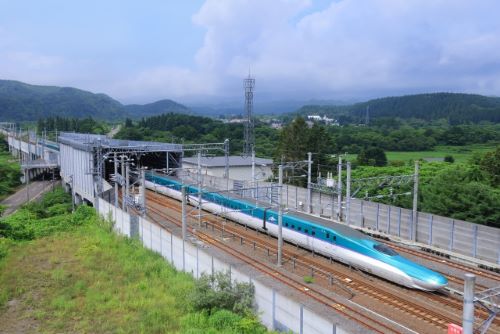
From Tokyo, take the northbound Hayabusa (新幹線はやぶさ) bullet train. The train trip is around 3.25 hours.
The bullet train will stop at a couple of stations in Tokyo (such as JR Tokyo Station and JR Ueno Station). A transfer may be necessary if your accommodation for the night before is not close to the train station where the bullet train stops. This includes if you are flying into Tokyo on Day 1.
Many attractions in Aomori are located closer to Aomori Station. Once you get off at JR Shin-Aomori Station, change to the local trains that will stop at JR Aomori Station. It will only be one stop away. We recommend booking your accommodation near Aomori Station for convenience.
Assuming your hotel is close to Aomori Station, the first thing you might want to do after arriving at Aomori is to drop your baggage at your accommodation. If your first stop is not the accommodation, you can opt to store your belongings at one of the coin-operated lockers in the station and pick them up at the end of the day.
Tip: Refer to our article on the Shinkansen from Tokyo to Hokkaidō for the best seats to reserve!
Exploring Aomori City
Aomori is best known for its Nebuta festival, which is held only during the summer. Amongst the many attractions in the city center, be sure to visit the Nebuta Museum WA RASSE to experience the energetic vibe of the gigantic festival floats!
Although located further away from the city center, the Aomori Museum of Art is another popular attraction listed in most tourists’ itineraries. The contemporary artworks in the museum are an absolute stunner!

Right by the museum, the Sannai Maruyama Special Historical Site was newly registered as a World Heritage in 2021. It is a place where you can discover the Jōmon civilization, which remains an important part of human history.
For a list of other attractions you may be interested in (such as souvenir shops), please refer to our article on Aomori City.
Day 2 – Mt. Hakkōda
Aomori ⇒ Mt. Hakkōda ⇒ Tsuta Onsen
The plan for Day 2 is to explore Mt. Hakkōda. The mountain offers multiple picturesque hiking and trekking routes to choose from. If you are only after shorter trails with a maximum of 2 hours to complete, you can potentially visit a few more attractions in Aomori City in the morning before you start heading south.
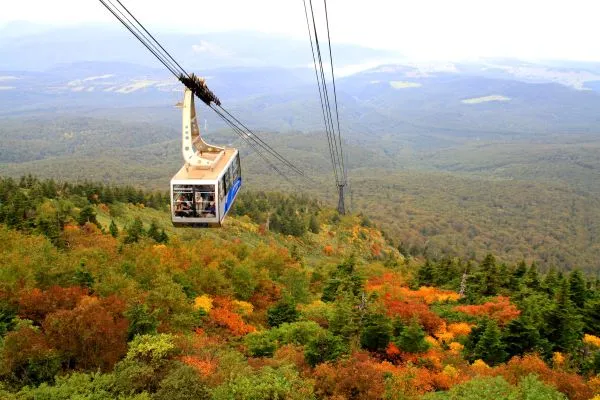
If you have your luggage with you, the easiest way to explore the mountain is to take the JR Bus Mizuumi-Gō from JR Aomori Station (青森駅) and get off at Ropeway Eki-mae (ロープウェイ駅前) for the Hakkōda Ropeway. You can then check in your belongings at the Summit Station, close to the trailhead of many hiking courses.
For more details on Mizuumi-Gō, please refer to the How to Get to the Picturesque Oirase Gorge article.
Depending on which hiking route(s) you plan to undertake, you can either walk or take the JR Bus to return to the ropeway station to retrieve your belongings.
For a list of hiking trails in Mt Hakkōda, please refer to our article, The Complete Guide to the Stunning Hakkōda Mountains.
Jōgakura Bridge (城ヶ倉大橋)
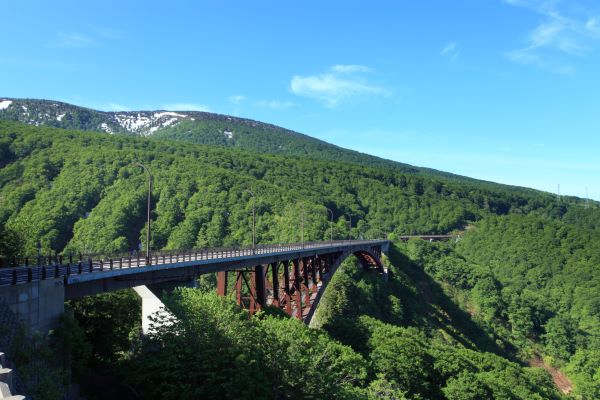
Whether you choose to take the short 30-minute Hakkōda Gourd Line or the 4-hour Ōtake Hiking Course, stop by Jōgakura Bridge. It is a 30-minute walk from Jōgakura Onsen. The magnificent bridge with a spectacular view is the longest arch bridge in Japan.
- If you plan to just hike around Hakkōda Ropeway, take Mizuumi-Gō and get off at Jōgakura Onsen (城ケ倉温泉).
- If you plan to trek the Ōtake Hiking Course, instead of heading to Sukayu Onsen at the last part of the course, turn right to Hotel Jōgakura.
For more information on Jōgakura Bridge, please refer to our article on attractions between Hakkōda Ropeway and Yakeyama!
Can I Board JR Bus Mizuumi-Gō With Luggage?
As overseas visitors, we often need to carry our suitcases or large backpacks when traveling in Japan. The JR bus, Mizuumi-Gō (みずうみ号), has a trunk room for you to store your suitcases.
But if your suitcase is oversized or weighs more than 25 kg, the bus driver may not allow you to board. So if you have oversized luggage, please utilize local carriers to send your belongings to your next accommodation. Although the staff at your hotel’s reception should be able to organize that for you, please enquire in advance.
Utilizing Tsuta Onsen Ryokan’s Pick-up Service

Other than Tsuta Onsen Ryokan, a couple of accommodation facilities provide pick-up service from JR Aomori Station at around 3 pm. For luggage storage, you can also leave it at your hotel in Aomori after you check out and explore the northern part of Mt.Hakkōda first. Just remember to watch the time and head back to Aomori Station before the pick-up time.
For more information about the ryokan, refer to our Tsuta Onsen Ryokan article.
Some accommodation providers offer a morning pick-up time. If you are staying with one of those providers, you can ask them to take you to the hotel/ryokan first before catching the JR Bus Mizuumi-Gō to get to Hakkōda Ropeway.
If you prefer not to hotel-hop, you can stay in Lake Towada for Day 2.
Day 3 – The Picturesque Ponds Around Tsuta Onsen and Oirase Gorge
Tsuta Onsen ⇒ Yakeyama ⇒ Oirase Gorge ⇒ Lake Towada
We chose to stay at Tsuta Onsen Ryokan mainly to increase our chances of seeing this breathtaking view of the Tsuta-Numa Pond at dawn. To see the view, you must get up really early in the morning. Some photographers get there as early as 3:30 am!
Between mid to the end of October, the sun usually rises between 5:30 and 6:30 am. So, if you stay at Tsuta Onsen Ryokan, you should still be able to capture this unreal scenery by getting up at 5 am. The ryokan is only an 11-minute walk away.
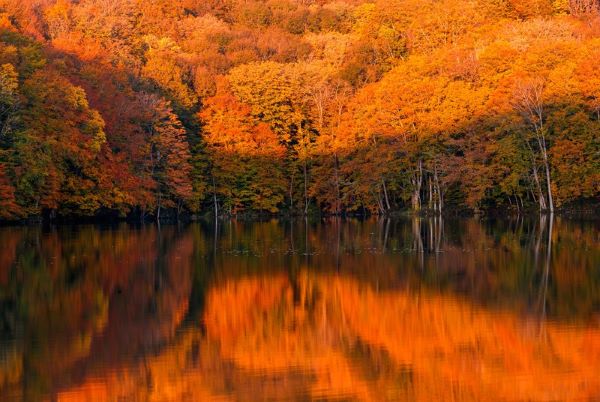
However, keep in mind that it is best to secure a spot in the front row at the moment of sunrise, so no one blocks your view. Thus, check with the ryokan staff upon arrival for the best time to visit the observatory the following morning.
On the other hand, if the bus is arriving soon, take the next service to Suiren-Numa Pond and then return to Tsuta Onsen later.
Suiren-Numa Pond (睡蓮沼) and Tsuta-Nana-Numa Ponds (蔦七沼)

After breakfast, when you are ready to explore more stunning ponds in the area, do check when the next Mizuumi (みずうみ号) will arrive at Tsuta Onsen.
If it isn’t coming for another 90 minutes, follow the promenade – Numa-Meguri No Komichi (沼めぐりの小路) and stroll around Tsuta-Nana-Numa Ponds first.
On the other hand, if the bus is coming soon, take the next service for the Suiren-Numa Pond (睡蓮沼) and then return to Tsuta Onsen later.
For Suiren-Numa, you can also check it out on Day 2.
You can find more information about these ponds in our article on The Picturesque Ponds between Sukayu Onsen and Tsuta Onsen.
From Tsuta Onsen to Yakeyama to Oirase Gorge
After your photographic adventure with the picturesque ponds, gather your belongings and head straight to Yakeyama, the entrance of Oirase Gorge!
As a small transportation hub, Yakeyama has a couple of restaurants open for lunch. It also has a few attractions that may interest you, including Japan’s most temperamental ginkgo tree.
For more information, please refer to our article on Yakeyama!
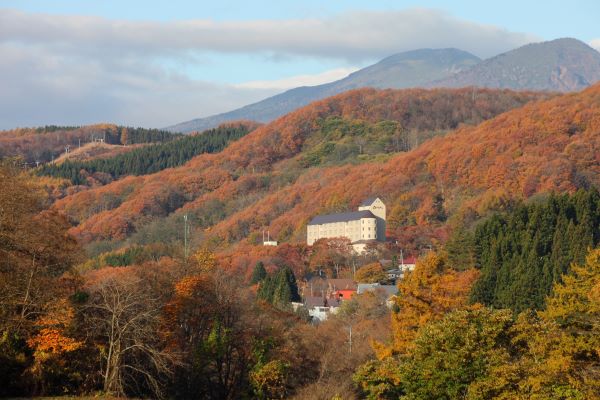
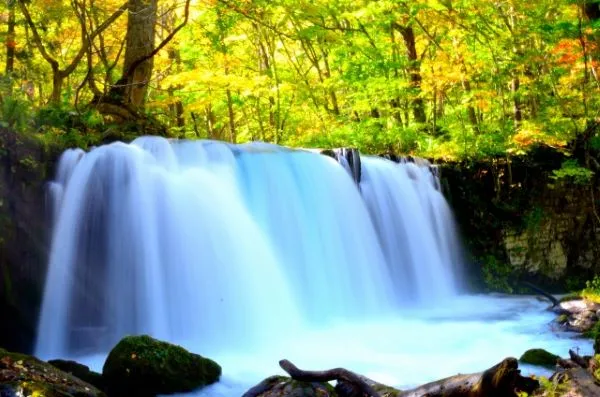
When you trek through Oirase Gorge in the afternoon, you can store your luggage at Oirase Stream Gifts and Restaurant (渓流の駅おいらせ).
Another option is to head straight to your accommodation at Lake Towada from Tsuta Onsen for a quick drop-off. After that, you can either rent a bicycle and cycle back to Yakeyama or take either the JR Bus Mizuumi-Gō (みずうみ号) or Oirase-Gō (おいらせ号).
For more information about bike rental and the beautiful gorge, please refer to our article on Oirase Gorge!
Day 4 – Lake Towada
Lake Towada
Lake Towada (十和田湖) isn’t just a beautiful lake that straddles both Aomori and Akita Prefectures in Northeastern Japan. Whether you prefer water sports, taking a stroll around the virgin forest, or just like to eat, Lake Towada is a destination for everyone!
For more information, please refer to our article on Lake Towada (=゚ω゚)ノ.

Day 5 – Hachinohe
Lake Towada ⇒ Hachinohe
When you are ready to leave Lake Towada, head to the bus stop to take the JR Bus Oirase-Gō (おいらせ号) to Hachinohe. As there is usually only one service per hour, it is best to confirm the bus schedule the night before.
Which hotel to stay in Hachinohe? We recommend Comfort Hotel Hachinohe, or any other hotels near JR Hachinohe Station. Although the city center is around JR Hon-Hachinohe Station (本八戸駅), you don’t want to drag your luggage back and forth on Days 5 and 6. Plus, the number of train services running between the two stations is limited.
Since the last couple of days were spent in nature, it is good to change things up and visit a few museums in Hachinohe.
Hachinohe City Museum can be a good place to visit (albeit English explanations are limited here, but there are leaflets in English). It is where you can learn the history of Hachinohe.
You can also visit Korekawa Jōmon Museum to learn more about the Jōmon period. The Korekawa Remain next to the museum is a part of the World Heritage: Jōmon Prehistoric Sites in Northern Japan.
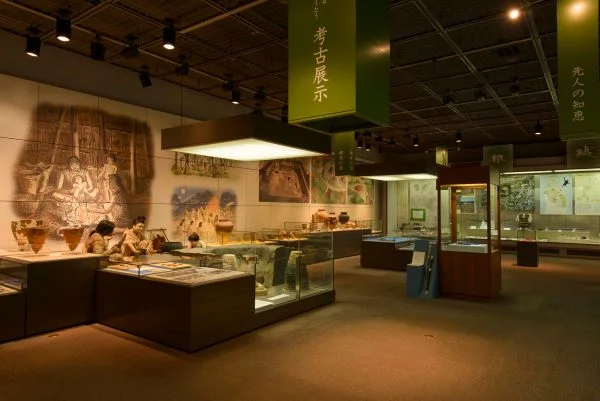
For dinner, head to Hachinohe Yataimura Miroku Yokochō (八戸屋台村みろく横丁) for the unique alley filled with stalls!
Day 6 – Hachinohe
Hachinohe ⇒ Morioka
If your Day 6 falls on a Sunday, you should get up early for the Tatehana Wharf Morning Market (館鼻岸壁朝市). No sleeping in!
The market has over 300 stalls serving customers from dawn to around 9 am. If you overslept, you will miss out on the chance to check out Japan’s biggest morning market!
It is also a good place to source some delicious breakfast.
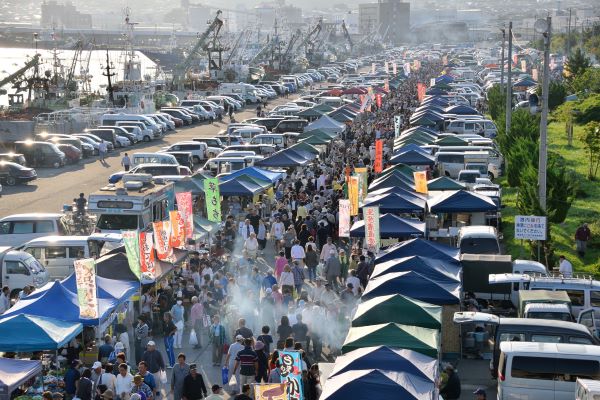
For more information on how to get to the market, please refer to our Hachinohe article.
Tanesashi Coast (種差海岸)
After the morning market, take a train to JR Tanesashi Kaigan Station (種差海岸駅). It is only a few stops away from the morning market.
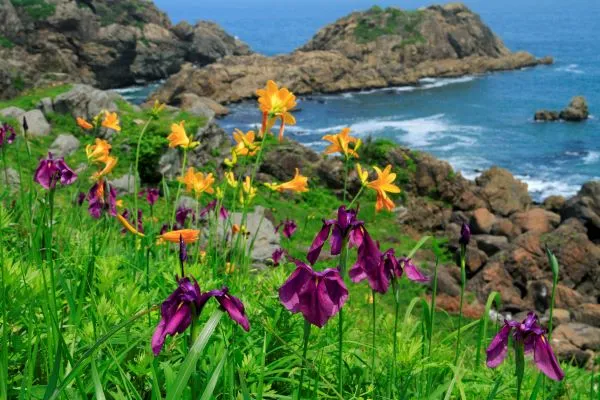
The Tanesashi Coast at the center of Sanriku Fukkō National Park is an unusual beach. Instead of a sandy beach shore, it has a natural lawn spread all the way to its shoreline! As one of the National Places of Scenery Beauty along the Tanesashi Coastline, you can admire more than 650 different types of plants that bloom from spring to fall!
For more information, please refer to our article on Tanesashi Coast.
For lunch, head to Hasshoku Center (八食センター). It is like Hachinohe’s kitchen, where agricultural products, groceries, and seafood can be sourced. While many shops and restaurants sell seafood and meat, it doesn’t mean you can’t find some delicious vegetarian dishes and snacks in the center.
After filling your stomach, head back to your hotel and take the bullet train to Morioka.
- If you want to stay near JR Morioka Station, Daiwa Roynet Hotel Morioka (ダイワロイネットホテル盛岡) is a good hotel.
- If you want to stay near where most of the attractions in the city center are located, choose a hotel near Morioka Bus Terminal. We love our stay at Daiwa Roynet Hotel Morioka (ダイワロイネットホテル 盛岡).
After dropping your bags at the hotel, you can explore the attractions in Morioka’s city center or head to a cafe for a relaxing afternoon tea.
- Refer to HERE for our favorite cafes in Morioka.
- If you want to explore the attractions in Morioka’s city center, refer to our article on Morioka.
Day 7 – Morioka or Hachimantai
Morioka
On Day 7, you can either continue to explore the attractions in Morioka or take a bus to Hachimantai.
If you choose to stay in Morioka, you can head out of the city center to Morioka Handi-Works Square and Tsunagi Onsen. At Morioka Handi-Works Square, you can make a bowl of Morioka Reimen Noodles in 20 minutes and experience other types of handicrafts. Tsunagi Onsen, not too far away from Morioka Handi-Works Square, is a small hot spring town. Free foot and hand spas can be found on the street.
For those who like hiking, take a bus to Hachimantai.
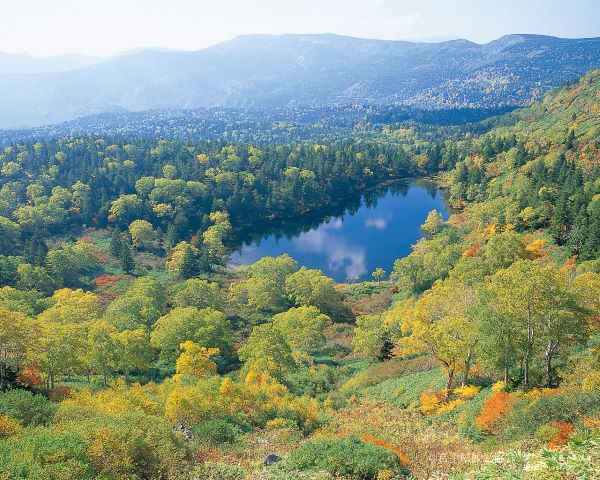
Hachimantai (八幡平) in Towada-Hachimantai National Park (十和田八幡平国立公園) is a magnificent patch of nature on the prefectural border between Iwate (岩手) and Akita (秋田). While the fall foliage scenery is better on the Akita side of Hachimantai, the summit of Mt. Hachimantai and many of the natural wonders are located in Iwate prefecture.
For more information about what to do and how to get to Hachimantai, refer to our Hachimantai article.
Day 8 – Ichinoseki
Morioka ⇒ Ichinoseki
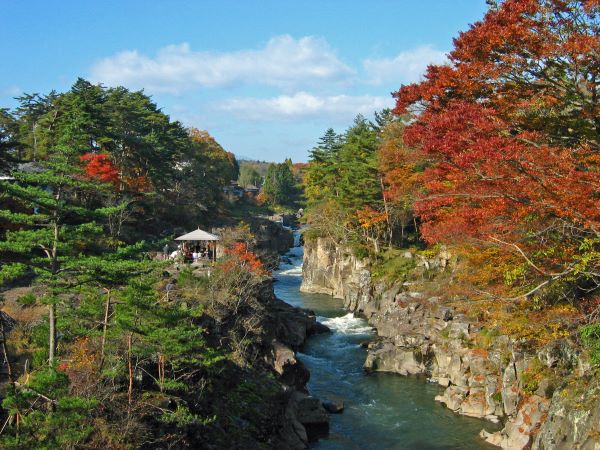
When you are ready, take the bullet train to Ichinoseki from Morioka. From JR Ichionoseki Station, take a local train/bus to Genbikei Gorge and/or Geibikei Gorge. While the two attractions are both natural valleys, their characteristics differ significantly from one another.
For hotels, stay close to Ichinoseki Station. We had a comfortable stay at Toyoko Inn Ichinoseki Ekimae.
Note: It takes 40 minutes to get to Ichinoseki Station from Morioka Station by bullet train.
The promenade at Genbikei Gorge allows you to trek through the gorge. It is also where you can see mochi rice cakes “flying” across the bank. On the other hand, at Geibikei Gorge, a traditional boat will take you to the other end of the deep valley.
The local specialty in Ichinoseki also differs from that in Morioka. The mochi rice cake cuisine here is a must-try. The good news is that a few restaurants can cater to the vegan diet.

For more information, refer to our article on Ichinoseki!
Day 9 – The Temples in Hiraizumi Town
Ichinoseki ⇒ Hiraizumi ⇒ Ichinoseki
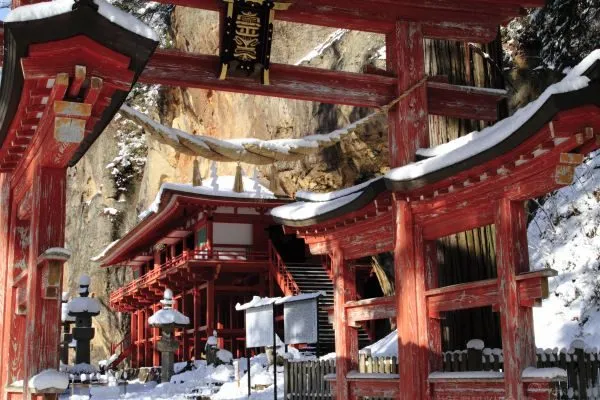
Day 9 is about the temples and history in Hiraizumi. The town was once Kyoto’s rival for its refined culture and elegant surroundings in the 12th century. Until now, it retains its charm and traces of its former greatness. If you are after a cultural and scenery feast, it is the destination that you don’t want to miss!
Hiraizumi is only two stations away from Ichinoseki.
For more information, please refer to our article on Hiraizumi.
Day 10 – Sendai
Ichinoseki ⇒ Sendai
On day 10, head to the train station and take a bullet train to Sendai.
Sendai is Tōhoku region’s biggest city. Besides Sendai Castle, it is where you can adore one of the area’s most amazingly built temples. The level of detail that goes into the architecture of Zuihōden Temple is astonishing.
The city also has a couple of good cafes worth visiting for the famous Zunda-related desserts. After resting, you can head to Sendai Daikannon to see the gigantic Kannon Bodhisattva statue.
For more information about the attractions in the city, refer to our Sendai article!
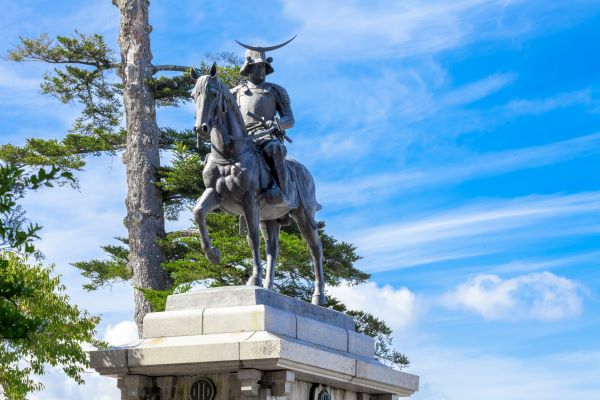
If you are a Hanyu Yuzuru’s fan, you can also refer to our article on a Pilgrimage to Hanyu Yuzuru’s Hometown!
Day 11 – Akiu Onsen
Sendai ⇒ Akiu Onsen ⇒ Sendai
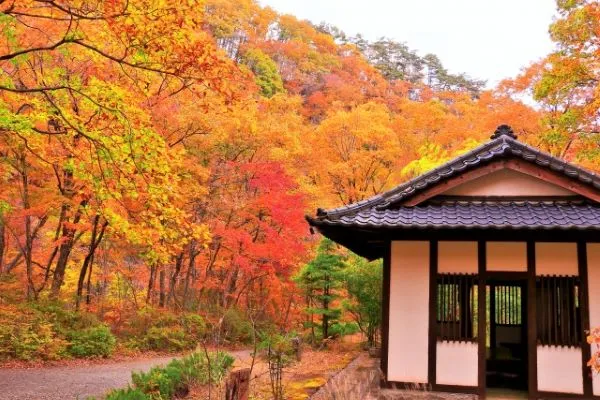
Akiu Onsen is Sendai’s best hot spring town. It was also loved by two past Japanese emperors. The onsen town is extra picturesque in autumn. You can take a bus to get there. In addition to the cultural attractions in the town center, you can also take a bus to Akiu Ōtaki Fall and Futakuchi Gorge.
For more information about what to do in the hot spring town, refer to our article Akiu Onsen!
Day 12 and Day 13 – Tadami Line
Sendai ⇒ Aizu-Wakamatsu/Tadami Line
On Days 12 and 13, you will explore Japan’s most scenic local train line, the Tadami Line. From the local train’s window that runs through the mountains, stunning natural views unfold one after another throughout the year. Several tourist spots worth checking out are also dotted along the Tadami Line, enriching your visit to Japan’s rural towns.
The Scenic View at The First Tadami River Bridge Viewpoint and Miyashita Arch Sankyōdai Bridges Viewpoint
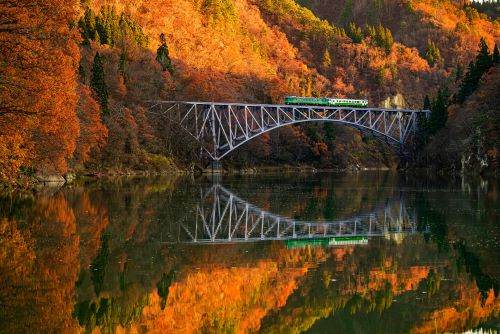
Note that there are only three services that run between Aizu-Kawaguchi Station and Tadami Station in each direction each day. Thus, it is recommended to spend a night around Koide Station or Aizu-Wakamatsu Station. There are plenty of accommodation options close to Aizu-Wakamatsu Station.
Note that Aizu-Wakamatsu Station is around 2 hours away from Sendai Station by train. Therefore, staying in Aizu-Wakamatsu on Day 10 is also an option.
You can spend Day 11 exploring the attractions on the first half of the Tadami Line. From Aizu-Wakamatsu Station, take the 7:41 am train. The train will reach Aizu-Miyashita Station at 9:07 am. From Aizu-Miyashita Station, rent a bicycle from Mishima Town Tourism Association (観光交流館からんころん). It is just a 2-minute walk away. Then, it will take you around 15 minutes to get to Ozekaido Mishima Juku Roadside Station, where you can park your bicycle.
If you stay in Sendai on Day 10, you can take the train departing at 1:05 pm from Aizu-Wakamatsu Station.
Note that the train departure time mentioned above is based on the Tadami Line timetable. Use one of Japan’s Transport Apps to plan your visit.
The First Tadami River Bridge Viewpoint is a 3-minute walk from Ozekaido Mishima Juku Roadside Station.
Then, you can cycle to the Third Tadami River Bridge Viewpoint. But just note the viewpoint is inside the snowshed (高清水スノーシェッド) on National Route 252. So, if you decide to go, be very careful about the ongoing traffic.
After returning your bicycle, you can head to Miyashita Arch Sankyōdai Bridges Viewpoint. The scenic spot is only a 5-minute walk from the station.
Tip: The Japan Transit Planner app has a timetable function in its free version.
Important: If you take the Tadami Line in the morning, have lunch at one of the restaurants near Aizu-Miyashita Station.
Things to Do Around Hayato Station
If you get to Aizu-Miyashita Station in the morning, you can take a taxi to Hayato Station if you don’t want to wait till 2:30 pm for the next train. It is only a 10-minute drive. Refer to HERE for information about taxis in Japan, including how to reserve one.
Taking a traditional boat to explore Mugenkyō Gorge is a must at Hayato Station. The usual course takes around 45 minutes for a return trip to the Tadami River. If you understand Japanese, you can also reserve the boat and sightseeing course for the boatman to take you around the area.
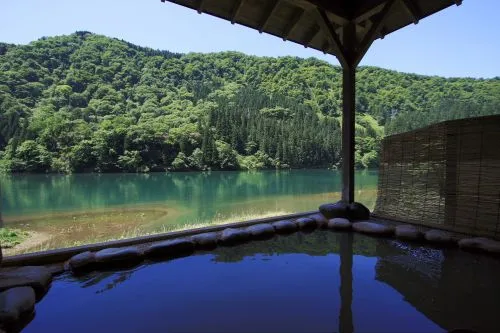
Then you can head to Hayato Onsen Tsuru no Yu to indulge in onsen. But note the hot spring facility doesn’t have a private bath.
If your hotel is in Aizu-Wakamatsu, it is recommended to take the 3:53 pm train from Hayato Station to get back. Otherwise, you will need to wait until 7:26 pm.
Things to Do in Tadami Town and the Scenic Spots Around Tadami
For Day 12, start your day by taking the 7:41 am train from Aizu-Wakamatsu Station and getting off at Tadami Station (只見駅). The train will get to Tadami at 9:07 am. Then, you can start exploring the small town. You will find Japan’s smallest distillery in Tadami. Despite its size, the sake produced at Sake Brewery Nekka has garnered international recognition and won numerous awards.
For more information about Tadami, refer to our Guide to What to Do in Tadami Town article.
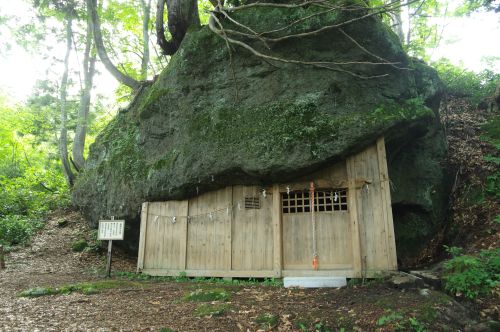
Then, rent a bicycle from Tadami Town Information Center (只見町インフォメーションセンター) and explore the surrounding scenic spots! Refer to HERE for the Tadami town cycling route. With an electric-assisted bicycle, getting to spots such as Lake Tagokura (田子倉湖), the Seventh Tadami River Bridge Viewpoint (第七只見川橋梁ビューポイント), and the Eighth Tadami River Bridge Viewpoint (第八只見川橋梁ビューポイント), won’t be hard!
Just remember to keep an eye on the time. Taking the 2:35 pm train from Tadami Station back to Aizu-Wakamatsu is better. The next train after that departs at 6:01 pm.
Day 14 – Aizu-Wakamatsu
Aizu-Wakamatsu ⇒ Tokyo
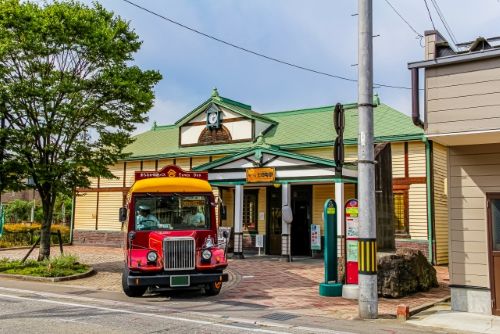
If you aren’t in a hurry to get to the airport, Aizu-Wakamatsu has several spots that are worth checking out. Besides the red-roofed Tsurugajo Castle, we highly recommend heading to the Nanukamachi-dōri street. The 800-meter-long street stretching west from Nanukamachi Station was a busy street in Aizu from the Edo period to the early 20th century. Historical warehouses and Western-style buildings are carefully preserved. While the street isn’t as lively as before, there is no doubt that it is where you can discover Aizu’s culture.
Moreover, there are a few spots related to the members of the famous samurai group, Shinsengumi, in the area!
For more information, refer to our article on the Must-Visit Spots on Nanukamachi-dōri!
Planning to Spend More Than 14 Days in Japan? Check Out the Itinerary to Other Parts of Japan!
If you have more than 7 days to spend in Japan and are struggling to decide where to visit next, we have a couple more itineraries to other parts of Japan with fascinating attractions.
Please refer to our Japan Itinerary Category for more information!