Step into a world where samurai legacy and modern artistry collide with our guide to Kanazawa (金沢), Japan’s “Little Kyoto.” Located on the rugged coast of the Sea of Japan, Kanazawa is home to Kenroku-en, universally acclaimed as one of the country’s three most beautiful landscape gardens. Producing 90% of Japan’s gold leaf (金箔), this prosperous city has its own unique culture, including the way fabrics are dyed and the Kaga Hōshō school (加賀宝生) of Noh theater. Whether you are wandering the perfectly preserved wooden teahouses of the Higashi Chaya geisha district, exploring the booby-trapped corridors of the “Ninja Temple”, or admiring the circular architecture of the 21st Century Museum of Contemporary Art, Kanazawa offers a deep dive into Edo-period culture without the overwhelming crowds of larger cities.
Things to Do in Kanazawa
- Tsuzumi-mon Gate (鼓門)
- Ōmichō Market (近江町市場)
- Kenrokuen Garden (兼六園)
- Kanazawa Castle (金沢城)
- Oyama Shrine (尾山神社)
- Kaga-Yūzen Kimono Center (加賀友禅会館)
- Ishikawa Local Products Center (石川県観光物産館)
- Gyokusen-en Nishida Family Garden (西田家庭園「玉泉園」)
- 21st Century Museum of Contemporary Art, Kanazawa (金沢21世紀美術館)
- Kanazawa Noh Museum (金沢能楽美術館)
- Nagamachi Samurai District (長町武家屋敷跡)
- Kanazawa’s Three Chaya Districts
- Kanazawa Yasue Gold Leaf Museum (金沢市立安江金箔工芸館)
- Myōryūji Temple (妙立寺)
- Mt. Utatsu (卯辰山)
- Kanazawa Minami Sōgō Undōkōen Park Rose Garden (金沢南総合運動公園バラ園)
Tips:
☛ Kanazawa has the most thunderstorms and the fourth-highest rainfall in Japan, so raingear is essential during your time in Kanazawa.
☛ You can make a reservation HERE to be dressed up in a kimono before exploring Kanazawa!
Explore Kanazawa With a Guided Tour
If you prefer a guide to introduce you to Kanazawa or a photographer to take professional photos for you, how about joining one of the following tours?
- Full-Day Tour from Kanazawa: Samurai, Matcha, Gardens and Geisha
- Discovery the Secret Gems in Kanazawa
Transportation Options in Kanazawa City Center
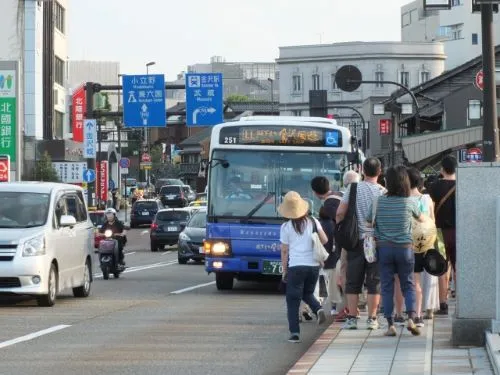
As mentioned earlier, most of the city’s attractions are not too far away from each other and Kanazawa Station. That said, it will take about 20 to 30 minutes to move from one main attraction to another. Unless you really like walking or prefer to travel by rental bike, we highly recommend you utilize the regular bus services that depart from JR Kanazawa Station.
For more information on how to explore Kanazawa efficiently, refer to our How to Travel Between the Attractions in Kanazawa article!
Festivals and Four Seasons in Kenrokuen Garden at Kanazawa
- From early to mid-March each year, around 20 different species of the 200 plum trees planted close to Shirure-Tei will bloom
- From the beginning to mid-April each year, around 20 different species of the 420 cherry trees in the garden will bloom
- Fugenzo Cherry: mid-April to early May
- Azalea: April to June
- May: Iris
- From late June to early July, you might be able to see some fireflies around Hanami Bridge.
- Japanese clover: August to September
- From mid to late November is the best time for fall foliage appreciation
- December to March: Camellia
For a list of events and festivals, please refer to Kanazawa City’s website HERE.
One-Day or Three-Day Passport for Cultural Sites at Kanazawa
When you come to Kanazawa, visiting a couple of the cultural sites is a must! Depending on how long you will be in Kanazawa, get one of the two passports that allow unlimited entry to those sites during their validity period to save!
For more information, please refer to their website HERE.
Tsuzumi Gate (鼓門)
This 13.7-meter gate, completed in 2005 in front of the JR Kanazawa Station, is the landmark of Kanazawa.
The inspiration for the gate came from the drum used in the Kaga Hōshō school (加賀宝生) of Noh theater. Noh theater is a type of performance art that has existed since the 14th century. In Kaga Province, in particular, Noh theater wasn’t only enjoyed by the samurai but was available to a wide range of upper and lower classes throughout the province.
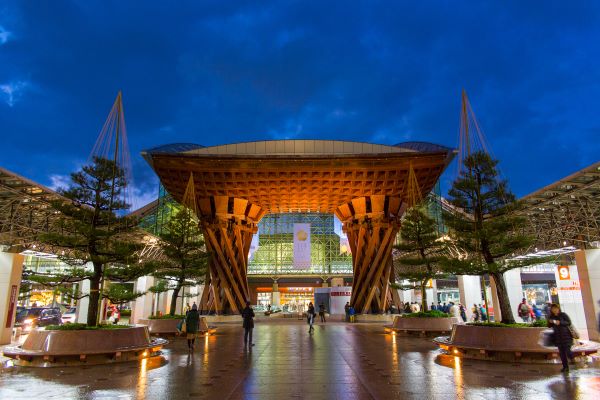
This is why, when locals talk about the Noh theater, they usually say the Noh music falls from the sky, because even the gardeners working in the treetops sing Noh chants!
Since Noh theater is an important part of Kanazawa’s culture, the gate was built based on an element of the performance art. And probably because of this gate, Kanazawa Station was chosen to be the 6th most beautiful station in the world by the American travel magazine Travel + Leisure in 2011!
Unlike the normal pillars of a gate, the pillar of Tsuzumi Gate has another practical use that can prolong the gate’s lifespan. There are pipes inside those two thick pillars that help to drain the water and snow accumulated on the roof in bad weather (^_-)-☆.
Kaga Yūzen (加賀友禅)

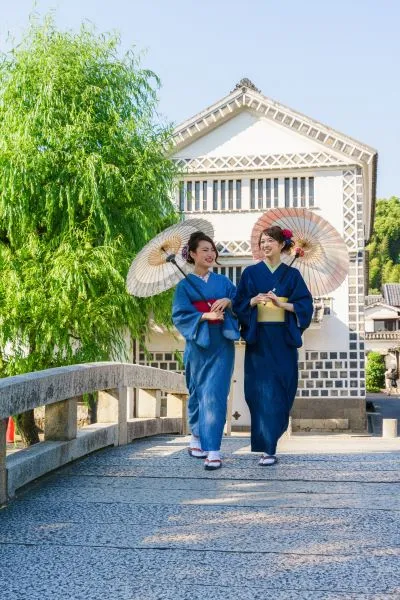
In a city with a long history in Japan like Kanazawa, isn’t it tempting to dress in a kimono before heading to all the tourist spots, such as historic tea houses, filled with traditional Japanese atmosphere?
It wouldn’t be hard to find a kimono rental shop around the station or close to Kenrokuen Garden, but it was really hard to find a kimono that isn’t too showy. And when we say ‘showy,’ we mean the flashy, touristy kimono with many clashing patterns in rich colors. These options are great if you are on a budget and still want that kimono experience.
But personally, we were after a more traditional, authentic kimono in a muted, elegant style. Plus, when you come to Kanazawa, it is a shame if you don’t get to wear a kimono dyed with the local Kaga Yūzen techniques!
How to Find Out if a Kimono Rental Shop Has Kaga Yūzen Kimono
As the prices for the kimonos dyed with Kaga Yūzen techniques are high, not all kimono rental shops have them. So, if you are after one of these gorgeous kimonos, just check with the staff to see if they have a Kaga Yūzen kimono. Below is a phrase that you can use if you ever get stuck with communication:
加賀友禅の着物はありますか?Pronouncing as “Kaga Yūzen no kimono wa arimasuka?” (Do you have Kaga Yūzen Kimono?)
If you haven’t decided on which kimono rental shop you want to use, the Kimono Rental Shop Kokoyui (着物レンタルshop・心結), which is just a 5-minute walk from JR Kanazawa Station, can be a good choice. The Kaga Yūzen Kimono Course isn’t listed on their English website, but it’s definitely available on their Japanese website HERE.
Price-wise, the normal kimono rental plan at kimono rental shops starts from around 5,000 yen. If you are after the Kaga Yūzen kimono, expect to pay at least twice, if not three times that amount.
Ōmichō Market (近江町市場)

Ōmichō Market, also known as Kanazawa’s pantry, has around 170 shops on two sides of a narrow street. While it can be hard to find a vegetarian menu at a restaurant, it is a great place to source fresh vegetables, fruits, and local specialties. Many shops also offer tasting samples, which is the best way to figure out the best snack as a souvenir.
We fell in love with Kanazawa Bōcha Tea (金沢棒茶) after trying it at one of the stalls. Instead of tea leaves, it is roasted tea stalks.
Tip: During the day, until the market closes at 5 pm, it can be as packed as shown in the photo. If you want to avoid the crowd, come here in the early morning. The shops in the market should all be open by 9 am.
How to Get to Ōmichō Market
- From JR Kanazawa Station, it is just a 15-minute walk.
- You can also catch a bus from Kanazawa Station’s bus stop no. 6 to no. 9 and get off at Musashigatsuji Ōmichō Ichiba (武蔵ヶ辻 近江町市場) stop.
Kenrokuen Garden (兼六園)
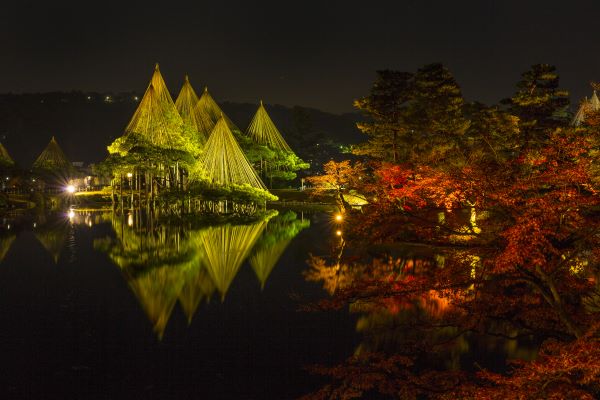
Experience the pinnacle of Japanese landscape design at Kenrokuen Garden in Kanazawa. Widely regarded as one of Japan’s “Three Great Gardens,” Kenrokuen is celebrated for embodying the six essential attributes of a perfect garden. From the iconic two-legged Kotoji-toro lantern reflecting in Kasumiga-ike Pond to the ancient Karaki-no-matsu pine, every corner offers a masterclass in horticultural beauty.
For more information, please refer to our article on Kenrokuen Garden!
Kanazawa Castle (金沢城)
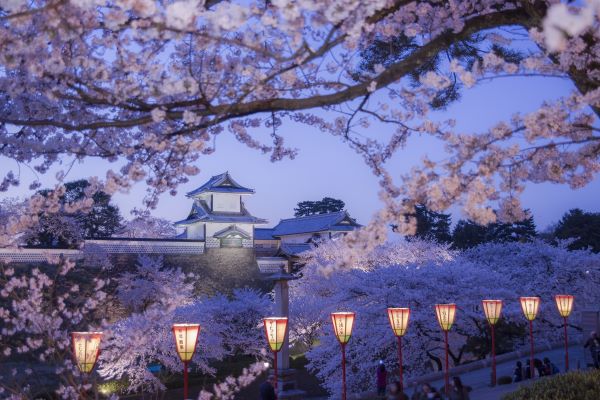
Step back into the feudal heart of the Kaga Domain with our guide to Kanazawa Castle Park. Once the seat of the powerful Maeda clan, this sprawling fortress stands as a testament to the “City of Gold’s” rich samurai heritage. While the original main keep was lost centuries ago, the meticulous reconstruction of the Hishi Yagura turret and the massive Gojikken Nagaya storehouse showcases the pinnacle of Edo-period engineering.
For more information, please refer to our article on Kanazawa Castle!
Oyama Shrine (尾山神社)
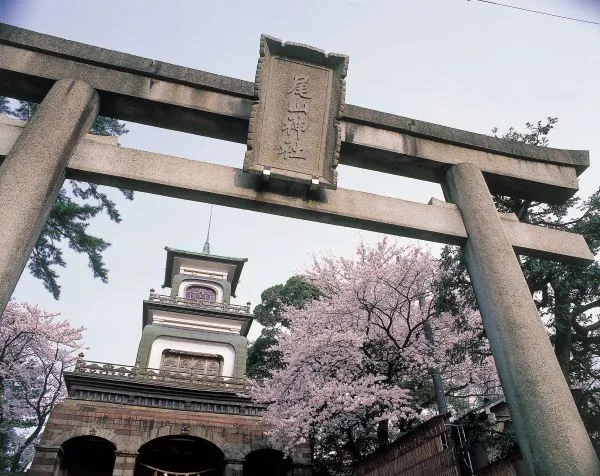
If you are wondering which of the six entrances you should finish your exploration of the Kanazawa Castle, exit the castle park through the Nezumita-mon Gate if you aren’t in a hurry to visit Kenrokuen Garden. Because after you cross the Nezumita-mon Bridge, there is a shrine with a three-storied gate, each built in a different style! Beyond the gates, you will find a serene “Garden of Musical Instruments,” where ponds and bridges are meticulously designed to resemble ancient lutes and harps.
For more information, please refer to our article on Oyama Shrine!
Kaga-Yūzen Kimono Center (加賀友禅会館)
Very close to Kenrokuen Garden is this Kaga Yūzen promotion center. It is the perfect place to learn more about this highly skilled dyeing technique! Not only will there be beautiful kimonos on display, but there will also be a dyeing demonstration corner so you can see how the professionals do it. And if you are interested in giving it a try, head to their basement level and participate in one of their dyeing workshops (=゚ω゚)ノ.


For more information about the workshops available, please refer to their website HERE. Please note that additional fees apply.
Kaga-Yūzen Kimono Center’s Business Hours, Admission Fees, and Access Information
- The center is open from 9 am to 5 pm daily except Wednesdays and from the end of December to the beginning of January.
- If Wednesday is a public holiday, the center will be open.
- The admission fee is
- 500 yen for adults
- 400 yen for children
- From the bus stop – Kenrokuen-shita Kanazawajō (兼六園下・金沢城), it is a 2-minute walk.
Ishikawa Local Products Center (石川県観光物産館)
Very close to Kaga-Yūzen Kimono Center, this local product centre is where you can source a wide range of local specialties in one go. The center also hosts many workshops for visitors to make Japanese confectionery and/or craftwork, including gold leaf decoration.
For more information about the workshops held here, please refer to their website HERE. Some workshops, such as Japanese confectionaries making, can be quite popular. We highly recommend that you call the center at +81-76-222-7788 to avoid disappointment.
For the Japanese-Style Confection Experience, you can also reserve through the Japanese Website. You can translate it using your browser’s translation function.
Ishikawa Local Products Center’s Opening Hours and Access Information
- The center is usually open from 9:50 am to 5:30 pm on weekdays.
- Note that the opening hours may differ slightly.
- Please refer to the calendar on their website HERE for the days when the center is closed.
- From the bus stop – Kenrokuen-shita Kanazawajō (兼六園下・金沢城), it is a one-minute walk.
Gyokusen-en Nishida Family Garden (西田家庭園「玉泉園」)
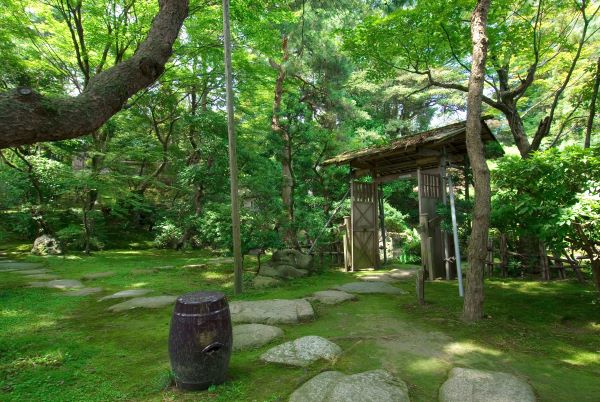
Directly next to the Kaga-Yūzen Kimono Center, the Gyokusen-en is a garden that is 120 years older than Kenrokuen Garden opposite Hyakumangoku-dori Avenue. Not many tourists know that the water flowing in Gyokusen-en’s ponds is sourced from Kasumiga Pond in Kenrokuen Garden! It is also the best spot in Kanazawa to experience the tea ceremony.
For more information, please refer to our article on Gyokusen-en Garden!
21st Century Museum of Contemporary Art, Kanazawa (金沢21世紀美術館)
Step into a world of architectural wonder and interactive creativity with our guide to the 21st Century Museum of Contemporary Art, Kanazawa. Visitors from around the world flock here to experience Leandro Erlich’s “The Swimming Pool,” where you can stand “underwater” without getting wet, and James Turrell’s “Blue Planet Sky,” a meditative room that frames the ever-changing Kanazawa heavens.
For more information, please refer to our article on 21st Century Museum of Contemporary Art, Kanazawa!

Kanazawa Noh Museum (金沢能楽美術館)

Just next to the 21st Century Museum of Contemporary Art, Kanazawa, there is another small museum all about the local school of the Noh Threatre – Kaga Hōshō (加賀宝生).
If you know nothing about the kind of performance art, by the time you come out of this museum, you will have enough knowledge to talk about it like an expert to your families and friends (=゚ω゚)ノ.
Cultural Experiences at Kanazawa Noh Museum
If you have 10 to 20 minutes to spare, head to the Noh costume-wearing corner on the ground floor. Although you won’t be able to tell who is behind one of the 20 Noh masks when you go through your photos later on, it will definitely be a fun experience!
- The corner is open from 10 am to 4 pm from Friday to Sunday and on public holidays. Please arrive before 3:30 pm if you want to be dressed.
- Another thing to note is that if your height isn’t between 150 and 175 cm or your heap size is more than 100 cm, it can be hard for you to participate in this experience, as they probably won’t have any costumes that fit you.
The experience, which takes place from 10 am to 5 pm, involves playing the instruments used in Noh Theater. It can be your first personal Taiko-drum (太鼓) performance!

Kanazawa Noh Museum’s Opening Hours, Admission Fee, and Access Information
- The museum is open from 10 am to 6 pm daily except Mondays, and from the end of December to the beginning of January. It will also close when the staff changes the collections on display.
- If Monday is a public holiday, it will close the next business day instead.
- The last admission is at 5:30 pm.
- The admission fee is
- 310 yen for senior high school students and above, up to the age of 65
- 210 yen for the elderly who are 65 years old and older, but free on public holidays
- Free for junior high school students and younger
- You can also get a combo ticket that allows you to enter the Noh Museum and the 21st Century Museum of Contemporary Art, Kanazawa
- 570 yen for adults
- 480 yen for university students
- 530 yen for those who are 65 years old and above
- Free for junior high school students or younger
Nagamachi Samurai District (長町武家屋敷跡)
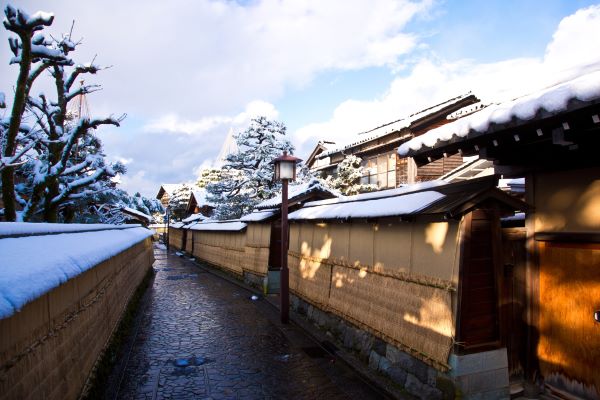
Nestled at the foot of the former Kanazawa Castle, the Kanazawa samurai district remarkably preserved neighborhood is a living time capsule of Edo-period Japan, famous for its winding cobblestone alleys, historic canals, and iconic earthen mud walls. Visitors can step inside authentic samurai residences, such as the world-renowned Nomura Clan House, home to a Michelin-starred garden, or explore the modest quarters to see how foot soldiers once lived.
For more information, refer to our article on Nagamachi Samurai District!
The Three Tea House Districts in Kanazawa
Immerse yourself in the timeless elegance of Kanazawa with our guide to the city’s Three Tea House Districts. Established in 1820, these historic neighborhoods, remain the beating heart of geiko (geisha) culture and Edo-period architecture. From the bustling main street of Higashi Chaya, to the tranquil riverside alleys of Kazue-machi and the intimate charm of Nishi Chaya, each district offers a unique window into Japan’s feudal past.
For more information, please refer to our article A Quick Introduction to Kanazawa’s Three Chaya Districts!
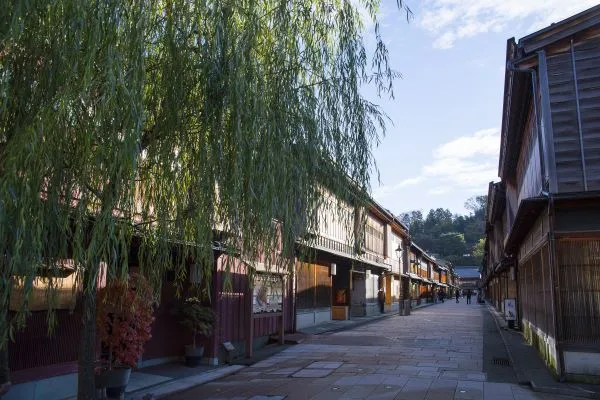
Kanazawa Yasue Gold Leaf Museum (金沢市立安江金箔工芸館)

As the city that produces the most gold leaf in Japan, Kanazawa has a museum dedicated to gold leaf for anyone interested in learning more about how the shiny paper leaf is produced.
There are also many golden collections on display, from kimonos with golden threads to pottery and lacquerware to paintings with gold leaf. If you love golden artwork, this is the place you want to visit when you come to Higashi Chaya District!
For more information, please refer to their website HERE.
Kanazawa Yasue Gold Leaf Museum’s Opening Hours, Admission Fees, and Access Information
- The museum is open from 9:30 am to 5 pm daily except Tuesdays and from the 29th of December to the 3rd of January.
- The last admission is at 4:30 pm.
- If Tuesday is a public holiday, the museum will close the next business day.
- Additional dates that the museum will close are listed at the end of the Official Website.
- The admission fee is
- 310 yen for adults
- 210 yen for those aged 65 and above. On public holidays, it is free.
- Free for high school students and below as well
- The museum is less than a 5-minute walk from the bus stop – Hashibachō (橋場町).
Myōryūji Temple (妙立寺)
Wondering the best things to do in Kanazawa? Joining Myoryuji Temple tour is a must if you are after some fun things to do in Kanazawa. It is famously known as the Ninja Temple.
The tour will guide you to uncover the secrets of Kanazawa’s most intriguing architectural marve. Built with a labyrinth of hidden stairs, trap doors, secret passages, and escape tunnels, the temple’s ingenious design was meant to thwart intruders and protect the local feudal lords!
For more information, refer to our article on Myōryūji Temple!

Mt. Utatsu (卯辰山)
Located east of the city, the mountain that overlooks the city center isn’t hard to reach. With just one bus service, you will be at the mountain in less than 30 minutes (=゚ω゚)ノ.
Located east of the city, the mountain that overlooks the city center isn’t all that hard to get to. With just one bus service, you will be at the mountain in less than 30 minutes (=゚ω゚)ノ.

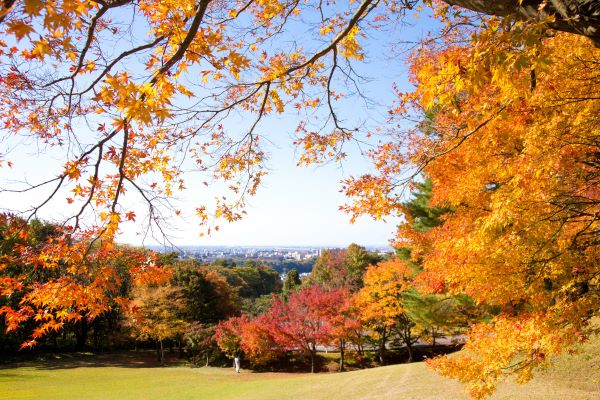
Being the most popular nature park for Kanazawa citizens, it is a famous place to admire various flowers and autumn foliage from April to November.
- 250 Cherry trees usually bloom from early to mid-April.
- 8,000 azaleas of12 different species usually bloom from late April to mid-May.
- 200,000 iris of 100 different species and 2,900 hydrangea trees usually bloom from mid-June to mid-July.
There are, of course, quite a few lookouts in the mountain that will give you a wide view of Kanazawa city and the nearby mountain range.
If you have a car, the most popular spot for Kanazawa City’s night view spot is Bōko-dai (望湖台). And in fact, try to get there before sunset for a photo as good as the one at the right or even better!

How to Get to Mt. Utatsu by Bus
Take bus route 90 – Utatsuyama Line (卯辰山線) and get off at either Bōko-dai (望湖台) or Utatsuyama Kōen (卯辰山公園).
Please note that the number of bus services is limited.
- For the service’s timetable, please refer to HERE.
- Bōko-dai (望湖台) is just a stop before Utatsuyama Kōen (卯辰山公園).
- You can also use one of Japan’s Transport Apps to plan if you don’t read Japanese.
Kanazawa Minami Sōgō Undōkōen Park Rose Garden (金沢南総合運動公園バラ園)
If you are visiting Kanazawa from mid-May to early June or from late September to mid-October, consider stopping by this park, a bit farther from JR Kanazawa Station, for its rose garden.
Amongst the 1,800 rose trees, there are a total of 143 types of roses! When the flowers bloom, it is the most romantic spot in Kanazawa, especially with the calming rose aroma that surrounds the whole garden!
How to Get to Kanazawa Minami Sōgō Undōkōen Park Rose Garden
From JR Kanazawa Station, take bus route 33 or 60 Shijima (四十万) and get off at Teraji (寺地). From the bus stop, it will be a 5-minute walk.
- For the service’s timetable, please refer to HERE.
Extend Your Trip to Ishikawa Prefecture to Noto Penisula
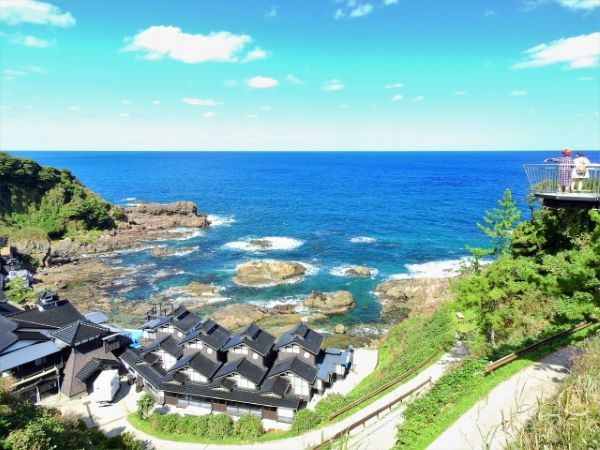
Extend your trip to the Noto Peninsula, a coastal gem in Ishikawa Prefecture that offers one of Japan’s most authentic off-the-beaten-path adventures. Known for its “Satoyama Satoumi” lifestyle, a UNESCO-recognized harmony between land and sea, Noto invites travelers in 2026 to discover the world-class Wajima lacquerware, the vibrant morning markets, and the restorative waters of Wakura Onsen.
For more information, please refer to our article on Noto Penisula!
Indulge in Kaga Onsen’s Natural Hot Springs and Stunning Nature
Unwind in the healing waters of Kaga Onsen, a collection of four historic hot spring towns that have defined Japanese wellness for over 1,300 years. Nestled between the sacred slopes of Mount Haku and the rugged Sea of Japan coast, this premier destination in Ishikawa Prefecture offers an authentic escape into traditional ryokan culture and samurai-era heritage.
Refer to our Kaga Onsen article for more information!