The iconic floating Torii gate of Itsukushima Shrine (厳島神社) is one of Japan’s most recognizable and spiritual sights, famously appearing to float completely on the sea at high tide. Registered as a UNESCO World Heritage Site in 1996, the shrine’s dramatic scenery changes completely with the ebb and flow of the tide, offering a particularly magical atmosphere during the evening light-ups. Planning a visit requires navigating more than just ferry schedules. You also need to time the Miyajima tide tables perfectly to see the gate both surrounded by water and accessible by foot. This complete guide covers everything you need to know about visiting Itsukushima Shrine, timing the high and low tides, and finding the best vegetarian and vegan dining spots on the island so you can travel with total peace of mind.
Everything You Need to Know Before Visiting Itsukushima Shrine
- A Brief History of Japan’s Sacred Water Shrine
- Why Was the Shrine Built on the Water?
- Catching the Sunset from Itsukushima Shrine
- Walking Up to the Great Torii Gate at Low Tide
- Why You Should Consider Staying Overnight on Miyajima Island
- The Floating Noh Stage of Itsukushima Shrine
- Itsukushima Shrine’s Opening Hours and Admission Fee
- Sea Kayaking at Miyajima
- Miyajima Light-Up Cruise
- The Itsukushima Shrine Treasure Hall (寶物館)
- How to Get to Itsukushima Shrine
- Navigating Miyajima as a Vegetarian or Vegan (Without Missing Out)
Explore Itsukushima Shrine and Miyajima With a Guided Tour
If you prefer a guide to introduce you to the charms of Itsukushima Shrine and Miyajima, how about joining one of the following tours?
Cultural Activities Tours on Miyajima
- Kimono and Calligraphy Experience in Miyajima
- Cultural activity in Miyajima: Kimono, tea ceremony, Calligraphy and Amulet
A Brief History of Japan’s Sacred Water Shrine
The history of Itsukushima Shrine is an incredible tale of nature worship, samurai ambition, and strict religious taboos. While the stunning vermilion corridors look like a floating palace today, the shrine began as a modest sanctuary more than 1,400 years ago.

The Mythic Foundation by the Sea
The great shrine we have today was originally built in 593 by Saeki no Kuramoto, an influential local leader during the reign of Empress Suiko. Long before complex structures existed, the ancient people of the region worshipped Miyajima Island as a whole as a physical kami (Shinto god or spirit), drawn to the deep spiritual energy of its highest peak, Mount Misen.
Taira no Kiyomori and the Samurai Transformation
The shrine’s transition from a small main hall to a grand, floating-pavilion layout occurred in 1168 under Taira no Kiyomori (平清盛), the country’s dominant general at the time. Kiyomori firmly believed he had successfully defeated the fierce pirates terrorising local coastal communities thanks to the direct blessings of the gods of Itsukushima Shrine. Driven by this profound gratitude, he continually donated substantial wealth and political influence to expand and elevate the complex.

An Elite Haven for Nobles and Emperors (1200s – 1600s)
Because of Kiyomori’s grand reconstructions in the elegant Shinden-zukuri style (an architectural layout reserved for imperial nobility), the shrine’s prestige skyrocketed. It rapidly grew into a massive spiritual center that attracted people of the absolute highest social status. For centuries, it welcomed a steady stream of powerful court nobles, legendary military leaders of successive Shogunates, and even reigning Emperors who traveled across the country to pay homage.
The Battle of Miyajima
During Japan’s chaotic Warring States period, the sacred island unexpectedly became a strategic military asset. In 1555, the warlord Mōri Motonari launched a legendary, late-night naval sneak attack during a fierce storm, crushing a massive rival army right on the shores of the island. After securing dominion over western Japan, the Mōri clan heavily renovated the main hall and funded a grand reconstruction of the Great Torii Gate.
Why Was the Shrine Built on the Water?
The decision to construct a massive complex on stilts over a shifting tidal flat wasn’t a mere stylistic choice. It was a direct response to a strict religious boundary.
Because the entire landmass of Miyajima was revered as a pure, sacred deity, cutting into the soil or clearing the ancient forests to lay down a traditional foundation was considered deeply offensive to the spirits. Building the sanctuary over the water allowed humans to approach the divine island by boat without ever “polluting” or altering its sacred ground.
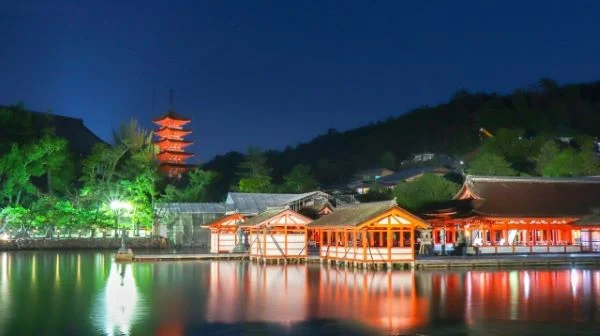
To maintain this uncompromising level of Shinto purity, births and deaths were completely forbidden on the island for centuries. To this day, the shrine retains its strict spiritual heritage, remaining in perfect structural harmony with the natural rising and falling of the Seto Inland Sea.
The Highlights of the Sacred Complex
When you step inside the sacred grounds of Itsukushima Shrine, you are walking through a brilliantly preserved complex of National Treasures and cultural properties. Your spiritual journey begins at Marōdo Shrine (客神社), a gorgeous subsidiary sanctuary traditionally revered for love, safety, and protection from misfortune. From there, you will stroll along the stunning East Corridor (東回廊), where the famous vermilion pillars and carefully spaced mesukashi floorboards protect the floating layout from the sea’s tides.
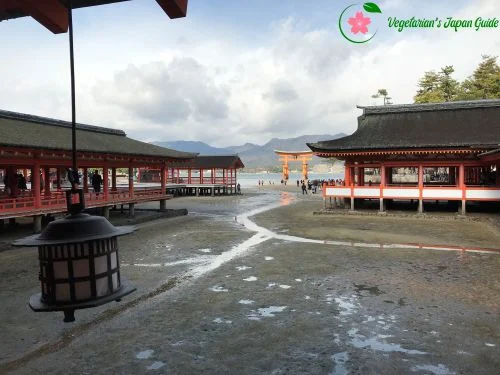
As you venture deeper into the complex, you will find architectural highlights like Asazaya (朝座屋), Masugata (桝形), and a series of dynamic Hirabutai (broad stage) and Takabutai (high stage) platforms positioned perfectly to frame the ocean view.
For an interactive layout map and deep-dive historical context on each of these unique structures, explore the official guide on the Itsukushima Shrine Route Page
Itsukushima Shrine’s East Corridor (東回廊): Ingenious Engineering to Survive the Sea
As you stroll along the East Corridor , look closely at the floorboards beneath your feet. You will notice small, deliberate gaps between each wooden plank.
Far from a construction flaw, this is an architectural trick called mesukashi. When severe typhoons or exceptionally high tides strike the bay, the rising water pushes up through these gaps rather than trapping pressure beneath the floor. This simple, elegant mechanism relieves the hydrostatic pressure, preventing the entire floating pavilion from being lifted up and washed away into the Seto Inland Sea.
The Floating Noh Stage of Itsukushima Shrine

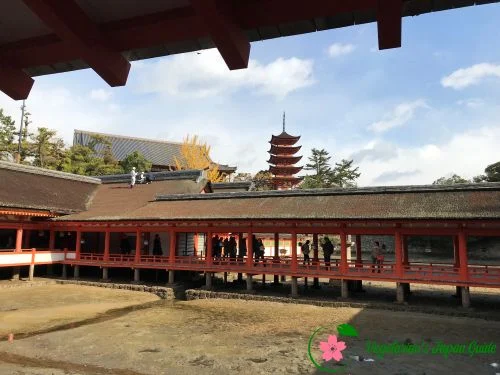
While the Great Torii Gate grabs most of the headlines, another architectural masterpiece within the complex deserves your full attention: the Itsukushima Noh Stage. Built completely over the tidal flats on the right side of the shrine complex, it holds the prestigious title of being Japan’s only floating Noh stage.
🏛️ Why It’s Historically Significant
- Architectural Rarity: Among the thousands of traditional Shinto shrines throughout Japan, this is one of only five designated Important Cultural Properties that feature a dedicated stage for Noh theater—and the absolute only one built entirely over the sea.
- Engineering Marvel: To counteract the acoustics of open water and wind, the stage uses special architectural design techniques, including unique floorboards that resonate beautifully when the actors perform their traditional rhythmic foot-stamping.
- A Living Tradition: Far from a static museum piece, this historic stage is still in use today. Every spring (typically in mid-April), it hosts the sacred Tokasai festival, where multi-day traditional Noh plays are performed over the sea, keeping a centuries-old artistic ritual alive.
Photography Tip: Because the stage is positioned to the west of the main shrine corridors, it is an incredible spot to photograph during the late afternoon. As the sun begins to set, the golden hour light reflects beautifully off the calm water surrounding the stage, creating a breathtaking, minimalist composition for your travel gallery.
Catching the Sunset from Itsukushima Shrine
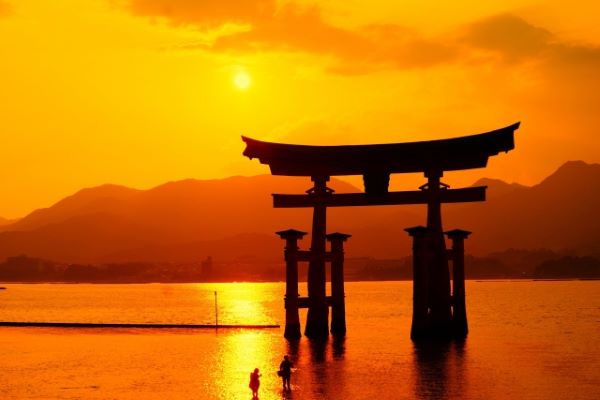
While you are busy exploring this god’s island, don’t forget to keep an eye on where the sun is. Watching the sun dip below the horizon behind the Great Torii Gate is widely considered one of the most magical, bucket-list experiences in all of Japan. As the sky shifts from brilliant oranges to deep purples, the entire Seto Inland Sea reflects the dramatic silhouette of the vermilion structure.
To get the perfect view and make the most of your evening, you need to map out your timing and vantage points carefully.
The Best Vantage Points for Sunset Photography
Depending on what kind of shot you want to capture, there are two premier locations to position yourself as golden hour approaches:
- The Mikonohama Beach Coastline (Best for High Tide): Located just a short walk past the exit of Itsukushima Shrine along the stone-lantern-lined pathway. From here, you look directly west through the gate toward the mainland mountains, capturing the classic “floating” illusion on the water.
- Right Beneath the Gate (Best for Low Tide): If the tide tables align and low tide hits during sunset, you can walk right out onto the wet sand of the tidal flats. Standing directly under or slightly in front of the giant pillars allows you to capture dramatic, close-up silhouette shots with the sunset glowing through the center of the beam.
🕒 Pro-Tips for Timing Your Sunset Visit
- Check the Exact Times in Advance: Sunset times in Hiroshima vary widely by season, ranging from 4:45 pm in December to 7:30 pm in July. Always check a local weather app the morning of your trip.
- Arrive 45 Minutes Early: The pre-sunset “golden hour” provides the softest, most beautiful light on the vermilion wood of the shrine itself.
- Stay for the Nighttime Light-Up: Do not rush back to the ferry terminal the moment the sun drops! About 30 minutes after sunset, the floodlights illuminate Itsukushima Shrine and the Torii Gate, casting a glowing golden reflection across the dark water that lasts until 11 pm.
🎒 A Quick Note for Vegetarian Travelers: Most of Miyajima’s sit-down restaurants and street food stalls close quite early, often between 5 pm and 6 pm right after the daytime crowds depart. If you plan to stay late for the sunset and light-up, make sure to read our Guide to vegan and vegetarian-friendly spots on Miyajima to identify which plant-based dinner spots remain open late, or consider booking a stay at a local ryokan like the Miyajima Guest House Mikuniya that can prepare a dedicated vegetarian meal for you.
Walking Up to the Great Torii Gate at Low Tide
One of the most unique aspects of visiting Miyajima is that you don’t just have to admire the iconic, 16-meter-tall Great Torii Gate from afar. Because the tide recedes completely twice a day (roughly every six hours), the sea floor transforms into a walkable path. This allows you to walk straight out onto the tidal flats and stand directly beneath this massive architectural marvel.
The Mystery of the Coins in the Pillars
If you look closely at the rough bark of the main camphor-wood pillars, you will notice hundreds of coins wedged into the natural cracks. And no, those are not prices for those who waited patiently for the tide to ebb. The money belongs to the god of the shrine that previous worshipers offered.
A Note on Etiquette & Preservation: The current Torii gate structure was built in 1875. Following a massive, three-year structural restoration project that concluded in late 2022, many of the older coins were cleared to protect the newly conserved wood. Visitors are gently encouraged to place offerings respectfully at the base rather than forcing them into the wooden cracks, helping to preserve the gate for future generations.

Why You Should Consider Staying Overnight on Miyajima
Because the local tides fluctuate dramatically every six hours, a quick day trip usually only allows you to experience one side of Miyajima—either the gate floating in the water or the gate sitting on dry sand.
To fully experience both stunning daytime views and the magical, illuminated nighttime atmosphere at both high and low tide, staying overnight on the island is highly recommended. Spending the night gives you the luxury of time to track the movements of the sea without rushing back to catch the last ferry to the Hiroshima mainland.
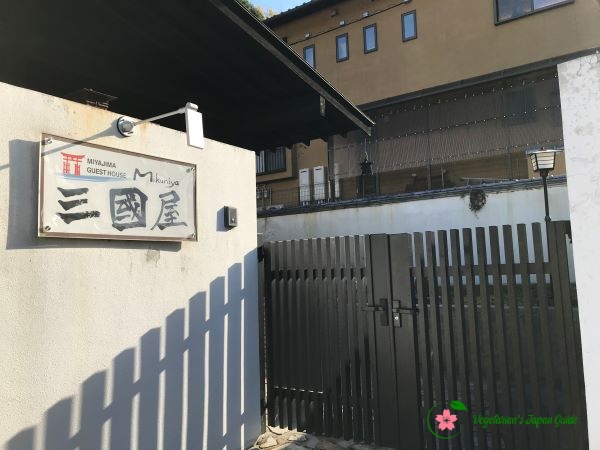
Our Stay: Miyajima Guest House Mikuniya (三國屋)
We chose Mikuniya, a highly rated, social guesthouse that perfectly blends the cozy feel of a traditional ryokan with an affordable budget. Check out our Miyajima Guest House Mikuniya Review for our experience!
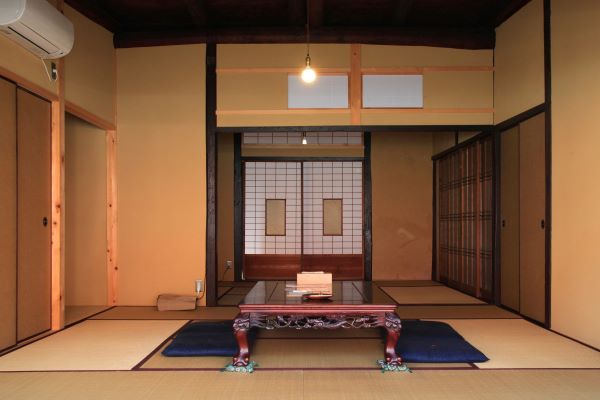
- The Cost & Room: It is incredibly reasonable. Around 12,000 yen gets you a wonderfully spacious Japanese-style room for two people!
- The Location: It sits a little further back from the busy tourist strip, requiring a scenic 10-to-15-minute walk from Miyajima Pier, but the absolute tranquility makes it completely worth it.
- The Highlight: Beyond the fantastic guest reviews, a major highlight of our stay was playing with the owner’s incredibly friendly resident cat!
Other Highly Recommended Miyajima Hotels & Ryokans
If you are looking for traditional multi-course dining (Kaiseki) but have strict dietary needs, finding a ryokan in Japan can be tough because most standard menus rely heavily on fish broth (dashi). However, these specific properties are excellent at accommodating special dietary restrictions if requested at the time of booking:
- Miyajima Seaside Hotel: Most suitable for travelers looking for a peaceful beachside retreat away from the main town center. This hotel features beautiful indoor mineral hot springs (onsen) facing the sea and is highly praised by international travelers for accommodating excellent, dedicated vegetarian dinner menus.
- Miyajima Hotel Makoto: Most suitable for families or couples wanting a classic, deeply authentic ryokan experience right in the heart of town. It features massive, beautiful 12.5-tatami mat rooms and an on-site public bath. Their kitchen can expertly prepare tailored vegetarian, vegan, or gluten-free traditional meals, just ensure you notify them several days in advance so they can pre-order the specialty ingredients.
How to Read Miyajima Tide Tables: High Tide vs. Low Tide
Whether you are planning a quick day trip or booking an overnight stay, checking the official daily tide schedules on Miyajima Tourist Association’s website is the single most important step in planning your Miyajima itinerary. The visual transformation of the area relies entirely on two critical measurements:
- To see the Shrine and Torii Gate “Float”: The water level needs to reach 250 cm or higher.
- To walk out onto the sand directly to the Gate: The water level must drop below 100 cm.
Step-by-Step Guide: Using the Official Miyajima Tide Tool
Because the most accurate, real-time tool is hosted on the Japanese version of the Miyajima Tourist Association’s website, navigating it can initially feel a little intimidating. Use this simple translation breakdown to decode the daily tables like a local:
- Select Your Travel Date: Use the drop-down boxes at the top of the page to select the specific Year, Month, and Date of your visit.
- Generate the Data: Click the button labeled 潮汐表示 (Display Tidal Information) to load the day’s specific chart.
- Read the Columns: A simple data table will appear directly underneath the photos:
- The first column displays the hours of the day (using standard 24-hour time).
- The second column displays the corresponding predicted water level height in centimeters (cm).
- Locate High and Low Peaks: Scroll further down to find the quick summary table. Look for 満潮 (High Tide) and 干潮 (Low Tide) to immediately identify the exact peak hours of the day’s cycle.
If you are using Google Chrome or Apple Safari, you can right-click anywhere on the page and select “Translate to English” to automatically convert the remaining text. If you run into any technical issues finding the data for your specific dates, feel free to drop us a message through our Contact Page, and we will gladly look it up for you!
Itsukushima Shrine’s Opening Hours and Admission Fee
- Itsukushima Shrine is open from
- 6:30 am to 5:30 pm from January to February and from October 15 to the end of November
- 6:30 am to 6 pm from March to October 14
- 6:30 am to 5 pm in December
- The admission fee is
- 300 yen for adults
- 200 yen for senior high school students
- 100 yen for elementary and junior high school students
Tip: Even on weekdays, the shrine is likely packed with tourists (especially during the cherry blossom and autumn foliage seasons). Thus, we recommend you visit the shrine as early as possible. Otherwise, you will be like us, who were struggling to find a good spot in the shrine without strangers in the background…
Klook.comSea Kayaking at Miyajima: An Up-Close Adventure
If you don’t want to wait hours for the tide to ebb but still want to see the magnificent structure from a completely unique perspective, sea kayaking is a thrilling alternative. Instead of standing on the shore, you can paddle right onto the open waters of the Seto Inland Sea and cruise directly up to the giant pillars of the Great Torii Gate.
What to Expect on a Guided Kayak Tour
- Perfect for Beginners: The half-day guided tour takes approximately two to three hours out on the water. While it does require a modest amount of physical stamina, the pace is leisurely and highly accessible for beginners, families, and casual travelers alike.
- Incredible Photo Opportunities: Paddling directly under or alongside the floating gate allows you to capture stunning, crowd-free photos that are impossible to get from the main shrine platforms.
- Expert Safety: You will be accompanied by a licensed local guide who ensures proper equipment fitting, offers paddling instruction, and monitors coastal conditions throughout the excursion.
How to Book Your Paddle: For complete scheduling details, safety requirements, and direct operational updates, please visit the Kayak Space Paddle Park’s Website.
The Miyajima Light-Up Cruise: A Magical Evening Voyage
If the daily low tide falls at an inconvenient hour during your stay, or if you simply want an effortless, romantic way to view the illuminated architecture from the sea, booking a Miyajima Light-Up Cruise is an exceptional choice. Operated by Aqua Net Hiroshima Co. Ltd., these nighttime boat tours glide right through the bay, offering passengers an unparalled, up-close view of the glowing Great Torii Gate reflecting off the dark water.
Cruising Tips: Booking, Prices, and Logistics
- Ticket Pricing: Tickets cost 2,000 yen for adults (1,000 yen for children). While it is an extra travel expense, it is a highly worthwhile investment considering the rare, unobstructed perspective it offers from the open water.
- Reservation Rules: You must book your seats at least 2 hours in advance before your desired departure time. Slots fill up quickly during peak travel seasons (like autumn foliage and cherry blossom weeks), so booking earlier in the day is strongly advised.
How to Plan Your Cruise: For current seasonal departure schedules, precise boarding locations near the ferry pier, and direct reservation forms, head straight to the Official Aqua Net Hiroshima Website.
The Itsukushima Shrine Treasure Hall (寶物館)
If you are a history buff, a fan of samurai lore, or an admirer of traditional Japanese craftsmanship, a stop at the Itsukushima Shrine Treasure Hall is an absolute must. Located just a short walk behind the main shrine complex, this historic museum, which opened its doors in 1934, houses a breathtaking repository of sacred artifacts dedicated to the island’s deities over the centuries.

What Inside: Samurai Armor and Sacred Relics
The Treasure Hall houses a massive archive of more than 4,500 priceless historical items. While the museum rotates the pieces on display to protect them from environmental wear, the permanent collection includes:
- Samurai Weaponry: Legendary swords, intricately forged blades, and full suits of battle armor and helmets once worn by elite warriors and generals.
- Performance Artifacts: Stunningly preserved masks, vibrant costumes, and props used in ancient Noh theater and sacred court dances (Bugaku) performed at the shrine.
- Art and Calligraphy: Hand-scrolls, paintings, and ceremonial craft arts donated by imperial family members and powerful Shoguns.
National Treasures and Important Cultural Properties
These aren’t just everyday antiques; they represent the absolute pinnacle of Japanese cultural history. Of the 4,500 items in the archive, approximately 130 are officially designated as National Treasures or Important Cultural Properties by the Japanese government.
⏱️ Planning Your Visit: Because the museum is compactly designed but densely packed with history, we recommend scheduling at least 30 to 45 minutes to thoroughly explore the exhibits. It serves as the perfect, air-conditioned educational detour right after you finish walking through the main floating corridors of the shrine.
Itsukushima Shrine Treasure Hall’s Opening Hours and Admission Fee
- Itsukushima Shrine Treasure Hall is open from 8 am to 5 pm.
- The admission fees are
- 300 yen for adults
- 200 yen for senior high school students
- 100 yen for elementary and junior high school students
Tip: Get a 100 yen discount with the Itsukushima Shrine + Treasure Hall combo ticket! Note that this ticket is only sold at the shrine’s entrance.
How to Get to Itsukushima Shrine
When your boat docks at the Miyajima Ferry Terminal, you have officially arrived! From the exit of the terminal, it is a completely flat, highly scenic 10-minute walk down the coastal boardwalk to the entrance of Itsukushima Shrine. Along the way, you can enjoy the seaside views and greet the friendly wild deer that roam the beaches.
How to Get to Miyajima Island
Because Miyajima is an island separated from the mainland, reaching it requires a combination of a train or tram ride followed by a short ferry crossing. Most travelers start their journey from major hubs like Hiroshima Station.
Here are the most efficient ways to reach the island smoothly:
Option 1: The Standard Train + Ferry Route (via Miyajimaguchi)
This is the most popular route, especially for rail pass holders. It involves two quick steps:
- Step 1: Head to Miyajimaguchi Station
- The Fast Route (JR Sanyo Line): Take the local JR Sanyo Line train from Hiroshima Station directly to JR Miyajimaguchi Station. This ride takes about 30 minutes and is fully covered by the JR Pass.
- The Scenic Route (Hiroden Tram): Take the Hiroshima Electric Railway (Hiroden) Line 2 tram from central Hiroshima to the Miyajimaguchi Tram Stop. While cheaper, this option takes roughly 50 to 75 minutes.
- Step 2: Catch the Ferry to Miyajima Exit the station at Miyajimaguchi and walk 5 minutes to the piers. Two companies operate side-by-side: JR West Miyajima Ferry (included in the JR Pass; sails slightly closer to the Great Torii Gate for a great photo opportunity) and Miyajima Matsudai Kisen. Both take only about 10 minutes to cross the water.
Option 2: The Direct Aqua Net World Heritage Sea Route (From the Peace Park)
If you want to skip the train platforms entirely and travel in style, you can take a direct high-speed boat right from the heart of the city.
- The Route: The Miyajima Heritage Route (Aqua Net Hiroshima) departs from the Motoyasu River pier, just next to the Hiroshima Peace Memorial Park (a short walk from the Atomic Bomb Dome).
- The Experience: This scenic boat ride cruises down the river and out into Hiroshima Bay, dropping you off directly at the Miyajima Ferry Terminal in about 45 minutes.
- The Catch: This option is more expensive than the train-and-ferry route and is not covered by the JR Pass. However, it saves you from changing transit lines and offers a completely unique perspective of the city’s waterways.
🎫 Want a detailed, step-by-step breakdown? Navigating Japanese train platforms, buying ferry tickets, and understanding how the JR Pass applies can be overwhelming. To avoid getting lost and to find alternative routes, including direct high-speed boats from the Hiroshima Peace Memorial Park, read our comprehensive article on The Best Guide to How to Get to Miyajima.

Tip: Below is a list of the most useful JR Passes covering Hiroshima and Miyajima.
☛ 5-Day JR Kansai-Hiroshima Area Pass: Most suitable for travelers starting their journey in Osaka, Kyoto, or Nara who want to make a fast, 5-day round-trip out west to see Himeji Castle, Okayama, and Hiroshima/Miyajima before returning to the Kansai region.
☛ 7-Day JR Sanyo-San’in Area Pass: Most suitable for a 7-day itinerary connecting Kansai (Osaka/Kyoto) all the way down to Fukuoka (Hakata), while also unlocking the rugged northern San’in coast to explore hidden gems like the historic sand dunes of Tottori and the castle town of Matsue.
☛ 7-Day JR-WEST All-Area Pass: Most suitable for an ambitious 7-day loop that covers Kansai, Hiroshima, and Fukuoka, but also allows you to head north into the scenic Hokuriku region (Kanazawa, Toyama, and Fukui) using the Hokuriku Shinkansen.
☛ 7-Day JR Sanyo-San in-Northern Kyushu Area Pass: Most suitable for travelers whose primary goal is to explore southern and western Japan deeply. It is perfect for a 7-day linear route starting in Osaka and moving into the island of Kyushu to visit Fukuoka and the hot springs of Beppu and Yufuin Onsen Town.
Navigating Miyajima as a Vegetarian or Vegan (Without Missing Out)
Miyajima is a food lover’s paradise, but traditional local specialties pose a massive hurdle for plant-based travelers. The island is world-famous for Anago Meshi (conger eel over rice) and grilled oysters. Furthermore, the standard dashi (soup stock) used across the island almost always relies on katsuobushi (bonito/fish flakes).
However, with a little pre-planning, you can easily sample authentic local street food and enjoy full, sit-down Japanese meals with a direct view of the floating Torii gate.
For a comprehensive, restaurant-by-restaurant breakdown of the island’s plant-based dining scene, make sure to check out our complete Guide to Vegan and Vegetarian-Friendly Spots on Miyajima.
The Street Food Challenge: Decoding Momiji Manju
You cannot leave Miyajima without trying Momiji Manju, the island’s iconic maple-leaf-shaped cakes. They are traditionally baked using a fluffy, castella-style cake batter and stuffed with sweet red bean paste (anko).
Is Momiji Manju Vegetarian or Vegan?
- For Vegetarians: Yes (if you eat eggs). Unlike many savory Japanese street foods, standard Momiji Manju rarely contains hidden lard or animal fats.
- For Vegans: No.

💡The Almost Vegan Breakthrough: “Momiji Manju Light”
If you are strictly vegan or have an egg/dairy allergy, look out for the major souvenir manufacturer Nishikido (にしき堂). They have locations right near the ferry terminal and shopping street. In collaboration with Hiroshima University, they developed “Momiji Manju Light (もみじ饅頭ライト).” This specific version is formulated without the eight major allergens, making it entirely egg-free, dairy-free, and wheat-free, and swapping the traditional batter for a mix of soy milk and rice flour. It retains its signature fluffy texture and sweet red bean center, allowing everyone to enjoy the local food culture.
Important: As honey is used in the recipe for Momiji Manju Light, it isn’t suitable for vegans.
Where to Eat: Top Plant-Based Restaurants on Miyajima
When you are ready for a proper sit-down lunch or dinner away from the busy Omotesando shopping street, skip the generic oyster stalls and head directly to these verified vegetarian-friendly havens.
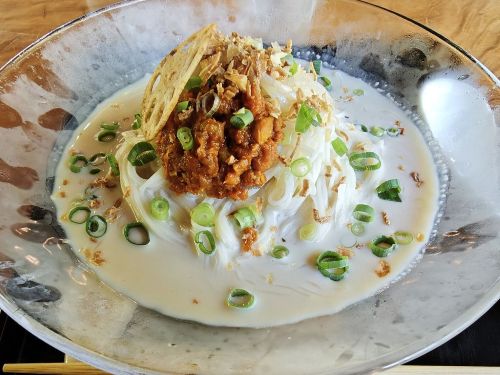
- 1. Tachibana (たち花) — Best for Authentic Japanese Noodles: Located right in the heart of the main shopping district, Tachibana is an unassuming, traditional mom-and-pop shop that features a dedicated vegetarian and vegan section at the back of their English menu.
- The Niche Detail: They explicitly swap out the standard fish dashi for a clean, deep konbu (kelp) seaweed broth upon request. Note: Skip the tempura sides here, as the tempura batter contains eggs.
- 2. Miyajima Mori-no-Yado (杜の宿) — Best for a Traditional Set Meal: If you want to experience a traditional Japanese Gozen (set meal) with multiple beautifully arranged small plates, head over to this quiet inn located near Omoto Park. Their restaurant opens to lunch walk-ins.
- What to Order: The Vegan Lunch Set (¥1,800).
- What you get: A beautifully balanced spread including yuba sashimi (silky tofu skin layers), crispy fried soy meat, lotus root hash, Hiroshima lemon tofu, rice, pickles, and a safe kelp-based soup.
- 3. Sonoma — Best for Organic Soy Gelato & Quick Curries: If you need a quick pick-me-up on a hot afternoon, Sonoma is a cozy spot that caters heavily to health-conscious and plant-based travelers.
- What to Order: A scoop of their house-made organic soy gelato paired with a warm cup of amazake (a naturally sweet, non-alcoholic fermented rice drink). They also serve ready-made vegan spinach and three-bean curries over rice if you need a quick, hearty meal.
⚠️ Pro-Tip for Ordering Anywhere Else: If you find yourself at a standard café, always ask: “Dashi wa sakana desu ka?” (Is the stock made from fish?). Even if a vegetable noodle dish appears vegetarian on the surface, the broth is almost certainly fish-based unless specified otherwise. Stick to the spots above to dine with absolute peace of mind! You can also refer to our Essential Japanese Travel Phrases for Vegetarians and Vegans article for more useful phrases to use!
Discover Other Fascinating Attractions on Miyajima
Finished exploring the shrine and ready for the next part of your Miyajima adventure? Don’t head back to the ferry just yet.
To truly experience the magic of the island, you’ll want to head up the mountain for some of the best coastal views in Japan. Read our full, step-by-step guide to Miyajima’s World Heritage Itsukushima Shrine and Mt. Misen to easily plan your route up the mountain trails and ropeway.