Miyajima is famous worldwide for the iconic floating Torii gate of Itsukushima Shrine, but the true spiritual heart of the island sits 535 meters above: the sacred Mt. Misen (弥山). Whether you choose to glide over the treetops on the scenic Miyajima Ropeway (宮島ロープウエー) or challenge yourself on the island’s ancient hiking trails, reaching the summit rewards you with breathtaking panoramas of the Seto Inland Sea. In this ultimate guide, we cover everything you need to plan your day, from ticket prices and operating hours to the mountain’s mystical Seven Wonders and the best plant-based, vegetarian-friendly dining spots to fuel your adventure.
How to Visit Mt. Misen: Miyajima Ropeway & Hiking Trails
- Miyajima Ropeway Weather Delays & Wind Advisory
- How to Get to Momijidani Station (紅葉谷駅) at Ropeway Base
- Miyajima Ropeway Prices, Fares, & Operating Hours
- The Miyajima Ropeway Experience: Transferring at Kayatani Station (榧谷駅)
- What to Do at Shishiiwa Station, The Lover’s Sanctuary, and Hiking to the Summit
- The UNESCO World Heritage Mt. Misen Primeval Forest
- The Seven Wonders of Mt. Misen: A Trail Checklist
- Reikadō Hall: The Hall of the Spiritual Flame
- Choosing Your Mt. Misen Hiking Trail: The 3 Main Courses
- Vegetarian & Vegan Dining on Miyajima
- Catching the First Sunrise of the Year from the Summit
- Staying Overnight on Miyajima
Explore Itsukushima Shrine and Miyajima With a Guided Tour
If you prefer a guide to introduce you to the charms of Itsukushima Shrine and Miyajima, how about joining one of the following tours?
Cultural Activities Tours on Miyajima
- Kimono and Calligraphy Experience in Miyajima
- Cultural activity in Miyajima: Kimono, tea ceremony, Calligraphy and Amulet
Miyajima Ropeway Weather Delays & Wind Advisory
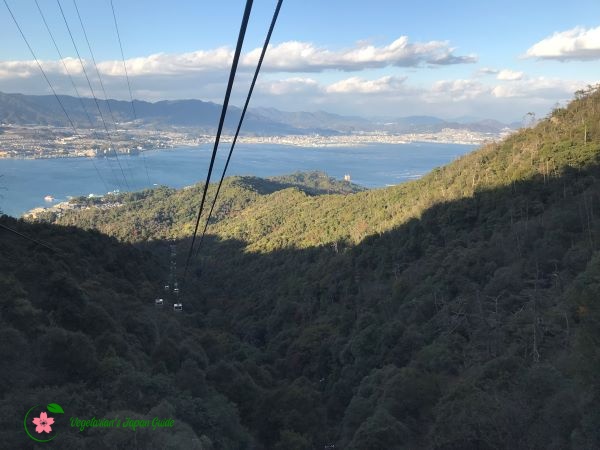
If the weather forecast is unstable or windy, prioritize the ropeway first in your itinerary. Because the cable cars glide over open ridges, high winds can cause sudden, unannounced service suspensions.
When we first arrived by ferry, we were informed that the ropeway was closed due to strong winds. Fortunately, these closures are often temporary. If the wind dies down later in the day, operations can resume immediately. We happened to be near Momijidani Station when the skies cleared, so we could skip the massive crowds that usually form once service resumes!
Tip: If the ropeway is suspended when you arrive, don’t give up on your plans just yet. Keep an eye on the weather; if the wind drops, check the digital status boards near the ferry terminal or the station. You might catch it reopening just in time!
How to Get to Momijidani Station (紅葉谷駅) at the Ropeway Base
There are two primary ways to reach Momijidani Station, the starting point for the Miyajima Ropeway:
- By Foot: Take a scenic 15-minute uphill walk from Itsukushima Shrine. We highly recommend this route during spring and autumn, when the trail is beautiful with cherry blossoms or vibrant fall foliage.
- By Shuttle: You can utilize the free shuttle bus departing from Hotel Iwaso (ホテル岩惣). The shuttle typically runs three times per hour, though frequency is reduced during the early morning and lunch hours. We recommend checking the official Miyajima Ropeway shuttle timetable before you head out to ensure your timing aligns.
Tip: For anyone with special dietary requirements, consider staying at Hotel Iwaso, as they can cater to your needs if you let them know in advance!
The Miyajima Ropeway Experience: Transferring at Kayatani Station (榧谷駅)
The journey up the mountain is split into two distinct sections, so you will need to transfer to another gondola halfway.
After boarding the first lift at Momijidani Station, you will take a 10-minute ride up to Kayatani Station. From there, you will step off and transfer to a different type of gondola lift for the final leg of the journey to Shishiiwa Station (獅子岩駅), the gateway to the Mt. Misen summit.
While making a transfer might seem like an extra step, it is actually a highlight of the trip! The two sections feature entirely different cabin styles. The second, 15-minute leg offers a spectacular, panoramic view of Mt. Misen’s lush forests and the tiny islands scattered across the shimmering Seto Inland Sea.

Miyajima Ropeway Prices & Operating Hours
- Miyajima Ropeway operates from 9 am to 4 pm.
- The last gondola lift departing from Shishiiwa Station is at 4:30 pm. Missing this lift means walking down the dark mountain paths, so please track your time carefully while exploring the summit!
| Ticket Type | Adults (Junior High & Older) | Children (Elementary Students) |
| One-Way Ticket | 1,100 yen | 550 yen |
| Round-Trip Ticket | 2,000 yen | 1,000 yen |
Toddler Policy: One adult can accompany one preschool-aged child (ages 1 to 6) completely for free. If you are traveling with a second preschooler, you will need to purchase a standard child’s fare for them. Infants under 1 year old ride free.
Tip: The ropeway allows you to buy tickets right at the station counter, and they accept both credit cards and major Japanese IC transit cards (like Suica and Pasmo). However, during peak travel seasons, you can secure your spot ahead of time by making a digital reservation directly on the official Miyajima Ropeway Booking Page.
What to Do at Shishiiwa Station, The Lover’s Sanctuary, and Hiking to the Summit
Once you step off the gondola at Shishiiwa Station, you will be greeted by incredible panoramic views of the Seto Inland Sea.
If the observation deck isn’t too crowded when you arrive, prioritize taking photos of the scenic Shishiiwa landmark right away. When we went in the peak autumn foliage season, the viewing deck was incredibly busy, making it difficult to catch a clear photo without crowds in the background!

Visiting Mt. Misen as a Couple: The Lover’s Sanctuary
Mount Misen holds a romantic reputation across Japan, officially designated as one of the country’s 100 Lover’s Sanctuaries due to its beautiful views and spiritual connection to the “Eternal Flame.” If you are traveling with your partner, there are a few special activities you can experience together right inside Shishiiwa Station:

- Lover’s Merchandise: The station gift shop sells unique couple’s souvenirs, including heart-shaped wooden plaques (ema) where you can write your names and wishes for a long-lasting relationship.
- The Fire of Oath (Chikai-no-Hi): Couples can participate in a unique ritual at the station by lighting a candle together from a flame connected to the mountain’s eternal fire, symbolizing eternal love.
🕯️ How to Participate: You can purchase the special heart-shaped locks and candles directly from the Shishiiwa Station second-floor counter. For a detailed breakdown of the ritual’s cultural meaning and step-by-step instructions on how to light the fire, you can check the official Miyajima Ropeway Lover’s Sanctuary Guide.
Hiking from Shishiiwa Station to the Mt. Misen Summit
To reach the true peak of the mountain where Misen Observatory is located, you will need to hike an additional 1 km (approx. 0.6 miles) uphill from Shishiiwa Station.
- Time Required: About 30 minutes one-way.
- Trail Conditions: The trail is well-maintained but features several steep, rolling slopes and stairs that can be physically demanding if you aren’t used to regular exercise.
🥾 Estimated Duration & Gear Tip: Plan to spend roughly 3 hours in total for your Mt. Misen excursion, which accounts for the round-trip ropeway rides and exploring the summit area at a comfortable pace. Because of the steep slopes on the final stretch to the observatory, wearing comfortable, sturdy walking shoes or sneakers is absolutely essential to avoid blisters and ensure a safe hike!
Tip: Refer to our Top 3 Comfortable Walking Shoes for Overseas Travel article if you need a new pair.
The UNESCO World Heritage Mt. Misen Primeval Forest
When Miyajima was designated as a UNESCO World Heritage site back in 1996, it wasn’t just the iconic floating Torii gate and Itsukushima Shrine that received protection. The designation also includes the vast, ancient Mt. Misen Primeval Forest, which covers the mountain’s northern slopes.
Because the island has been deeply worshipped as a sacred “Island of Gods” since ancient times, logging was strictly forbidden for centuries. This preserved an untouched ecosystem where rare, warm-temperate plants and giant coniferous trees still thrive today.
As you follow the trail up to the summit, keep an eye out for the Mt. Misen Primeval Forest Monument. It marks the exact boundary of this globally recognized natural treasure and serves as the perfect backdrop for a scenic photo on your way to the top!
The Seven Wonders of Mt. Misen
Since ancient times, the entire island of Miyajima has been revered as a sacred “Island of the Gods.” Because of its deep spiritual history, Mount Misen is home to seven famous mystical phenomena known as the Seven Wonders of Mt. Misen.
You can check out the photo of each wonder on the official Miyajima Ropeway Nature & Miracles Guide. As you hike from Shishiiwa Station to the summit, keep this handy checklist ready to help you spot these unique spiritual landmarks along the trail:
1. Kiezu-no-hi (きえずの火) – The Eternal Flame
Located inside the Reikadō Hall (Spiritual Flame Hall), this sacred fire was lit by the monk Kobo Daishi in 806 AD as part of his ascetic training. It has been burning continuously for over 1,200 years. Remarkably, this very flame was used to light the Peace Flame at Hiroshima’s Peace Memorial Park. Visitors can drink holy water boiled over this ancient fire, which is said to cure diseases.
2. Shakujō-no-ume (錫杖の梅) – The Tin Stick Plum Tree
Right next to the Reikadō Hall stands a beautiful wild plum tree. Legend says that when Kobo Daishi leaned his shakujō (a traditional monk’s walking staff made of tin) against the ground, it miraculously took root and grew into a plum tree. It is said that whenever bad omens threaten the island, this tree refuses to bloom.
3. Kanman-iwa (干満岩) – The Ebb-and-Flow Rock
This is a massive boulder located near the trail summit, with a small hollow cavity on one side. Despite being high up on a mountain, roughly 500 meters above sea level, the water inside this rock cavity mysteriously rises and falls in perfect sync with the ocean’s high and low tides.
4. Mandara-iwa (曼荼羅岩) – The Mandara Rock
Tucked away behind the Misen Main Hall (Misen Hondo), this enormous, flat stone wall features ancient Sanskrit characters and complex mandalas meticulously engraved into the rock face. These sacred inscriptions are attributed directly to the handiwork of Kobo Daishi.
5. Shigure-zakura (しぐれ桜) – The Showered Cherry Blossom
This unique cherry blossom tree is famous for a strange meteorological phenomenon: even on perfectly clear, sunny days, the leaves of this specific tree mysteriously drip with moisture, looking as though it has just been caught in a sudden rain shower.
6. Ryūto-no-sugi (龍燈の杉) – The Sea-Fire Japan Cedar
This refers to a massive, ancient Japanese cedar tree that could once be seen from the ocean. Legend has it that on dark nights, mysterious ghostly lights (known as Ryūto or “Dragon Lanterns”) could be seen floating softly out of the sea and resting gently within the branches of this sacred tree.
7. Hyōshigi-no-oto (拍子木の音) – The Sound of Wooden Clappers
If you find yourself hiking through the quiet mountain forests late at night, you might suddenly hear the sharp, rhythmic sound of hyōshigi (traditional Japanese wooden clappers) echoing through the trees. Local folklore warns that this sound comes from a mischievous Tengu (a mythical mountain goblin) guarding the slopes of Mt. Misen.
Reikadō Hall (The Hall of the Spiritual Flame)

As you near the final stretch of the trail connecting Shishiiwa Station to the peak of Mount Misen, you will reach a crucial mountain junction. Here sits Reikadō Hall (霊火堂), a historic wooden pavilion that serves as one of the most spiritually significant stops on the entire island.
This sacred hall houses the first and most famous of Mount Misen’s seven wonders: Kiezu-no-hi (きえずの火), the Eternal Flame.
Critical Update: Recent Fire Damage & Safety Strictness
Reikado Hall was tragically destroyed by a fire on May 20, 2026. Fortunately, monks successfully salvaged the hall’s sacred “Eternal Flame” before the wooden structure collapsed.
The 1,200-Year-Old Flame and Holy Water
Step inside the hall, and you will instantly notice the thick, aromatic charcoal smoke billowing up from a massive, soot-covered iron kettle. This kettle is heated directly by the 1,200-year-old eternal flame burning underneath it.
The water boiling inside the cauldron is considered sacred holy water. Visitors are welcome to drink it from the provided cups, as local tradition holds that it can cure ailments, promote good health, and bring good fortune.
💨 A Quick Warning for Visitors: The interior of the hall is incredibly smoky! The air is dense, and depending on the wind direction, it can quickly sting your eyes or make it hard to breathe. When we visited, our eyes were watering so much from the thick smoke that we couldn’t stay inside long enough to drink the holy water. Don’t be discouraged if you have to step out quickly. Even viewing the historic cauldron from the doorway is an unforgettable experience.

Continuing to the Summit
Reikadō Hall acts as the final major resting area before the peak. Once you have explored the pavilion and adjusted to the fresh mountain air outside, the final trek to the Mt. Misen Summit and the observation deck is just another 10-minute steep uphill walk from this junction.
Refer to the Mt. Misen Summit map for the route.
Choosing Your Mt. Misen Hiking Trail: The 3 Main Courses

If you decide to skip the Miyajima Ropeway or want to take the ropeway up and hike back down, three distinct hiking trails lead to the Mt. Misen summit. Each course offers a completely different landscape, difficulty level, and cultural experience.
To easily visualize how these paths connect to the summit stations, take a quick look at the official Miyajima Ropeway Route Map. For a deeper look at the terrain before you go, the Miyajima Tourism Board Hiking Trail Guide provides excellent route photographs and step-by-step trail conditions.
| Trail Name | Avg. Time Up | Trail Condition | Crowd Level | Best Feature |
| Daisho-in | 1.5 – 2 hours | Paved stone stairs | Moderate | Coastal views & Buddhist landmarks |
| Momijidani | 1.5 hours | Dirt paths & roots | Low-Moderate | Autumn foliage & dense shade |
| Omoto | 2 – 2.5 hours | Uneven dirt & rock | Very Low | Ancient giant trees & solitude |
Important: Mount Misen sits at an altitude of 535 meters. The mountain trails get dark significantly earlier than the surrounding town due to the thick forest canopy. If you are starting your descent after 3 pm, always choose the Daisho-in Course. Its open ridges catch the remaining daylight far better than the heavily forested paths.
1. The Daisho-in Course (Most Scenic & Best for Beginners)
The Daisho-in Course is widely considered the most popular and beautiful trail up Mount Misen. It is well-maintained, clear of heavy overgrowth, and offers the most sweeping, uninterrupted views of the Seto Inland Sea along the way.
- Distance: ~2.3 km (1.4 miles)
- Time: 1.5 to 2 hours (one way)
- Difficulty: Moderate
- Highlights: You will pass beautiful Buddhist structures, stone steps, the historic Niomon Gate, and hundreds of unique Jizo statues.
- Best For: First-time visitors and photographers who prefer stone paving over dirt paths.
2. The Momijidani Course (Shortest but Steepest)
Starting at Momijidani Park, the Momijidani Course is the most direct route to the peak. Because it cuts straight through the dense forest, it is heavily shaded, making it a cooler option during hot summer days. However, it gets steep very quickly.
- Distance: ~2.5 km (1.5 miles)
- Time: 1.5 hours (one way)
- Difficulty: Strenuous
- Highlights: Incredible views of the World Heritage primeval forest and crossing rustic wooden bridges. This trail is spectacular during autumn when the maple leaves turn bright red.
- Best For: Hikers looking for a fast workout who prefer a wilder, more unpaved forest trail.
3. The Omoto Course (Quiet & Deep Nature)
The Omoto Course is the hidden gem of Miyajima. It starts further west from the Omoto Shrine and is far less crowded than the other two routes. It feels like stepping into ancient Japan, though it requires a higher level of physical fitness due to uneven terrain.
- Distance: ~3.2 km (2 miles)
- Time: 2 to 2.5 hours (one way)
- Difficulty: Strenuous / Advanced
- Highlights: The trail passes through the Omoto Primeval Forest, famous for its massive, ancient Japanese fir trees and fascinating rock formations like the Rock of Sail.
- Best For: Experienced hikers looking to avoid the tourist crowds and experience deep, untouched nature.
Vegetarian & Vegan Dining on Miyajima
Miyajima is a food lover’s paradise, but traditional local specialties pose a massive hurdle for plant-based travelers. The island is world-famous for Anago Meshi (conger eel over rice) and grilled oysters. Furthermore, the standard dashi (soup stock) used across the island almost always relies on katsuobushi (bonito/fish flakes).
However, with a little pre-planning, you can easily sample authentic local street food and enjoy full, sit-down Japanese meals with a direct view of the floating Torii gate.
For a comprehensive, restaurant-by-restaurant breakdown of the island’s plant-based dining scene, make sure to check out our complete Guide to Vegan and Vegetarian-Friendly Spots on Miyajima.

The Street Food Challenge: Decoding Momiji Manju
You cannot leave Miyajima without trying Momiji Manju, the island’s iconic maple-leaf-shaped cakes. They are traditionally baked using a fluffy, castella-style cake batter and stuffed with sweet red bean paste (anko).
Is Momiji Manju Vegetarian or Vegan?
- For Vegetarians: Yes (if you eat eggs). Unlike many savory Japanese street foods, standard Momiji Manju rarely contains hidden lard or animal fats.
- For Vegans: No.

💡The Almost Vegan Breakthrough: “Momiji Manju Light”
If you are strictly vegan or have an egg/dairy allergy, look out for the major souvenir manufacturer Nishikido (にしき堂). They have locations right near the ferry terminal and shopping street. In collaboration with Hiroshima University, they developed “Momiji Manju Light (もみじ饅頭ライト).” This specific version is formulated without the eight major allergens, making it entirely egg-free, dairy-free, and wheat-free, and swapping the traditional batter for a mix of soy milk and rice flour. It retains its signature fluffy texture and sweet red bean center, allowing everyone to enjoy the local food culture.
Important: As honey is used in the recipe for Momiji Manju Light, it isn’t suitable for vegans.
Catching the First Sunrise of the Year from Mt. Misen
While many travelers ring in the New Year with midnight fireworks, Japan celebrates a beautiful tradition known as Hatsuhinode, watching the very first sunrise of the New Year. The absolute peak of Mount Misen is considered one of the most sacred and spectacular vantage points in the Hiroshima region to witness this event.
To accommodate locals and dedicated travelers aiming to see the sun peek over the horizon around 7 am, the Miyajima Ropeway offers a special early-morning service exclusively on January 1st, starting operations at 5 am.
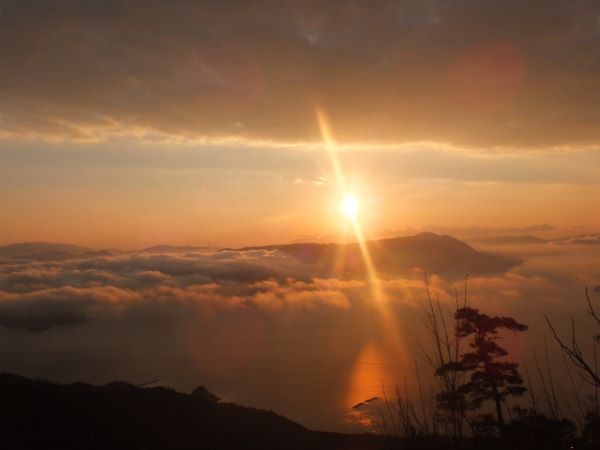
No advance reservations are required for this special New Year’s Day transit, but pulling it off requires a bit of smart planning:
Essential Tips for the New Year’s Sunrise Trek
- Stay Overnight on the Island: Because standard ferry schedules from the mainland do not align with the early morning ropeway start, you must stay overnight at a local Miyajima hotel or ryokan on New Year’s Eve to make it to the station in time.
- Dress in Heavy Layers: The summit sits at an altitude of 535 meters. In the pitch-black early hours of January morning, temperatures at the peak hover around freezing, and the wind coming off the Seto Inland Sea can be piercing.
- Pack a Reliable Flashlight: While the trail from Shishiiwa Station to the summit observatory is well-maintained, it is completely unlit. The flashlight on your smartphone may not be bright enough to safely navigate the steep slopes and stone steps in the dark—bring a dedicated headlamp or flashlight if possible.
- Bring Extra Water and Snacks: The mountain shops and cafes will be closed during these early hours, so ensure you carry your own hydration and energy snacks to stay warm.
Staying Overnight on Miyajima
To fully experience both stunning daytime views and the magical, illuminated nighttime atmosphere at both high and low tide, staying overnight on the island is highly recommended (especially if you plan to see the first sunrise of the year). Spending the night gives you the luxury of time to track the movements of the sea without rushing back to catch the last ferry to the Hiroshima mainland.
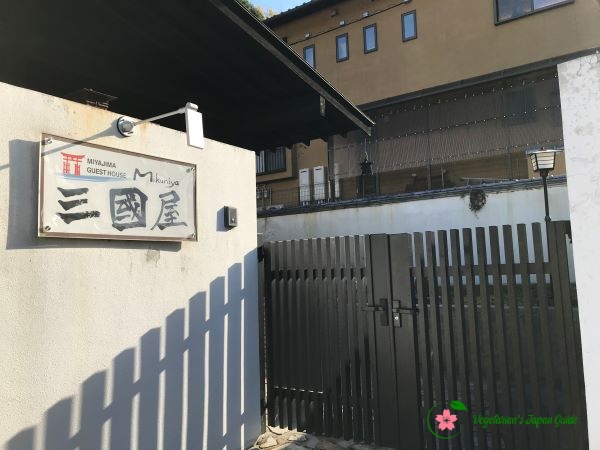
Our Stay: Miyajima Guest House Mikuniya (三國屋)
We chose Mikuniya, a highly rated, social guesthouse that perfectly blends the cozy feel of a traditional ryokan with an affordable budget. Check out our Miyajima Guest House Mikuniya Review for our experience!
- The Cost & Room: It is incredibly reasonable. Around 12,000 yen gets you a wonderfully spacious Japanese-style room for two people!
- The Location: It sits a little further back from the busy tourist strip, requiring a scenic 10-to-15-minute walk from Miyajima Pier, but the absolute tranquility makes it completely worth it.
- The Highlight: Beyond the fantastic guest reviews, a major highlight of our stay was playing with the owner’s incredibly friendly resident cat!
Other Highly Recommended Miyajima Hotels & Ryokans
If you are looking for traditional multi-course dining (Kaiseki) but have strict dietary needs, finding a ryokan in Japan can be tough because most standard menus rely heavily on fish broth (dashi). However, these specific properties are excellent at accommodating special dietary restrictions if requested at the time of booking:
- Miyajima Seaside Hotel: Most suitable for travelers looking for a peaceful beachside retreat away from the main town center. This hotel features beautiful indoor mineral hot springs (onsen) facing the sea and is highly praised by international travelers for accommodating excellent, dedicated vegetarian dinner menus.
- Miyajima Hotel Makoto: Most suitable for families or couples wanting a classic, deeply authentic ryokan experience right in the heart of town. It features massive, beautiful 12.5-tatami mat rooms and an on-site public bath. Their kitchen can expertly prepare tailored vegetarian, vegan, or gluten-free traditional meals, just ensure you notify them several days in advance so they can pre-order the specialty ingredients.
Ready to Plan Your Visit?
While conquering the mountain summit is a massive highlight, it’s only one piece of the island’s UNESCO World Heritage footprint.
To see how to seamlessly pair your trek with a visit to the floating Torii gate, historic pavilions, and local shopping streets, head over to our Ultimate Guide to Miyajima and Itsukushima Shrine to explore the best local seaside cafes, learn about the historic Daishōin Temple, and get our top recommendations for booking traditional, dietary-friendly overnight stays on the island.