Most travelers treat the sacred island of Miyajima as a quick day trip from Hiroshima. They rush off the ferry, snap a photo of the famous floating torii gate of Itsukushima Shrine, feed a wild deer, and head back before sunset. But if you do that, you miss the true magic of the island. Once the final evening ferry departs and the daytime crowds vanish, a profound stillness settles over Miyajima. The stone lanterns light up along the water, the shrine glows against the dark sea, and the island returns to its peaceful, spiritual roots. To experience this, staying overnight is an absolute must!
From the luxurious onsen ryokans to the budget-friendly guesthouses, Miyajima offers visitors a wide range of accommodation options. If you are searching for where to stay in Miyajima for a cultural and budget-friendly experience that can also accommodate your dietary needs, here is our honest, first-hand review of what it is like to spend a night at Miyajima Guesthouse Mikuniya (三國屋).
Mikuniya Review: The Best Budget and Vegan-Friendly Traditional Stay on Miyajima Island
- Mikuniya in a Snapshot
- Why Stay Overnight on Miyajima Island? (Day Trip vs. Overnight)
- Why Mikuniya Feels More Like a Ryokan Than a Guesthouse
- What to Expect Inside Your Room at Mikuniya
- Shared Facilities: Baths, Kitchen, and Common Areas at Mikuniya
- Crucial Booking Tips for Vegan and Gluten-Free Guests
- The Premium Option: Mikuniya’s New Building
- Check-in and Check-out Time at Mikuniya
- A Magical Encounter: The White Raccoon Dogs of Mikuniya
- How to Get to Ryokan Mikuniya (Access & Directions)
- Practical Tips for Your Stay
- Is Ryokan Mikuniya Worth It?
- Other Recommended Hotels and Ryokans on Miyajima Island
Mikuniya in a Snapshot
| Feature | Details & What to Expect |
| Room Style | Authentic Japanese-style (Tatami mats, futon bedding) |
| Bathrooms | Shared traditional bath (Sento-style) & private shower options |
| Key Amenities | Free Wi-Fi, luggage storage, dinner, breakfast, and shared lounge with tea/coffee |
| Vegetarian Friendly? | Yes (Free vegan curry rice for dinner and complimentary breakfast ) |
| Gluten-Free Friendly? | Yes (Dinner and breakfast available upon advanced request) |
| Location | 15-minute walk from Miyajima Ferry Terminal, near Daisho-in Temple |
Why Stay Overnight on Miyajima Island? (Day Trip vs. Overnight)
When planning your itinerary, it is easy to look at a map and assume a Miyajima day trip from Hiroshima is enough. On paper, the ferry ride is short, and the main attractions seem clustered together. However, treating this sacred island as a mere checkbox on a checklist completely changes the quality of your experience.
Deciding where to stay in Miyajima, or whether to stay at all, comes down to how you want to experience the island’s unique spiritual atmosphere. Here is why skipping the last ferry back to the mainland changes everything.
1. Witness the High and Low Tides of Itsukushima Shrine
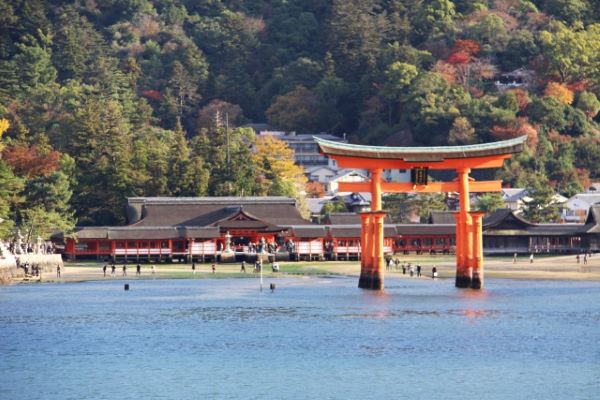
The iconic “floating” torii gate is a masterpiece of classical engineering, but its magic relies entirely on the ocean. During high tide, the gate appears to float seamlessly on the water, creating a surreal, postcard-perfect view.
If you visit for only a few hours in the afternoon, you will likely see only one phase of the tide. By staying overnight, you get to witness both extremes. In the late evening or early morning, the tide recedes completely, allowing you to walk right out onto the wet sand and stand directly beneath the massive wooden pillars of the gate, a humbling perspective you completely miss on a rushed timeline.

2. Experience the Island in Serene Silence
Between 10 am and 4 pm, Miyajima’s main shopping street (Omotesando) is packed with bustling tour groups, selfie sticks, and lines for street food. It can feel frantic.
But around 5:30 pm, a dramatic shift occurs. The day-trippers head back to the ferry terminal. The souvenir shops lower their wooden shutters. The only sounds left are the gentle lapping of the waves, the caw of distant birds, and the occasional rustle of a wild deer walking along the shore. Walking along the illuminated stone lanterns of the waterfront at 9 pm feels like stepping back in time centuries to ancient Japan.
3. Enjoy Stress-Free Evenings Near Daishō-in Temple
Most generic travel blogs warn that Miyajima “shuts down” at night, using it as an excuse not to stay over. While it is true that commercial shopping streets close early, this is actually the island’s greatest asset.
Staying at a peaceful spot like Ryokan Mikuniya—which sits just a short walk from the foot of Daishō-in Temple, allows you to enjoy the mountain air and starlit skies completely free from urban noise. It turns your accommodation from just a place to sleep into a restorative, mindful retreat.
Why Mikuniya Feels More Like a Ryokan Than a Guesthouse
When we travel, our accommodation strategy is simple: find places that are comfortable, budget-friendly, and quiet enough for a good night’s sleep. Because of this, we were initially a bit hesitant to book Mikuniya. We usually associate the word “guesthouse” with a noisy, party-centric hostel environment. However, after reading dozens of reviews promising a quiet stay, we decided to give it a chance, and we are so glad we did!
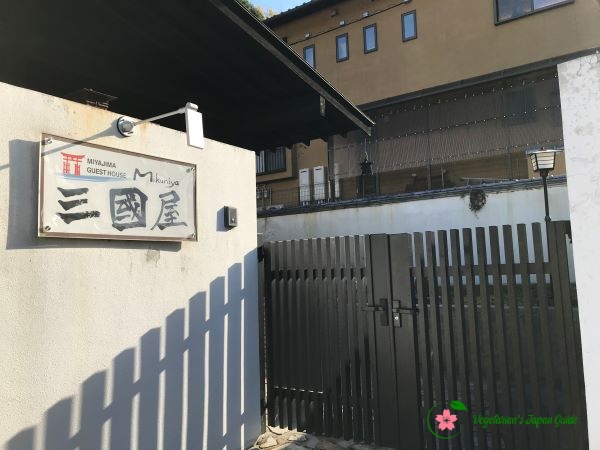
Arriving at Mikuniya
Unlike many commercial properties, Mikuniya’s exterior blends seamlessly into the neighborhood, looking exactly like a traditional local home. If it weren’t for the discreet sign on the wall, it would be incredibly easy to walk right past it!
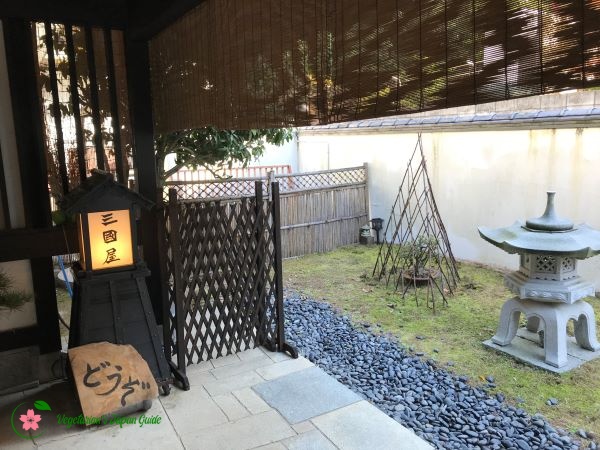
As we stepped through the front gate, we immediately fell in love with the atmosphere. Passing the wooden Douzo (どうぞ, Welcome) sign and the glowing paper lantern, it quickly became clear that this property feels much more like a traditional ryokan than a standard guesthouse. As it turns out, there is a historical reason for this: the building originally served as a private recreation center for the Japan Mint Bureau (造幣局).
The Check-In Process at Mikuniya
When you arrive, keep these practical steps in mind for a smooth check-in:
- Entering the Property: The front gate is unlocked. You do not need to ring a bell outside. We have confirmed with the owner that you are welcome to come in without ringing the bell.
- The Shoe Rule: As is standard in traditional Japanese homes and ryokans, you must remove your outdoor shoes at the entrance hall. Swap them for the comfortable house slippers provided in the entryway.
- Finding the Staff: The reception office is located immediately to your right as you enter the building. If the hosts aren’t already at the desk to greet you, simply give the office door a gentle knock.

What to Expect Inside Your Room at Mikuniya
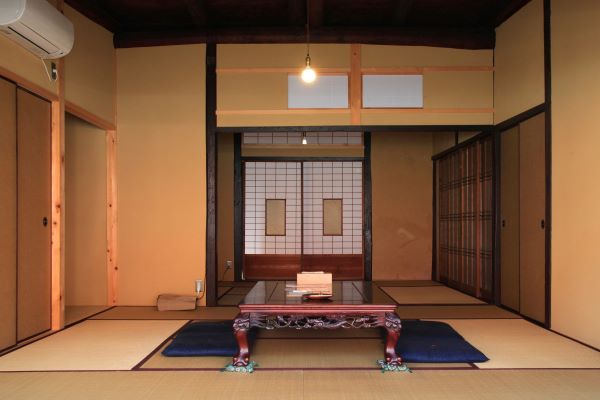
When you slide back the wooden door to your private room, you will notice the distinct, calming scent of tatami (woven rush-straw mats) lining the floor. The first thing you will likely notice is the space; the guestrooms at Mikuniya are huge! Forget about the cramped, tiny hotel rooms you normally encounter in urban Japan. Here, even the smallest guestrooms in the main building are a generous 8 tatami mats in size (with one standard mat measuring roughly 0.9 m x 1.8 m).

An 8-mat room can easily fit four people with room to spare. Our room even featured a lovely attached sunroom, offering a beautiful view of Miyajima township and the ocean!

The overall design relies on a beautiful, spacious minimalism:
- The Living Space Transition: During the day, your room features a low central table (chabudai) paired with legless floor chairs (zaisu) where you can sip complimentary green tea and look out over the quiet garden or the town.
- Classic Sliding Screens: The windows are insulated by elegant wooden-framed shoji screens that softly diffuse morning sunlight into the room.
The DIY Futon Experience at Mikuniya
If you have never slept on a traditional Japanese futon before, setting it up might feel a bit daunting at first, but it is actually a really fun part of the cultural experience!


Unlike some luxury ryokans where staff lay out your bedding while you eat dinner, Mikuniya embraces a hands-on approach. All of your bedding equipment is neatly stored in the room’s wardrobe. When you are ready to turn down your room for the night, you simply roll out the thick, supportive cotton mattresses directly onto the tatami and slide on the fresh futon covers and pillowcases.
Don’t worry if you don’t know the proper technique. When you check in, the incredibly helpful staff will give you a set of clear instructions with photos showing you exactly how to make your futon bed. The entire process shouldn’t take you more than 10 minutes!
If you want a quick visual guide before you arrive, you can also check out this helpful demonstration video below:
Shared Facilities: Baths, Kitchen, and Common Areas at Mikuniya
To keep its rates highly competitive and budget-friendly, Mikuniya utilizes a traditional layout for its facilities. While your guestroom is completely private, the common spaces, restrooms, and bathing areas are shared.
Here is everything you need to know about navigating the shared spaces during your stay.
Toilet and Shower Facilities
Mikuniya provides all the standard amenities you would expect at a hotel, including fresh facial and bath towels, hairdryers, shampoo, conditioner, and body soap. You will just need to bring your own personal skincare items, like toner and moisturizer.
- The Restrooms: Toilets are separated by gender, so please check the sign on the door carefully before entering. They are kept spotlessly clean and modern.
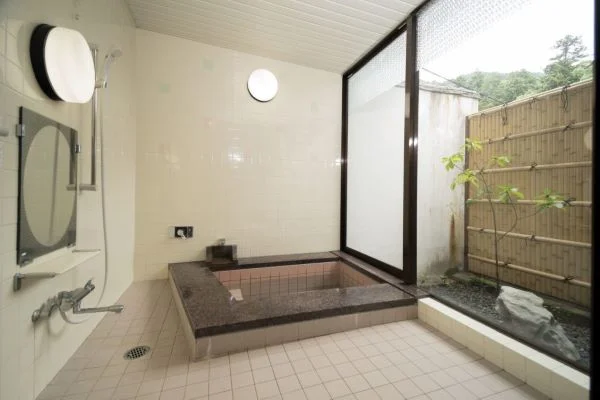
- The Showers & Sento Experience: There are private shower rooms on each floor that you can lock and use entirely to yourself. However, if you want a deeply relaxing Japanese experience, one of the first-floor bathing areas features a classic sento (communal bathhouse) setup with a large, deep hot-water soaking tub, perfect for soothing your muscles after hiking Mount Misen.
The Living and Dining Area (With Free Breakfast & Vegan Curry Dinner!)

Just like a cozy hostel or guesthouse, Mikuniya features a communal lounge. The best part? The dining tables overlook a gorgeous, peaceful Japanese garden. If you are a cat lover, keep your eyes peeled in the morning, as you have a great chance of spotting a few neighboring cats wandering through the greenery!
Adjacent to the lounge is a fully equipped communal kitchen.


The kitchen is stocked with all sorts of cooking utensils if you prefer to prepare your own meals. Here is how the kitchen perks work:
- Complimentary Breakfast Items: The fridge, freezer, and cupboards are stocked with a variety of foods and drinks. Currently, breakfast-related staples like cereal, toast, and all beverages are completely free. (Note: Always double-check with staff at check-in to confirm which items are free or whether certain items require a small donation to the kitchen money box—and please only take what you can finish!)
- Grocery Shopping Tip: Miyajima only has one small supermarket, and it closes early at 7 pm. If you plan to cook, it is best to buy your ingredients at a major supermarket in Hiroshima before boarding the ferry. If you forget, Mikuniya sells quite a few frozen meals directly from their freezer (though please note most are non-vegetarian).
Vegan Tip: Mikuniya offers complimentary vegan vegetable curry rice for dinner between 6:30 pm and 8:30 pm. The service is a lifesaver as you can hardly find anything vegan on Miyajima Island!
On-Site Laundry Facilities
The laundry area is conveniently located just outside the kitchen and includes a dedicated outdoor drying rack. Mikuniya provides two sets of guest-use washing machines and dryers. If you need to do a load of laundry, keep these quick details in mind:
- The Washing Machines: Cost 300 yen per cycle. Laundry detergent is automatically added during the cycle, so you don’t need to purchase or bring your own.
- The Dryers: Cost 100 yen for every 20 minutes of use.
- Tip: Be sure to have your 100-yen coins ready! If you only have bills, you can always ask the front desk staff to break your 1,000-yen notes into coins.

Crucial Booking Tips for Vegan and Gluten-Free Guests
To guarantee your plant-based and/or gluten-free breakfast, ensure you email Mikuniya in advance to request vegan and/or gluten-free options.
- 1.Request Upon Booking
- When making your reservation through their website or an online booking platform, explicitly write in the “Special Requests” box that you require a fully vegan or gluten-free breakfast. We would also email Mikuniya the dietary requirement before arrival.
- 2.Specify Your Dietary Scope: Clearly state your boundaries.
- For vegetarians/vegan: Write: “No meat, no poultry, no seafood, and no fish-based dashi broth.” If you are strictly vegan, explicitly mention “no eggs and no dairy” as well, so the kitchen can adjust the side dishes.
- If you have celiac disease: Write: “No wheat, barley, or rye.”
- 3.Confirm 48 Hours Before Arrival: Timing Dependent.
- Send a quick courtesy email to the property two days prior to your arrival to confirm your dietary request has been logged. This gives the kitchen staff ample time to double-check their kombu stock prep.
The Premium Option: Mikuniya’s New Building

If you prefer your accommodations to feel fresh, modern, and pristine, consider booking a room in Mikuniya’s newer annex building. Completed in May 2020, this modern addition offers a beautiful blend of traditional aesthetics and contemporary comfort. When you walk into your room, you are immediately greeted by the crisp, refreshing scent of brand-new tatami straw mats.
Choosing a room in the new building upgrades your experience with several key features:
- Upgraded Facilities: The brand-new shower and toilet facilities here are exceptionally sleek, rivaling the quality and cleanliness you would expect from a luxury hotel.
- Flexible Bathing Options: While the new building features top-tier private showers, you are always welcome to head to the main building to soak in its large traditional bathtub.
- An Expert Local Tip: If you want a change of scenery or a larger bath experience, you can visit the nearby Hotel Kikunoya (ホテル菊乃家). For just 500 yen, non-guests can access their beautiful public bath facilities for a deeply relaxing, premium soak!
Check-in and Check-out Time at Mikuniya
- Check-in can be done from 3 pm to 9 pm.
- Please remember to check out by 10 am. The staff will be at the office from 9 am. If you wish to check out earlier than that, please pre-arrange with the guesthouse so the keys can be handed to the staff.
- You are welcome to leave your belongings before you check in and after you check out.
A Magical Encounter: The White Raccoon Dogs of Mikuniya
Wild deer aren’t the only animal residents you will encounter on Miyajima. The island is also home to tanuki (Japanese raccoon dogs), which are common throughout Japan. However, Mikuniya offers a chance to spot something incredibly rare: white raccoon dogs.
Because of their striking, snow-white fur, these rare creatures are deeply special to Miyajima’s residents, who view them as sacred messengers of the gods (much like the island’s famous deer).

🌟 THE LEGEND OF THE WHITE TANUKI
Local folklore says that only a tiny handful of these white raccoon dogs exist
on the island. Spotting one is considered an omen of immense good luck—it is
believed that if you see one, something truly wonderful will happen to you!
One of the most magical benefits of staying overnight at Mikuniya is that your chances of crossing paths with these elusive creatures skyrocket. Because the property is tucked away in a quiet, nature-filled residential valley, the tanuki frequently wander onto the grounds.
Whether it is the standard brown tanuki or the legendary white ones, they tend to appear when you least expect them. For us, the magic happened right as we returned from our evening photo session at the Great Torii Gate. We caught a few of the little white fellows happily enjoying their dinner right by the property! Keep your camera ready; you might just get blessed with a little island luck during your stay.
How to Get to Ryokan Mikuniya (Access & Directions)
Reaching Miyajima is a classic, scenic Japanese journey involving a train ride and a short ferry crossing. Once you land on the island, finding Mikuniya is quite straightforward, provided you know which streets to take.
Here is the exact step-by-step breakdown for getting to the property from Hiroshima Station.
Tips:
☛ As Mikuniya is located on the hill leading to Daishōin Temple, be prepared to walk uphill and try to travel lightly. You can also catch a taxi if you don’t want to walk, but please note that traffic restrictions apply on roads on Miyajima Island during the day. Accompanied by the large crowd of tourists, catching a taxi might be a slower option to get to the guesthouse.
☛ Once you check in, you can borrow the electric-assisted bicycles from the guesthouse to move around!
Step 1: Hiroshima to the Miyajima Ferry Terminal
- By Train (Fastest): From JR Hiroshima Station, hop on the JR Sanyo Line bound for Iwakuni or Miyajimaguchi. Get off at JR Miyajimaguchi Station (approx. 25–30 minutes).
- By Tram (Scenic/Budget): Alternatively, you can take the Hiroden Streetcar (Line 2) from central Hiroshima all the way to the Miyajimaguchi tram stop. This takes longer (approx. 60–70 minutes) but is a great budget option if you are using a local hop-on pass.
Tip: Get the 5-Day JR Kansai-Hiroshima Area Pass to save on transport if you plan to visit Miyajima from Osaka/Kyoto!
Step 2: The Ferry Crossing to the Island
From the train station or tram stop, follow the signs for a short 2-minute walk to the ferry piers. There are two main operators: JR West Miyajima Ferry and Miyajima Matsudai Kisen.
- Both ferries cost the same and take about 10 minutes to cross the water.
- Tip: If you have a JR Rail Pass, choose the JR West Ferry, as the crossing is fully covered by your pass!
Step 3: Walking from Miyajima Ferry Terminal to Mikuniya
Once you exit the Miyajima Ferry Terminal, the walk to the property takes about 15 minutes.
- Exit the terminal building and head left, walking along the coastal path toward the main town and the giant torii gate.
- Instead of entering the crowded, narrow Omotesando shopping street, take the slightly quieter road that runs parallel to it, heading toward Daisho-in Temple and the foot of the mountain.
- As you move away from the shoreline and head slightly inland into the residential valley, keep an eye out for a traditional, two-story house with a white exterior.
- Look for the wooden Mikuniya (三國屋) signboard on the outer wall—without it, the property looks just like a local home, and it is easy to walk right past it!
Quick Transportation Summary
- Total Travel Time: Approx. 50–60 minutes from central Hiroshima.
- Walking Distance on Island: 15 minutes (gentle uphill slope at the end).
- Closest Major Landmark: Daisho-in Temple (a 5-minute walk from the ryokan).
Practical Tips for Your Stay
To ensure your overnight stay at Mikuniya is completely seamless, there are a few island-specific logistics you should keep in mind before you board the ferry from the mainland.
1. Master the Luggage Logistics
Ryokan Mikuniya is located a scenic 15-minute walk from the Miyajima Ferry Terminal. While it is a beautiful stroll through the town, the final stretch involves a gentle uphill climb through a residential valley.
If you are traveling with large, heavy suitcases, dragging them over paved streets and up the incline can be exhausting. To avoid this, we highly recommend utilizing the baggage delivery service located right inside the ferry terminal on the mainland side, or catching one of the few local taxis waiting outside the island terminal for a quick 3-minute ride.
2. Mind the Famous Wild Deer
Miyajima’s free-roaming sika deer are incredibly charming but also completely unbothered by humans and highly opportunistic.
Unlike the deer in Nara, Miyajima’s deer are not fed special crackers. They are entirely wild and constantly hunting for food. Keep these two things in mind:
- Secure your paper items: They will actively eat paper maps, train tickets, and paper bags right out of your hands.
- Keep ground-floor windows secure: Because Ryokan Mikuniya sits in a quiet, nature-filled valley, deer occasionally wander near the property. If your guest room is on the ground floor, ensure your windows are latched when you aren’t in the room so an inquisitive deer doesn’t try to sniff out your travel snacks!
Is Ryokan Mikuniya Worth It?
If you are looking for a luxury, multi-million yen resort experience with private open-air hot springs in your room, Mikuniya isn’t that type of property.
However, if your goal is to experience an authentic, warm, and deeply traditional Japanese stay without breaking the bank, Mikuniya is an absolute gem. For vegetarian and vegan travellers specifically, their genuine understanding of plant-based dietary needs, coupled with their peaceful location away from the tourist crowds, makes them among the most valuable and accommodating places to stay in the Hiroshima region.
Staying here turns a standard vacation into a peaceful, memorable cultural retreat.
Have you ever stayed in a traditional Japanese ryokan? Let us know your favorite memories—or any questions you have about booking a vegetarian stay—in the comments below!
Other Recommended Hotels and Ryokans on Miyajima Island
If you are after a more luxurious accommodation experience, the following hotels/ryokans can accommodate special dietary requirements.
Discover the Astonishing Attractions in Miyajima
Planning your island itinerary?
Once you have secured your traditional stay at Mikuniya, it is time to map out your sightseeing. Check out our detailed guide to Miyajima’s World Heritage Itsukushima Shrine and Mt. Misen to discover the best things to do, historical insights, and how to hike the island’s most sacred peak. It covers the best walking routes, ropeway tips, and how to time your visit with the shifting tides.