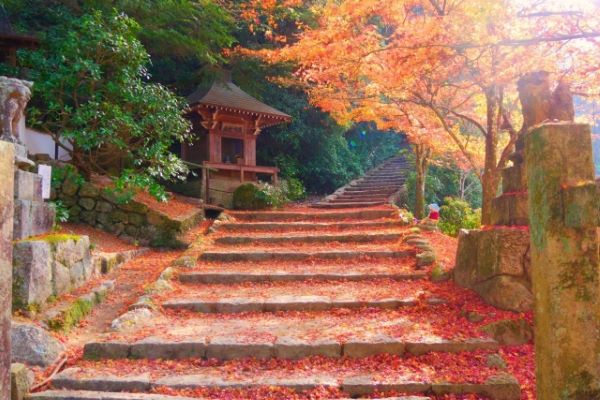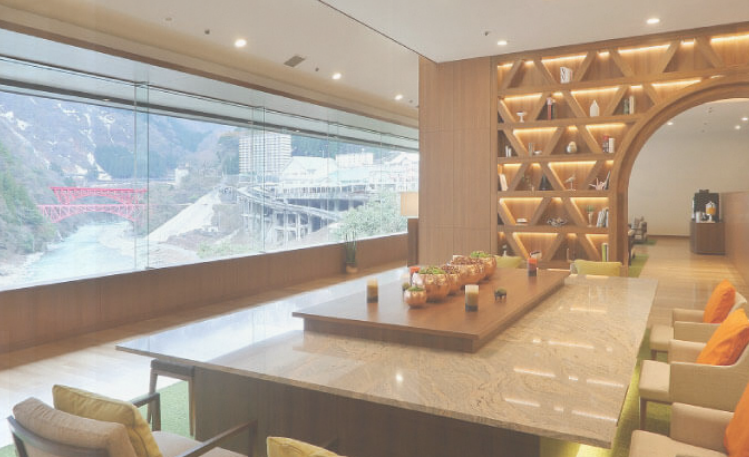
Explore the majestic heart of the Japanese Alps with this ultimate 7-day Chūbu Japan itinerary. Spanning the most spectacular mountain scenery between Tokyo and Kyoto, this week-long journey takes you through the best of Central Japan’s natural wonders and engineering marvels. From the pristine glacial waters of Kamikōchi and the iconic thatched-roof farmhouses of Shirakawa-go to the dramatic cliffs of the Kurobe Gorge Railway and the historic samurai districts of Kanazawa, the itinerary maps out a seamless route through Nagano, Toyama, and Ishikawa Prefectures. Whether you are planning to ride the open-air carriages through Japan’s deepest V-shaped gorge or soak in the riverside onsens of Unazuki, this Chūbu travel guide provides essential tips on transportation, local delicacies, and how to experience the authentic soul of the Alps.
This 7-day Japan itinerary assumes you will come from Osaka/Kyoto/Nagoya. If you are based in Tokyo, you can easily replace the starting and ending points of this itinerary with where you will be coming from and/or heading to afterwards. The itinerary also assumes you are taking public transport at all times.
The 7-Day Chubu Itinerary in a Snapshot
| Prefecture | City | Accommodation In | Attractions | |
| Day 1 | Ishikawa | Kanazawa | Kanazawa | ☛ Kenrokuen Garden ☛ Kanazawa Castle ☛ Oyama Shrine ☛ 21st Century Museum of Contemporary Art, Kanazawa ☛ Nagamachi Samurai District ☛ Myōryūji Temple (Ninja Temple) |
| Day 2 | Gifu | Shirakawa-gō | Toyama | Shirakawa-gō |
| Day 3 | Toyama | Kurobe | Toyama | ☛ Kurobe Gorge ☛ Unazuki Onsen |
| Day 4 | Toyama | Toyama | Nagano | Tateyama Kurobe Alpine Route |
| Day 5 | Nagano | Nagano | Nagano | ☛ Zenkōji Temple ☛ Nakamise-dōri Street ☛ Jigokudani Snow Monkey Park/Obuse or ☛ Matsumoto Castle ☛ Daiō Wasabi Farm |
| Day 6 | Nagano | Matsumoto | Kamikōchi | Kamikōchi |
| Day 7 | Tokyo | Tokyo |
We used this itinerary in late October to admire Chubu region’s autumn foliage. While the fall foliage season is usually at its peak in late October, it is too early for Kanazawa.
Important: Kamikochi and Tateyama Kurobe Alpine Route are only accessible from mid/late April to November. If you plan to visit the Chubu region in winter/early spring, you can visit Kurobe Gorge after Kanazawa, and head to Takayama after Shirakawago. From Takayama, there is one direct train per day to Kyoto or Osaka. Otherwise, you can transfer at Nagoya.
Day 1 – Kanazawa
Osaka/Kyoto ⇒ Kanazawa
Start your first day of the trip by visiting one of the most beautiful cities in Japan, Kanazawa (金沢)! It is a city that combines traditional and modern elements, with many historical and artistic attractions worth your time. It only takes around 2.5 hours by bullet train from Tokyo to JR Kanazawa Station (金沢駅).
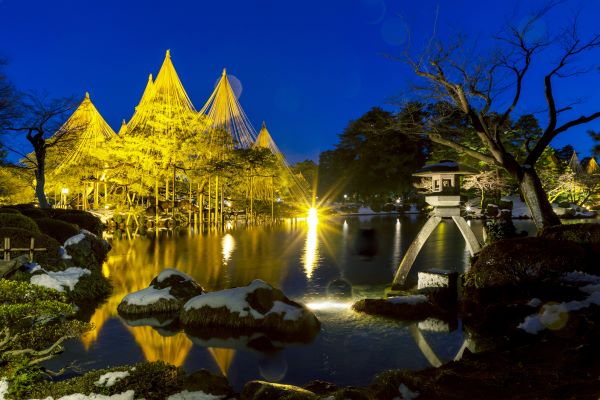
One day is definitely not enough to fully explore this great city, so you really have to cherry-pick the spots that interest you the most. If you are unsure where to visit in Kanazawa, here are our top picks.
☛ Kenrokuen Garden
☛ Kanazawa Castle
☛ Oyama Shrine
☛ 21st Century Museum of Contemporary Art, Kanazawa
☛ Nagamachi Samurai District
☛ Myōryūji Temple (Ninja Temple)
For more ideas for your itinerary, please refer to our article on Kanazawa!
Tip: As soon as you get to JR Kanazawa Station, head to Hokutetsu Ekimae Center / Honkutetsu Bus ticket office (北鉄駅前センター). It is just in front of the station’s east exit to get your bus tickets for Day 2 and make reservations for your seats on the bus. You will need the bus tickets:
☛ From Kanazawa to Shirakawa-gō
☛ From Shirakawa-gō to JR Toyama Station
How to Get to Kanazawa
Getting to Kanazawa is incredibly straightforward thanks to Japan’s extensive train network. Depending on where you are starting your journey, here are the most efficient routes to get you to JR Kanazawa Station.
| Starting City | Train Type | Transfer Point | Total Travel Time |
| Tokyo | Hokuriku Shinkansen | Direct | ~2.5 hours |
| Osaka | Thunderbird Express + Shinkansen | Tsuruga Station (敦賀駅) | ~2 hours 40 mins |
| Kyoto | Thunderbird Express + Shinkansen | Tsuruga Station (敦賀駅) | ~2 hours 10 mi |
Tip: If you are traveling from Osaka or Kyoto, consider looking into the Hokuriku Arch Pass. It covers the travel between Tokyo, Kanazawa, and the Kansai area, and can often save you money compared to a standard nationwide JR Pass if you are following this specific route!
From Tokyo
The fastest and most convenient option is the bullet train.
- By Train: Take the Hokuriku Shinkansen (Kagayaki or Hakutaka trains) directly from Tokyo Station or Ueno Station to JR Kanazawa Station. The fastest train (Kagayaki) gets you there in just about 2.5 hours. This entire route is fully covered by the Japan Rail (JR) Pass.
From Osaka
You can easily reach Kanazawa from the Kansai region using the express train system.
- By Train: Take the Thunderbird Limited Express from JR Osaka Station. It takes about 2 hours and 40 minutes to reach Kanazawa. (Note: You will change trains at Tsuruga Station to hop onto the Hokuriku Shinkansen for the final leg to Kanazawa).
From Kyoto
Since Kyoto is on the same line as Osaka, the journey is slightly shorter but uses the same route.
- By Train: Board the Thunderbird Limited Express from JR Kyoto Station. It takes roughly 2 hours and 10 minutes to reach Kanazawa, including the brief transfer to the Hokuriku Shinkansen at Tsuruga Station.
Day 2 – Shirakawa-gō
JR Kanazawa Station ⇒ Shirakawa-gō
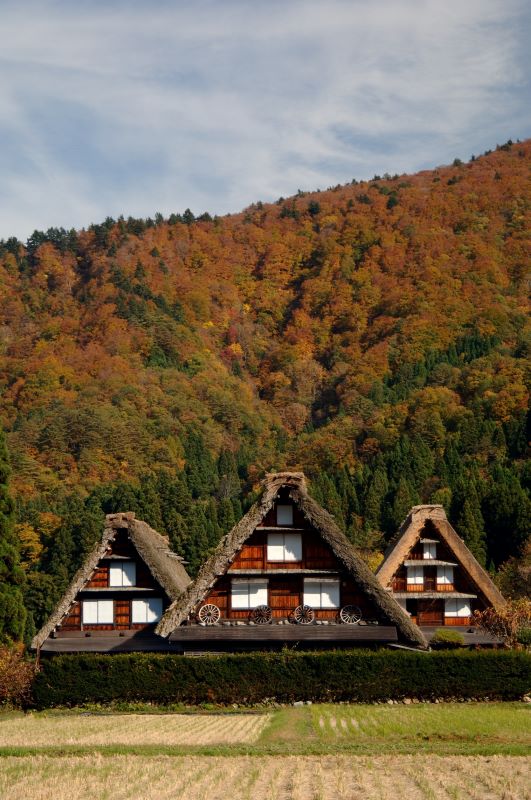
While it is too early to see the autumn foliage in Kanazawa, you should be just in time to admire the color in Shirakawa-gō (白川郷) from mid to late October.
Your bus ticket to Shirakawa-gō should state which bus stop at Kanazawa Station’s east exit your bus will depart from. Arriving a little earlier than the actual departure time is highly advisable.
People usually spend around 4 to 6 hours in Shirakawa-gō, so you don’t necessarily need to take the first few buses. But just note it takes approximately 1.5 hours to get to Shirawakago, and the village is the most crowded from late morning to early afternoon.
For more information, please refer to our Shirakawa-gō article.
On the day, remember to keep an eye on the time so you don’t miss your bus to Toyama!
Tip: We recommend booking your accommodation close to JR Toyama Station/Detetsu Toyama Station so you can reach the station as quickly as possible. This is essential for Day 4, as your day will start very early.
Day 3 – Kurobe Gorge
JR Toyama Station ⇔ Kurobe Gorge
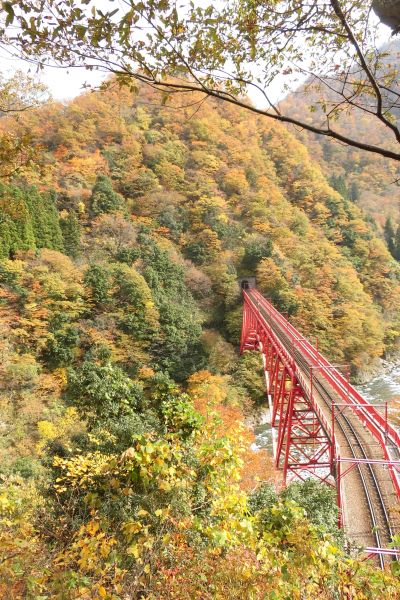
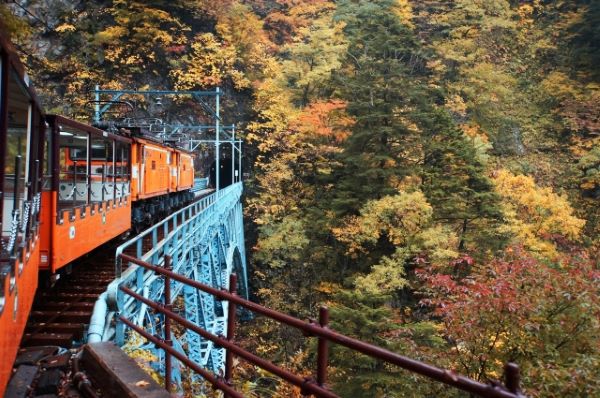
Day 3 is all about the scenic Kurobe Gorge. From Toyama, take the Main Line of Toyama Chihō Railway from Dentetsu Toyama Station, which is just next to JR Toyama Station, and get off at the last station of the route, Unazuki-Onsen Station. From there, take the Kurobe Gorge Sightseeing Train (黒部峡谷鉄道トロッコ電車) that winds through the deepest V-shaped gorge in Japan!
Before heading back to Toyama, remember to indulge in Unazuki Onsen‘s natural hot spring to rejuvenate and explore this traditional onsen town!

Tip: As a one-way trip costs 2,160 yen, it will be worthwhile to get the One-day Hop-on Hop-off Railway and Tram Tickets (鉄道線・市内電車1日フリーきっぷ) for 3,400 yen. For more information, please refer to Toyama Chiho Railway’s website HERE.
Day 4 – Tateyama Kurobe Alpine Route
JR Toyama Station ⇒ Tateyama Kurobe Alpine Route ⇒ JR Nagano Station
Tateyama Kurobe Alpine Route (立山黒部アルペンルート) is a scenic route that traverses the Japanese Northern Alps, connecting Toyama Prefecture and Nagano Prefecture. It is also known as the Roof of Japan. This spectacular route is best known for a magnificent 20-meter snow corridor that can be experienced at only a few spots in the world. But we believe the best time to visit is autumn, especially if your home country has snow in winter.
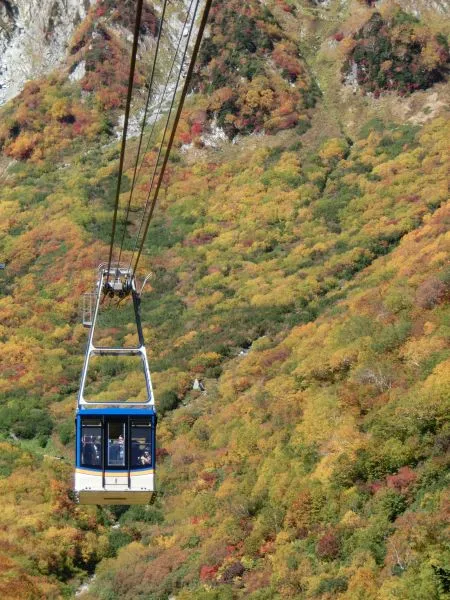
To allow yourself as much time as possible on this scenic route, we highly recommend you take the first train departing from Dentetsu Toyama Station (電鉄富山), which is just next to JR Toyama Station (富山駅). If you miss the first train, the second train departs more than 30 minutes later. So try to arrive at the platform at least 10 minutes before departure in case something unexpected happens.
Those who have purchased an advance ticket for the route can exchange their voucher for the actual ticket at Dentetsu Toyama Station (電鉄富山) or Dentetsu Tateyama Station (立山駅).
As you only have a day to explore the Tateyama Kurobe Alpine Route, we suggest you go straight up to Murodo (室堂), as it is the main attraction on the whole route. The area will likely be covered in snow by late October, so remember to bring enough warm clothes.
Then, as you start heading down the mountain, you will notice the colours of the surrounding nature become more vivid. From mid to late October, the colors are at their most beautiful at Kurobedaira (黒部平), Kurobeko Lake (黒部湖), and Kurobe Dam (黒部ダム).
From Kurobe Dam, take the Kanden Tunnel Electric Bus to Ogizawa. From Ogizawa Station, there are express buses you can take to Nagano Station.
Important: Remember to plan your time wisely at each station so you can at least catch the last express bus to Nagano.
For more information about this scenic route, please refer to our Tateyama Kurobe Alpine Route article!
Tip: The Tateyama Kurobe Alpine Route baggage forwarding service can only send your belongings to JR Shinano-Omachi Station. However, your hotel should be able to organize baggage forwarding for you using a common operator such as Yamato. When you arrive at your hotel in Toyama on Day 2, please check with the staff about baggage forwarding. Same-day delivery is unlikely, so you might need to send your belongings by Day 3 for it to arrive at your hotel in Nagano on Day 4.
Day 5 – Nagano
Nagano

After you have a good rest after a long day from Day 4, your Day 5 can be all about shopping and eating around JR Nagano Station. The famous Zenkōji Temple (善光寺) is not too far away from the station as well. The temple’s approach, Nakamise-dōri Street (仲見世通り), is filled with boutique shops and restaurants for you to explore.
You can refer to our article on the Attractions Around Nagano Station for more information to plan your day.
You can also venture out to Matsumoto for the famous Matsumoto Castle (松本城) or Japan’s biggest wasabi farm, Daiō Wasabi Farm!
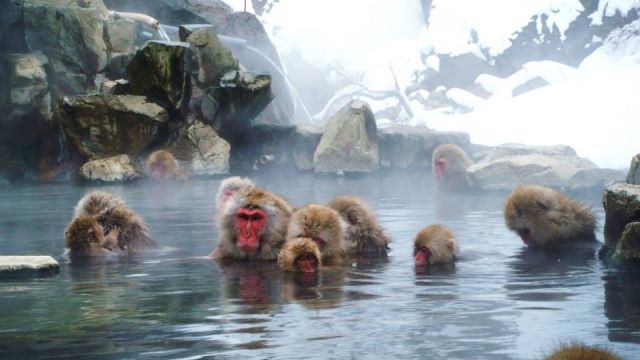
On the other hand, you can take a day trip to Jigokudani Monkey Park to see the wild snow monkeys. Along the way, you can drop by Obuse (小布施), a town known for chestnuts, to enjoy the freshly harvested chestnuts in the local restaurants, cafes, and even from a roasted chestnut stall on the side of a street!
Day 6 – Kamikōchi
Nagano ⇒ Kamikōchi
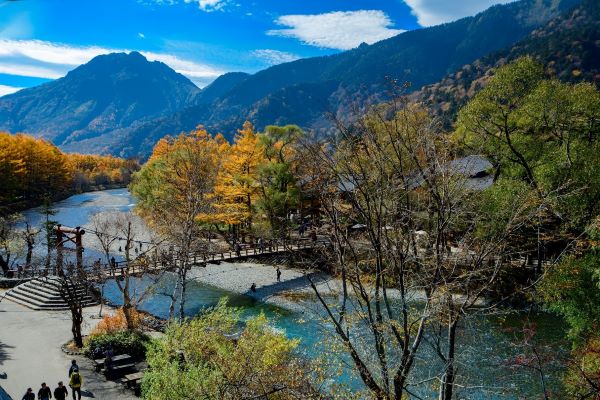
From Nagano, the bus service for Kamikochi departs from JR Nagano Staton’s east exit at 8:30 am. Make sure you arrive there early in case something unexpected happens on your way to the bus stop. Please refer to HERE for the timetable and instructions on reserving your seats.
During the day, you can either spend most of your time enjoying the breathtaking scenery by trekking on the well-maintained tracks or allocate some time for a relaxing morning or afternoon tea in one of the nicely decorated cafés.
For more information, please refer to our article on Kamikōchi (=゚ω゚)ノ.
Tip: There are a few hotels in Kamikōchi. If you are unsure, we recommend staying at Taishoike Hotel (大正池ホテル), so you can see the Taishō Pond’s stunning sunrise from your hotel room on Day 7’s morning!
Day 7 – Kamikōchi
Kamikōchi ⇒ Osaka/Kyoto/Tokyo
The average sunrise time at Taishō Pond is between 5:30 and 6 in the morning in October. Assuming you took our advice and booked your accommodation for Day 6 at Taishoike Hotel to see the stunning view that many professional photographers come to Kamikōchi for, all you need to do is remember to set your alarm clock at 5:30 and don’t snooze your alarm when it goes off on Day 7.
Depending on whether your room has a lake view, you can enjoy the view from your window!
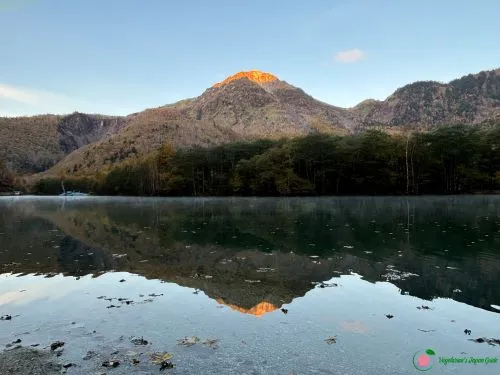
No matter what you do at Kamikōchi, don’t miss out on the bus service you have reserved to leave this picturesque spot. Depending on when you want to leave this stunning place, you can take an express bus to Tokyo, Osaka, or other major cities in Japan. Or, take one of the regular buses running between Kamikōchi and JR Shinshimashima Station (新島々駅).
For more information, please refer to our How to Get to Kamikōchi article.
Direct Express Bus Services from Kamikōchi to Other Major Cities in Japan
The easiest way to get out of Kamikōchi is to take an express bus to major cities in Japan. The services mostly leave Kamikōchi between 3 and 5 pm, allowing you ample time to enjoy all Kamikōchi has to offer. Please refer to Alpico Group’s website for the bus services.
From Kamikōchi to JR Matsumoto Station
For those who prefer to leave Kamikōchi before 3 pm, there are direct bus services between JR Shinshimashima Station and Kamikōchi. From JR Shinshimashima Station, there are connecting trains to JR Matsumoto Station. Again, please refer to Alpico Group’s website for the bus timetable.
Adding Hida Takayama and Furukawa to Your Itinerary
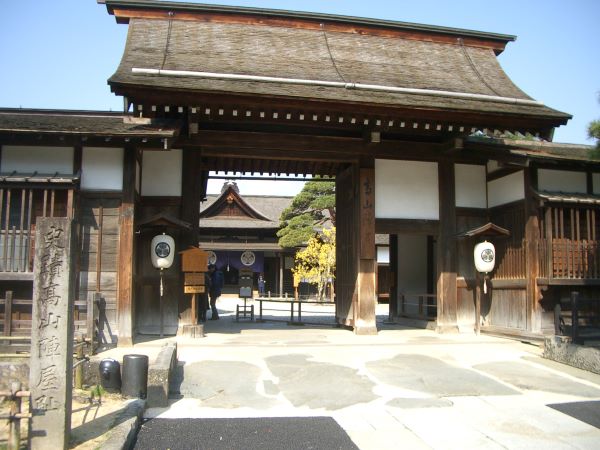
We omitted Hida Takayama and Hida Furukawa from the above itinerary because we are running out of time. Direct buses are running between Kamikochi and Takayama. So, if you have an extra day or two to spare, make a detour to Takayama. You will undoubtedly have a great time in these traditional towns.
For more information, please refer to our article on Hida Takayama and Hida Furukawa!
Planning to Spend More than 7 Days in Japan? Check Out the Itinerary to Other Parts of Japan!
If you have more than 7 days to spend in Japan and are struggling to decide where to visit next, we have a couple more itineraries to other parts of Japan with fascinating attractions! While a week is a fantastic amount of time to experience the breathtaking fall foliage of the Chūbu region, Japan has so much more to offer if you have the flexibility to extend your stay. Feel free to browse our full collection of curated Japan Itinerary to discover the perfect next stop for your vacation and seamlessly build your ultimate Japanese getaway!