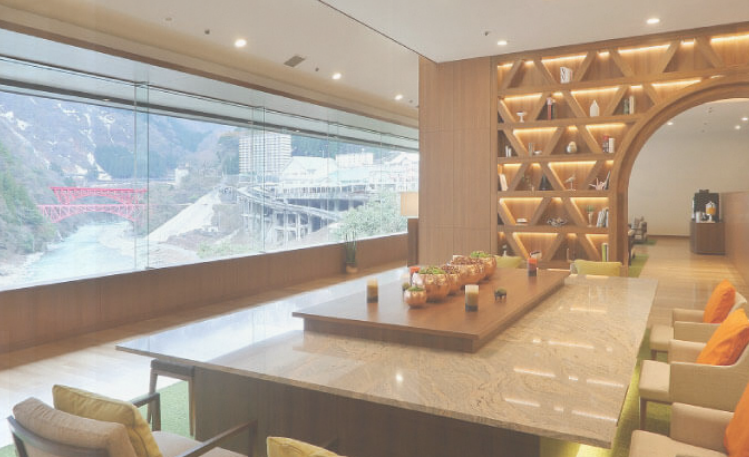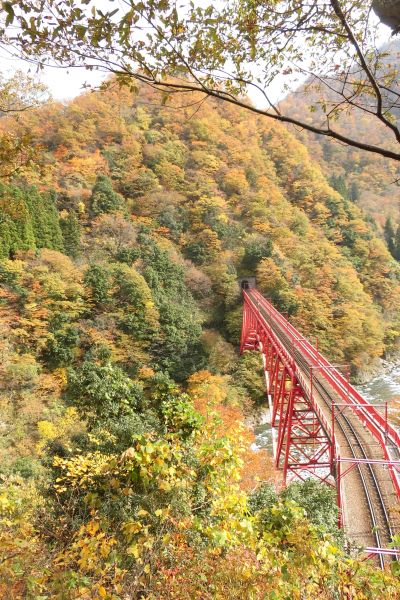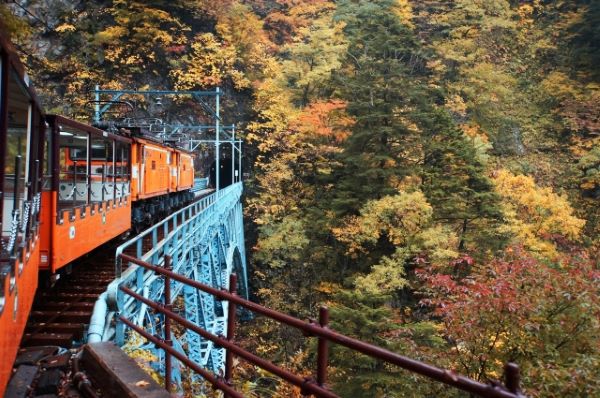
Tucked away in the mountains of Ishikawa Prefecture, Kaga Onsen (加賀温泉) is more than just a hot spring destination. It is a collection of four distinct resort towns dating back 1,300 years. Since the 2024 Hokuriku Shinkansen extension, these four historic hot spring towns, Yamashiro, Yamanaka, Katayamazu, and Awazu, have become effortlessly accessible, offering a serene alternative to Japan’s more crowded tourist hubs. Whether you are soaking in a 19th-century-style public soyu, walking the vibrant Kakusenkei Gorge, or discovering the world-class artistry of Kutani-yaki pottery, a visit here is more than just a vacation. It is a way to support the resilient communities of Ishikawa Prefecture. Read on for more information about how to navigate this cultural treasure, from the latest transport hacks to finding the most authentic, sustainable local experiences. So, let’s start planning your Kaga Onsen day trip from Kanazawa!
What to See and Things to Do in Kaga Onsen
- Travel Tip for Plant-Based Travelers
- How to Get to Kaga Onsen
- How to Get Around in Kaga Onsen
- Which Kaga Onsen Town is Right for You?
- Yamanaka Onsen (山中温泉)
- Yamashiro Onsen (山代温泉)
- Yunokuni no Mori Traditional Handicrafts Village (加賀伝統工芸村 ゆのくにの森)
- Natadera Temple (那谷寺)
- Wagatani Dam (我谷ダム)
- Tsukiusagi no Sato (月うさぎの里)
- Kaga Fruitland (加賀フルーツランド)
- Kutaniyaki Art Museum (石川県九谷焼美術館)
- Enuma Shrine Chōryūtei Villa (江沼神社 長流亭)
- Sugo Ishibe Shrine (菅生石部神社)
- Zōrokuen (蔵六園)
- Kasano Cape (加佐ノ岬)
- Katayamazu Onsen (片山津温泉)
- Frequently Asked Questions: Kaga Onsen
Travel Tip for Plant-Based Travelers
Finding plant-based food in the Kaga Onsen region can be a challenge. It is best to bring plant-based food with you if you plan to visit Kaga Onsen. You can also grab vegan-friendly snacks from the convenience stores around Kaga-Onsen Station.
Refer to HERE for a list of vegan food available at convenience stores.
Tip: Soba noodles also taste nice with salt. It’s an option if you want to dine at a restaurant in Kaga Onsen.
How to Get to Kaga Onsen
Kaga Onsen is one of the most accessible hot spring escapes from Kanazawa, making it a perfect destination for a side trip from Ishikawa Prefecture’s capital. Whether you are visiting for a day trip or an overnight stay, here are the best ways to reach the resort towns.
If you plan to visit Kaga Onsen from other parts of Japan, see below for how to get to Kaga Onsen Station.
- From Tokyo: Take the Hokuriku Shinkansen (Kagayaki or Hakutaka). There are direct trains to Kaga-Onsen Station that take approximately 2 hours and 45 minutes to 3 hours.
- From Osaka/Kyoto: Take the Limited Express Thunderbird to Tsuruga Station, then transfer to the Hokuriku Shinkansen for the final leg to Kaga-Onsen Station. The total trip takes about 2 hours to 2 hours 15 minutes.
- From Komatsu Airport: Komatsu Airport is close to Kaga Onsen. You can take a direct bus (CANBUS or local lines) which reaches the area in about 30 to 40 minutes.
How to Get to Kaga Onsen from Kanazawa by Train
The quickest way to get to Kaga Onsen from Kanazawa is via the JR Hokuriku Shinkansen (北陸新幹線) or the IR Ishikawa Railway (いしかわ鉄道).
- The travel time by taking the Hokuriku Shinkansen from Kanazawa Station to Kaga Onsen Station (加賀温泉駅):
- Hokuriku Shinkansen Kagayaki (かがやき): Around 15 minutes
- Hokuriku Shinkansen Hakutaka (はくたか) or Tsurugi (つるぎ): Around 18 minutes
- It takes around 45 minutes if you take the local IR Ishikawa Railway from Kanazawa Station to Kaga Onsen Station.
- The Cost to get to Kaga Onsen Station from Kanazawa:
- It will cost 3,170 yen to take the Shinkansen from Kanazawa Station to Kaga Onsen Station.The trip is covered by the following JR Passes.
- If you don’t have a JR Pass and want to save on transportation, it only costs 880 yen to take the local trains run by IR Ishikaway Railway to Kaga Onsen Station.
How to Get Around in Kaga Onsen
Once you arrive at Kaga-Onsen Station, the CANBUS (Kaga Loop Bus) is the most convenient way for tourists to navigate between the four main onsen spirits: Yamanaka, Yamashiro, Katayamazu, and Awazu.
In addition, you can take the local Hokutetsu Kaga Bus (北鉄加賀バス) to travel between the attractions in Kaga City. Both services depart from JR Kaga-Onsen Station.
Kaga Tour Bus – CANBUS (加賀周遊バス キャン・バス)
Most of the attractions in Kaga can be accessed by taking the Kaga Tour Bus – CANBUS, which departs from and terminates at JR Kagaonsen Station (加賀温泉駅). Except for the Komatsu Airport Line (小松空港線), the other two lines run in loops and go in only one direction. This means that if the places you visit are close to JR Kagaonsen Station, the return bus trip will take a lot longer.
Previously, you could purchase either a one-day or a two-day bus ticket on board. However, the rules have changed. Only single-ride tickets are on sale now. So, each ride will cost you 500 yen to board the CANBUS.
For more information about the service, pricing, and timetable, please refer to their website HERE.
Tip: With your bus ticket, you can get discounts or freebies at some attractions along the bus route.
Eco Ride Coupon (ECO乗りクーポン)
If you don’t think you will visit many attractions in a day, then the 1,000 yen ECO Ride Coupon may be better. It allows you to board the CANBUS twice, have free access to one facility in the city and an exchange voucher for a traditional sweet at participating stores.
For more information, please refer to their website HERE and use Google Chrome’s translation function at the top right of the address bar. HERE is the English pamphlet for ECO Ride Coupons.
Kaga Hot Spring Town Passport (加賀温泉郷パスポート)
Another money saver is the Kaga Hot Spring Town Passport. Depending on how you plan to get around, you can either get a red passport (1,000 yen) that gives you access to three attractions or a blue passport (1,800 yen) for an additional CANBUS ticket. Both passports are valid for two days from the date of purchase.
For more information, please refer to their website HERE.
1. The Routes You Need
- Mountain Route (Yama-machi): Use this for Yamashiro and Yamanaka. It heads into the valley, stopping at the major bathhouses and the Kakusenkei Gorge.
- Sea Route (Umi-machi): Use this for Katayamazu. It heads toward the coast and the lakefront museums.
- Komatsu Airport Route: Perfect for those flying in or out of the region.
2. The “Perfect Weekend” Strategy
- Day 1 (Mountain Route): Take the bus to Yamanaka Onsen first thing in the morning. Spend the afternoon in Yamashiro Onsen on the way back. Both are on the same loop!
- Day 2 (Sea Route): Head to Katayamazu Onsen for a lakeside brunch and a soak in the glass-walled Soyu before catching your Shinkansen back to Tokyo or Osaka
Hokutetsu Kaga Bus (北鉄加賀バス)
The regular bus services are also running in Kaga City. If you read Japanese, you can refer to HERE and scroll down to “北鉄加賀バス” for more details. We have included information on the regular bus service under the attractions’ access information below.
You can also use one of Japan’s Transportation Apps to plan your visit.
Which Kaga Onsen Town is Right for You?
| Town Name | Best For… | Key Vibe | Top Highlight |
| Yamashiro | History & Pottery | Traditional Meiji-era charm with red-tiled roofs. | Soyu & Kosoyu: Two gorgeous public baths in the town center. |
| Yamanaka | Nature & Crafts | Deep forest scenery along the Kakusenkei Gorge. | Lacquered Wood: Exquisite “Yamanaka Shikki” lacquerware shops. |
| Katayamazu | Modern Views | Sleek, lakeside relaxation with a minimalist feel. | Lake Shibayama: Stunning views of Mount Hakusan across the water. |
| Awazu | Quiet Tradition | The oldest of the four; intimate and spiritual. | Natadera Temple: Ancient rock-cut temples and mossy gardens nearby. |
Yamanaka Onsen (山中温泉)
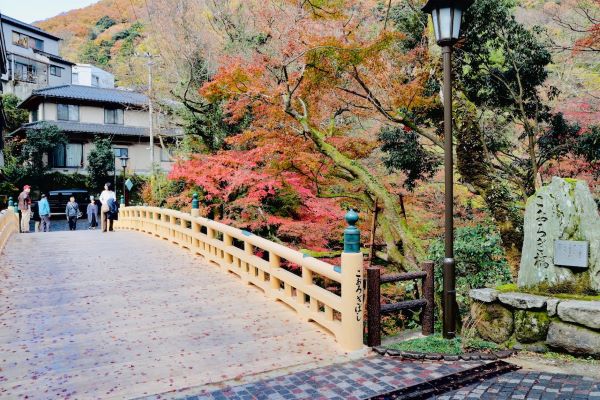
Among all of Kaga’s hot spring towns, Yamanaka Onsen is the undisputed choice for those who crave a connection with nature and the fine arts. Praised by the famous poet, Matsumo Basho, as one of Japan’s finest springs, this town is a living gallery of Yamanaka Shikki lacquerware (山中漆器). You will find this craft woven into the very corner of the town, from the stunning lacquered pillars and gold-maki-e coffered ceilings of the Yamanaka-za performance hall to the elegant wooden interiors of the historic Kiku-no-yu public bathhouse.
Walking on the moss-covered trails of Kakusenkei Gorge is another must-do when you rejuvenate at Yamanaka Onsen. So, refer to our Guide to Yamanaka Onsen: Nature Trails, Artisan Crafts, and Healing Waters to find out more about what to see and do in the gorgeous town!
Yamashiro Onsen (山代温泉)
If Yamanaka is a journey into the forest, Yamashiro Onsen is a journey into the soul of traditional Japan. Built in a classic yunogawa (hot water circle) layout, the town radiates from its centerpiece: the Kosoyu. It is a beautifully restored 19th-century bathhouse adorned with stained glass and vibrant Kutani-yaki tiles.
Beyond the soothing waters, Yamashiro is a sanctuary for art lovers, having once been the home and inspiration for the legendary artist Rosanjin Kitaoji.
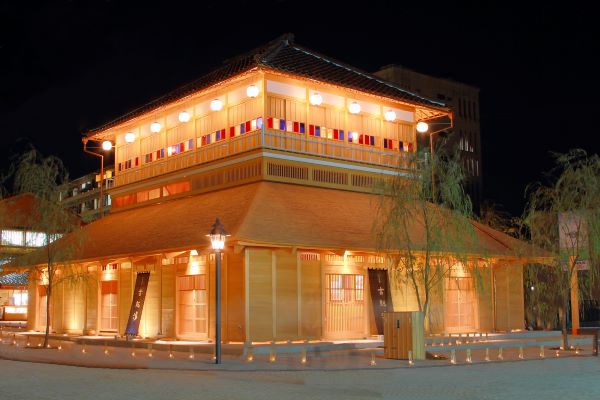
Whether you want to stroll past the crimson-latticed shopfronts in your yukata or discover the birthplace of Kaga’s famous porcelain, don’t miss our Guide to Yamashiro Onsen: Historic Baths, Artisan Culture, and the Legend of the Three-Legged Crow.
Yunokuni no Mori Traditional Handicrafts Village (加賀伝統工芸村 ゆのくにの森)
For those looking to enjoy cultural activities in Japan, Ishikawa Prefecture is one of the best places to do so. The region has many kinds of traditional crafts. And if you can’t be bothered to travel around the prefecture to have a go at all of them, come to Yunokuni no Mori Traditional Handicrafts Village in Komatsu City. Because here is where you can make more than 10 different types of handicrafts in one spot!
Located on a hill with beautiful scenery, the village was created by relocating thatched-roof houses built during the Edo and Meiji Periods. Each of the 11 houses has a different theme based on traditional crafts such as Kutani-ware, gold leaf, and Yamanaka lacquerware. As each workshop requires a different amount of time to explore, plan your time using the information on their website HERE, so you get the most out of your visit!
Important: The restaurants in the village don’t have a pure vegetarian menu. Remember to bring your lunch if you can’t take the non-vegetarian broth.
Yunokuni no Mori Traditional Handicrafts Village’s Opening Hours, Admission Fee, and Access Information
- The village is open from 9 am to 4:30 pm.
- The last admission to the village is at 4 pm.
- The last admission to any workshops is at 3 pm.
- Apart from July 20 to August, the village closes on Thursdays and may close on other days, which they will announce on their Japanese website.
- Admission fee:
- Adults: 550 yen (+300 yen for your access to the village on the following day)
- High school students: 440 yen (+250 yen for your access to the village on the following day)
- Children from the age of 4: 330 yen (+120 yen for your access to the village on the following day)
- From JR Kagaonsen Station (加賀温泉駅), take one of the Kaga Tour Bus – CANBUS’s (加賀周遊バス キャン・バス) mountain route (山まわり) and get off at Kaga Traditional Handicrafts Village Yunokuni no Mori (加賀 伝統工芸村ゆのくにの森).
- Refer to HERE for the service’s timetable.
- You can also catch a bus from JR Komatsu Station (小松駅) west exit bus stop no. 1 and get off at the Awazu Onsen (粟津温泉).
- Please refer to HERE and click Awazu Line (粟津線) for the service’s timetable. The village is within a 15-minute walk from the bus stop.
Natadera Temple (那谷寺)
Having a Michelin Green Guide star, the scenery in the temple’s precinct is just breathtaking, especially the rocky cliff on one side of the temple. The cliff, which looks almost painted onto the scenery, was designated as one of the National Places of Scenic Beauty. Many of the halls are also Japan’s National Important Cultural Properties.
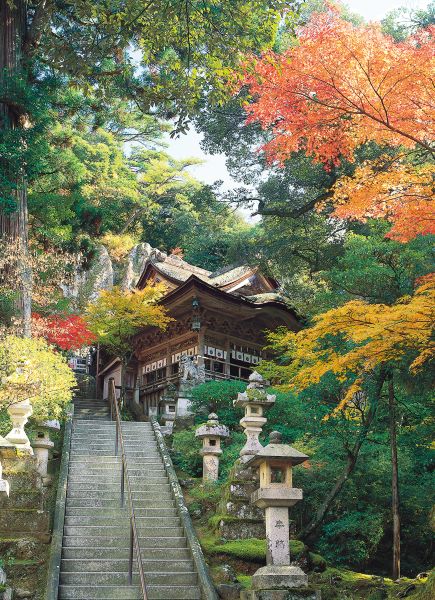
The history of Natadera Temple began in 717 with a monk named Taichō (泰澄), who placed a statue of Kannon Bodhisattva inside the cave that became the foundation for the current temple’s main hall. The Tainai-kuguri (胎内くぐり) in the main worship hall in many Japanese temples are usually dark. But, the Iwaya-tainai-kuguri (いわや胎内くぐり) at Natadera Temple is a lot brighter, where lit candles and incense are offered to the Eleven-faced Thousand-armed Kannon!

With a spacious temple ground, many spend at least 30 minutes, if not over an hour, indulging in the picturesque surroundings. The temple’s lake, close to the Honden (main worship hall), is another spot that attracts many pilgrims, enchanted by the stunning view in front of them.
Passing the Kaedetsuki Bridge (楓月橋), you will reach an observation deck that offers the most spectacular view of the entire temple. With access to the cliff itself prohibited due to safety and landscape protection reasons, the deck offers the best spot to admire the extraordinary rocky cliff!
Natadera Temple is best known for its fall foliage, which peaks from mid to late November. It is also a great place to visit throughout the year. With flowers decorating the temple in spring and summer, and the snowy scenery in winter, this spot is one of the most popular tourist destinations in Awazu Onsen (粟津温泉) in the Kaga region.
For more information about the temple, please refer to their website HERE.
Natadera Temple’s Opening Hours, Entry Fee, and Access Information
- The temple is open from 9:15 am to 4 pm daily.
- The admission fee is :
- 1,000 yen for adults
- 300 yen for elementary school students
- An additional 200 yen is payable to enter the Shoin and Garden.
- From JR Kagaonsen Station (加賀温泉駅), take one of the Kaga Tour Bus – CANBUS’s (加賀周遊バス キャン・バス) mountain route (山まわり) and get off at Natadera Temple (那谷寺).
- Refer to HERE for the service’s timetable.
- You can also catch a bus from JR Komatsu Station (小松駅) west exit bus stop no. 1 and get off at the terminal stop Natadera Temple (那谷寺).
- Please refer to HERE and click Awazu Line (粟津線) for the service’s timetable.
Wagatani Dam (我谷ダム)
Thanks to the Wagatani Dam at the far end of Yamanaka Onsen, the water flowing through the Kakusenkei Gorge (鶴仙渓) in Yamanaka Onsen (山中温泉) remains stable year-round. Even on a day with heavy rain, the promenade of the gorge won’t be submerged by a sudden increase in water flow.
While there isn’t anything special about the dam, it is actually a hidden cherry blossom viewing spot. You can also enjoy the fall color around the dam, which attracts many visitors in November. When everything is frozen in winter, it also offers spectacular scenery for those who venture out of the warm ryokan rooms (*´ω`).
The most popular photo spot is the red suspension bridge crossing the dam. It will also lead to the trailhead for the Wagatani mountain trail, for passionate hikers aiming for the summit of Mt. Fujishagadake (富士写ヶ岳).
And don’t be afraid to cross the bridge even if you are scared of heights. The majority of the bridge was built with concrete so that it hardly swings (^_-)-☆.
How to Get to Wagatani Dam
The dam is about a 30-minute walk from The Great Cedars of Kayano in Yamanaka Onsen or a 10-minute drive from Yamanaka Onsen.
Tsukiusagi no Sato (月うさぎの里)
The Nagai Town (永井町) in Kaga City has a legend that a rabbit rescued by a townsman saved the village from floods in return. The town also has an old belief that rabbits will bring happiness and good luck.
This is probably why the park – Tsukiusagi no Sato – is free to enter for you to meet more than 50 rabbits that are running around freely on the premises (*´ω`). Although you can only hug them during the designated time slots (see below), you can feed them at any time by buying feed from a vending machine!
- 11 am to 11:30 am on weekdays
- On weekends and public holidays:
- 10:30 am to 11 am
- 1:30 pm to 2 pm
- The cost is 200 yen.
You can also feed them while you hug them if you purchase the feed in advance.
- 200 yen for a cup of rabbit feed
Apart from rabbits, there are also two African-spurred tortoises. While you will typically find them in the yard, on a hot day, you might spot them in souvenir shops (≧▽≦).
Tortoise feeding can also be arranged by notifying the staff. You can distinguish the staff by their red hats. Each time it will cost 300 yen. When you feed them, please wear the provided gloves and use tongs to avoid being bitten.
Apart from the restaurant (which doesn’t have a vegetarian menu), there is also a bakery and a confectionery shop selling rabbit-shaped bread and sweet bean-paste buns!
Note that most bread and buns contain eggs. To confirm the ingredients, you can utilize the phrases in our Essential Japanese Travel Phrases for Vegetarians and Vegans article.
Tsukiusagi no Sato’s Opening Hours and Access Information
- Tsukiusagi no Sato is open from 9 am to 4 pm.
- The admission fee is
- 300 yen for adults
- 200 yen for elementary school students
- From JR Kagaonsen Station (加賀温泉駅), take the sea route (海まわり) of the Kaga Tour Bus – CANBUS’s (加賀周遊バスキャン・バス) and get off as stop 16 – Usagi no Sato (月うさぎの里)
- Refer to HERE for the service’s timetable.
Kaga Fruitland (加賀フルーツランド)
If you have been to a supermarket in Japan looking for fruit, you would have realized how expensive fruit in Japan is. This is why an all-you-can-eat fruit-picking farm is a great way to enjoy Japan’s sweet and juicy fruits!
At Kaga Fruitland, each fruit-picking session is 30 minutes. So having some training on how to eat faster beforehand would be really useful on the day (´▽`*). The park has 5 different fruits with varying harvesting seasons. So no matter when you visit the park, you won’t leave empty-handed.
One thing to note is that some fruit requires booking to ensure enough ripe fruit is available to pick on the day. Booking at least 1 month in advance is recommended, especially if you visit the park on a weekend or public holiday.
Apart from fruit picking, you can also utilize the BBQ facilities. Everything, including the ingredients, will be prepared for you, so all you need to bring is yourself with an empty stomach and enough cash!
On your way out, don’t forget to drop by their shop for souvenirs such as homemade jams and original wines (=゚ω゚)ノ.
Refer to their website HERE for a list of fruits you can pick at Kaga Fruitland and their season. You can translate the webpage using Google Chrome’s translation function on the right side of the address bar. To reserve your fruit-picking session, fill in the web form HERE or call them at +81-761-72-1800.
Tip: They can arrange your BBQ ingredients only with vegetables. The cost is 880 yen per person.
Kaga Fruitland’s Opening Hours and Access Information
- Kaga Fruitland is open from 9 am to 5 pm.
- The admission to the fruit picking is from 9 am to 4 pm.
- From JR Kagaonsen Station (加賀温泉駅), take the Kaga Tour Bus – CANBUS’s (加賀周遊バス キャン・バス) sea route (海まわり) and get off at Kaga Fruitland (加賀フルーツランド).
Kutaniyaki Art Museum (石川県九谷焼美術館)
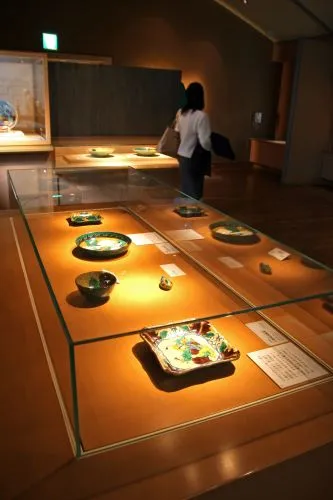
Kutaniyaki Art Museum is a great place to be enchanted by Kutani ware, a local handicraft with a history spanning over 360 years. Not only will you find beautiful ceramics in the display rooms, but the local specialty is proudly displayed throughout the facility. In fact, the museum itself is also decorated with colorful porcelain. Even the umbrella stands at the entrance are made of Kutani-ware!
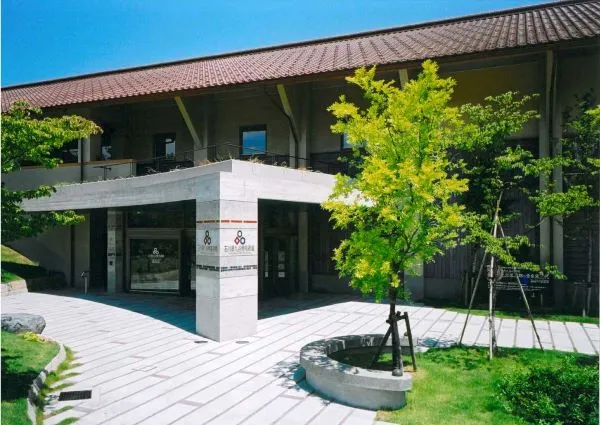
In addition to the vintage Kutani-ware on display from the Edo Period (1603 to 1867), the museum features a digital library with high-definition images of Kutani-ware masterpieces held across the country, as well as the history of Kutani-ware.
For more information about Kutani Ware, you can refer to the museum’s English website HERE.
Another spot in the museum that you just can’t miss out on is the washbasin-like instrument. When water drops onto it, a pleasing xylophone-like sound rings out (apparently due to the bottles buried underneath)!
On the museum’s second floor, a cafe serves Japanese and/or Chinese tea, with Kutani ware made by artisans in the Kaga region. Depending on the season, the recommended teas will also change!
Next to the cafe is the museum’s shop, featuring Kutani wares for visitors to bring home (albeit with a price tag that isn’t that friendly).
Tip: If you understand Japanese, free guided tours are available on weekends and public holidays.
Kutaniyaki Art Museum’s Opening Hours, Admission Fee, and Access Information
- The museum is open from 9 am to 5 pm daily except Mondays unless it is a public holiday. The museum will also close from December 29 to January 3.
- The last admission is at 4:30 pm.
- Admission Fees:
- 560 yen for adults
- 280 yen for the elderly who are 75 years old and above
- Free otherwise
- The museum is an 8-minute walk from JR Daishōji Station (大聖寺駅).
- You can also take the Kaga Tour Bus – CANBUS’s (加賀周遊バス キャン・バス) sea route (海まわり) from JR Kagaonsen Station (加賀温泉駅), and get off at Yamanoshita Temples Kutaniyaki Art Museum (山ノ下寺院群/石川県九谷焼美術館).
Enuma Shrine Chōryūtei Villa (江沼神社 長流亭)
Daishōji Domain is a branch of the Kaga Domain. Without a castle, they only had Jinya (陣屋), an administrative headquarters in the Edo Period. While the Daishōji Jinya no longer exists, it was located near Enuma Shrine, which has a garden and Chōryūtei Villa on its grounds. Both the garden and the villa were built by the 3rd lord of the Daishōji Domain, Maeda Toshinao (前田 利直), in 1709. The Kenrokuen Garden in Kanazawa influenced the garden’s design, making it one of the main reasons for tourists to visit it.
As the famous scholar Sugawara no Michizane (菅原 道真), who passed away in 903, is enshrined here, you might see students coming to the shrine to pray for academic success.
Also, the shrine is one of the region’s best spots for fall foliage, which is why it can be crowded in November.
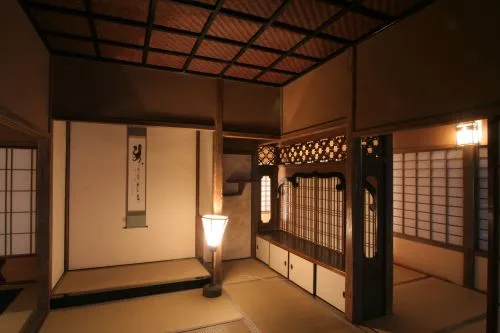
Although Chōryūtei Villa, facing the beautiful Daishōji River, was built as Maeda Toshinao’s personal resting place, having spent most of his life at Edo Castle, he didn’t have much chance to enjoy what the villa had to offer.
Designated as a National Important Cultural Property in 1950, the villa is not open to the public without a reservation. If you would like to view the villa’s interior, please email [email protected] or call +81-761-72-0551 at least one day before your visit!
While this part of the shrine is stunning year-round, it is especially picturesque in spring, when cherry blossoms bloom along the river. Although there won’t be any traditional boats taking us for a scenic ride down the river anymore, we can still walk along the riverbank anytime we visit Enuma Shrine (*´ω`).
Enuma Shrine Chōryūtei Villa’s Opening Hours, Admission Fee, and Access Information
- The shrine is open from
- 9 am to 4 pm from March to October
- 9 am to 3 pm from November to February
- The shrine is closed from December 29 to January 3.
- The admission fee is 400 yen.
- The shrine is a 20-minute walk from JR Daishōji Station (大聖寺駅).
- You can also take the Kaga Tour Bus – CANBUS’s (加賀周遊バス キャン・バス) sea route (海まわり) from JR Kagaonsen Station (加賀温泉駅), and get off at Boats, Kyuya and Choryu-tei (舟と久弥と長流亭).
Sugo Ishibe Shrine (菅生石部神社)
If you like to visit Japanese Shinto Shrines, then Sugo Ishibe Shrine is the spot that you want to be on your itinerary.
The shrine is the second-largest in the Kaga region and has a history of more than 1,400 years. The shrine was founded in 585 during an epidemic in the area. Largely supported by the feudal lords during the Edo Period, the shrine has many important cultural properties within its precinct.
The most special ritual at Sugo Ishibe Shrine is the Gonganshinji (御願神事), commonly known as the Bamboo Breaking Festival (竹割り祭り), which takes place on February 10 each year. Originally created to defeat a giant serpent, it is now a ritual to pray for a year without disease and prosperity.
Young men who participated in the ritual will break around 300 2-meter-long bamboo pieces by heating them slightly on the ground. It is said that if you bring the bamboo pieces home, you will be spared from the plague.
At the end of the ritual, the “giant serpent” – a large rope with a length of 20 meters, 30 cm in diametres, and weighing 180 kgs, is dragged around the shrine before being thrown into the Daishōji River close by.
Another well-known ritual of Sugo Ishibe Shrine is its three-day festival – Tenjinkō (天神講), which is held from the 24th to the 26th of July each year.
Each day, as part of the morning ritual at 10 am, young children perform the Butterfly Dance (蝶の舞). From sunset, lanterns are offered to the gods, creating a rather sacred atmosphere around the shrine at night.
Sugo Ishibe Shrine’s Opening Hours and Access Information
- The shrine is open from 9 am to 5 pm daily.
- The shrine is a 20-minute walk from JR Daishōji Station (大聖寺駅).
- You can also take the Kaga Tour Bus – CANBUS’s (加賀周遊バス キャン・バス) sea route (海まわり) from JR Kagaonsen Station (加賀温泉駅), and get off at JR Daishōji Station Entrance Kaga City Hall (大聖寺駅口/加賀市役所).
Zōrokuen (蔵六園)
The Hashidate (橋立) area in Kaga City was the base of all the wealthy shipping merchants from Edo to the mid-Meiji period. Zōrokuen was the mansion of one of the wealthiest families, the Sakatani. On the grounds of this big residence, 11 buildings have been designated as Japan’s National Tangible Cultural Properties.
The interior walls of the mansion are splendidly covered by lacquer, with a tatami room at the far back built to entertain the Daishōji Domain’s feudal lord.
From the garden’s decoration, someone with extensive knowledge of Japanese garden stones can quickly tell how much wealth the family had at the time, with various stones gathered from across the country.
The residence was named Zōroku by the lord because a rock in the garden resembled a turtle.

The well-maintained Japanese garden can be admired from the tea room, where you can enjoy a cup of coffee or juice or a bowl of matcha with a traditional dry confectionery.
As you stroll around the mansion, you might notice that some antiques/furniture have a price tag attached to them. Yes, if they have a price tag, they are for sale! While it might not be cheap, if you really love it, you are welcome to bring it home (^_-)-☆.
Close to Zōrokuen, you can find out more about the history of this once prosperous district at the Kitamaebune Ship Museum (北前船の里資料館). A couple of the other residences are also open to the public if you are interested.
If you have time, take a 15-minute walk to Kasano Cape for some relaxing moments with the magnificent ocean view!
Zōrokuen’s Opening Hours, Admission Fee, and Access Information
- Zōrokuen is open from 10 am to 4 pm daily .
- The admission fee is
- 400 yen for adults
- 200 yen for preschool children
- From JR Kagaonsen Station (加賀温泉駅), take the Kaga Tour Bus – CANBUS’s (加賀周遊バス キャン・バス) sea route (海まわり) and get off at Kitamaebune Ship Captain’s Residence Zōrokuen (北前船主屋敷蔵六園)
Kasano Cape (加佐ノ岬)
Kasano Cape is the most protruding cape on the Kaga coast to the Sea of Japan. Not too far from the white lighthouse, sea erosion created a cliff 20 to 30 meters high. As the wind can be quite strong in the area, be careful when you snap a selfie with the magnificent view.
From the free car park, the path will first pass through a black pine forest planted as a windbreak. From the cape, the path extends for around 4 km to reach Katano Beach (片野海岸) for you to have a relaxing stroll by the beach shore (^_-)-☆.
Tip: Come in the late afternoon for the stunning sunset!
How To Get To Kasano Cape
From JR Kagaonsen Station (加賀温泉駅), take the Kaga Tour Bus – CANBUS’s (加賀周遊バス キャン・バス) sea route (海まわり) and get off at Kitamaebune Ship Museum (北前船の里資料館). From there, it is around a 20-minute walk.
Katayamazu Onsen (片山津温泉)

For a completely different perspective on Ishikawa’s hot spring culture, Katayamazu Onsen offers a stunning blend of natural beauty and sleek, modern architecture. Perched on the shores of Lake Shibayama, this town is famous for its ‘miraculous’ waters that reportedly change color seven times a day. The town’s crown jewel is the Katayamazu Soyu, a glass-walled public bathhouse designed by world-renowned architect Yoshio Taniguchi (the mind behind the MoMA in New York). Here, you can soak while looking out over the infinity-edge views of the lake and the distant, snow-capped peaks of Mount Hakusan.
Whether you’re interested in a sunset boat cruise or exploring the local ‘Snow Science’ history, check out our Full Guide to Katayamazu Onsen: Lakeside Relaxation and Architectural Wonders.
Frequently Asked Questions: Kaga Onsen
Which of the Kaga Onsen towns is best for a first-time visitor?
It depends on your travel style!
- Yamashiro Onsen is the best for history and traditional “Meiji-era” aesthetics.
- Yamanaka Onsen is ideal for nature lovers who want to walk the Kakusenkei Gorge.
- Katayamazu Onsen offers a modern, lakeside vibe with views of Mt. Hakusan.
- Awazu Onsen is the quietest, known for having one of the world’s oldest hotels.
I have tattoos. Can I still use the public baths?
Yes! Kaga Onsen is remarkably progressive compared to other regions. The Sōyu (Public Baths) in Yamashiro, Yamanaka, and Katayamazu are all known to be tattoo-friendly. If you have very large, prominent tattoos, you might feel more comfortable using a “tattoo seal” (available at most convenience stores), but generally, international tourists with ink are welcomed in the public soyu.
What is the CANBUS, and is the pass worth it?
The CANBUS is a dedicated tourist loop bus that connects Kaga Onsen Station to all four onsen towns and major sights like Natadera Temple.
Is Kaga Onsen a good day trip from Kanazawa?
With the Hokuriku Shinkansen now stopping at Kaga Onsen Station, the trip from Kanazawa takes only 15 to 20 minutes. This makes it an incredibly easy day trip. However, to truly experience the magic of a “hot spring town”, especially the evening atmosphere and a traditional kaiseki dinner. We highly recommend staying at least one night.
How do I find vegetarian or vegan food in Kaga Onsen?
While the Kaga region is famous for seafood, plant-based dining is growing:
- At Ryokans: You must request a vegetarian or vegan meal at least 3–5 days in advance. Places like Beniya Mukayu are famous for their high-end vegan kaiseki.
- Pro Tip: Many local “Dashi” (broth) contains fish. Always ask for “Sakana-nashi dashi” (fish-free broth) or stick to plain salt-seasoned dishes.
Is there a luggage storage service at the station?
Yes, JR Kaga Onsen Station has both coin lockers and a staffed luggage delivery counter (located inside the Tabimachi Net information center). They can even deliver your bags directly to your ryokan for a small fee, allowing you to start sightseeing immediately via the CANBUS.
Discover What to Do and Where to Go in Kanazawa
While the hot springs of Kaga offer a peaceful retreat, the cultural heart of the region lies just a short train ride away in Kanazawa. Known as the ‘City of Gold,’ Kanazawa is the perfect urban companion to Kaga’s rural charm. After you have soaked in the historic baths of Yamashiro, you can be at the gates of the world-famous Kenrokuen Garden or exploring the preserved geisha districts of Higashi Chaya in less than 30 minutes.
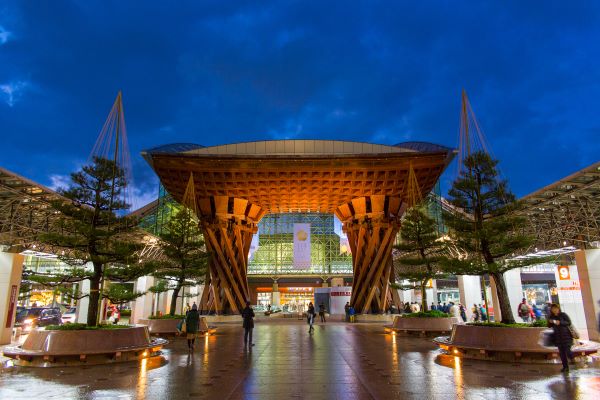
To find out the places that might interest you in one of Japan’s most sought-after cities by international visitors, refer to our article on Kanazawa City!